

The complete guide
How to Choose a Silk Sleep Mask If You Sleep on Your Side
The problem with most sleep masks
You buy a mask, you put it on, and for about four minutes it is wonderful. Then you roll onto your side. The pillow catches the edge of the mask, the band twists, and by 2am the thing is halfway up your forehead or wrapped around one ear. You wake up, fix it, and the whole cycle starts again.
Flat masks are made with one sleeping position in mind, and it is not yours. A flat panel of fabric sits directly on the eyelids and relies on the band pulling it tight to stay there. The tighter you pull, the more pressure sits on your eyes and temples. The looser you leave it, the faster it moves. Side sleepers get the worst of both.
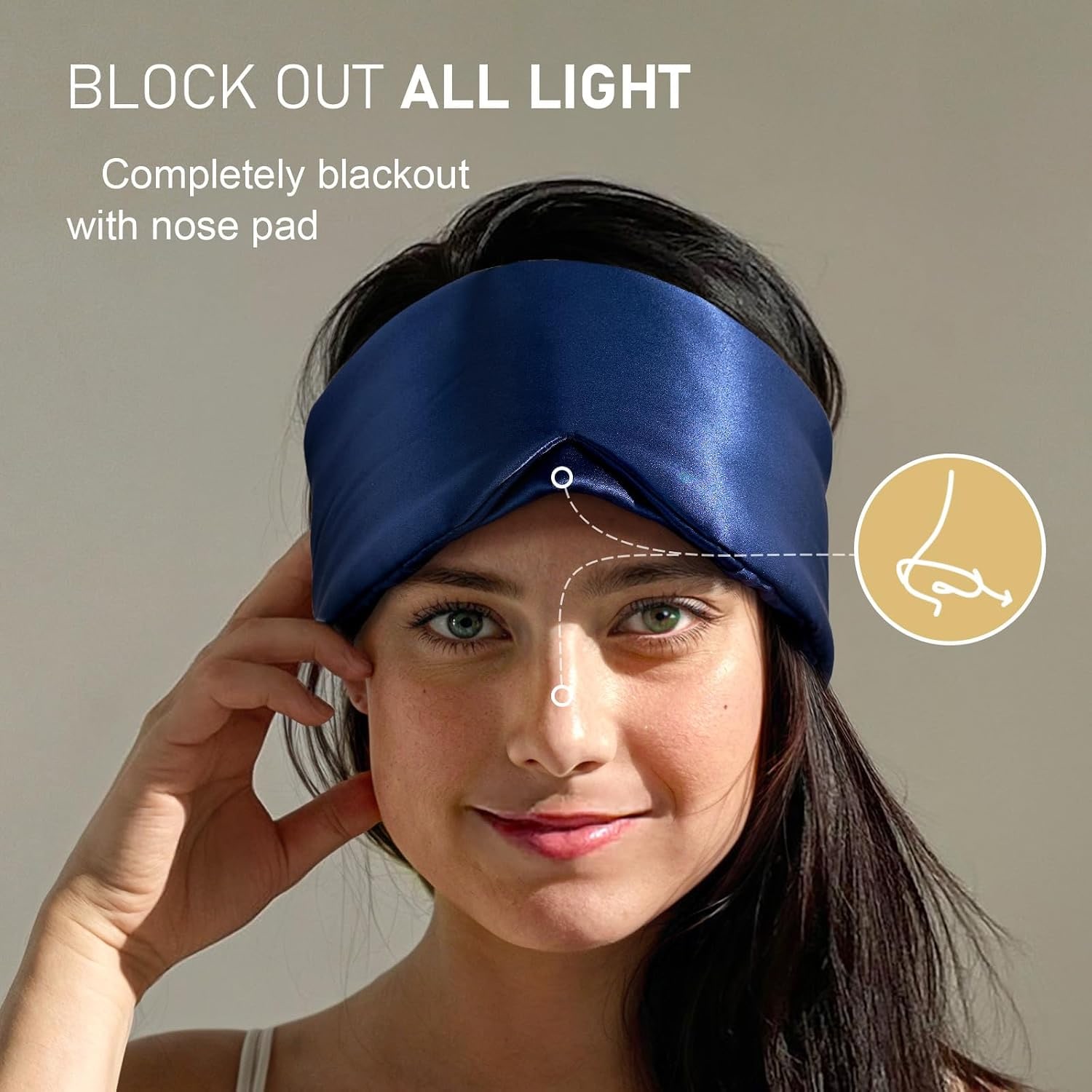
There is also the light problem. Even a well-fitting flat mask leaves a small triangle of gap on either side of the nose. In a dark bedroom you might not notice. In a hotel room with a glowing smoke alarm, or at 6am in summer, that gap is the only thing you can see.
How a contoured mask works
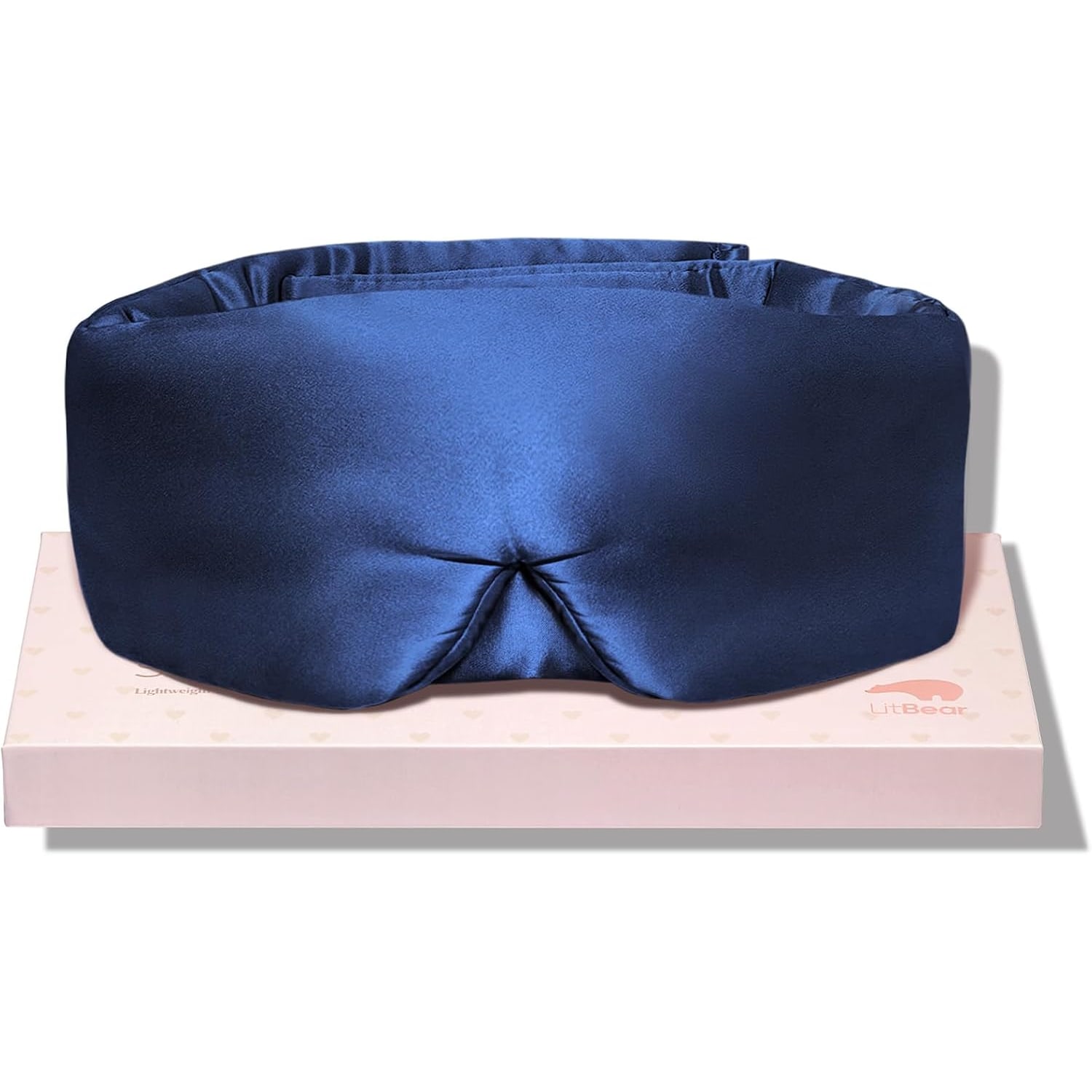
A contoured mask solves both problems with shape rather than tension. The front is moulded into two shallow cups, one over each eye. Because the fabric arches over the eye instead of resting on it, there is no pressure on the lids and no fabric touching your lashes. You can open your eyes inside the mask and see nothing at all.
The second piece is the nose wing, a shaped section that follows the bridge and sides of the nose. That is the part that closes the gap flat masks leave open. It is a small detail that makes a large difference to how dark the mask actually is.
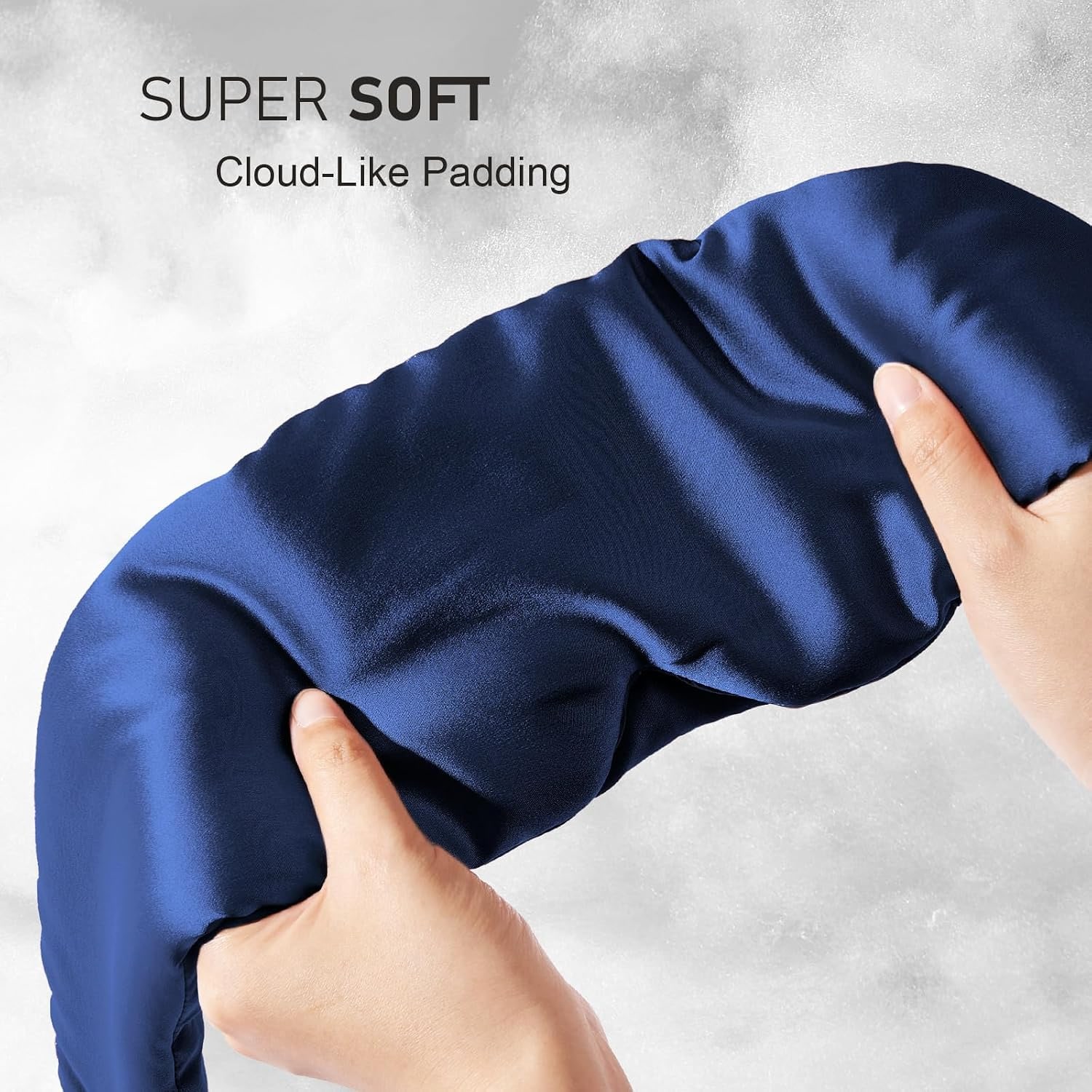
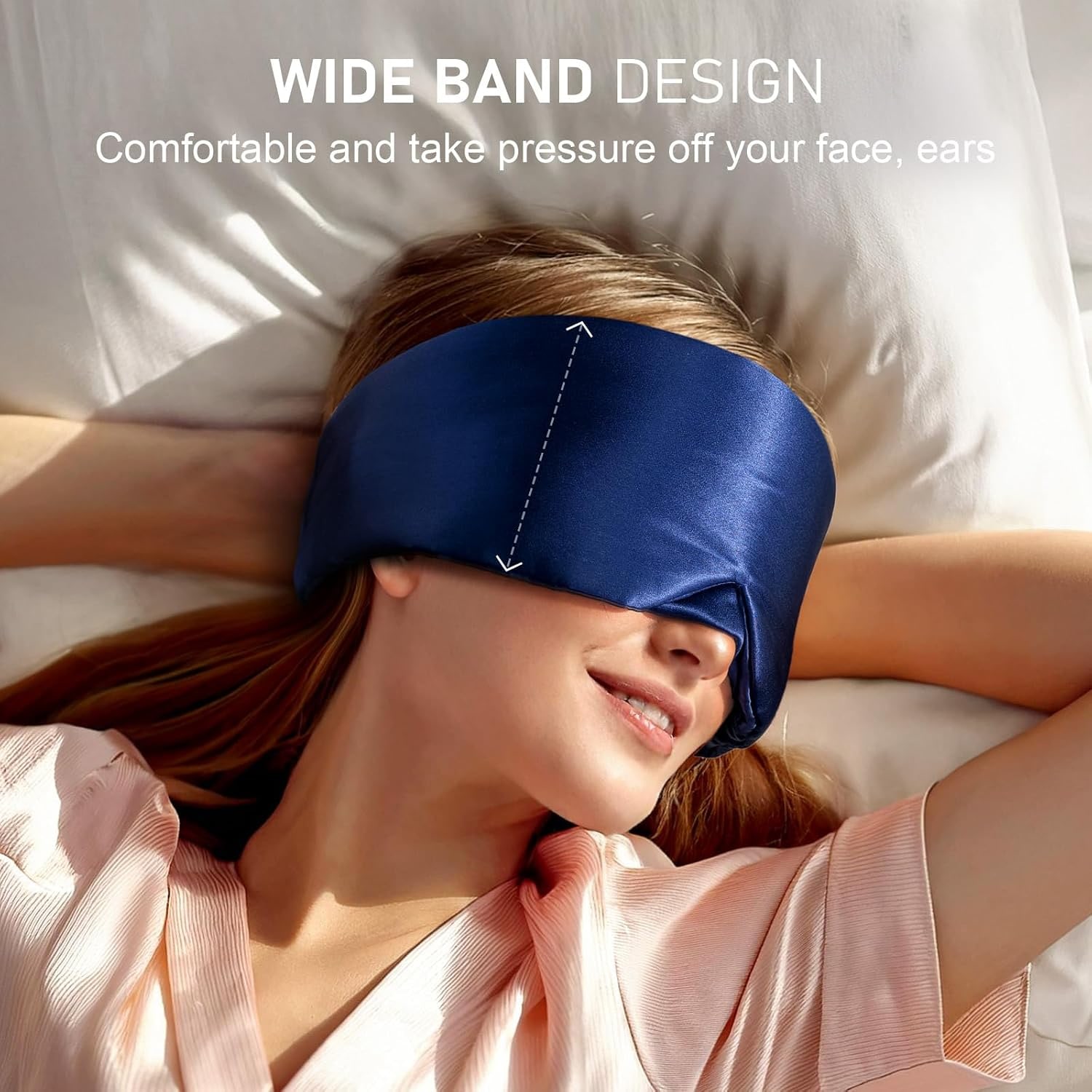
The third piece is the band. This one is wide and cushioned rather than a thin elastic cord. Wide bands spread their grip over more surface, so the mask stays put without needing to be cranked tight. That matters most when your head is turned and half the band is squashed against a pillow. A wide band silk eye mask tends to survive that far better than a string.
Why silk, specifically
Silk is a fine, smooth fibre, and the surface of a silk mask slides over your skin rather than dragging on it. If you have ever woken up with pillow lines across your cheek, you already know what friction does overnight.
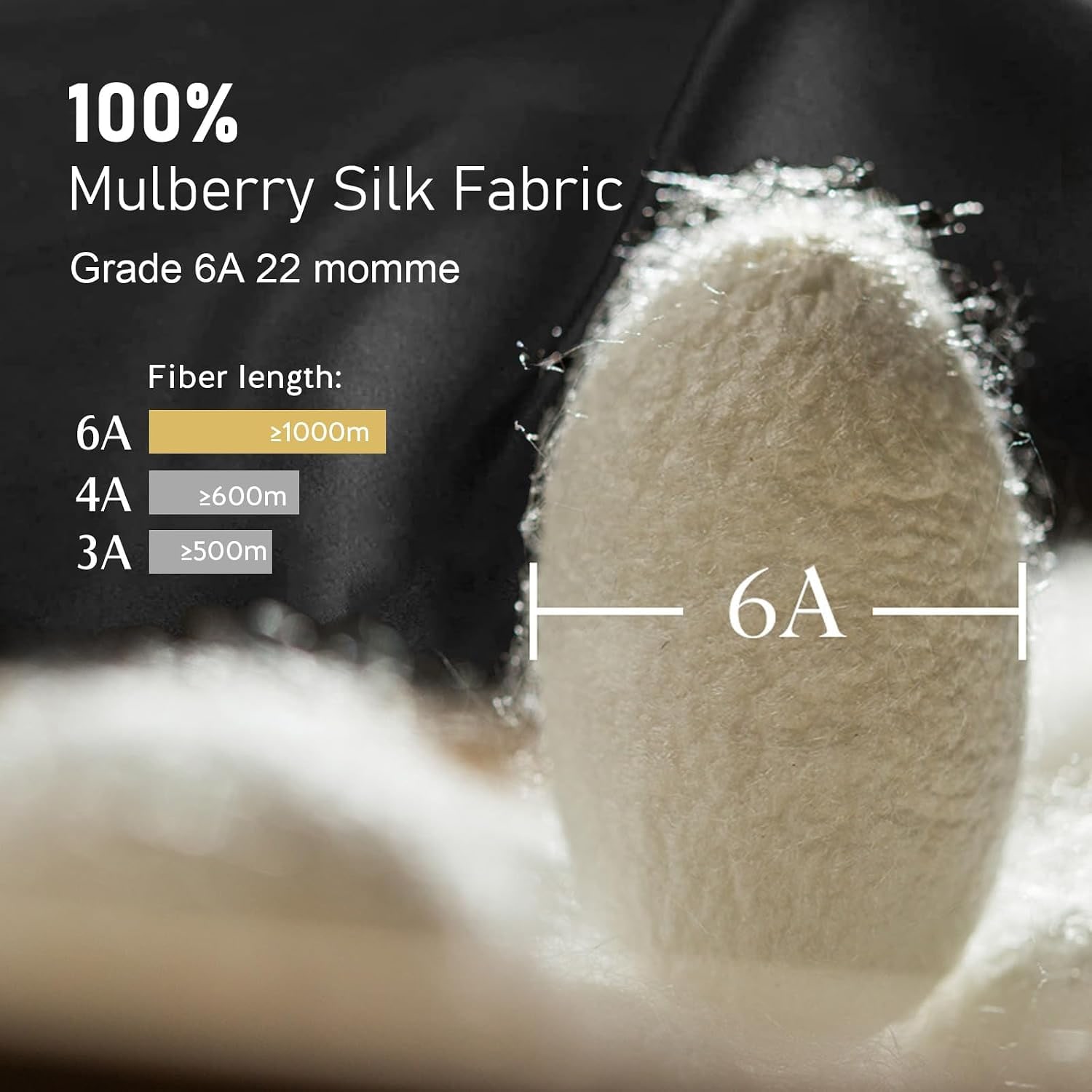
Silk also breathes. The eye area is a small space with warm skin and, under a mask, limited air flow. Heavier materials trap that warmth. This mask uses silk on both faces, with a cushioned layer in between, and the maker describes the result as soft, breathable and cool. Practically, that means the mask does not feel damp against your face by morning the way a thick padded one can.
And silk is quiet. A synthetic shell crinkles every time you move. There is no noise from a silk surface, which sounds like a trivial thing until you have been woken by your own sleep mask.
Who this suits
Side sleepers are the obvious group, since that is what the shape is built for. But a few other people tend to get on well with a 3D silk sleep mask.
Anyone who wears eye make-up to bed, or who has lash extensions, benefits from the gap over the eyes. Nothing presses, so nothing smudges or bends. People who find flat masks give them a headache often do better too, because the cushioned band means less tension is needed.
Shift workers are another group. Sleeping during daylight is a harder problem than sleeping at night, and the nose wing matters more when the light source is a bright window rather than a dim hallway. Frequent flyers come to it for a different reason, weight and bulk. At 134 g, packed in a small pouch, a travel silk eye mask takes up almost no room in a carry-on.
It is an adult product. The band is adult-sized and the maker does not offer a child fit.
How to choose and fit one
Start with the band. Measure around your head at eyebrow level with a soft tape. Most adult heads land between 54 and 62 cm, and an adjustable band covers that range comfortably, but knowing your number makes the first fit much quicker.
When you put it on, set the band so the mask sits still when you shake your head gently, and no tighter. If you wake with a crease across your temples, you went a notch too far. If it has crawled up your forehead by morning, you went a notch too loose. Two or three nights of small adjustments is normal.
Position matters as much as tension. The band should sit low on the back of the head, roughly level with the top of your ears, not high on the crown. High placement is the single most common reason a mask slides up during the night. If you sleep with your hair tied up, put the band under the bun rather than over it.
Give yourself a few nights before deciding. Sleeping with anything on your face is a habit, and even a mask that fits perfectly can feel strange on night one.
Looking after it
This mask is hand wash only. Cool water, a small amount of mild liquid detergent made for delicates, and gentle squeezing rather than scrubbing. Close the hook and loop fastening before it goes in the water, because an open strip of hook will snag on silk and pull threads.
Do not wring it out. Lay it flat in a towel, press, then reshape the cups with your fingers and dry it flat, away from direct sun and well clear of a radiator or heater. Heat is harder on silk than water is.
How often depends on how you use it. With nightly wear, every week or two is sensible, and sooner if you use night creams or sleep in make-up. A mask that only comes out for flights can go longer. Skip bleach entirely. For a single mark, dab mild detergent and cool water onto the spot with your fingertips, then rinse the whole mask so you do not end up with a clean patch.
Stored in its pouch between uses, it stays clean and keeps its shape better than it would loose in a drawer.
What the maker does and does not tell you
Worth being straight about this. The mask is midnight blue, silk on both sides, 134 g, one per pack, with a hook and loop adjustable band and a 3D contoured front with a nose wing. It arrives in a gift box with a carry pouch, and care is hand wash only.
What is not published is the silk's country of origin, the weave, or the worn dimensions of the mask itself. The packed measurements are 69.01 x 0.99 x 11.51 cm, which describes the box rather than the mask on your face. If a specific fabric specification is the deciding factor for you, buy this one on shape and fit instead, because those are the qualities it is actually built around.
The short version
If you sleep flat on your back in a dark room, a simple flat mask will probably do. If you sleep on your side, or if daylight is your problem, the shape is what you are paying for. The cups keep fabric off your eyes, the nose wing closes the gap that lets light in, and the wide adjustable band holds everything in place without needing to be tight.
Measure your head, set the band low and snug, hand wash it, and dry it flat. Keep the pouch for travel. If it is not right once you have tried it, you have 14 days from delivery to send it back unused and unwashed.