

The complete guide
How to Choose a Silk Bonnet That Actually Stays On
The problem with pillowcases
Most hair damage does not happen in one dramatic moment. It builds up slowly, and a fair amount of it happens while you are asleep.
Think about what your hair does for seven or eight hours a night. You turn over, you shift position, and every time you do, the hair at the back of your head drags across the pillowcase. Standard cotton is made from short fibres with a slightly rough surface. Under a microscope it looks like a field of tiny hooks. Your hair cuticle catches on those hooks, lifts a little, and over months of nights that adds up to frizz, flyaways and split ends you did not earn from heat styling.
There is a second problem. Cotton is absorbent, which is excellent in a towel and less helpful under your head. It pulls moisture out of hair, and dry hair breaks more easily than hair that has kept its moisture.
A silk bonnet solves both at once. It puts a smooth, less absorbent surface between your hair and everything else.
What silk is doing differently
Silk is a natural protein fibre. The filament is long, continuous and smooth, which is why silk fabric feels the way it does. When hair slides across it, there is simply less to catch on.
The useful number to look at is momme. Momme measures the weight of silk fabric, and for hair accessories and bedding the common range runs from about 16 up to 25. This bonnet is 22 momme, which sits comfortably in the better half of that range. It has body. You can feel the difference between 22 momme and a flimsy 16 momme the moment you pick both up. Lighter silk tends to feel papery and wears through faster at stress points.
The other marker is grade. Silk is graded by the length and uniformity of the filaments, and 6A is the top of the scale in common use. In practice that means a smoother, more even surface with fewer slubs.
Why double layering matters more than people realise
This is the detail worth paying attention to when you compare bonnets.
A lot of caps sold as silk are silk only on the outside. The lining, which is the part doing all the work against your hair, is polyester, cotton or a cheap satin. You pay for silk and your hair touches something else.
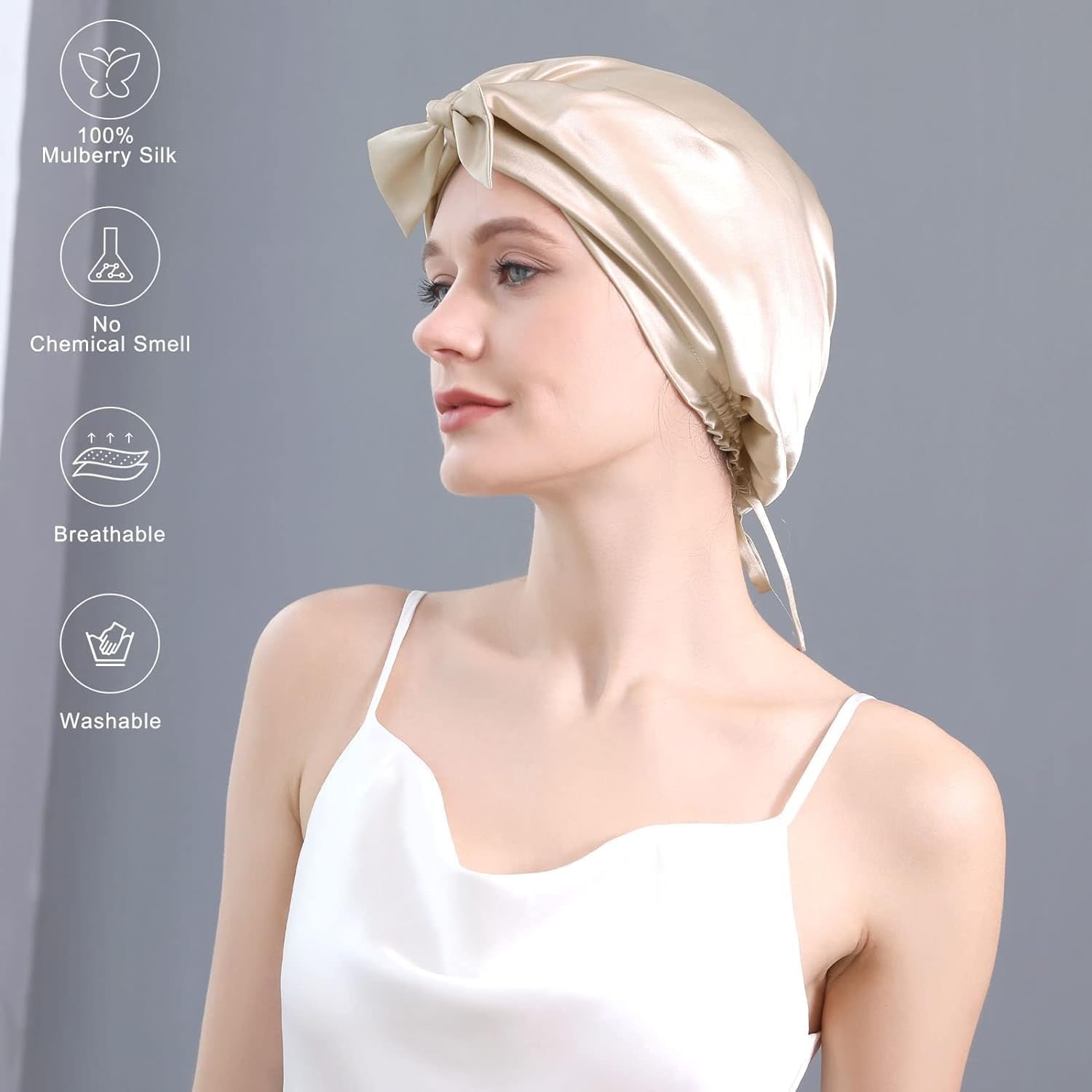
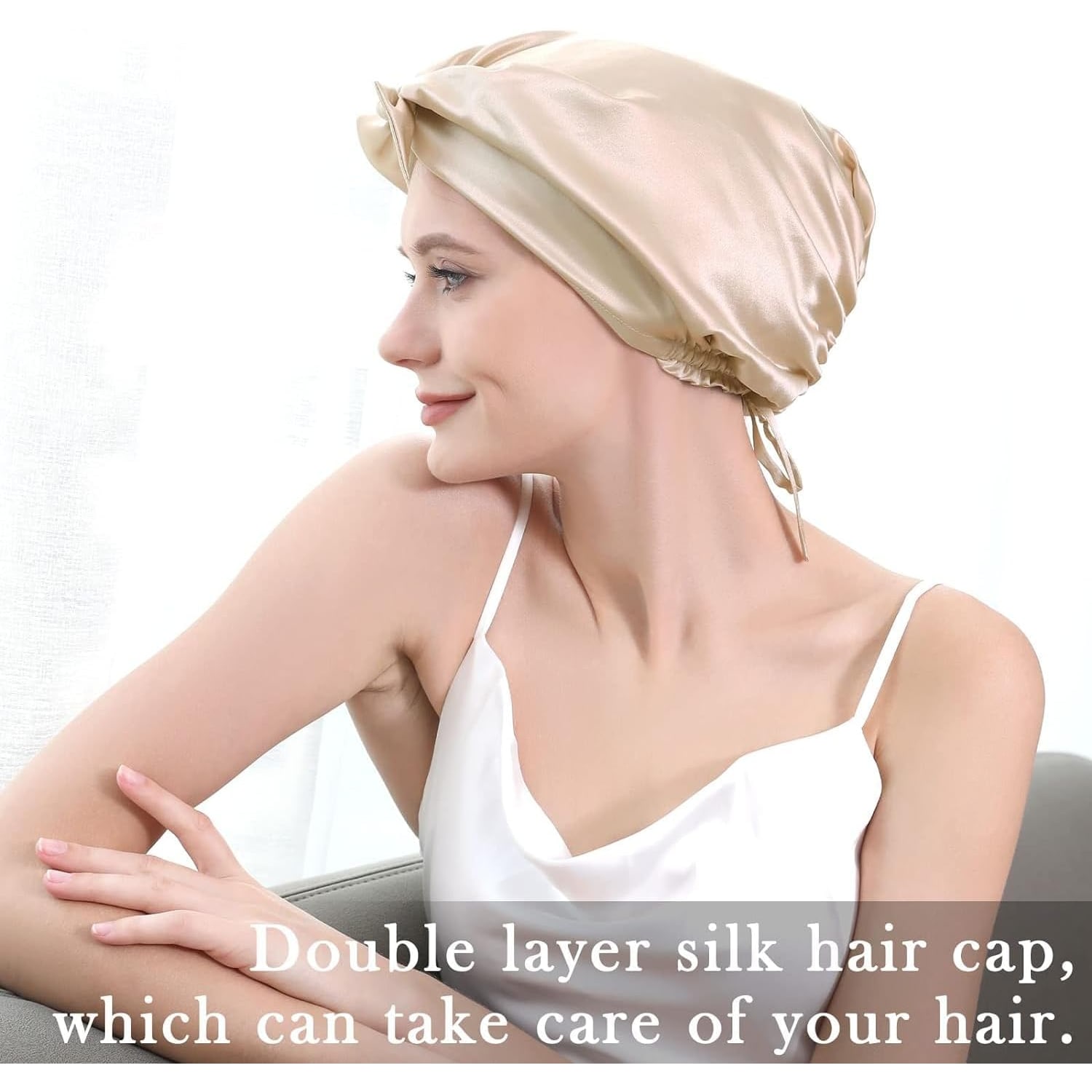
This one uses mulberry silk for both layers. Inside and out, same fabric. It means two things. First, the surface touching your hair is genuinely silk. Second, if the cap twists or gets folded back during the night, nothing changes, because there is no wrong side.
The double layer also gives the cap a bit more structure without adding bulk. A single layer of silk is soft but floppy, and floppy caps tend to shift. Two layers hold their shape better.
Who gets the most out of a bonnet
If your hair is curly, coily or textured, a bonnet is probably the single most useful overnight tool you can own. Curls flatten and tangle against a pillow, and a roomy cap lets them sit loose instead of being crushed. Gather curls loosely on top of your head before putting the cap on and you will keep a lot more definition by morning.
Braids, twists and locs benefit for a slightly different reason. The issue there is frizz along the lengths and lifting at the parting. A silk cap for braids keeps everything contained and keeps lint and dust out.
Straight and wavy hair is not exempt. If you blow-dry, a bonnet is how you get a second and third day out of it. The flyaways that appear overnight are friction damage, and reducing the friction reduces the flyaways.
Short hair gets a quieter benefit. A fresh cut, a taper or a wrap stays tidier when it has not been scrubbed against a pillow all night.
Getting the fit right
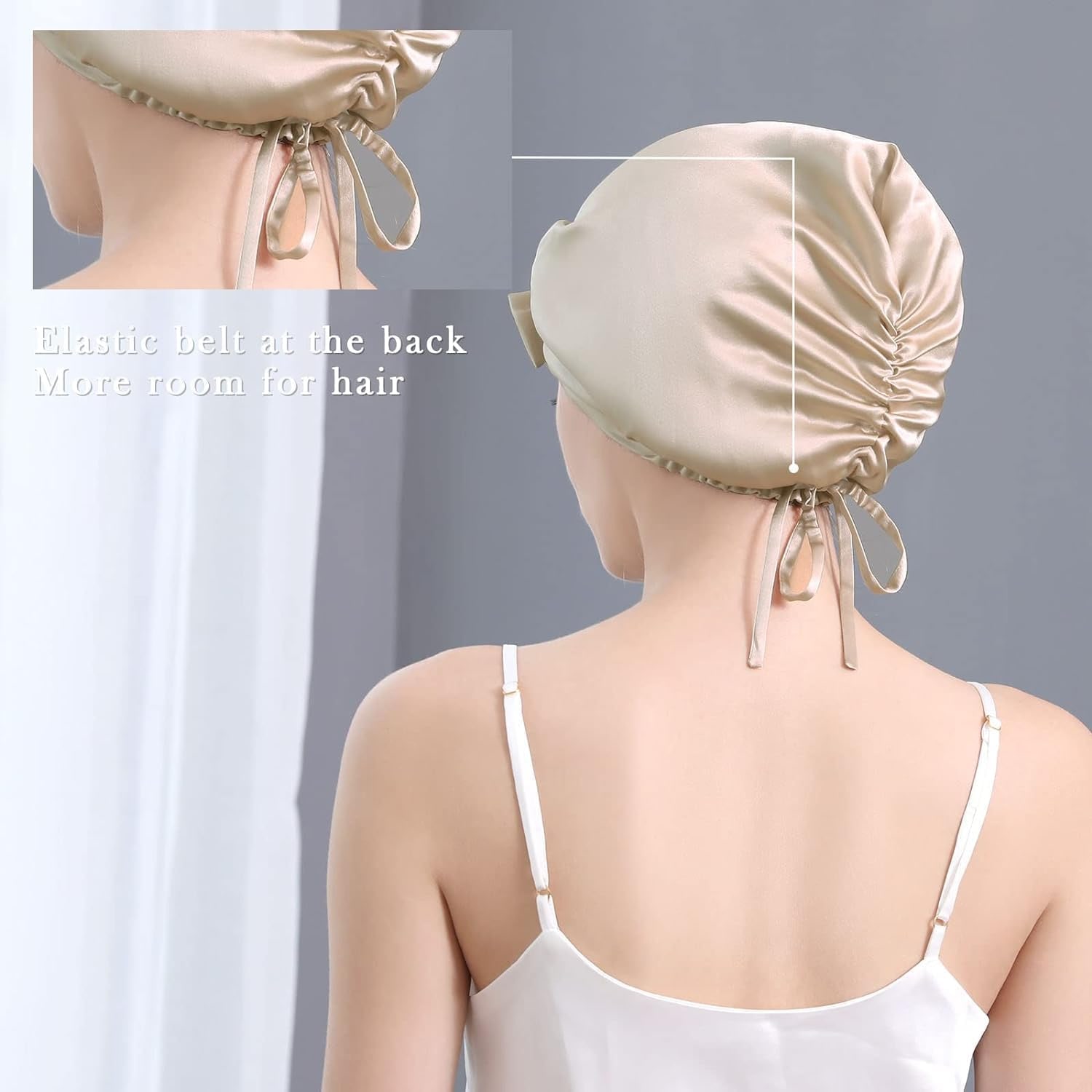
One size caps live or die on the elastic. The band here runs along the back edge, which is the right place for it, because that is where most caps slip off from.
The way to put one on is to lean forward, let your hair fall into the crown, then pull the cap back over your head and settle the band at the nape of your neck rather than high on the back of your skull. Set it too high and it works its way up and off. Set it at the nape and it has something to grip.
If you have a lot of hair, resist the urge to pull the cap down tight. Tension at the hairline is not what you want overnight. The cap should feel secure but not gripping.
Head sizes vary, and the maker does not publish measurements for this cap. If you have had trouble with one size caps before, measure around your head at the hairline and compare that with a cap that currently fits you well.
Day wear, not just night wear
Nobody says this often enough, but a good bonnet is useful well outside bedtime.
Cooking, cleaning, painting a room, sitting with a book on a windy stoep. Anything that gets dust, steam or grease near your hair is a reason to put a cap on. Silk is light and breathes, so you can wear it for hours without feeling hot or itchy under it.
Some people keep one at the gym bag, one at the bedside and one in the car. They are small, they fold flat, and they are the kind of thing you miss when you do not have one.
Looking after silk
Silk is less fragile than its reputation suggests, but it does have preferences.
Cool water. Mild detergent made for delicates, not standard laundry powder, which is often too alkaline. Press the water out rather than wringing. Hang it somewhere airy and out of direct sunlight, because sun fades silk and weakens the fibre over time.
A cold, gentle machine cycle inside a mesh laundry bag is fine if you prefer. Skip the tumble dryer entirely. If it needs pressing, use the coolest setting and work on the reverse side.
The care label on this cap states dry clean only. If you would rather follow the label to the letter, take it to a cleaner. Plenty of people hand wash silk of this weight without trouble, but the maker's instruction is what it is, and we will not pretend otherwise.
Wash every week or two, more often if you use heavy oils or creams. Product build-up is what dulls a light champagne colour, not normal wear.
Comparing silk with satin
You will see satin bonnets everywhere, usually much cheaper. It is worth knowing what you are comparing.
Satin is a weave, not a material. Most satin bonnets are woven from polyester. They are smooth, and they do reduce friction compared with cotton, so they are not useless. But polyester does not breathe the way silk does, it holds heat, and it has a slippery, slightly plasticky hand feel that some people cannot get past.
Silk at 22 momme feels different in the hand, drapes differently and sits more comfortably against skin. Whether the difference is worth the price gap depends on how much you care about the feel and how long you want the cap to last.
The short version
Look for real mulberry silk, not satin. Check the momme, and treat anything under about 19 as lightweight. Check whether both layers are silk or just the outside, because the inside is what matters.
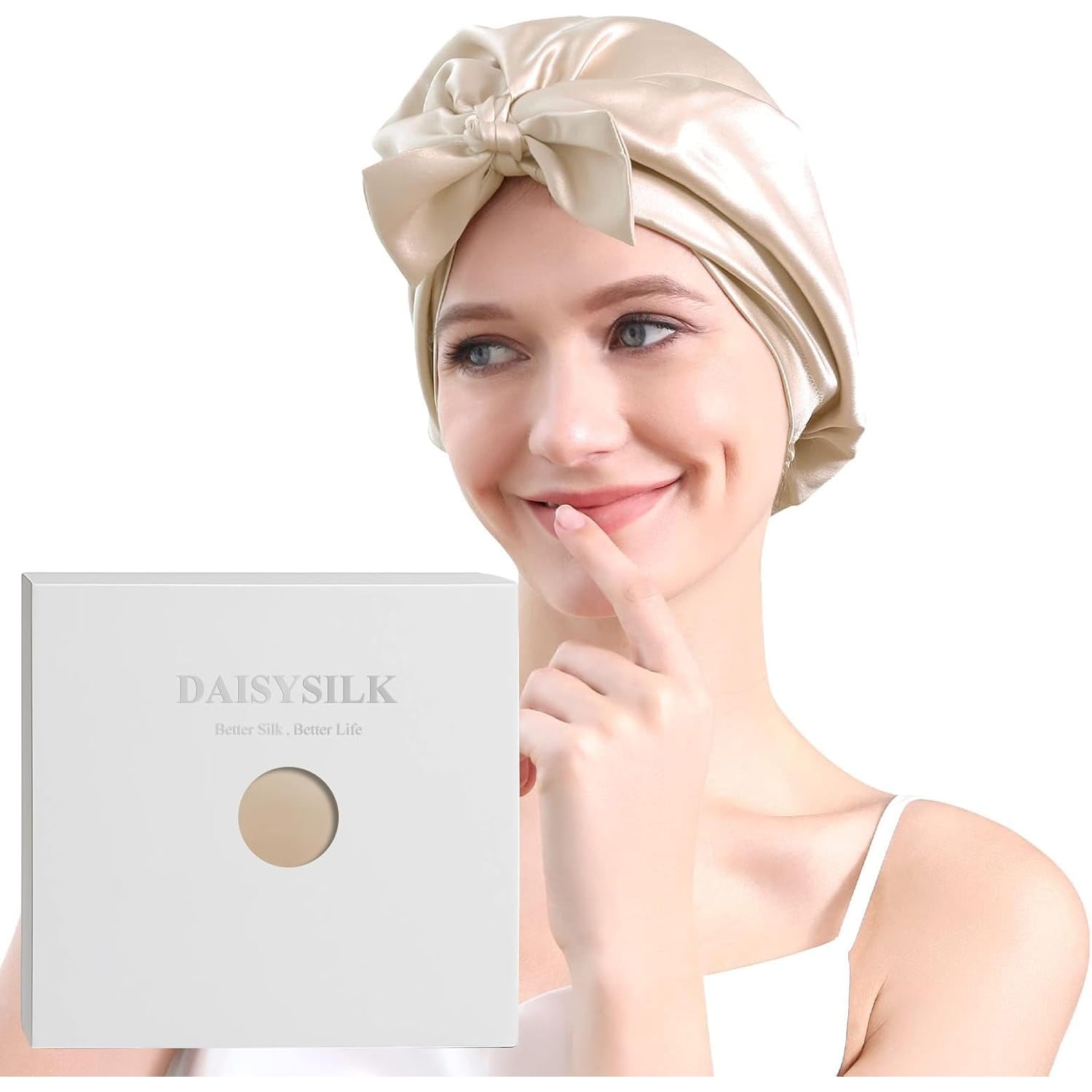
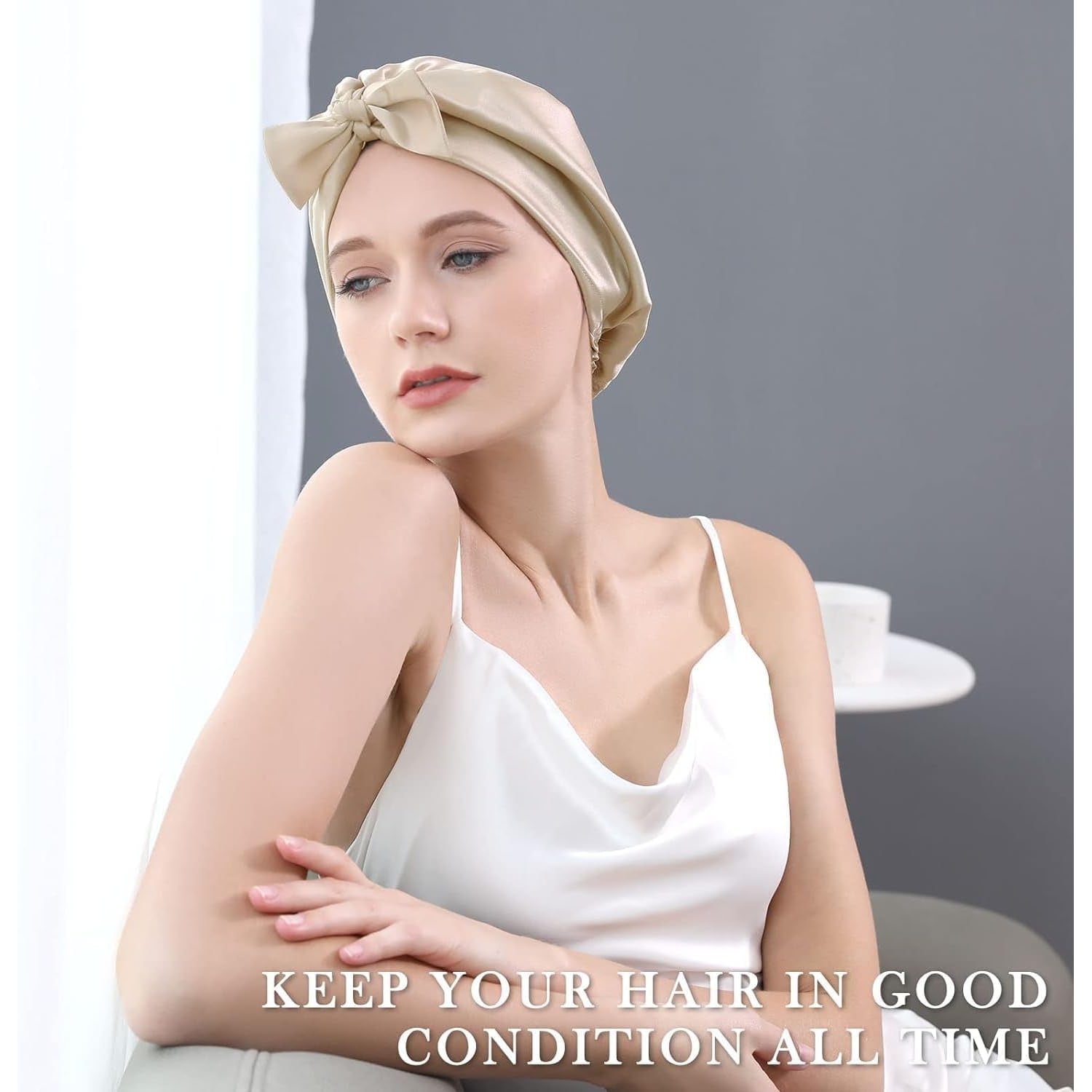
This cap is 22 momme, 6A grade mulberry silk, double layered so silk sits on both faces, in a soft champagne colour with an elastic band at the back. One size, roomy enough for long hair, braids or a set, light enough to wear during the day.
If you have been waking up to frizz you cannot explain, your pillowcase is a reasonable suspect. A bonnet is the cheapest way to rule it out.