
The complete guide
How to Choose a Silk Pillowcase, and How to Get the Size Right
The small annoyance nobody talks about
Most people notice the pillowcase last. You buy a mattress, you fuss over the duvet, and then you put whatever cotton case is in the cupboard on top. It works, until you start paying attention. Cotton grips. Hair catches on it and twists. Your cheek presses into a crease and the crease presses back. By two in the morning the fabric has warmed up and you are turning the pillow over looking for the cool side.
A silk pillowcase changes the surface your face spends a third of its life on. Silk fibres are long and smooth, so hair and skin slide across them instead of dragging. The fabric also sheds heat rather than storing it. That is the whole proposition, and it is a physical one. No magic, just a different cloth.
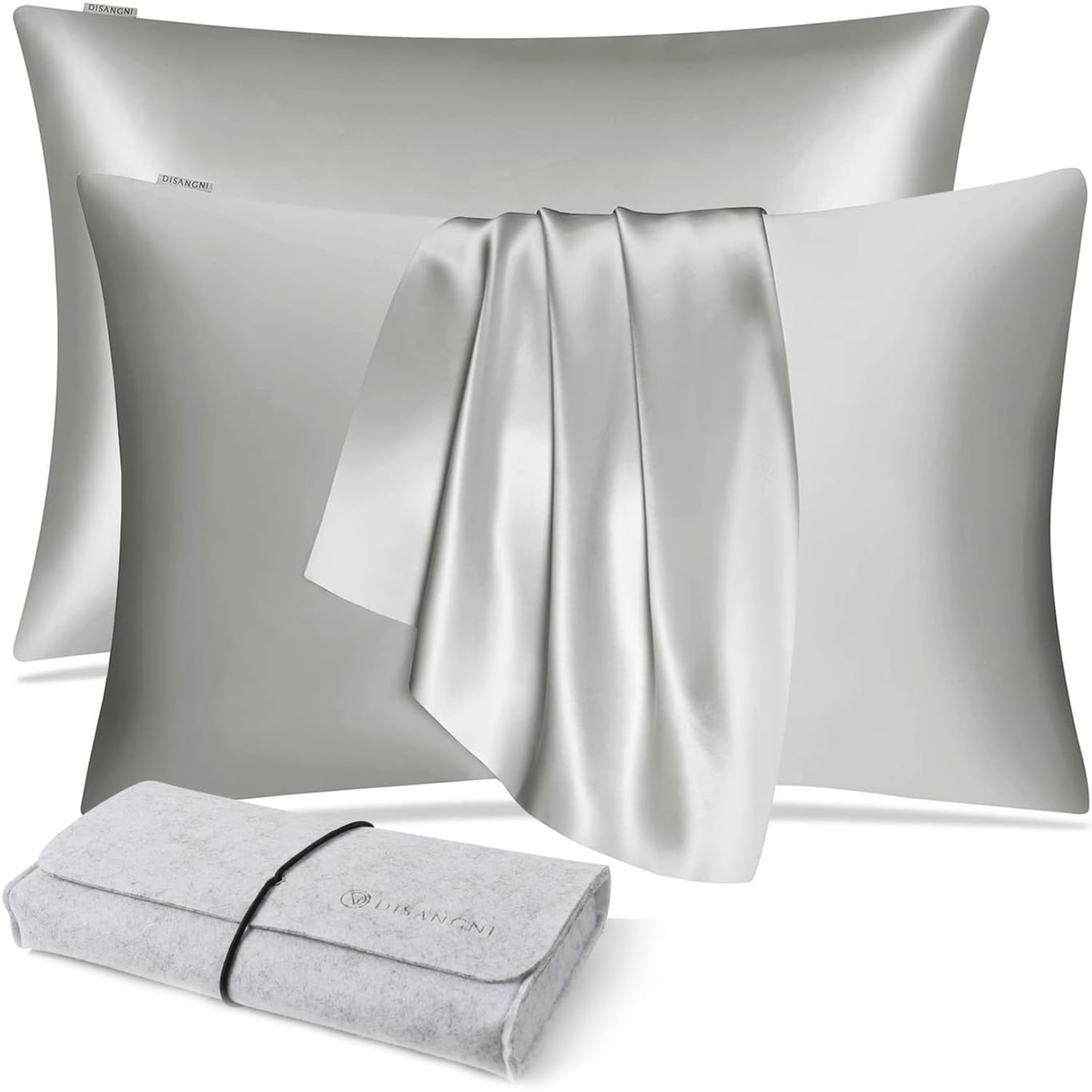
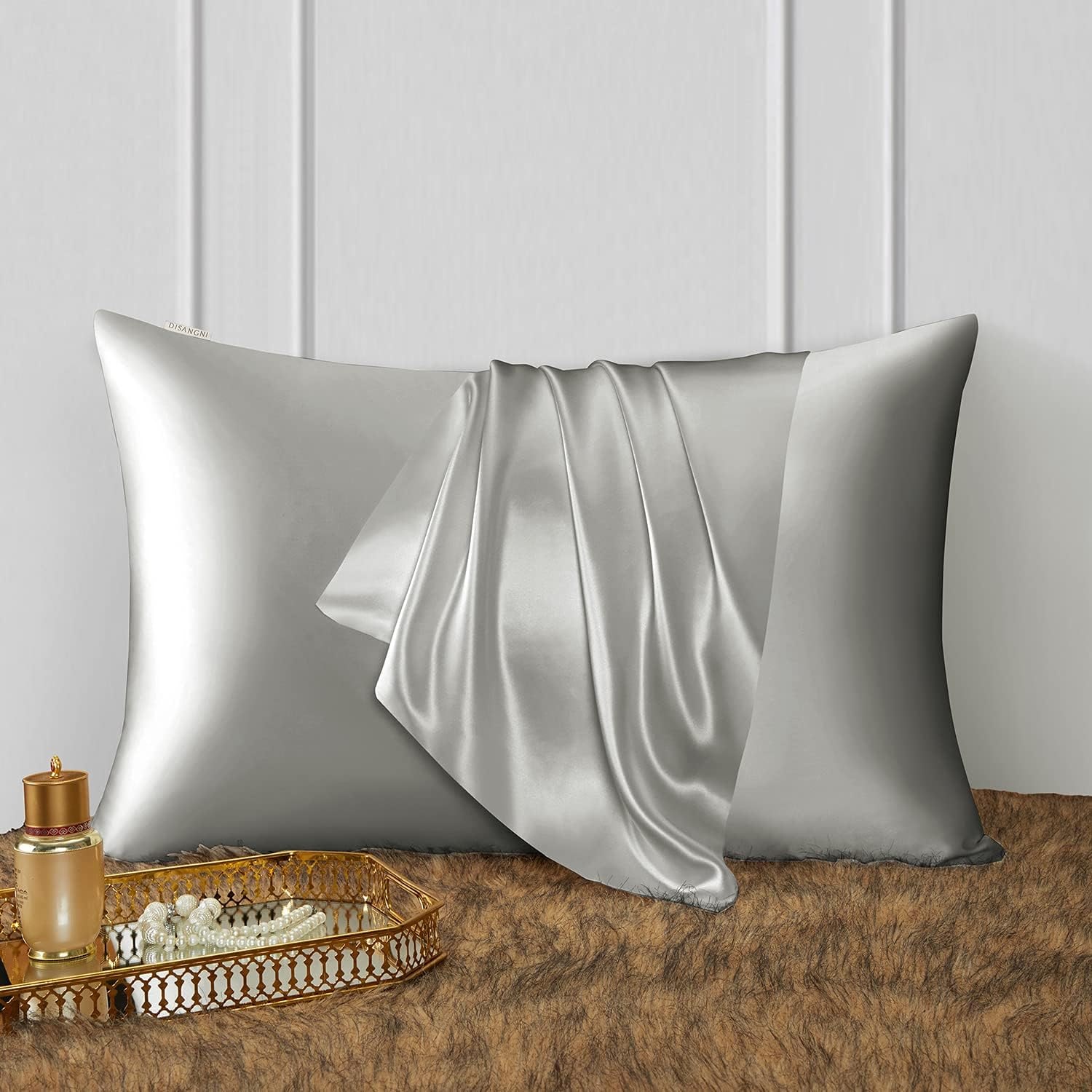
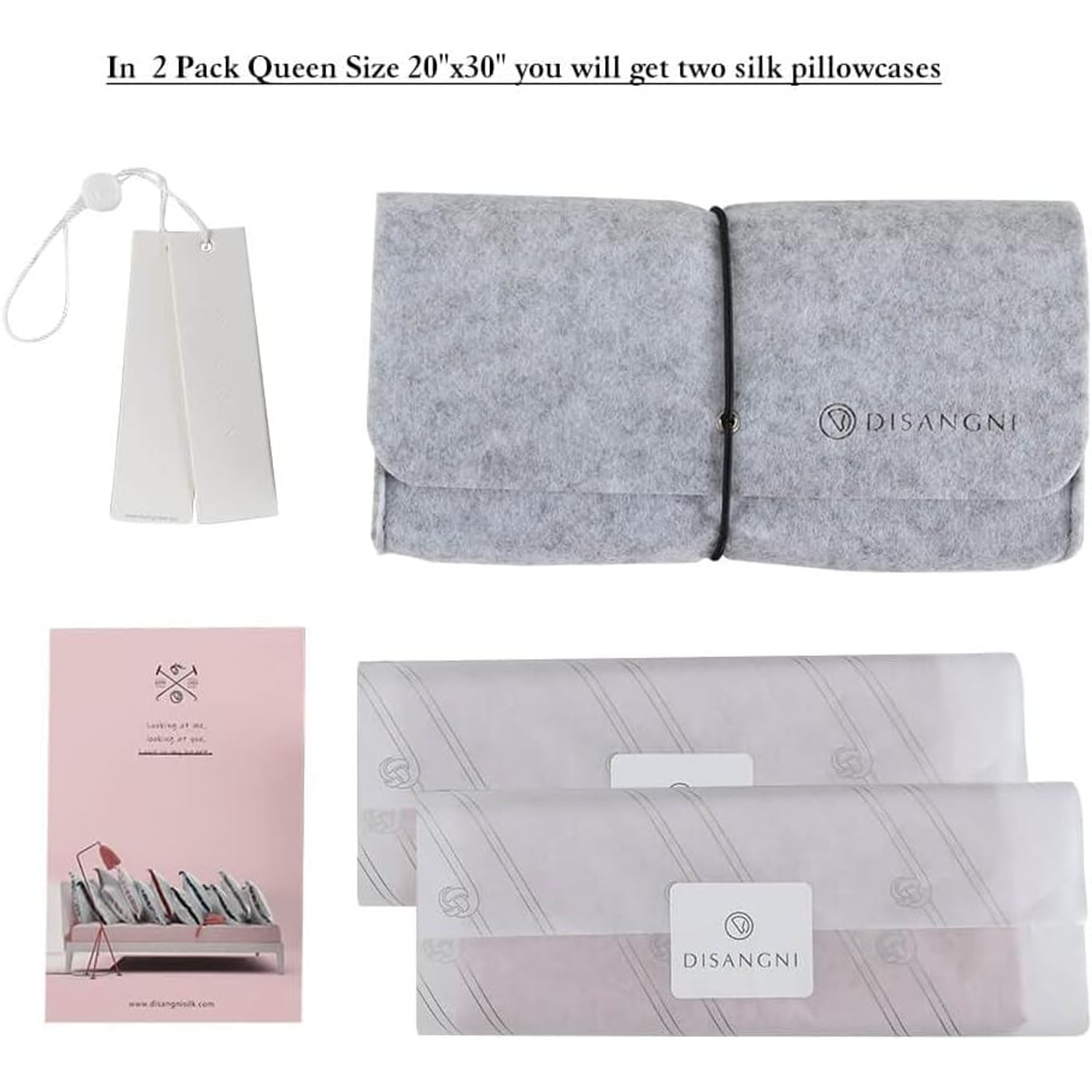
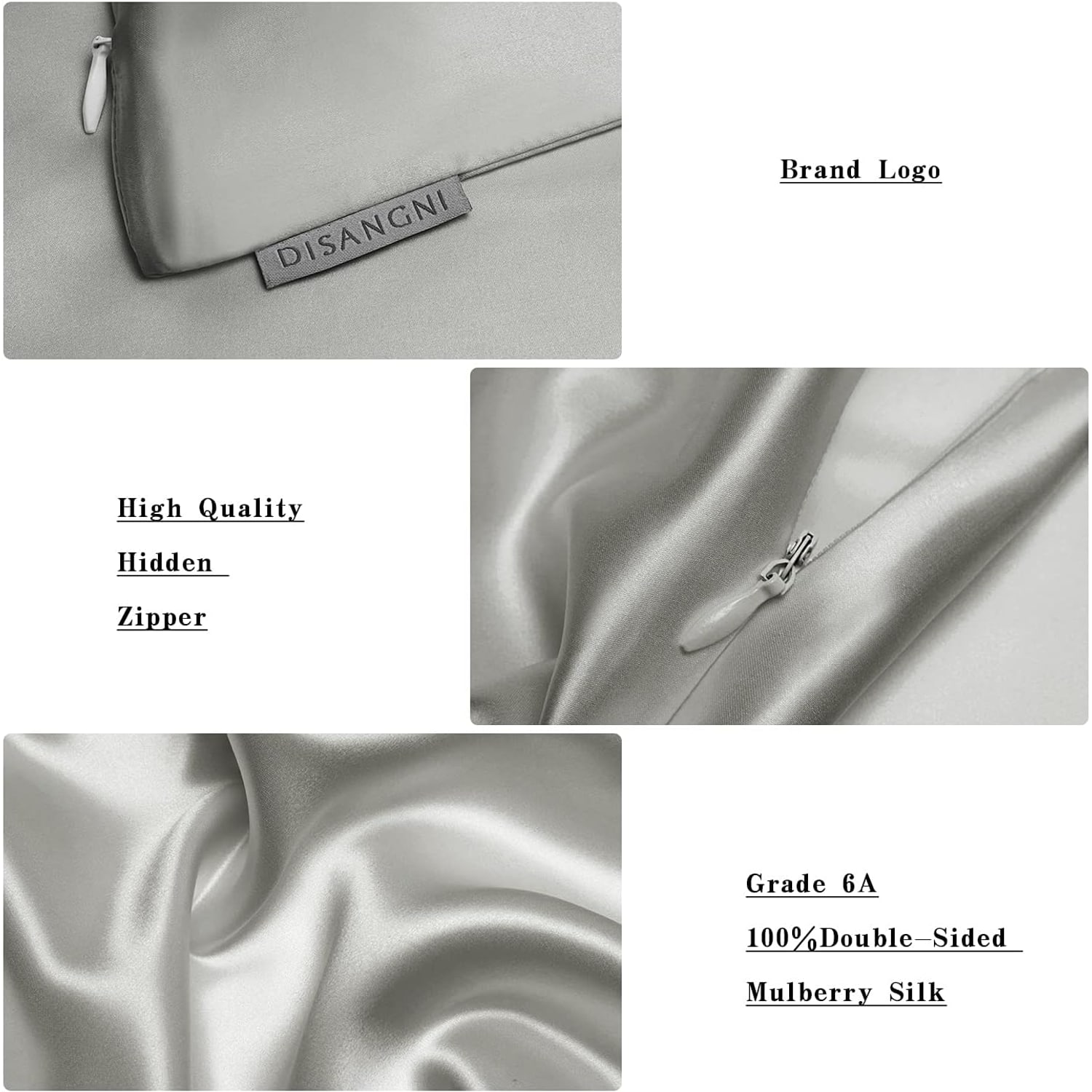
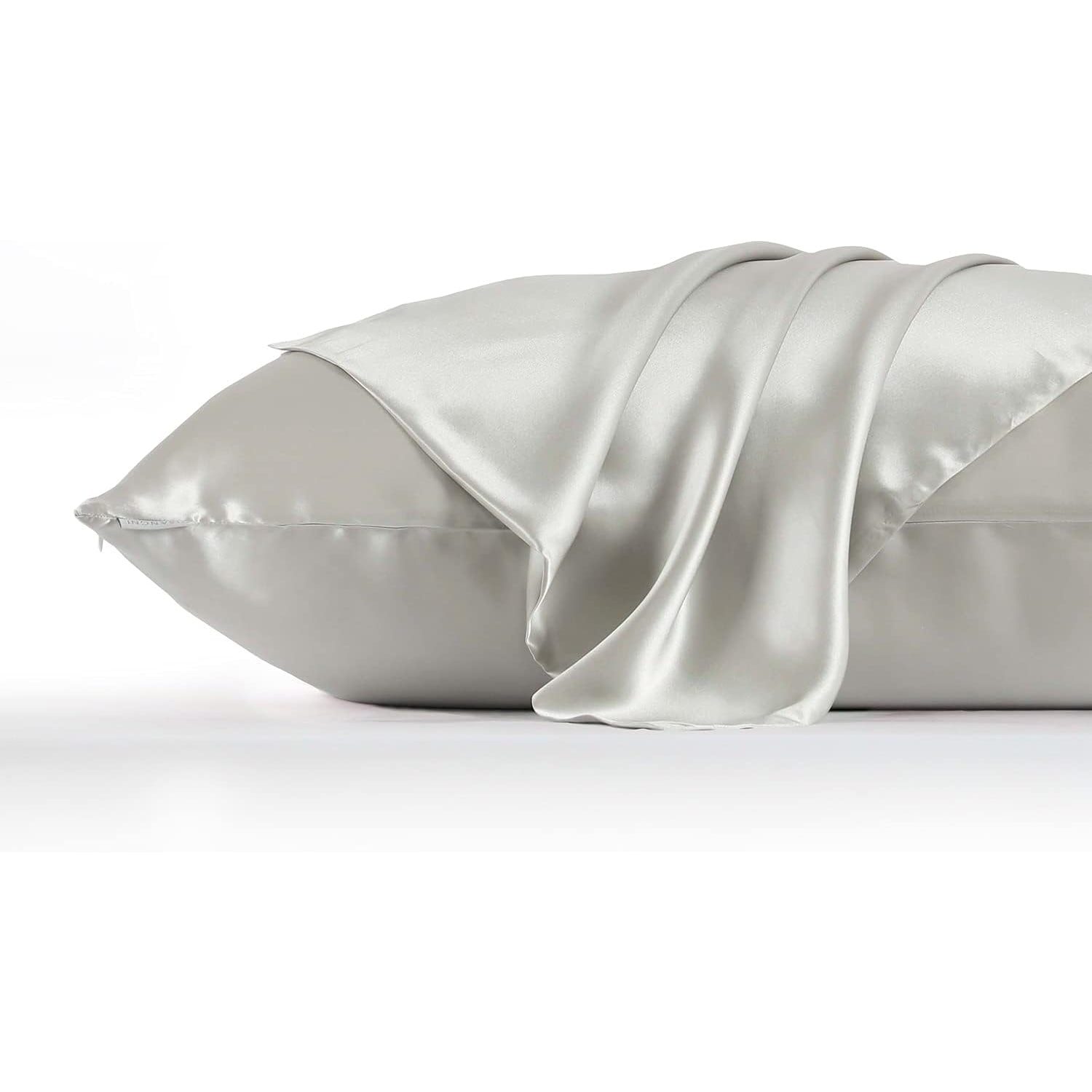
This pair is light grey, cut to the queen size at 75 by 50 cm (about 30 by 20 inches), and made from 100% mulberry silk on both faces. It is 22 momme, 600 thread count, and it closes with a hidden zip. The rest of this guide explains what those numbers mean and, more importantly, how to make sure the thing fits your pillow.
Momme is the number that matters
If you only learn one piece of silk vocabulary, make it momme. It measures the weight of the fabric, and with silk, weight is a decent shorthand for quality. More silk per square metre means more body, better drape and more fabric to wear through before anything gives way.
Silk bedding usually runs between about 16 and 25 momme. The light end feels pleasant in the shop but can look thin after a few months and show wear at the seams. The heavy end is lovely but costs more and can feel almost stiff when new. Twenty-two momme is the middle ground most people settle into, and it is where you will find a lot of what gets called the best 22 momme silk pillowcase in reviews. It has enough weight to hang properly over a pillow without feeling heavy against the face.
Thread count is the other number on the label, 600 in this case. It tells you how densely the threads are packed. On silk it contributes to the evenness and the sheen, but it is not the number to shop on. A 600 thread count silk at 16 momme is still a lighter fabric than a 600 thread count silk at 22 momme. Check momme first.
Both sides, not just one
Here is a trick worth knowing. Plenty of silk pillowcases are silk on one side and a cheaper fabric, often cotton or polyester, on the other. It keeps the price down and it looks fine folded on a shelf. Then you flip your pillow in the night and land on the back side, which feels nothing like silk.
These are silk on both faces. It is a small thing that you only appreciate at three in the morning, but it is the difference between a case that works all night and one that works half the night.
The zip, and why it is not a detail
Silk pillowcases close one of three ways. An open end is simplest and cheapest, and the pillow drifts out. An envelope flap folds over and tucks in, which is better, but it still works loose if you move a lot. A hidden zip sews into the seam, closes completely and holds the pillow exactly where you put it.
These use the zip. From the outside you see a clean, continuous edge. The pillow does not creep. And during washing, a closed zip keeps the case from twisting itself into a knot. Just remember to close it before it goes in the water so the slider cannot catch the cloth.
Getting the size right, which is where most people slip
This is the part worth slowing down for. A standard South African pillow is usually somewhere around 45 by 70 cm. A lot of silk pillowcases, including this one, are cut to American sizing. In that system a standard case is about 51 by 66 cm, a queen is 51 by 76 cm and a king is 51 by 91 cm. These are listed at 75 by 50 cm, which is the queen cut.
So what does that mean in practice? On a typical local pillow this case will be a little roomy. The silk will drape rather than stretch tight. Many people prefer that look, since a slightly loose silk case has a softer, more relaxed hang. What you cannot do is go the other way. If your pillow is longer than 75 cm, it will not go in, and pushing it will stress the seams.
The fix is simple. Take the pillow off the bed, lay it flat, and measure the length and width with a tape. Write the numbers down. Then compare them to the case. If your pillow comes in under 75 by 50 cm you are fine. If it is over on either measurement, look for a bigger size. People hunting for the best queen silk pillowcase often skip this step and end up disappointed by something that was never going to fit.
Does grey actually work in a bedroom?
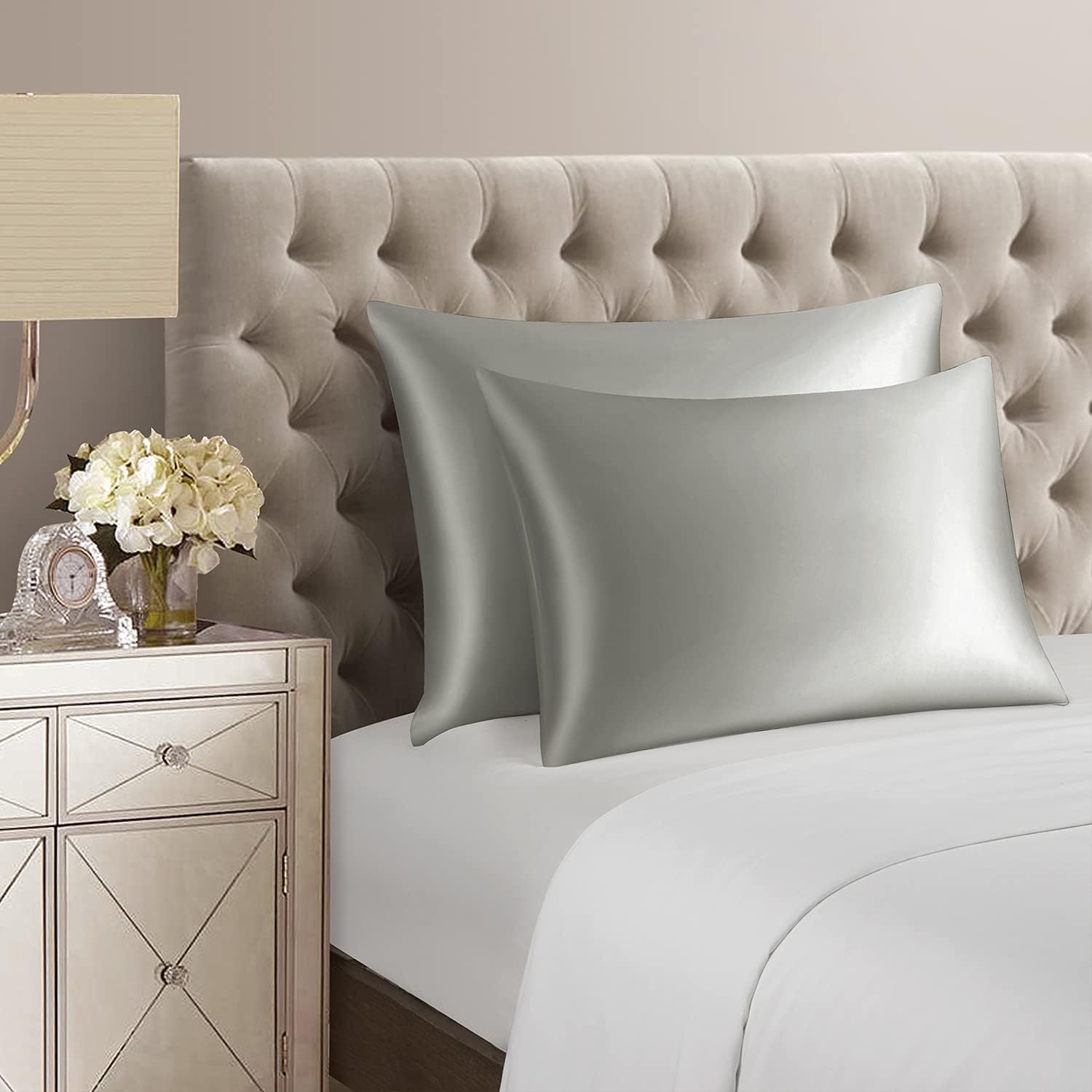
Colour is personal, but light grey is one of the lowest-risk choices you can make. It is a plain solid with no pattern, so it does not compete with anything. It sits comfortably next to crisp white sheets, next to charcoal or navy, and next to the warm stone and oatmeal tones that have taken over a lot of bedrooms.
Silk also behaves a little differently to cotton with colour. The sheen means the shade shifts slightly with the light, reading cooler in daylight and softer under a lamp. A pale grey handles that well. Very dark colours show every crease and very pale whites show every mark, which is part of why a mid-neutral like this gets picked so often as the best grey silk pillowcase for a room you do not want to redecorate around.
Looking after silk, honestly
Silk sounds fragile. It is not, particularly, but it does ask for different habits than cotton.
Hand wash at 30 degrees Celsius or cooler. Fill a basin, dissolve a small amount of mild detergent fully in the water first, then put the case in. Swirl it gently. Do not scrub, do not twist, do not wring. Rinse in cool water and press the water out with your palms or roll it in a dry towel.
Dry flat or on a line, out of direct sunlight. Sun fades dye and makes silk brittle over time. Skip the tumble dryer entirely. Silk holds far less water than cotton so it dries fast anyway.
Skip the bleach and the harsh stain removers. If something spills, deal with it the same day. Fresh marks lift out of silk easily, set ones do not. If you want it crisp, a cool iron on the reverse side while slightly damp does the job, though most creases drop out on the pillow overnight.
Having two cases makes all of this easier. One on the bed, one in the cupboard, and you never have to fall back on cotton while the other dries.
Who this suits
If you have long hair that tangles overnight, a smoother surface helps because there is simply less friction to catch on. If you run warm and keep flipping the pillow, silk sheds heat better than a dense cotton weave. If you like the way a bed looks with a little sheen on the pillows, a plain silk case does that without any pattern to date.
If your pillow is oversized or an unusual shape, measure before you commit. And if you are buying for someone else, a pair in a neutral colour is about as safe as bedding gifting gets.
The short version
Twenty-two momme is a sensible weight, heavy enough to last and light enough to feel good. Silk on both faces means the case still works when you flip the pillow. The hidden zip keeps everything where it belongs. Light grey goes with almost anything. And the one thing to do before you order is measure your pillow, because this is the American queen cut at 75 by 50 cm and a lot of local pillows are smaller.
Get the size right and the rest looks after itself.