

The complete guide
How to Choose a Silk Pillowcase, Sizing, Momme and Care
The problem with most pillowcases
You wash your face, you brush your hair, you get into bed, and then you spend seven hours with your cheek pressed into a woven cotton surface that grips every time you turn over. Cotton is a good fibre. It is just not a slippery one. Its short fibres sit up off the surface in tiny loops, and those loops catch.
Most people notice it in small ways. Sleep creases that take an hour to fade. Hair that looks like it argued with the pillow overnight. A case that feels warm by two in the morning. None of it ruins a night, but it adds up, and the fix is not complicated.
A silk pillowcase swaps that textured surface for one made of long, continuous filaments. Hair and skin slide across it instead of dragging. That is the whole idea. There is nothing mysterious going on, just a different fibre doing a different job.
What momme actually tells you
Silk is sold by momme, which is written as mm and pronounced "mommy". It measures how much a set area of the fabric weighs. The higher the figure, the more silk is in the cloth.
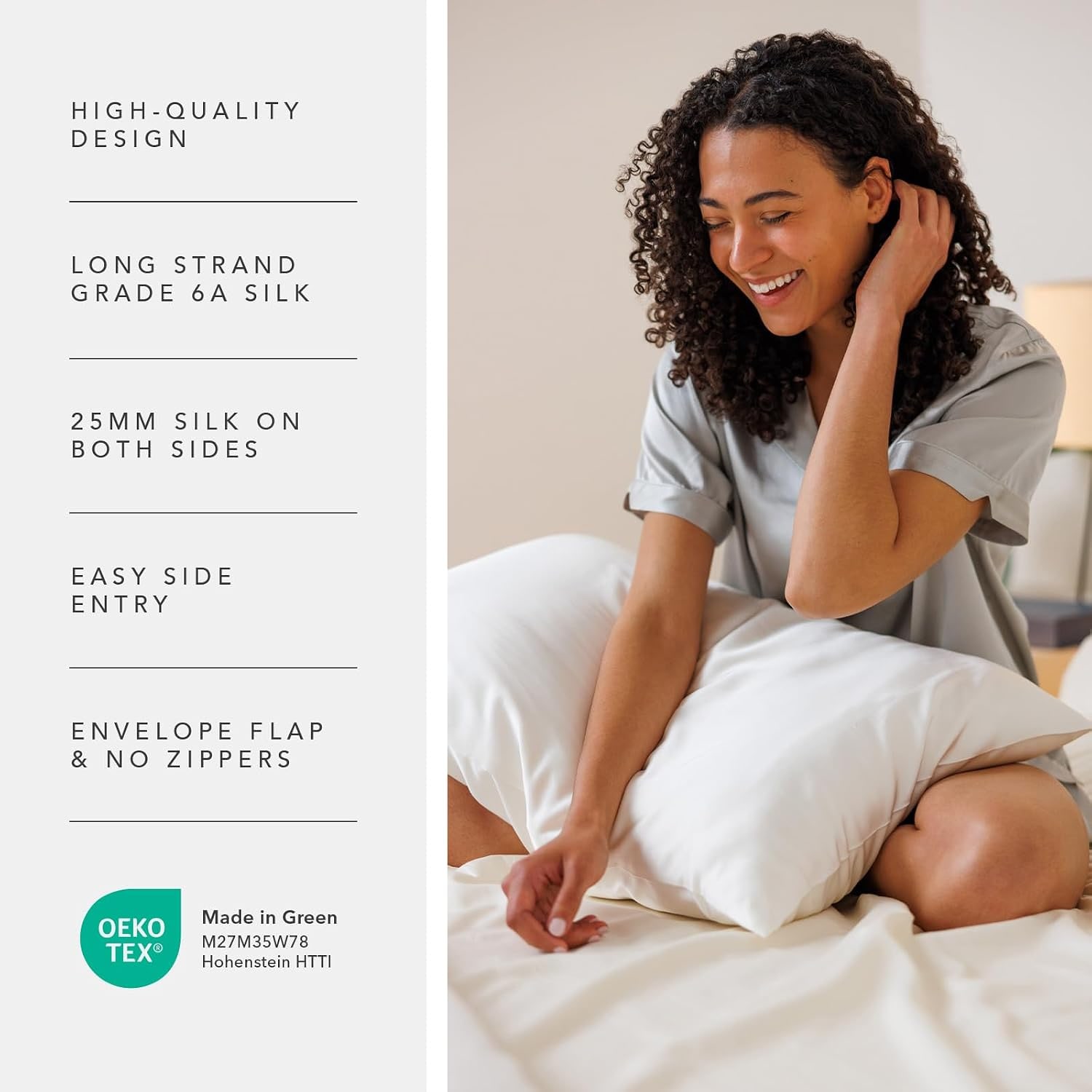
Lightweight silk for scarves sits around 12 to 16 momme. Bedding generally starts around 19 momme, which is thin but usable. This case is 25 momme, which is at the heavier end of what is made for pillowcases.
Why does weight matter on a pillowcase? Three reasons. Heavier silk drapes properly instead of clinging and wrinkling. It holds up to repeated washing far better, because there is simply more fibre to wear through. And it feels like something when you handle it, rather than feeling like a lining.
The trade-off is cost. More silk per square metre means a higher price, which is why the best 25 momme silk pillowcase options sit above the 19 momme ones. If you are buying once and want it to last, the heavier cloth is usually the smarter spend.
This case is also listed at 700 thread count. Thread count and momme describe different things, weave density versus fibre weight, and with silk the momme figure is generally the more useful number. Together they point to a cloth that is both dense and substantial.
Silk on both sides, and why it matters
Plenty of silk pillowcases are silk on the top face and cotton or polyester underneath. Manufacturers do it to cut cost, and in fairness you only ever lie on one side at a time.
Except you do not, really. You roll. You flip the pillow when one side gets warm. You fold it in half under your head. And the moment your cheek lands on the cotton backing, the difference is obvious.
This case uses silk on both faces, so it behaves the same whichever way it sits. It also means the case does not have a right and a wrong way up when you make the bed, which is a small thing that stops being small at eleven at night.
The closure question
Pillowcases close in three common ways. A plain open end, a zip, or an envelope flap.
Open ends are cheapest and the pillow works its way out. Zips keep everything locked in but put a hard plastic track somewhere near your head, and zips on silk have a habit of snagging the fabric when you are in a hurry.
The envelope style used here folds the fabric back on itself inside the case to make a pocket. The pillow slides in, the flap closes over, and there is nothing hard anywhere on the case. The side entry on this one is slightly offset rather than centred, which gives a deeper overlap and a better hold.
It also just looks tidier. No pillow poking out of one end, no zip line breaking up the surface. If you care how the bed looks when it is made, the best envelope closure pillowcase beats a zip every time.
Getting the size right
This is where silk pillowcases go wrong more often than anything else, so it is worth slowing down.
The case measures 76.2 x 50.8 cm, which is 30 x 20 inches. That is an American queen cut. Silk pillowcases are frequently made to American sizing, where standard is 51 x 66 cm, queen is 51 x 76 cm and king is 51 x 91 cm.
A typical pillow sold in South Africa is around 45 x 70 cm. So this case is longer and wider than that pillow. It will fit, and the envelope flap will keep things in order, but it will not be snug the way a tailored case would be.
Measure before you decide. Lay the pillow flat on a bed, press it down with your palm, and measure seam to seam in both directions. Do not go around the curve of the puffed middle, because that will give you a number several centimetres too large. Write both figures down and compare them to 76.2 x 50.8 cm.
If your pillow is smaller, as most local pillows will be, expect a slightly relaxed fit. If your pillow is bigger in either direction, go up a size rather than forcing it, because silk does not stretch and straining the seams is how a good case gets ruined in a month.
Who this suits
Anyone who sleeps hot will notice the surface feels cool when you first lie down, since silk pulls heat off the skin quickly. Anyone with long hair will notice less of a tangle in the morning, because there is simply less friction to work against. People who have been sleeping on cotton for years tend to notice the difference the first night, then forget about it, which is usually the sign that something is working.
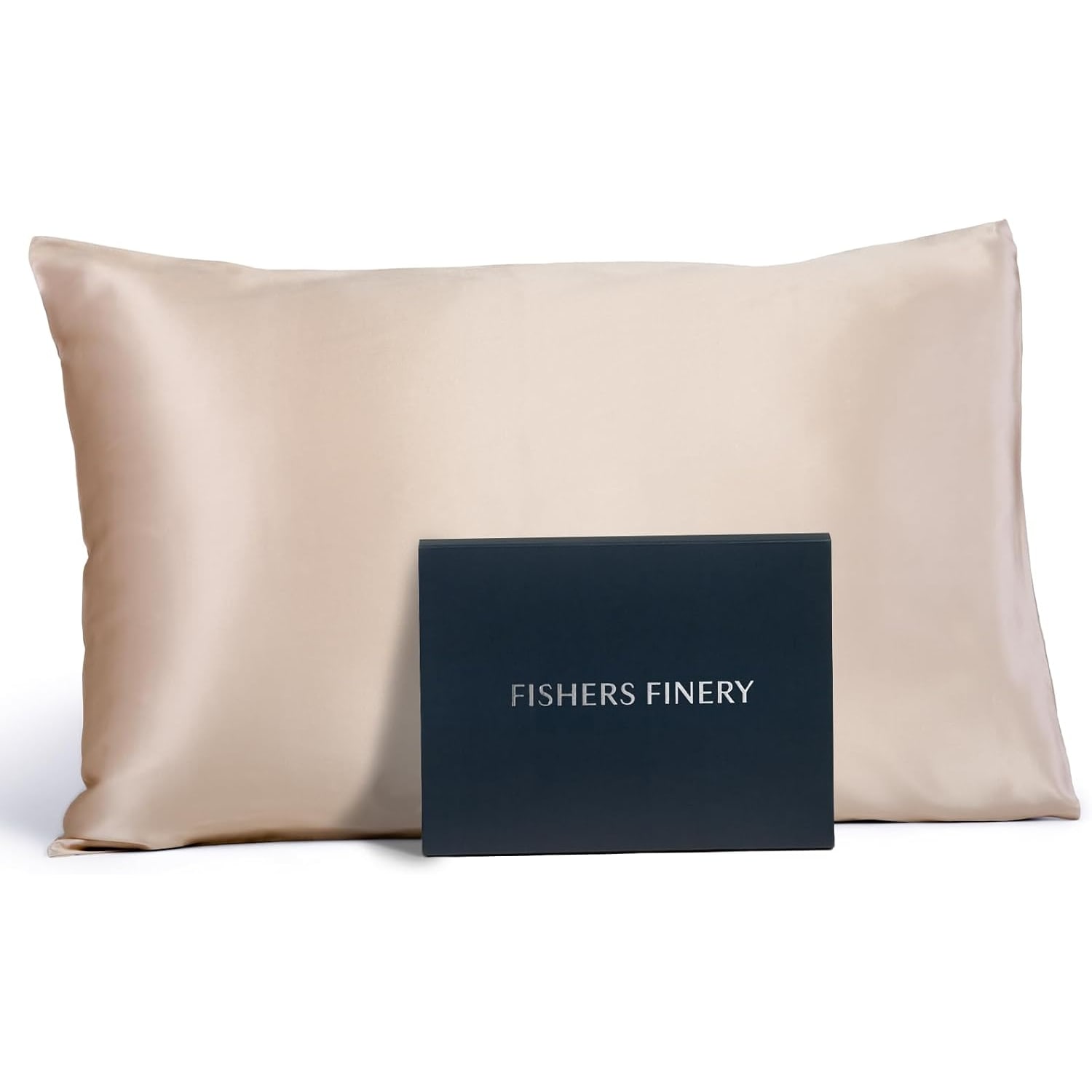
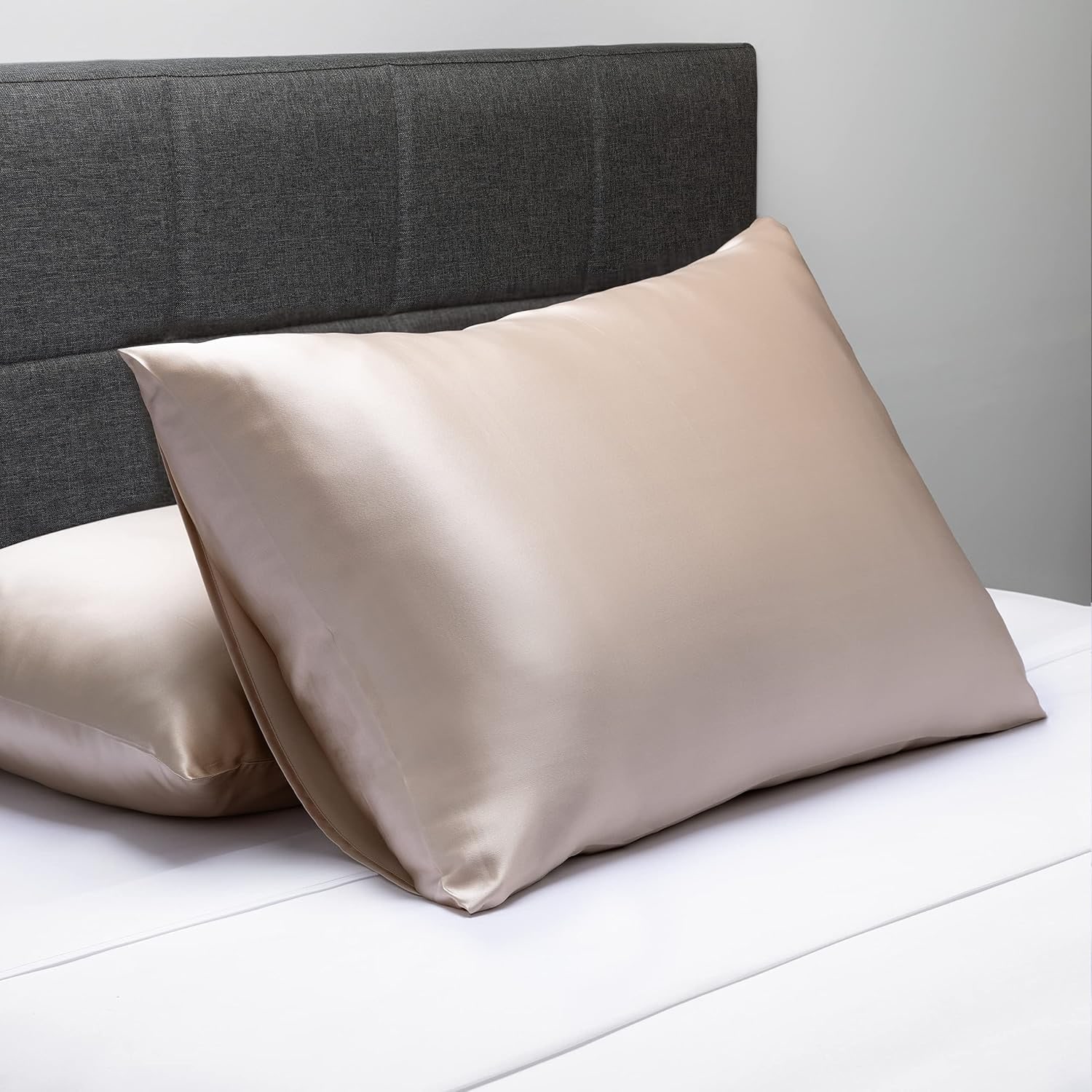
Taupe makes it an easy fit for a neutral room. It is a greyish brown that sits quietly next to white, cream, charcoal, stone or oatmeal. It does not read as yellow the way some beiges do, and it does not go cold the way pure grey can. If you are after the best neutral bedroom bedding and you do not want to redo the whole room, a single neutral case is a low-risk place to begin.
It also makes a decent gift. There is no size to guess, no colour that clashes, and it is the sort of item most people would enjoy but not buy for themselves.
Looking after it
Silk is not fragile, but it does not like three things. Heat, harsh chemicals, and rough handling.
Dry cleaning and hand washing are the gentlest routes. For hand washing, use cool water and a mild detergent made for delicates. Swirl it rather than scrubbing it, rinse until the water runs clear, then press the water out between two towels. Never wring it.
Machine washing works on a gentle cycle. Put the case inside a mesh laundry bag first, keep the water cool, and do not wash it with jeans, zips or towels. Those are what cause snags.
Skip the fabric softener entirely. It leaves a residue that dulls the surface and takes away the thing you paid for. Bleach will damage the fibre outright.
Dry it flat, out of direct sun, because strong sunlight fades colour and weakens the fibre. If you want it crisp, iron on the lowest setting with a cloth between the iron and the silk, ideally while it is slightly damp. Most of the time it barely needs it.
Buying two and rotating them makes the whole routine simpler, and each case lasts longer because neither one is in constant use.
The short version
This is a queen size pillowcase in 100% mulberry silk at 25 momme, silk on both faces, 700 thread count, in a solid taupe. It closes with an offset envelope flap, so there is no zip or buttons. It measures 76.2 x 50.8 cm (30 x 20 inches) and weighs about 0.11 kg.
The two things to check before you buy are the measurement of your own pillow and whether you are happy with the care routine. Get those right and it is a simple, quiet upgrade to a bed you already own. The maker does not state the country of origin.