

The complete guide
How to Choose a 25 Momme Silk Pillowcase
The problem with most pillowcases
You spend about a third of your life with your face pressed into one piece of fabric, and most of us never think about it. A standard cotton pillowcase has a visible weave. Run your finger across it slowly and you can feel the little ridges where the threads cross. That texture is fine for a tablecloth. Against a cheek for eight hours, and against hair that moves every time you turn over, it drags.
That dragging is what sends people looking at silk in the first place. Silk filaments are long and smooth, so the finished cloth has far less surface texture than a cotton weave of the same price. Hair and skin slide over it rather than catching. You notice it most in the morning, when your hair has not been pushed into the same four creases all night.
The catch is that silk pillowcases vary enormously, and the marketing rarely makes it clear why one costs R600 and another costs three times that. The number that actually matters is momme.
What momme actually tells you
Momme is a weight measure, not a thread count. It tells you how much silk is in a given area of cloth. Thread count, which gets quoted constantly for cotton, is close to meaningless for silk because the filaments are so fine that the numbers stop being comparable.
Most silk pillowcases on the market sit at 19 momme. That is a perfectly serviceable weight, light and glossy, and it is what you will find at the lower end of the price range. This pillowcase is 25 momme, which puts considerably more silk fibre into the same square metre.
What does that feel like in practice? Heavier. The cloth has more body and drapes rather than floats. It holds its shape a little better when you pick it up. It still has the slip and the sheen you expect from silk, it just does not feel thin. If you have handled a 19 momme case and found it flimsier than you hoped, 25 momme is the step up you were after.
The denser weave is also generally more forgiving in the wash, simply because there is more fibre there. That is not a promise of immortality. Silk is a natural protein fibre and it will always need gentler handling than a poly-cotton blend.
Silk on both faces matters more than you think
Here is a detail worth checking on any silk pillowcase you consider. Some are only silk on one side. The back is cotton or a synthetic, which keeps the price down and means the manufacturer only has to buy half as much silk.
It sounds like a minor thing until you make the bed in a hurry and put the case on the wrong way up. Then you are sleeping on cotton and wondering why you bothered.
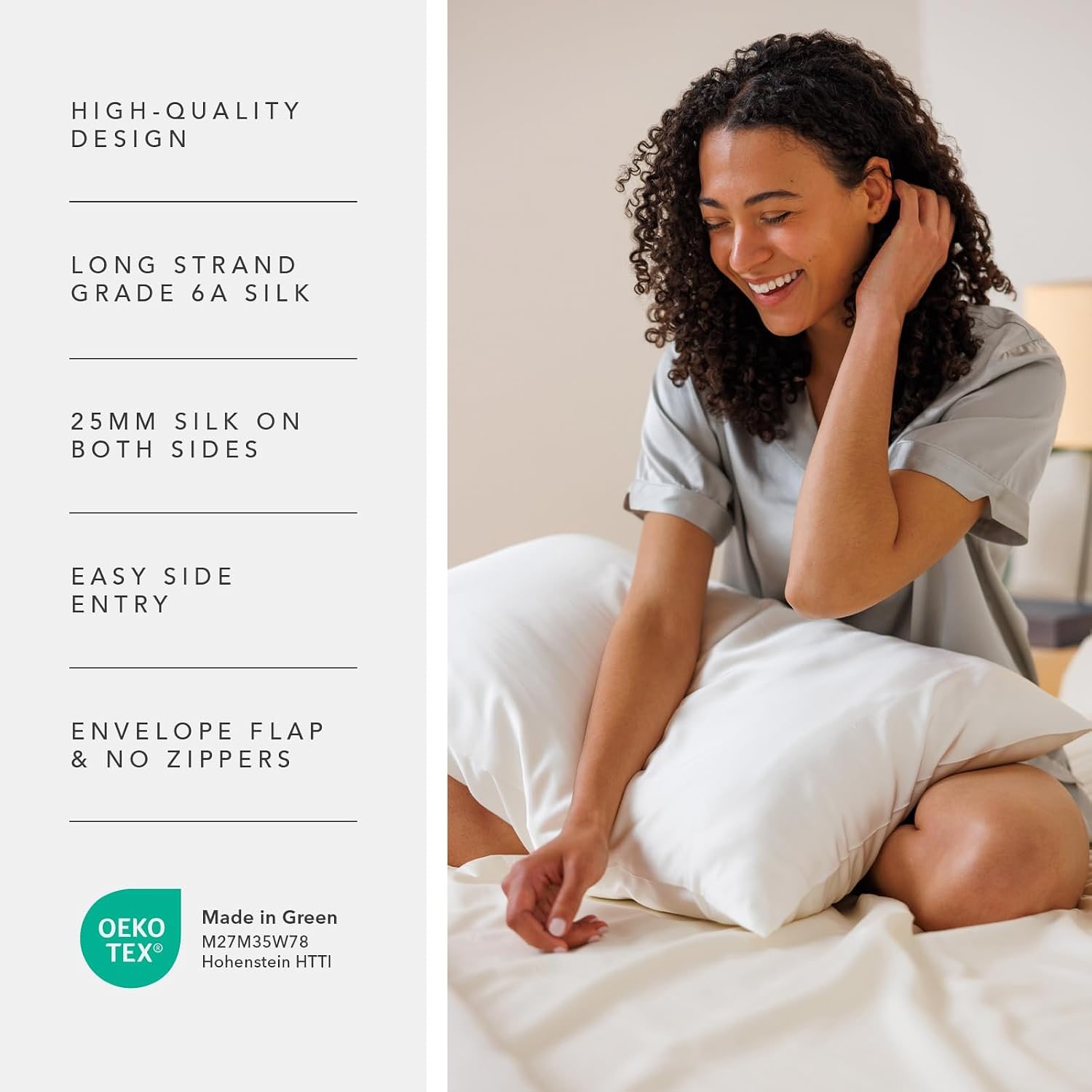
This one is mulberry silk on the front and the back. There is no right side to find at eleven at night. You put the pillow in, drop it on the bed, and whichever face ends up pointing at you is the one you wanted.
The closure, and why side openings are better
Most cheap pillowcases have an open end. The pillow goes in, and over the course of a few nights it slowly works its way back out until half of it is bare by morning.
This case uses an envelope closure instead. A flap of fabric folds over the opening and the weight of the pillow holds it shut. No zip to catch on hair, no buttons to press into your ear.
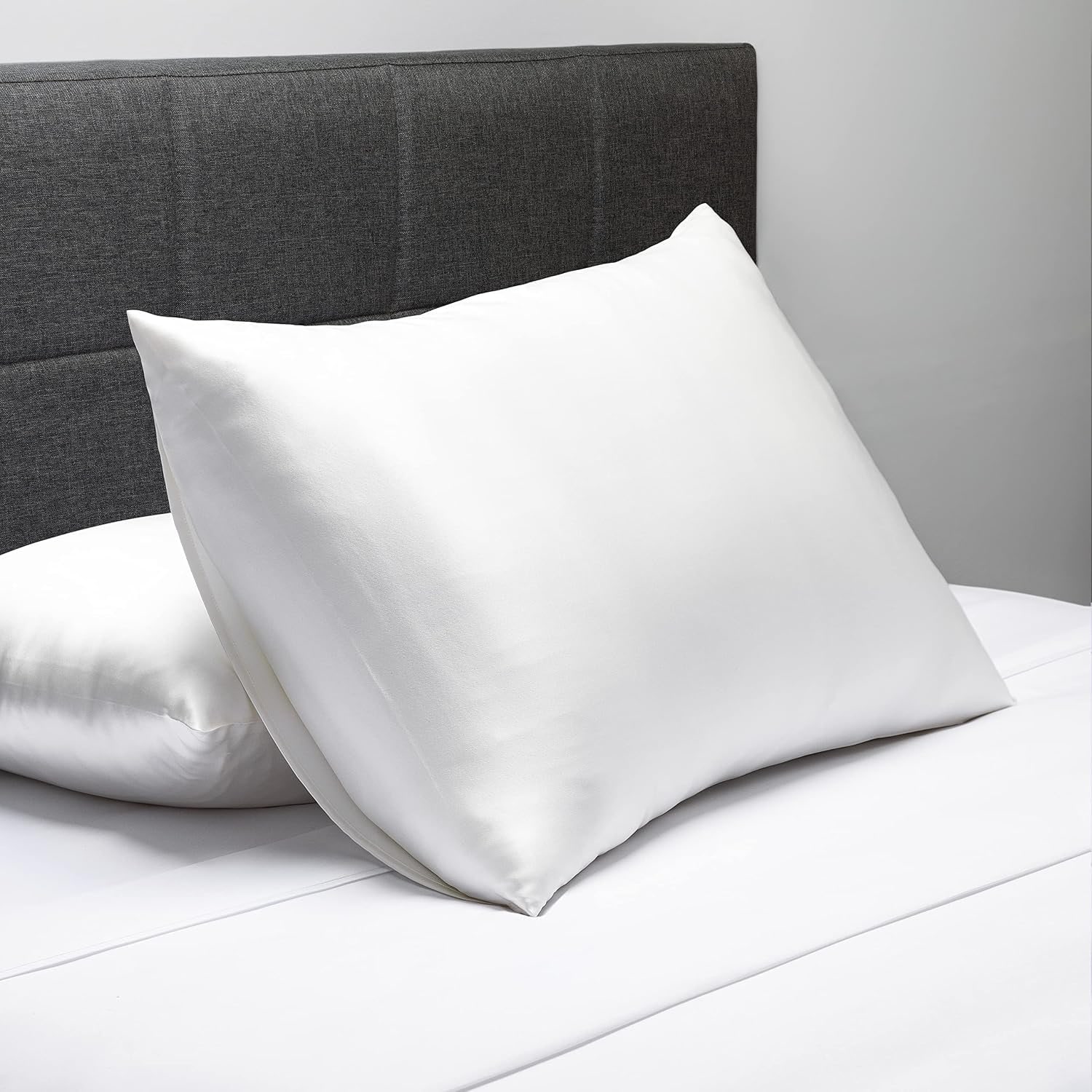
The opening also runs along the side rather than the end, and it is set slightly off centre. That offset does two useful things. It moves the overlapping layers away from the middle of the pillow, where your head actually sits, and it leaves the front face completely clean. So when you prop the pillow up against the headboard in the morning, it reads as a finished sham rather than a pillowcase with a gaping end.
Natural white, and what undyed looks like
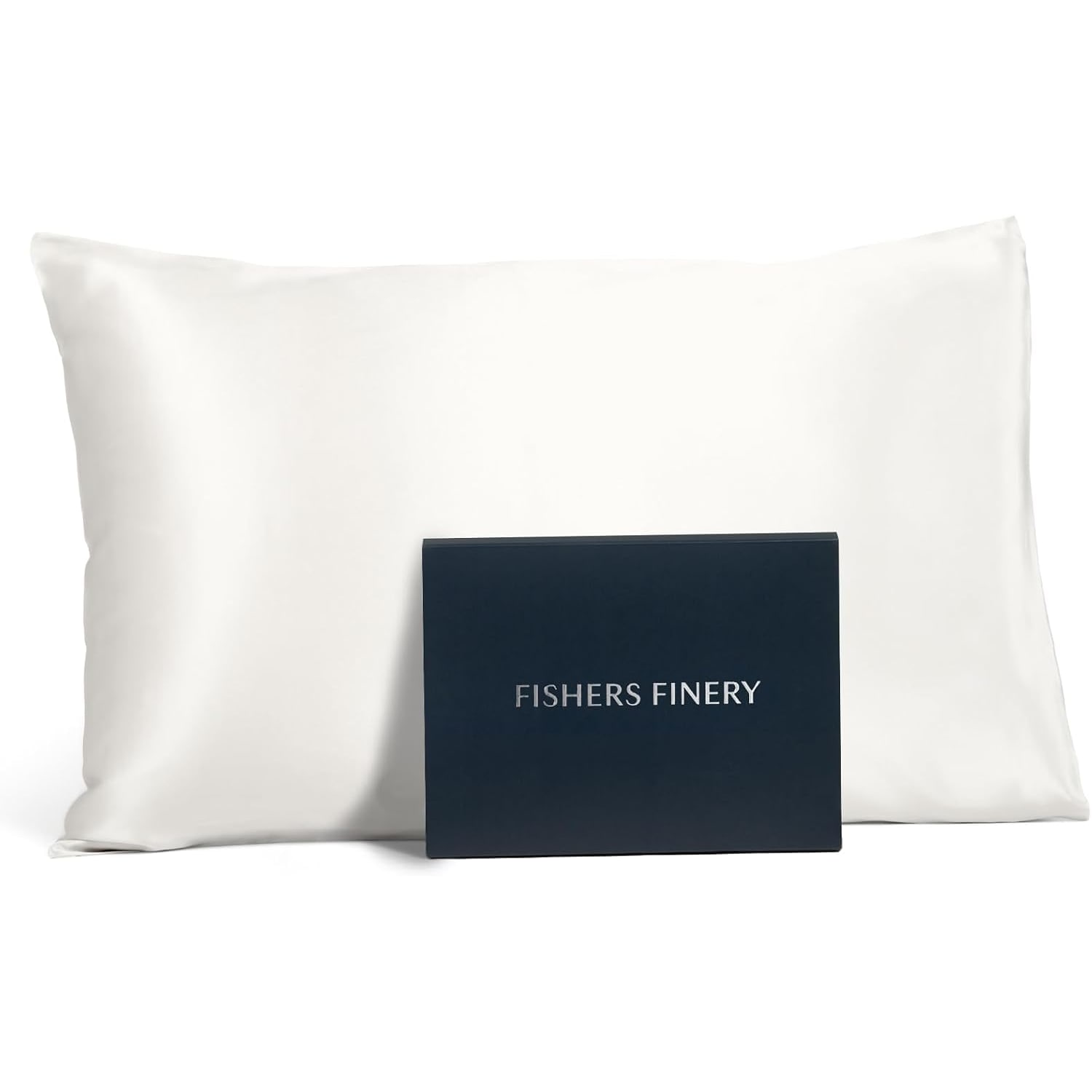
The colour here is natural white, which means the silk has not been dyed. No colour has been added to the fibre at all.
Expect a soft, warm off-white rather than a bright bleached white. Silk has its own quiet sheen, so the shade shifts slightly depending on the angle of the light and the time of day. Under a bedside lamp it reads warmer. In morning light it looks closer to a clean ivory.
In a bedroom, that is easy to live with. It sits comfortably beside white cotton sheets without looking dirty, and it blends well with linen, stone, grey and cream. If your bedding is bright optical white, you will see a difference, but most people find the softer tone more restful anyway.
Getting the size right
This is the part that trips people up, so read it carefully.
The flat finished size is 71,1 x 50,8 cm, which is 28" x 20" in the American system. That is an American queen cut.
A standard South African pillow is usually somewhere around 45 x 70 cm. So this case will sit generously on a typical local pillow rather than hugging it tightly. Plenty of people like that, because the extra fabric gives the pillow a softer, more relaxed look on the bed and the envelope flap still holds everything in place.
If you own a larger American-style queen pillow, it will be a closer fit.
Either way, measure before you order. Lay the pillow flat on the bed, do not squash it, and run a tape measure edge to edge both ways. Compare those two numbers to 71,1 x 50,8 cm. Five minutes with a tape measure saves a return.
Looking after it
Silk is not difficult, it just does not like heat, bleach or rough handling.
Dry cleaning is the safest route if you would rather not think about it. Hand washing in cool water with a gentle detergent is just as good and costs nothing. Swish it through, rinse well, and press the water out between your palms rather than wringing it.
Machine washing is allowed on a gentle cycle, and it is worth putting the case inside a mesh laundry bag so it does not get flung around with zips and buttons. Keep the water cool.
Then lay it flat to dry. Not in a tumble dryer, and not pegged out in full sun, which will dull the surface over time. A clean towel on a drying rack indoors does the job.
Skip the fabric softener entirely. It leaves a film on the fibre that takes away the exact slip you bought the pillowcase for. Skip bleach for the same reason you would not bleach a silk shirt.
If creases bother you, press on the lowest setting on the reverse side. Honestly, most of them fall out after a night of use.
Who this suits
Anyone with long hair tends to feel the difference first, because the lower friction surface means less catching and tangling overnight. People who find cotton too warm often get on well with silk too, since it does not hold heat the way a thick brushed weave does.
It also suits anyone who has tried a thin silk pillowcase and been underwhelmed. The weight is the whole point here. A 25 momme cloth has presence in a way that a lightweight one does not.
If you are buying as a gift, natural white is the safest colour you can choose. It goes with everything, and nobody has to pretend to like it.
The short version
This is a queen pillowcase in 100% mulberry silk, woven at 25 momme, with silk on both faces and no dye in the fibre. The flat size is 71,1 x 50,8 cm (28" x 20"), the closure is an offset envelope flap on the side, and it can be used as a sham as easily as a pillowcase.
Check your pillow against that size before ordering. Wash it cool and lay it flat to dry. Beyond that there is not much to it, which is rather the point.