
The complete guide
The Square Silk Hair Scarf Buyer's Guide
The problem with everything else you have tied around your head
Most hair coverings are a compromise. A cotton bandana is cheap and washable, but it grips hair and leaves it looking rough by the morning. A wide elastic headband holds well and then leaves a dent. A big shawl-style scarf is lovely but there is too much of it, so you end up with a bulky knot and fabric flapping into your coffee. Then there are the single-purpose things, the shower cap, the bonnet, the hair tie, each of which does one job and then sits in a drawer.
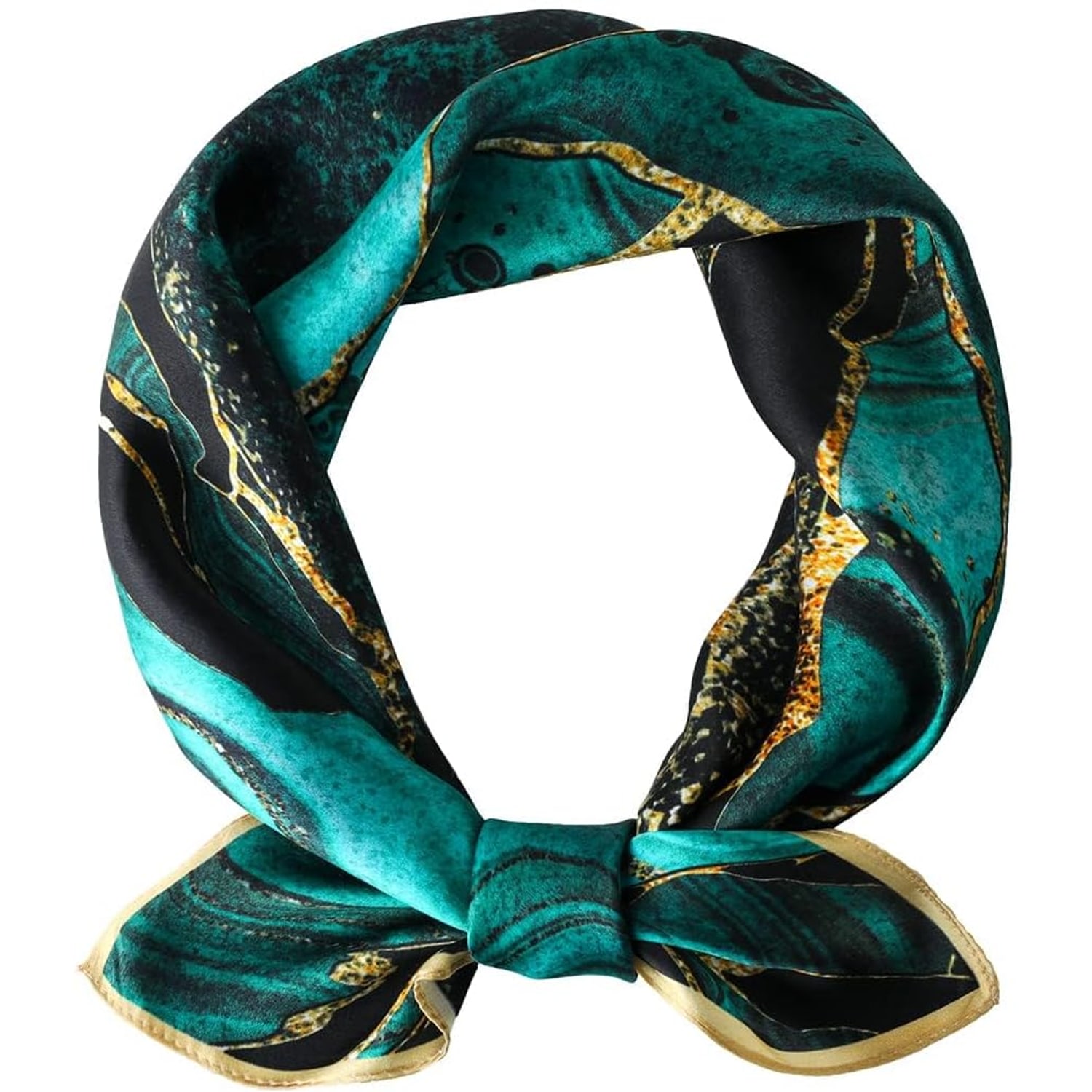
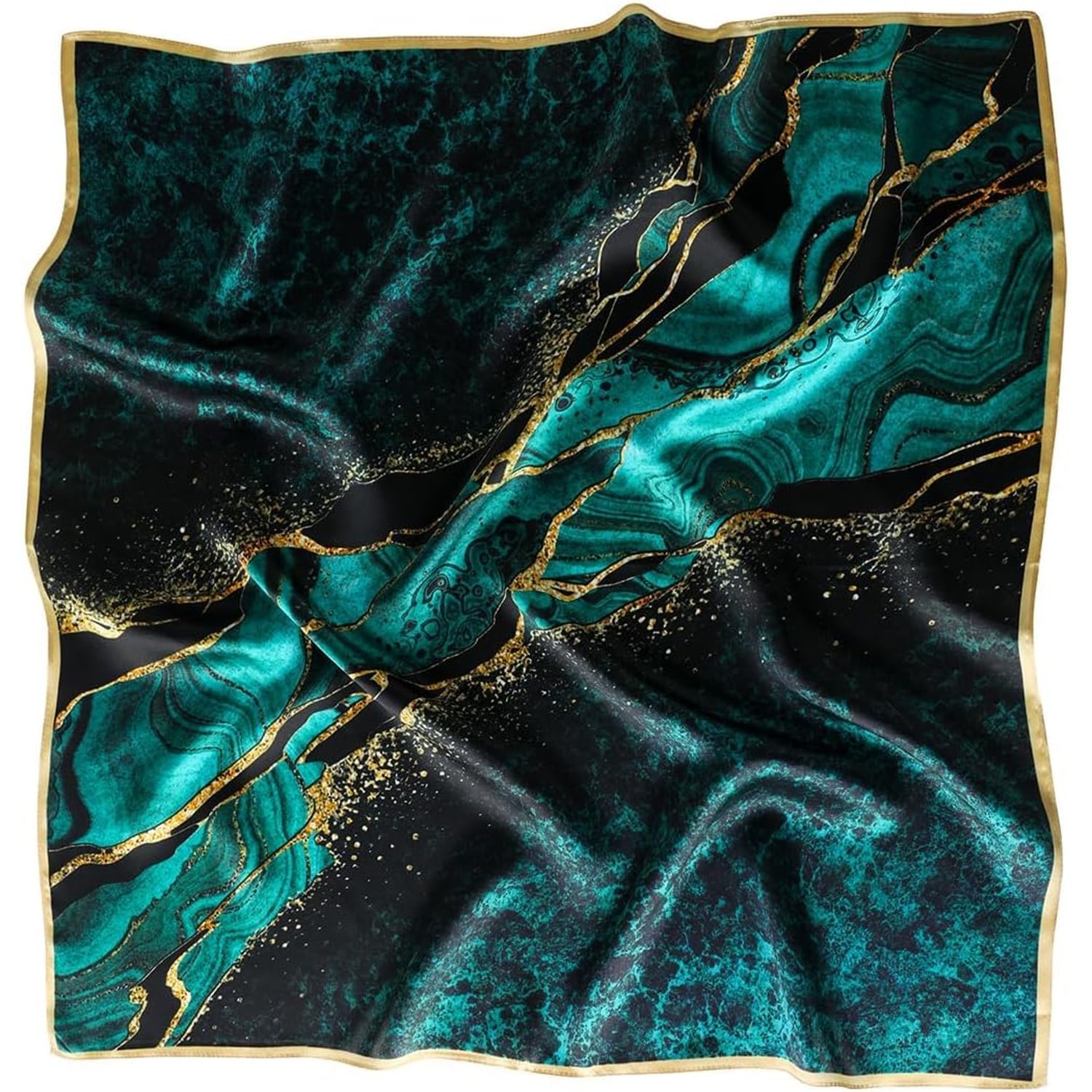
A 68 x 68 cm (about 27 x 27 in) square of mulberry silk is the opposite of a single-purpose thing. It is the size that covers a full head, folds into a band, knots at the neck, and still fits in a jacket pocket. That is why a square silk scarf has stayed in fashion for about a century while most other hair accessories came and went.
What silk actually does for hair
The useful property here is friction, nothing more complicated than that. Silk filaments are long and smooth, so hair strands slide across the surface rather than catching on it. Cotton is spun from short, textured fibres and is absorbent, so it grips. You can feel the difference just by running a strand of hair across each fabric.
That matters most in two situations. The first is overnight, when your head turns against a surface for hours. A silk head covering means the hair moves over the fabric rather than being dragged by it. The second is tying and untying, which most of us do several times a day. Less grip means less tugging at the moment you pull the knot loose.
What silk does not do is magic. It is a smooth fabric, and smooth fabrics are kinder to hair than rough ones. That is the honest version, and it is enough of a reason on its own.
Why the square shape matters
Scarves come as long rectangles or as squares, and they behave differently. A rectangle wants to be wound. A square wants to be folded.
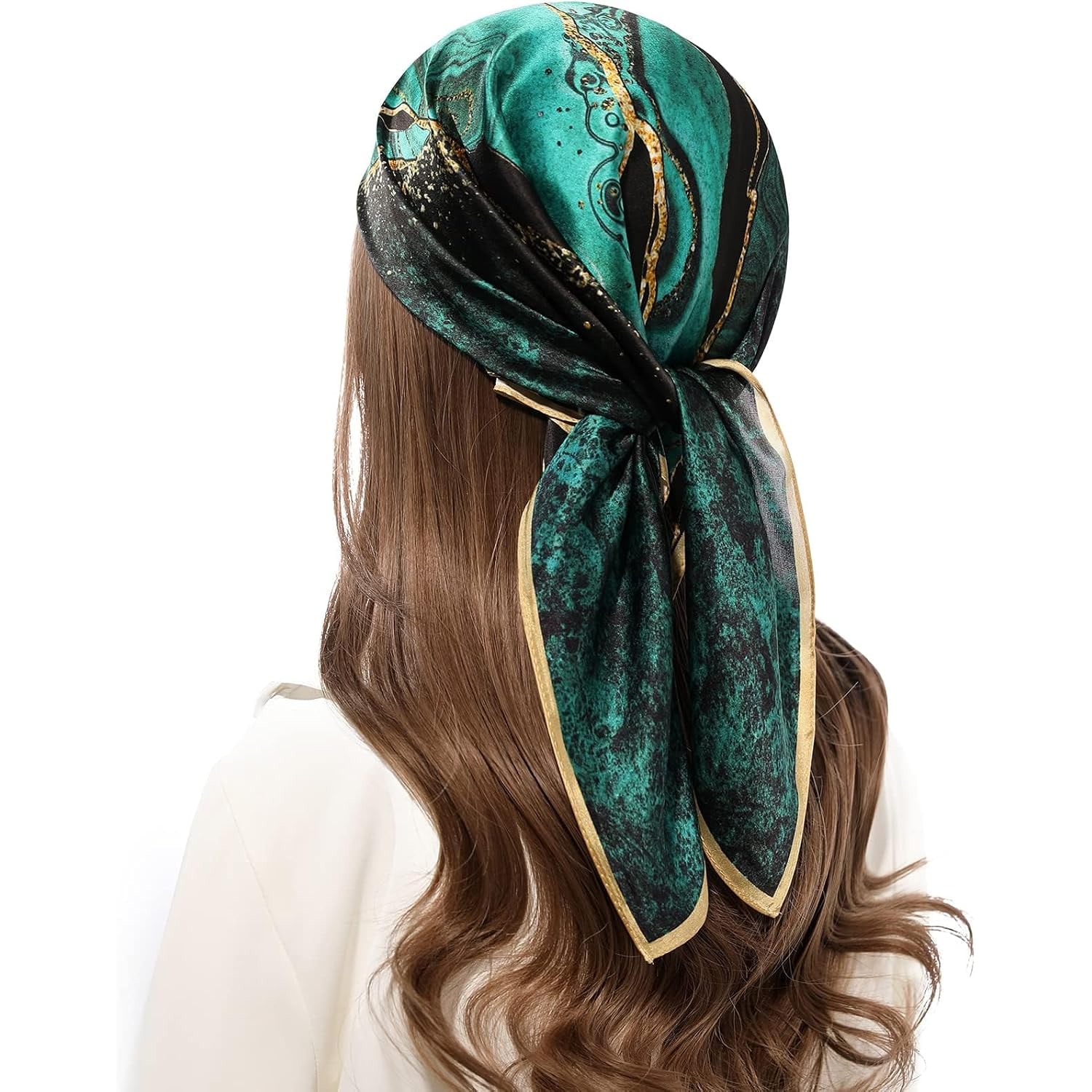
Fold a square corner to corner and you have a triangle with a long edge of roughly 96 cm. That is the classic headscarf fold, and 68 cm is right in the sweet spot. Smaller squares, around 50 cm, cover the crown but run out of tail for a proper knot. Larger squares, 90 cm and up, give you so much fabric that the knot turns into a lump and the points hang past your shoulders.
From the same square you can also make a wide band by folding the triangle down in strips, or a narrow tie by rolling it tight. One piece of fabric, five or six shapes. That is what people mean when they call a 68 cm square the most useful size to own.
Who it suits
If you wear protective styles, you probably already know why a silk wrap is on the list. Braids, twists and sets hold their shape better under something smooth and light than under a thick knit.
If you have curls, a wide fold over a loose pineapple at night keeps the shape without crushing it. The best silk scarf for curly hair is usually the one you tie loosely, because compression is the enemy of curl pattern, not the fabric.
If your hair is fine and straight, this is useful on windy days, on a bike, and for second-day hair you do not feel like washing. A silk hair wrap over unwashed hair at the airport is a very old trick and it still works.
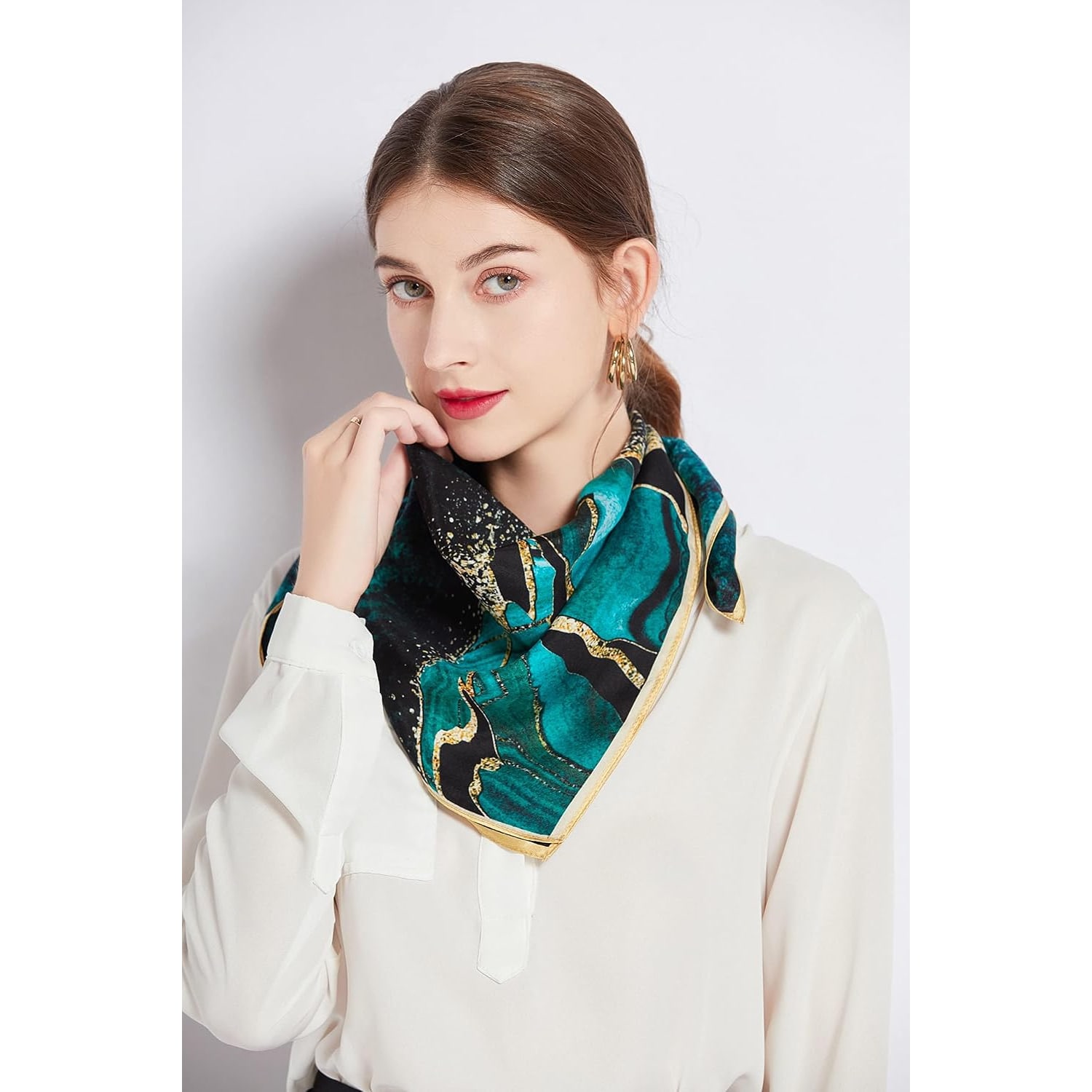
And if you simply like scarves, the 68 cm square is the one that works at the neck, in the hair and on a bag handle without looking like it was borrowed from another outfit.
Judging quality in a silk square
There are a few things worth knowing before you buy any silk accessory.
Fibre. Mulberry silk is the long-filament silk used for fine accessories. That is what this scarf is made from. Short-fibre or blended silks feel fuzzier and tend not to hold that smooth surface as long.
Weight. Silk weight is measured in momme. Lighter fabrics feel fluid and pack smaller, heavier ones drape with more body and feel more substantial in the hand. The maker does not state a momme weight here, but the fabric is described as light and breathable, which is what you want for a scarf you plan to wear in summer or sleep in.
Hem. Hand-rolled hems give a slightly rounded, soft edge. Machine hems sit flatter. The maker does not state which finish is used on this scarf.
Size. Measure before you commit. Hold a tape measure corner to corner across your head and see what 68 cm gives you with your hair up versus down.
How to tie it, in plain terms
The back knot. Fold corner to corner, lay the long edge across your hairline, take the two points behind your head and knot them under your hair at the nape. Tuck the remaining point up under the knot. Simple, holds well, good for sleeping.
The turban. Same start, but knot at the top or front, then twist the two tails together and wind them around the base of the knot. Tuck the ends in. More secure if you move a lot.
The band. Fold the triangle into a strip about 8 cm wide, lay it along your hairline and tie underneath at the back. Good for keeping a fringe off your face without a dent.
The ponytail wrap. Roll it narrow, wrap it twice around the base of a ponytail or bun, and tie a bow. Softer on the roots than an elastic.
At the throat. Roll it narrow, loop it once, knot it to the side. Done.
Looking after it
Silk is not fragile, but it does not like three things: heat, harsh detergent and being wrung out.
Wash by hand in cool water with a wash made for delicates. Swish it around instead of scrubbing, then rinse until the water runs clear. Lay it flat on a towel, roll the towel up and press to squeeze out the water. Do not twist it.
Dry it flat or hang it in the shade with air moving around it. Keep it away from direct sun, heaters and the tumble dryer. It is a light fabric and it dries fast.
If it needs pressing, use the lowest silk setting on the iron, work on the reverse side, and do it while the scarf is still a touch damp. A thin cotton cloth between the iron and the silk is cheap insurance.
Keep hairspray, perfume and anything alcohol-based off the fabric. Spray first, let it dry, then tie the scarf on. Store it rolled or loosely folded rather than hung on a hook, which pulls the shape out over time.
Buying it in South Africa
Prices here are in rand. Delivery is tracked, goes to every province, and takes 10 to 20 working days. It is free on orders over R1800 and R250 on anything under that. Payment is by card.
If it turns out not to suit you, you have 14 days from delivery to cancel for any reason, as long as it is unused and unwashed.
The short version
A 68 x 68 cm mulberry silk square is the most flexible hair accessory you can own. It covers a full head, folds into a band, ties at the neck, and weighs almost nothing. Silk is smooth, so hair moves over it with less friction than it does over cotton, which is the real reason people wrap their hair in it overnight.
Hand wash it in cool water, dry it in the shade, iron it cool if you must. Do that and it will still be in your drawer years from now. Measure before you order if size matters to you, and ask us if you are not sure.