
The complete guide
How to Choose a Silk Sleep Cap That Actually Stays On
The problem with waking up to messy hair
You go to bed with your hair neat. You wake up with it pulled sideways, frizzed at the crown, and flattened on one side. Nothing dramatic happened overnight. You just moved, and every time you moved, your hair dragged across the pillow.
Most pillowcases are cotton or a cotton blend. Cotton feels soft to your hand, but under a microscope the weave is full of tiny hooks and loops that catch on hair. Multiply that by seven or eight hours and a few dozen turns, and you get the morning result. People with long hair notice it most at the ends. People with curls notice it as flattened, frizzy sections. People with shorter, finer hair notice it as static and strands stuck in odd directions.
A silk sleep cap deals with the problem at the source. Instead of trying to control how you sleep, it changes what your hair touches. Silk has a much smoother surface, so hair slides rather than snagging. The cap also keeps everything gathered in one place, which stops long hair from fanning out and tangling against itself.
What 19 momme actually tells you
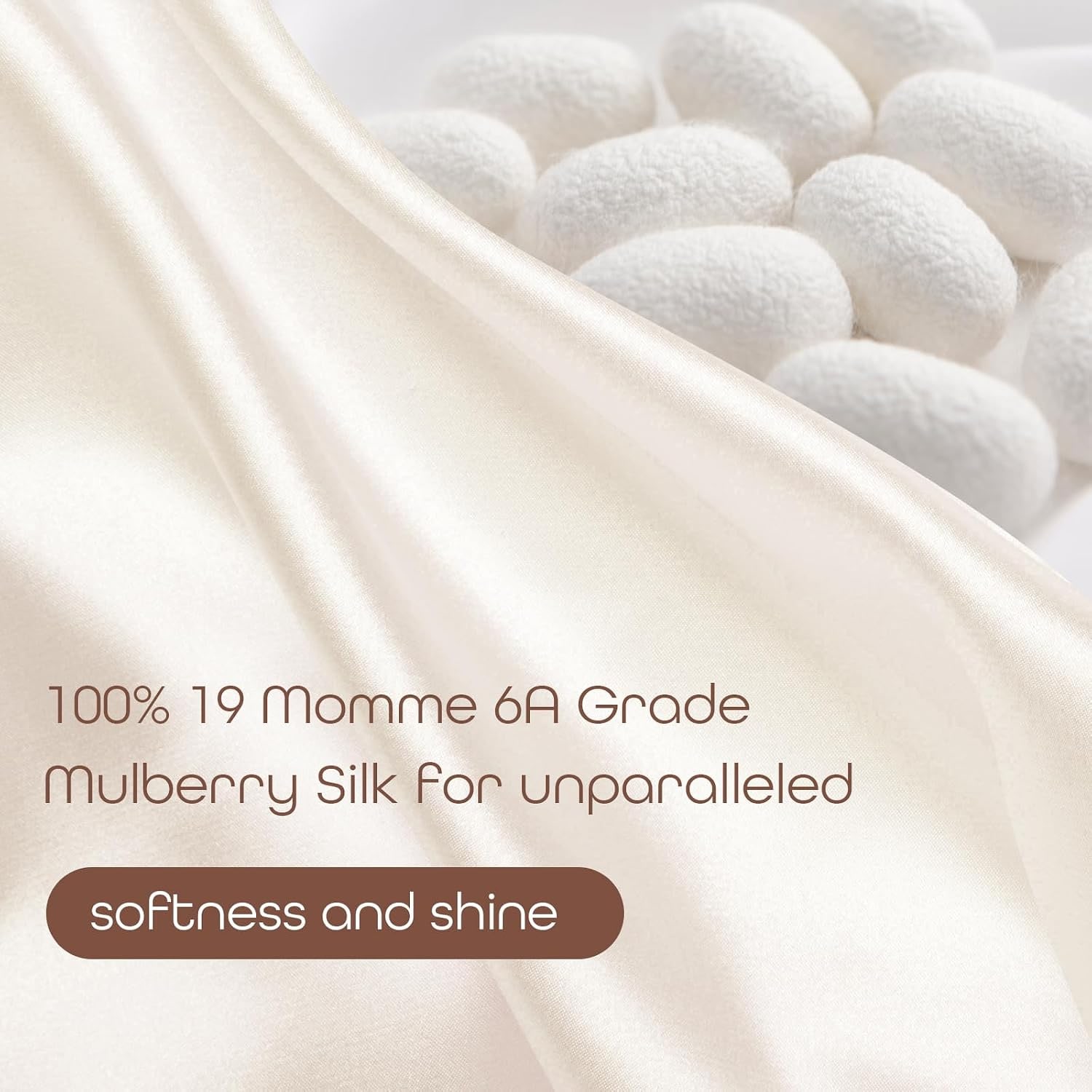
Momme is the number worth checking on any silk item. It measures the weight of the fabric, and it is the quickest way to judge quality without handling it in person.
Silk sold for sleepwear usually sits somewhere between 12 and 25 momme. Below about 16, the fabric starts to feel thin and papery, and it wears out quickly at the seams. Above about 22, you are paying noticeably more for weight you may not want against your skin on a warm night.
Nineteen momme sits in the middle and is the weight most people settle on for both pillowcases and bonnets. It has enough body to drape instead of clinging, enough strength to survive regular washing, and it still feels light on your head. If you have ever handled a silk pillowcase that felt substantial but not heavy, that was probably 19 momme.
The other number here is the grade, 6A, which refers to the quality of the raw silk filament before it is woven. It describes long, even fibres. Taken together, 6A mulberry silk at 19 momme is the combination you would expect on a decent silk sleep cap rather than a cheap one.
Why the second layer matters more than it sounds
Plenty of bonnets are a single panel of fabric with a band sewn on. They work, up to a point. The trouble shows up after a couple of months of wear and washing, when the fabric has been stretched over the same shape hundreds of times and starts to go slack.
This cap is double-layered, meaning two panels of silk rather than one. Two things come from that. The first is strength, because both layers share the stretching load. The second is shape. A single thin layer tends to collapse onto your hair, while two layers hold a bit of structure and leave room underneath. For anyone with volume to protect, curls, a blow-dry, or hair set in rollers, that extra room is the difference between a cap that preserves the shape and one that squashes it.
There is a comfort benefit as well. Silk on the inside, silk on the outside. No cheaper lining fabric sneaking in where you cannot see it.
The band is where most bonnets fail
If you have ever given up on a sleep cap, there is a good chance the band was the reason. Exposed elastic does two unpleasant things. It presses a line into your forehead that takes an hour to fade, and it grabs the fine baby hairs along your hairline, which is exactly the hair you were trying to protect.
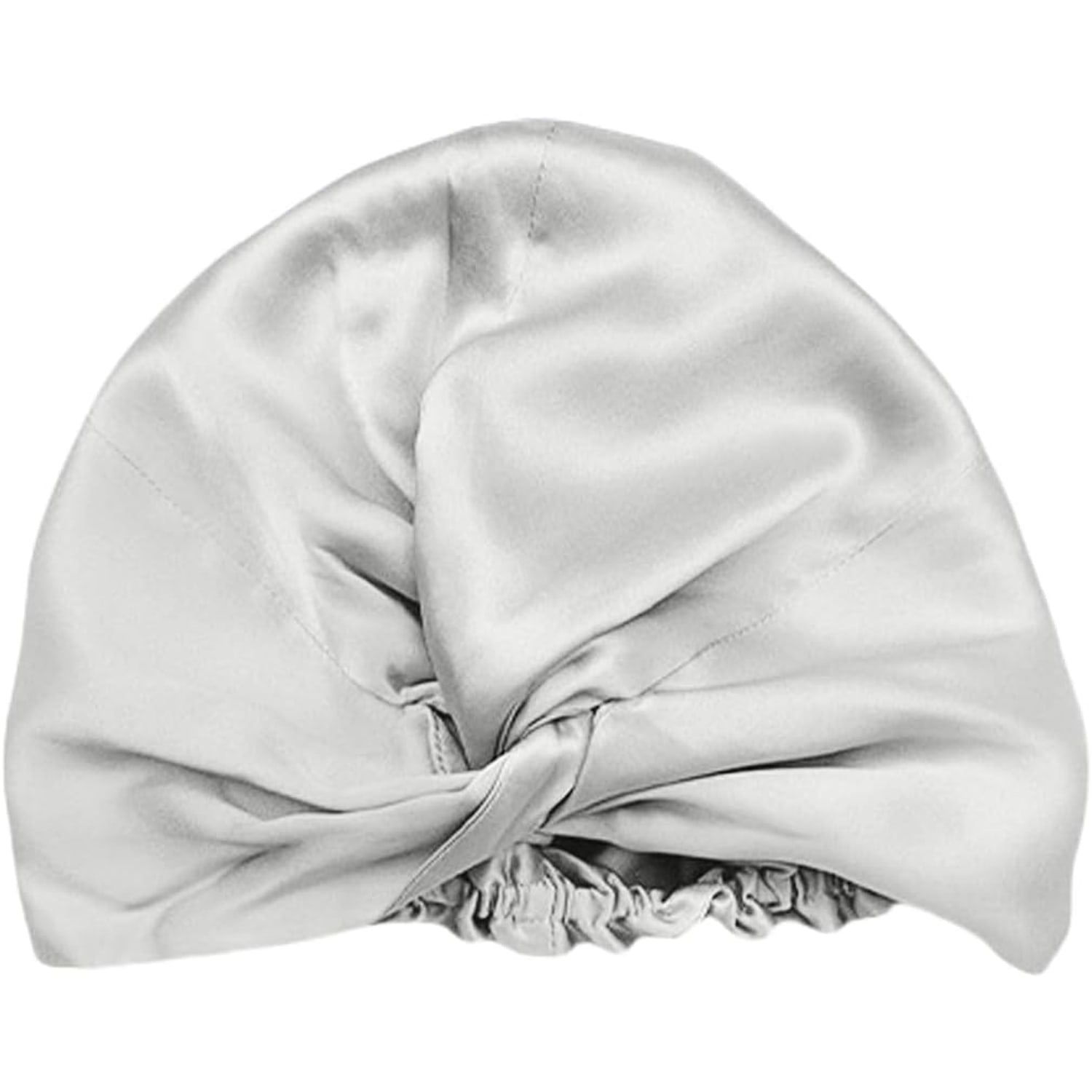
The band on this cap runs along the back edge and is covered in silk. That means the surface sitting against your skin is the same smooth fibre as the rest of the cap. It stretches to suit most adult head sizes and recovers overnight rather than going baggy.
One tip that makes a real difference: position the band at the nape, just below the curve of your skull, instead of high across the back of your head. Sitting low, it grips the natural shape of your head and stays put. Sitting high, it slides up with every turn and ends up on the pillow by morning.
Working out whether one size will suit you
One size does not mean every size, and it is fair to ask. This cap is cut at roughly 25.4 x 20.3 cm (10 x 8 in) flat, with a stretchy band doing the fitting work.
In practice, that handles most adult heads comfortably. Where to pause is if you have a lot of bulk to tuck in. Thick, long locs, a full set of long braids, or very dense natural hair can need a jumbo bonnet with more volume than a standard one-size cut offers. Short to mid-length hair, fine hair, and most curly hair fits without issue.
If you are unsure, measure around your head just above your ears with a soft tape. Then pile your hair the way you would at bedtime and see how much height it adds. That second number is usually the one that decides it.
Getting the most out of it night to night
A few habits make a silk bonnet work better.
Tuck the ends in. The ends of long hair take the heaviest friction, so leaving them trailing out of the back defeats half the purpose. Gather hair loosely before you pull the cap on, and avoid a tight elastic underneath, which just moves the stress to a different point.
Do not fight your volume. If you have curls, lift them up toward the crown rather than smoothing them down. The double layer gives you headroom. Use it.
Keep products in mind. Heavy oils and creams will transfer onto the silk, which is fine, but it means washing more often. Thin layers sink in better overnight anyway.
Looking after the silk
Silk is less fragile than its reputation suggests, but it does have preferences. Cool water, not warm. A mild detergent made for delicates, not standard laundry powder with brighteners. No bleach, ever.
Hand washing is gentlest. If you would rather machine wash, put the cap inside a mesh laundry bag and use the gentle cycle. The bag matters more than people expect, because it stops the band from catching on other items in the drum.
Do not wring it. Press the water out between a clean towel instead, reshape the cap, and lay it flat to dry somewhere out of direct sun. Skip the tumble dryer entirely. Heat is hard on silk and harder on elastic, which is the one part of a bonnet with a limited life.
If you want to press it, use the lowest silk setting, work on the inside of the cap, and stay clear of the band.
A weekly wash suits most people. Rotate two caps if you want one always ready, and both will last longer for the rest they get between uses.
The short version
If your hair looks rough in the morning and you cannot pin the reason on anything else, friction against the pillow is the usual suspect. A silk sleep cap changes the surface your hair spends the night against, and that is the whole idea.
This one is 100% mulberry silk at 19 momme in 6A grade, double-layered, with a silk-covered elastic band and a one-size adult cut in plain silver. It weighs about 57 grams, so it travels easily and feels like almost nothing once you have it on.
Choose it if you want a mid-weight silk cap that holds its shape and will not dig into your hairline. Look at a larger or jumbo style instead if you have a lot of length and bulk to pack away. And measure first if you have any doubt. It takes a minute and saves a return.