
The complete guide
The Honest Buyer's Guide to King Silk Pillowcases
The problem nobody mentions until you have already bought
Most people buy a silk pillowcase on feel. They touch one in a shop, like the way it slips under their fingers, and order the first thing they find online in roughly the right colour. Then it arrives, and it is either thin enough to see through, or it hangs off the pillow by a hand's width, or it crumples into a ball by morning because the flap at the back will not hold.
None of those are silk's fault. They are size and weight problems, and both are easy to avoid once you know which two numbers to look at.
This guide covers what 22 momme actually means, why the king cut is longer than most South African pillows, and how to wash silk so it lasts years instead of months.
What momme is, and why 22 is the number to aim for
Momme is an old unit of silk weight. You will see it written as a number followed by the word, so 16 momme, 19 momme, 22 momme, 25 momme. The higher the number, the heavier and denser the silk.
Lightweight silk around 16 momme is cheap to make and feels lovely for about two minutes. It is thin, it tears at stress points, and it tends to come out of the wash looking tired. At the other end, 25 momme and up is wonderful but expensive, and heavier than most people want on a pillow.
Twenty-two momme is where most regular silk buyers end up. It has real weight in the hand. It drapes over the pillow rather than hovering above it. It survives hand washing without losing its shape. If you are comparing a 22 momme silk pillowcase against a cheaper option, the weight is almost always what separates them, more than the colour or the stitching.
Thread count is the second number, and here it is 600. For silk, thread count describes how tightly packed the weave is. A dense weave gives you an even surface with a quiet sheen instead of a glassy shine. The two numbers work together. A high thread count on lightweight silk still gives you a flimsy case.
Double-sided silk versus silk on one side only
This is the detail that catches people out most often. Plenty of pillowcases sold as silk are silk on one face and cotton or polyester on the other. The listing is technically truthful and the price is lower, but you have to put the case on the right way up, and you cannot flip the pillow in the night without moving from silk to cotton.
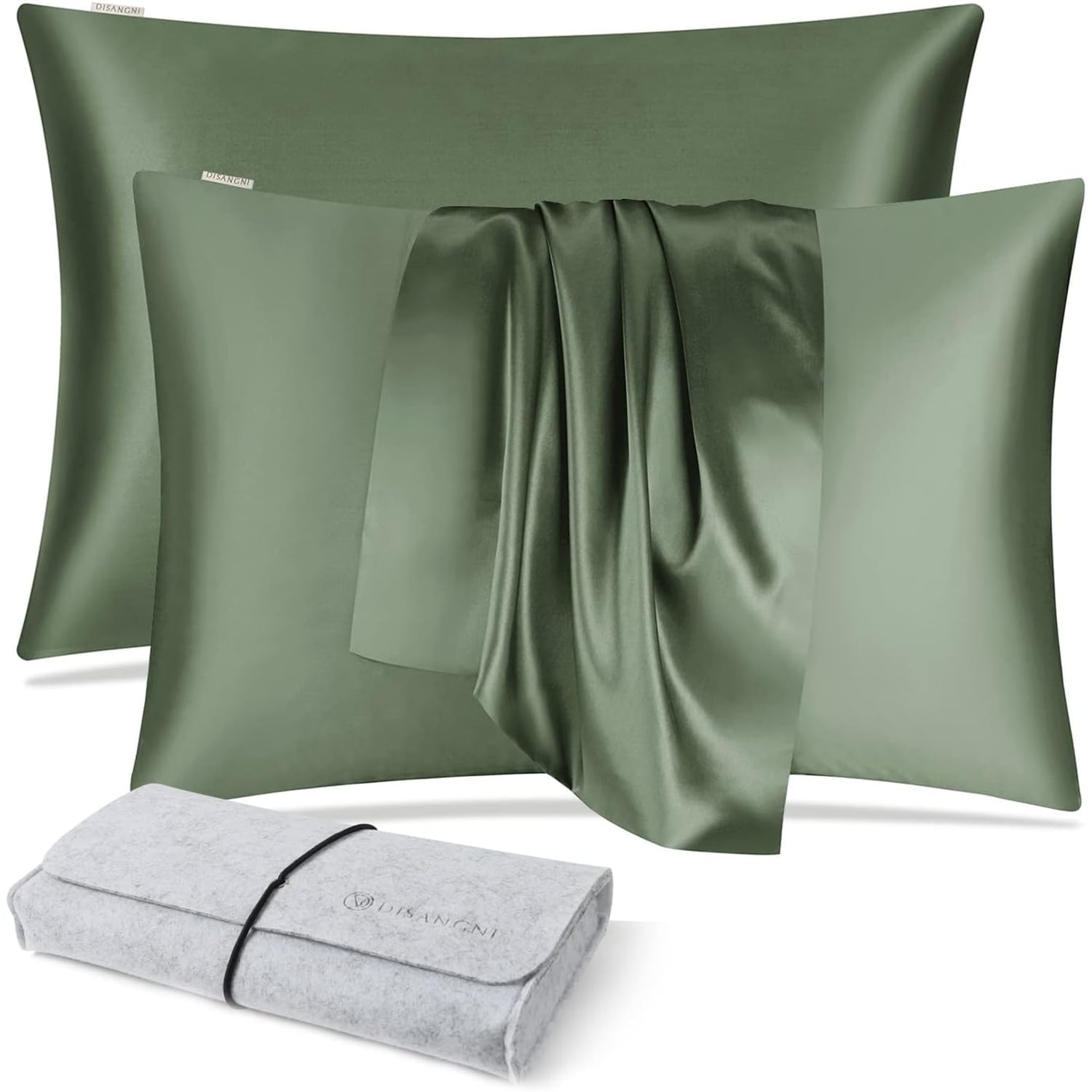
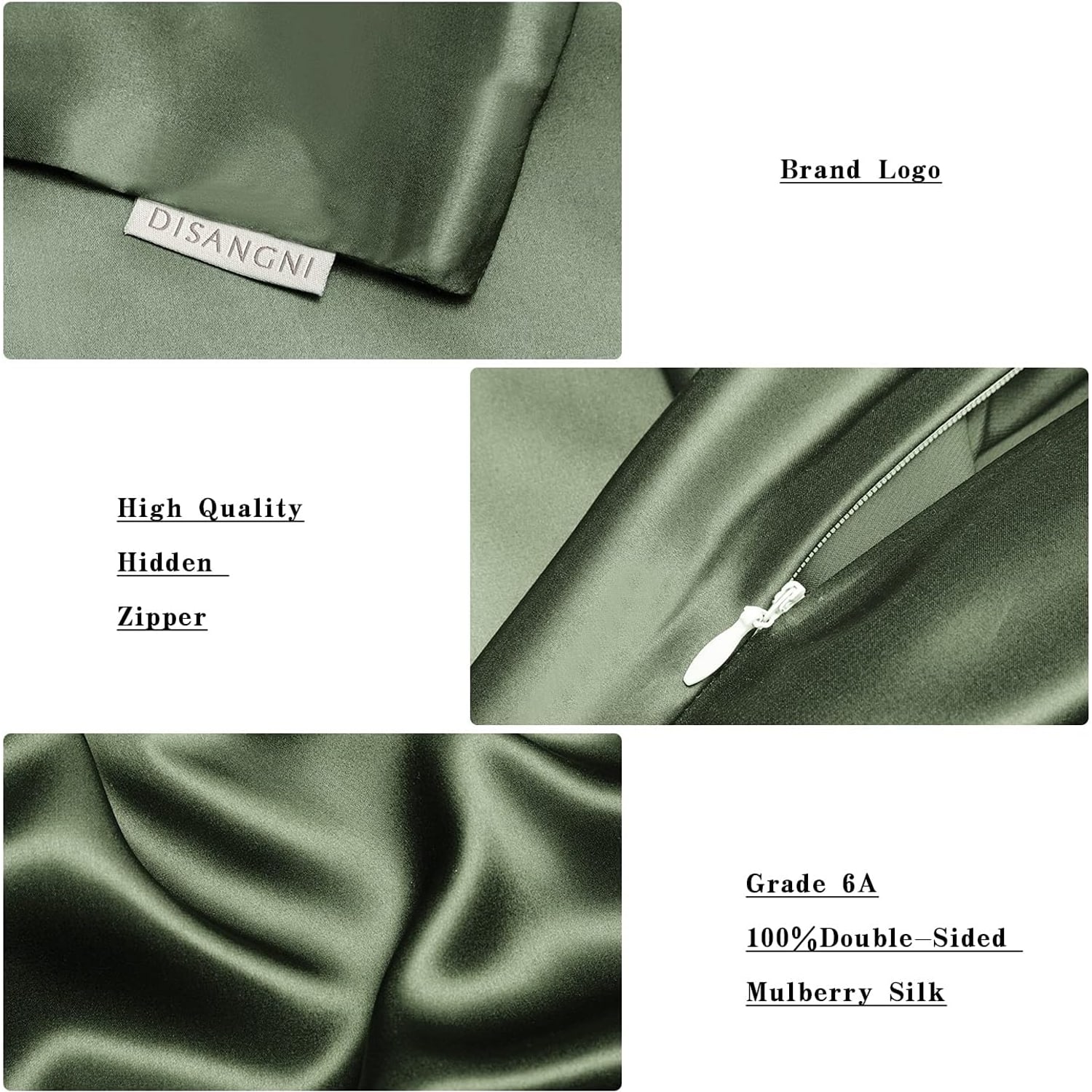
This pair is 100% mulberry silk on both faces. It makes life simpler. The case goes on either way, the pillow flips to a cool side that is still silk, and you are not paying attention to orientation at eleven at night.
Mulberry silk, specifically, is the silk from silkworms raised on mulberry leaves. The fibres are long and even, which is why it feels consistent across the whole surface rather than slightly rough in patches.
The size question, and why it matters more here
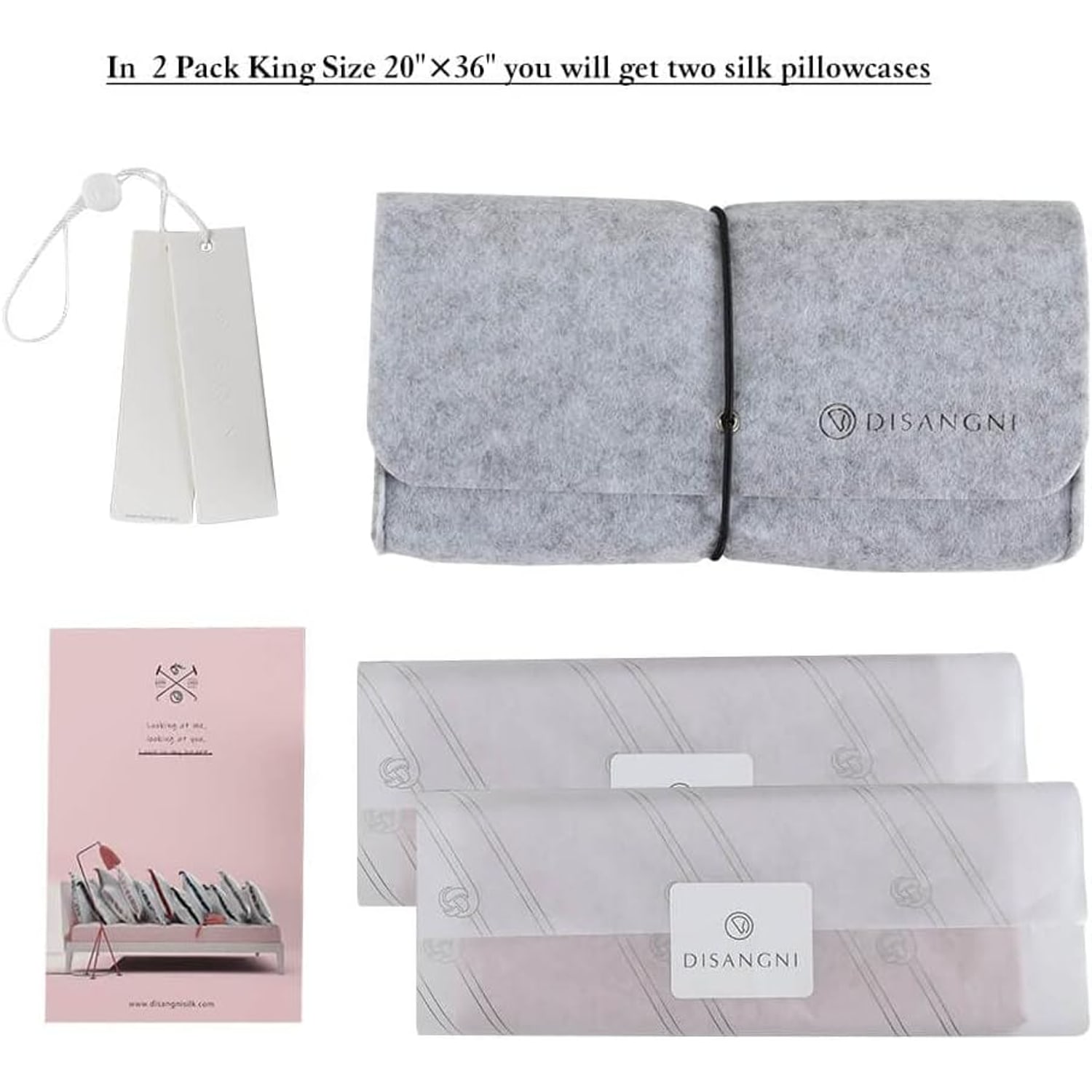
Each case in this pack measures 91,4 cm long by 50,8 cm wide. In inches that is roughly 36 by 20. This is the American king cut.
A standard South African pillow is about 45 x 70 cm. That is a meaningful gap. Put a 91 cm case on a 70 cm pillow and you have more than 20 cm of empty silk at one end.
Some people genuinely like that look. The loose end flops softly and reads as relaxed, almost hotel-like. Others find it annoying and want a case that sits tight. Neither is wrong, but you should know which camp you are in before you order.
The fix is simple. Before you buy anything, lay your pillow flat without squashing it and run a tape measure along the long edge. If you get a number close to 90 cm, this is your size. If you get 70 cm, you either want a king pillow to go with it, or a shorter case.
Common pillow cuts you will run into:
- Standard South African, roughly 45 x 70 cm
- American standard, about 51 x 66 cm
- American queen, about 51 x 76 cm
- American king, about 51 x 91 cm
This set matches that last one.
Why a zip beats an envelope flap
An envelope closure is a folded flap of fabric at the back of the case with no fastening. It is cheap to sew and it works fine on a tightly stuffed pillow that never moves.
Silk is slippery. That is the whole point of it. A slippery pillow inside a slippery case with an open flap has a habit of creeping out during the night, and you wake up with the pillow half naked and your cheek on the mattress protector.
The hidden zip on these cases removes that. The pillow goes in, the zip closes, and it stays where you put it. Because the zip is sewn in to sit out of sight, the pillow still looks like a clean block of green silk from the front. No visible hardware, no flap gaping open.
The only thing worth knowing is where the zip sits. Put the zipped edge toward the headboard or the outside of the bed and you will never feel it.
Living with the colour
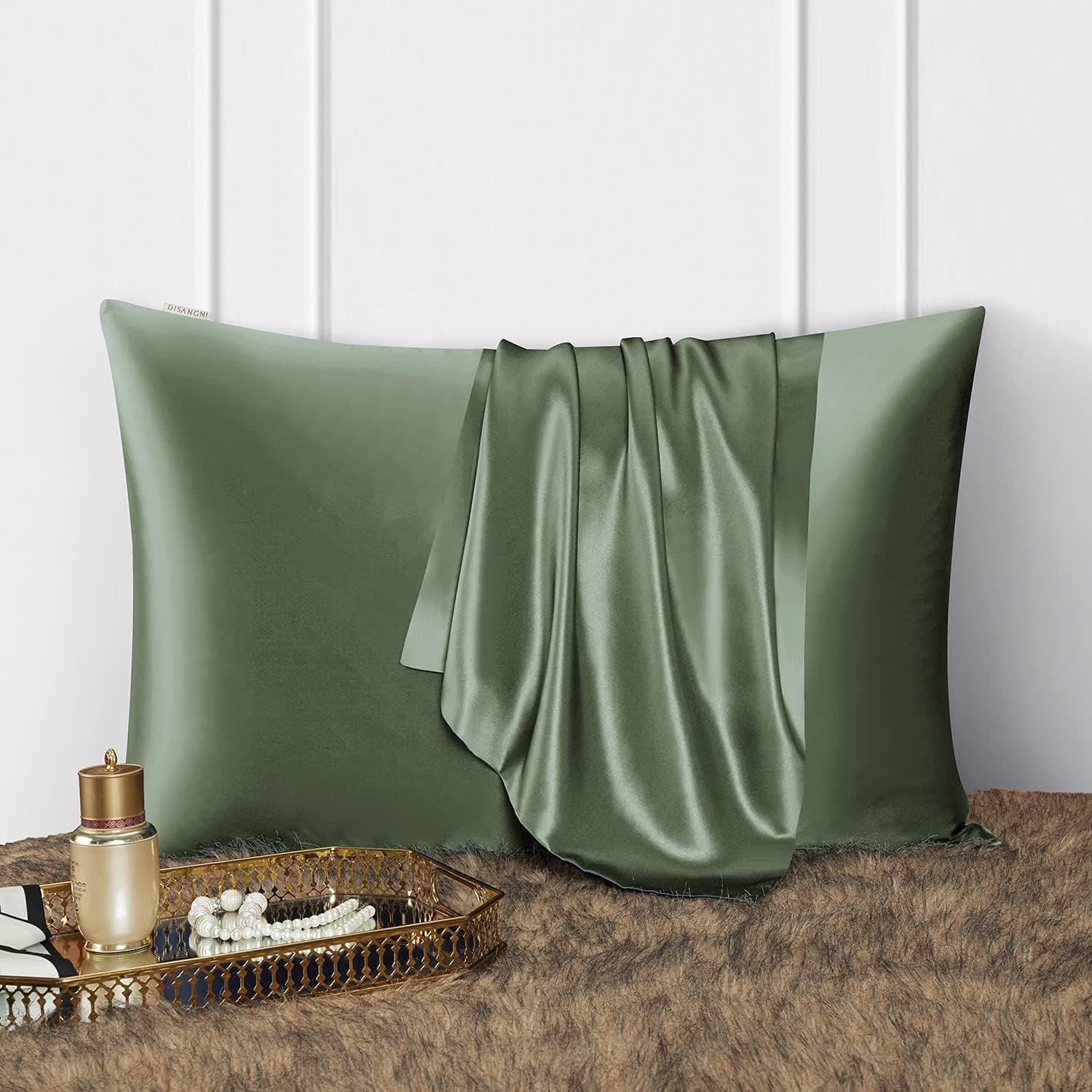
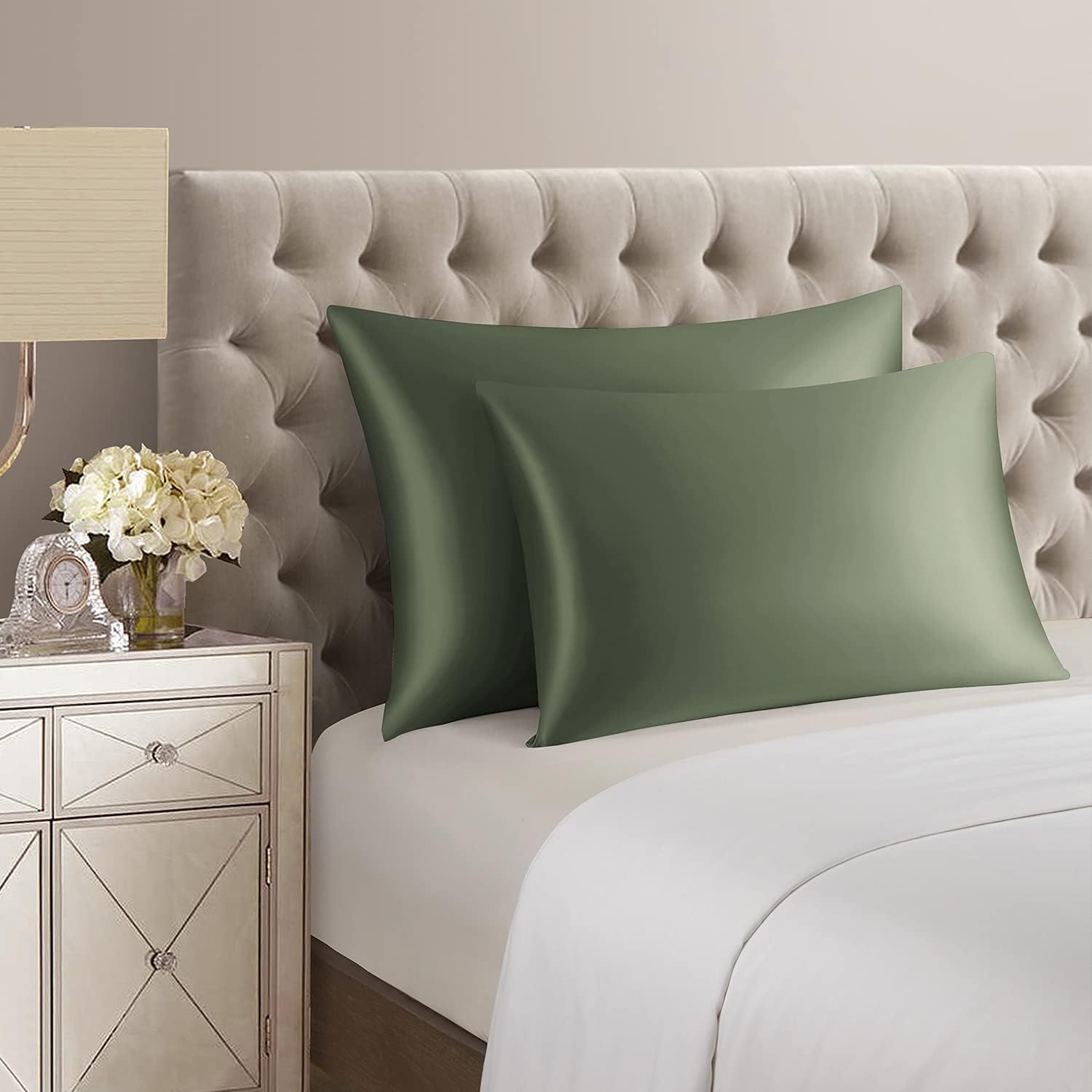
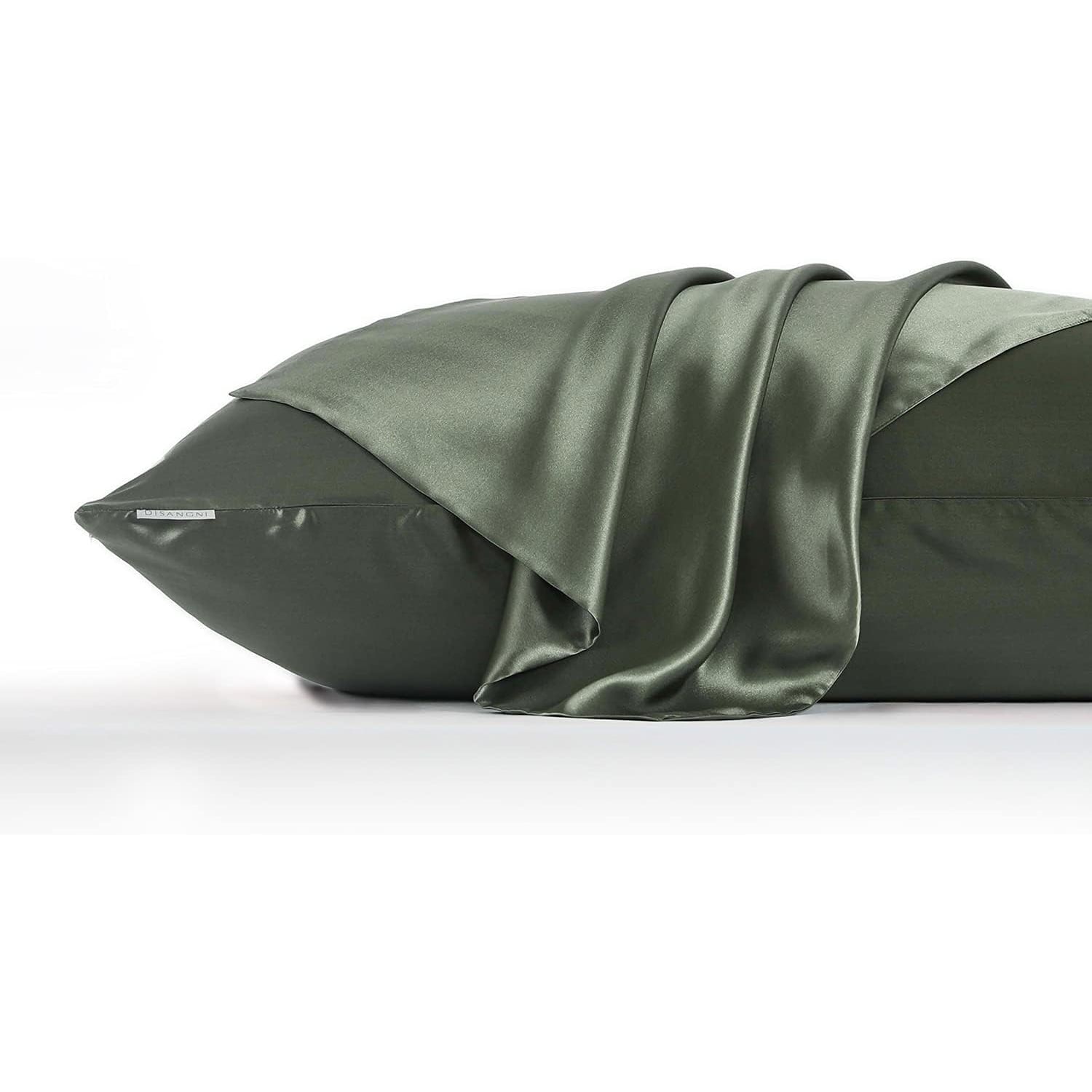
The green here is solid, with no print or pattern. Solid colours are the safer buy if you change your bedding around, because they do not date the way a print does.
Green sits comfortably with white cotton, grey, charcoal and natural linen. It is warm enough to stop a white bed looking clinical and quiet enough that it does not take over the room. If your bedroom leans towards wood, cream or stone, it will slot in without any thought.
Screens do shift colours slightly, so expect a small difference between what you see and what arrives. That is true of any fabric bought online.
Washing silk without ruining it
Here is the part people skip, and it is the single biggest reason silk pillowcases end up disappointing.
Silk is a protein fibre, much like hair. It does not like heat, bleach, or harsh enzymes. The care guidance for these cases is hand washing at a maximum of 30 degrees Celsius.
The routine takes about five minutes:
- Fill a basin with cool water and dissolve a mild detergent completely before the silk goes anywhere near it. Neat detergent on silk leaves marks.
- Soak the case in clean water first, then wash it gently by hand. No scrubbing, no twisting.
- Wash it on its own or with similar colours. Do this religiously for the first few washes.
- Press the water out between your hands or inside a towel. Never wring it.
- Dry it flat or on a line, out of direct sunlight.
If it needs pressing, use the lowest heat your iron offers and work on the inside of the case, ideally while it is still a little damp.
Two things kill silk fast. One is sunlight, which fades dye and weakens fibres. The other is bleach and strong biological detergents, which are literally designed to break down protein. Avoid both and a 22 momme case will keep its hand and its colour for years.
Stains need the same-day treatment. Fresh marks rinse out of silk fairly easily in cool water. Marks that have dried in and been slept on for a week are a different problem entirely.
Why a two pack makes practical sense
One silk pillowcase is a nice object. Two is a system.
With a pair you can strip one off for washing and put the other straight on, so the bed is never back to cotton while the silk dries. On a double bed, a two pack covers both sides. On a single, it gives you a spare that doubles the life of each case because neither is in constant rotation.
A mulberry silk pillowcase set also makes a tidier gift than a single case, which can look a bit mean once it is out of the box.
The short version
Look at momme before anything else, and 22 is the weight most people are happy with long term. Check that the silk is on both faces, not just the side facing up. Measure your pillow against the 91,4 cm king length, because this cut is made for a long pillow and a standard South African pillow is about 20 cm shorter. Prefer a zip over an envelope flap, since silk slides. Then hand wash cool, skip the bleach, and dry out of the sun.
Get those right and the pillowcase stops being a fussy purchase and just becomes part of the bed.