
The complete guide
How To Choose And Wear A 70cm Square Silk Scarf
The small problem a scarf quietly solves
Most wardrobes have a gap that has nothing to do with clothes. You have the dress, the shirt, the jeans, the jacket. They are fine. They are also exactly what they were last week, and the week before that, and you are bored of looking at yourself in them.
A square silk scarf fills that gap for very little money and almost no effort. Seventy centimetres of printed silk knotted at your throat changes the whole read of a plain top. The same square rolled into a band and tied in your hair reads completely differently again. Nothing else in a wardrobe shifts that much with a different fold.
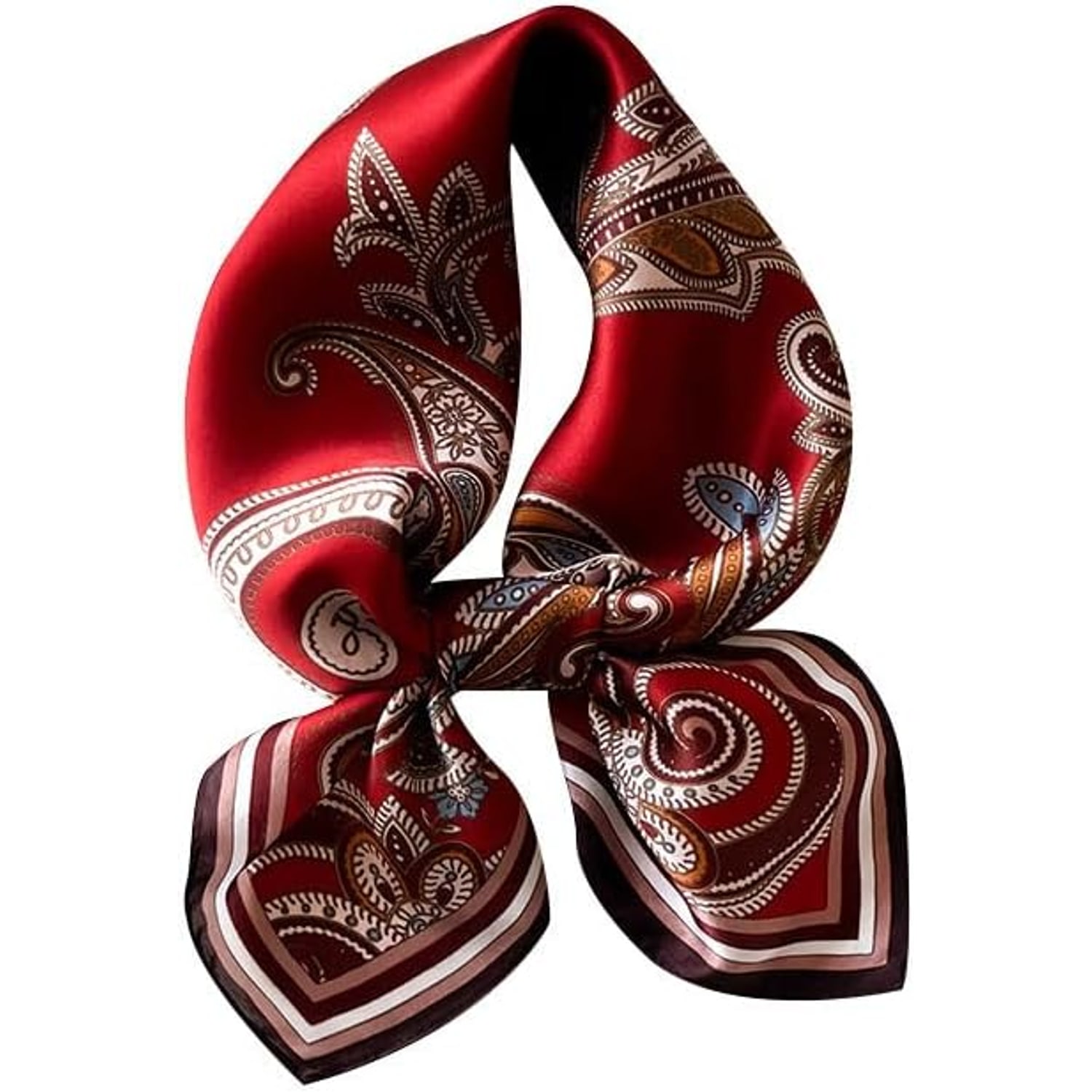
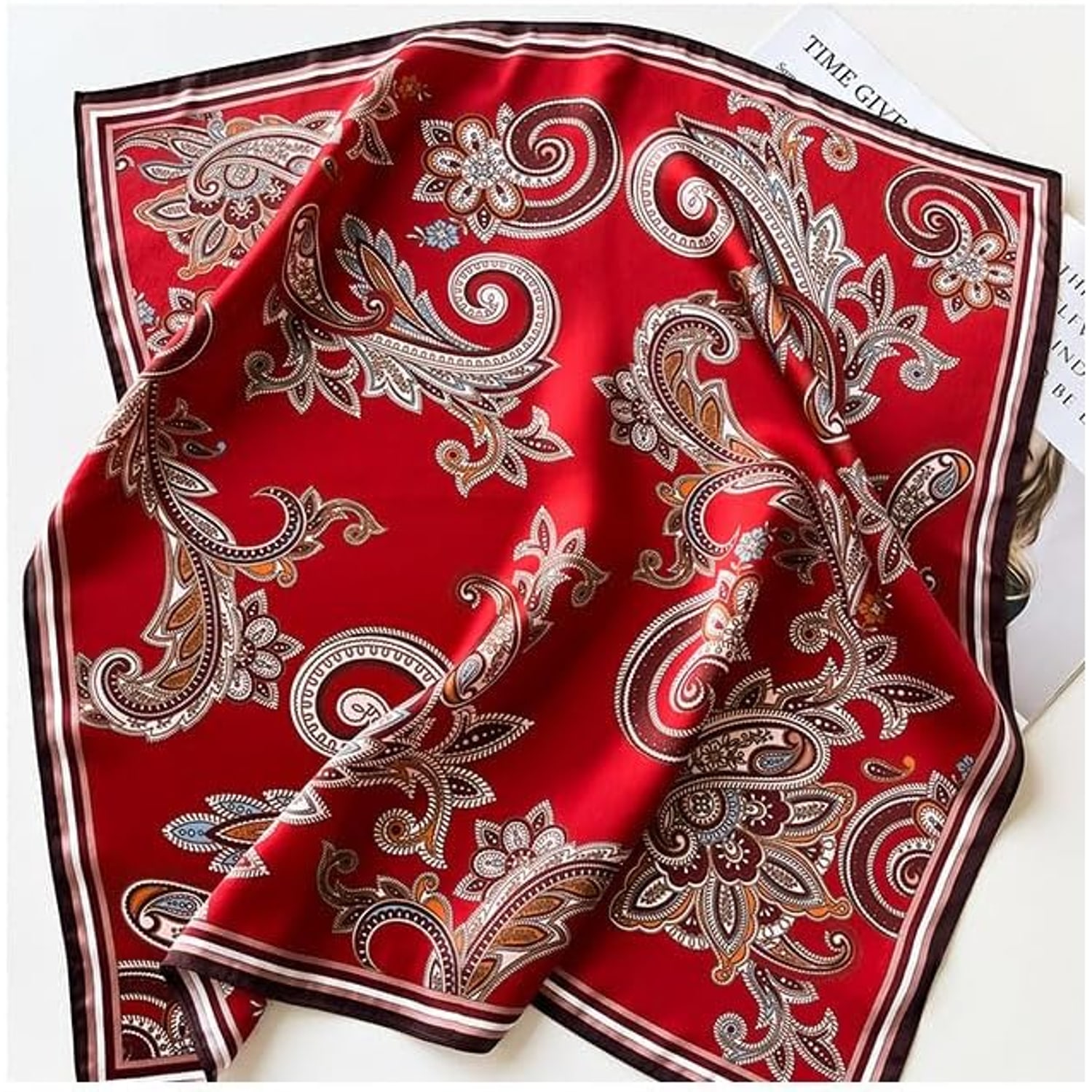
This one is 70 x 70 cm, which is about 27 x 27 inches, and it is cut from 100% pure mulberry silk. That size is the workhorse of the scarf world. Bigger squares, 90 cm and up, are lovely but need practice to tie well. Smaller ones get fiddly. Seventy sits in the middle and does more jobs than either.
What mulberry silk actually gives you
Silk is a protein fibre, spun as one continuous filament rather than short staples twisted together. That single fact explains most of what you notice when you handle it. The surface is smooth because there are no fibre ends poking out. It drapes rather than holds a shape. It is strong for its weight, which is why something this light does not tear when you knot it hard.
Mulberry silk specifically comes from silkworms raised on mulberry leaves, and the filament is longer and more even than wild silk. In practice that means a cleaner surface and a better print.
Two practical consequences matter when you wear it. First, silk breathes. A polyester scarf at your neck in Durban in February is a small act of self-harm. Silk is not. Second, silk slides. Hair and skin move over it with much less friction than over cotton, which is exactly why so many people use a square like this as a hair band or a night wrap rather than keeping it for the neck.
What the maker does not tell us is the momme weight or the weave. Momme is how silk weight is measured, and a scarf might be anywhere from 8 to 16 momme depending on whether it is a fine chiffon or a heavier twill. Since that number is not stated, treat this as a light dress-weight silk. It knots easily, it folds down small, and it is not going to behave like a thick winter twill.
The single-sided print, and why it changes how you tie it
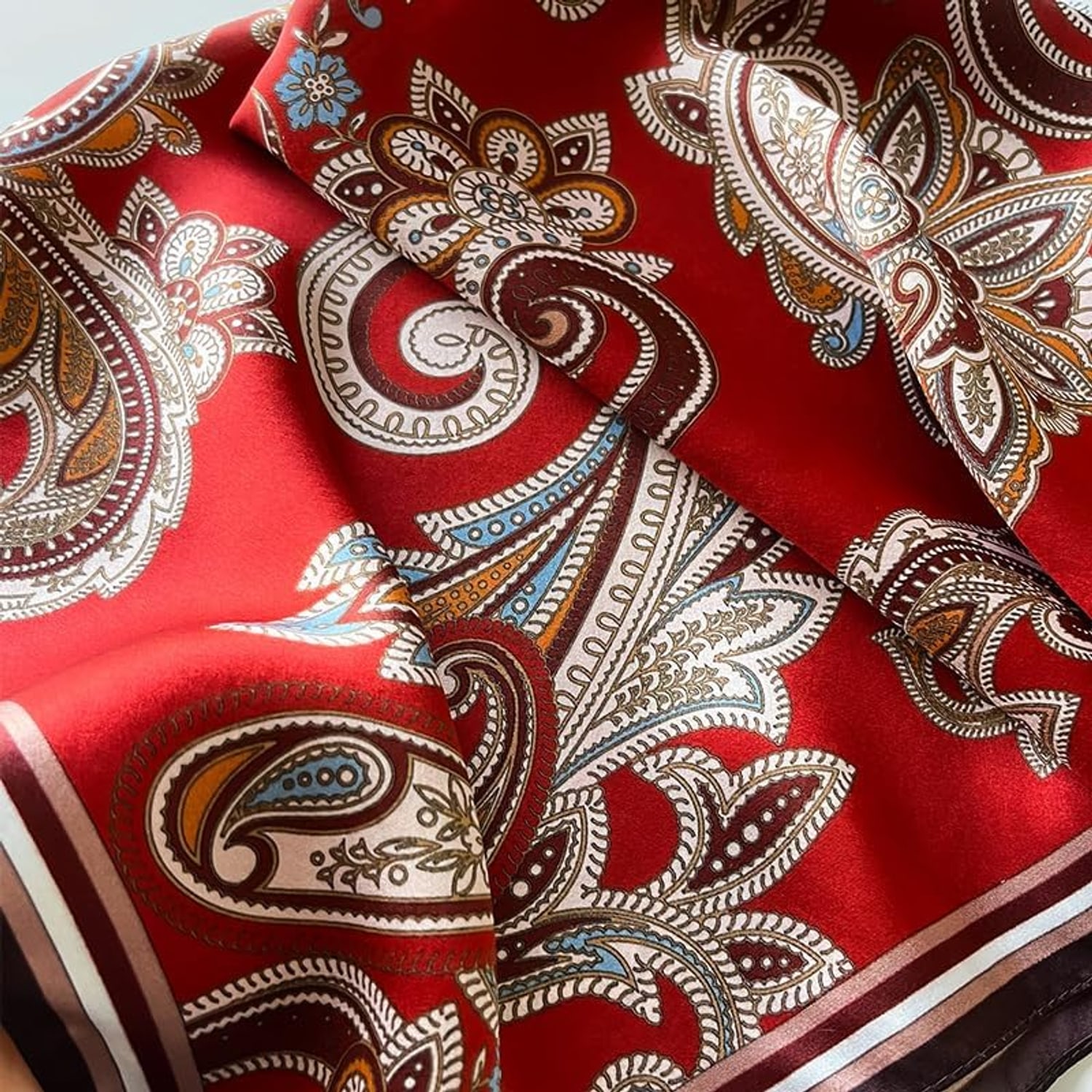
The design on this scarf is printed on one face. The back carries a fainter version of the same pattern. That is completely standard for printed silk squares, but it is worth knowing before the parcel arrives, because it affects your folding.
With a double-sided scarf you can be careless. With a single-sided one, you fold so the printed face ends up on the outside, and you let the pale reverse hide inside the knot. In practice this is easy. The classic bias fold, corner to corner into a triangle, then rolling the long edge down, naturally buries the back of the cloth. Once you have done it twice you stop thinking about it.
It also means the scarf looks best with a bit of the pattern on show rather than scrunched into a tight little rope. Leave the fold a few centimetres wide at the neck so the print actually reads.
Ways to wear it
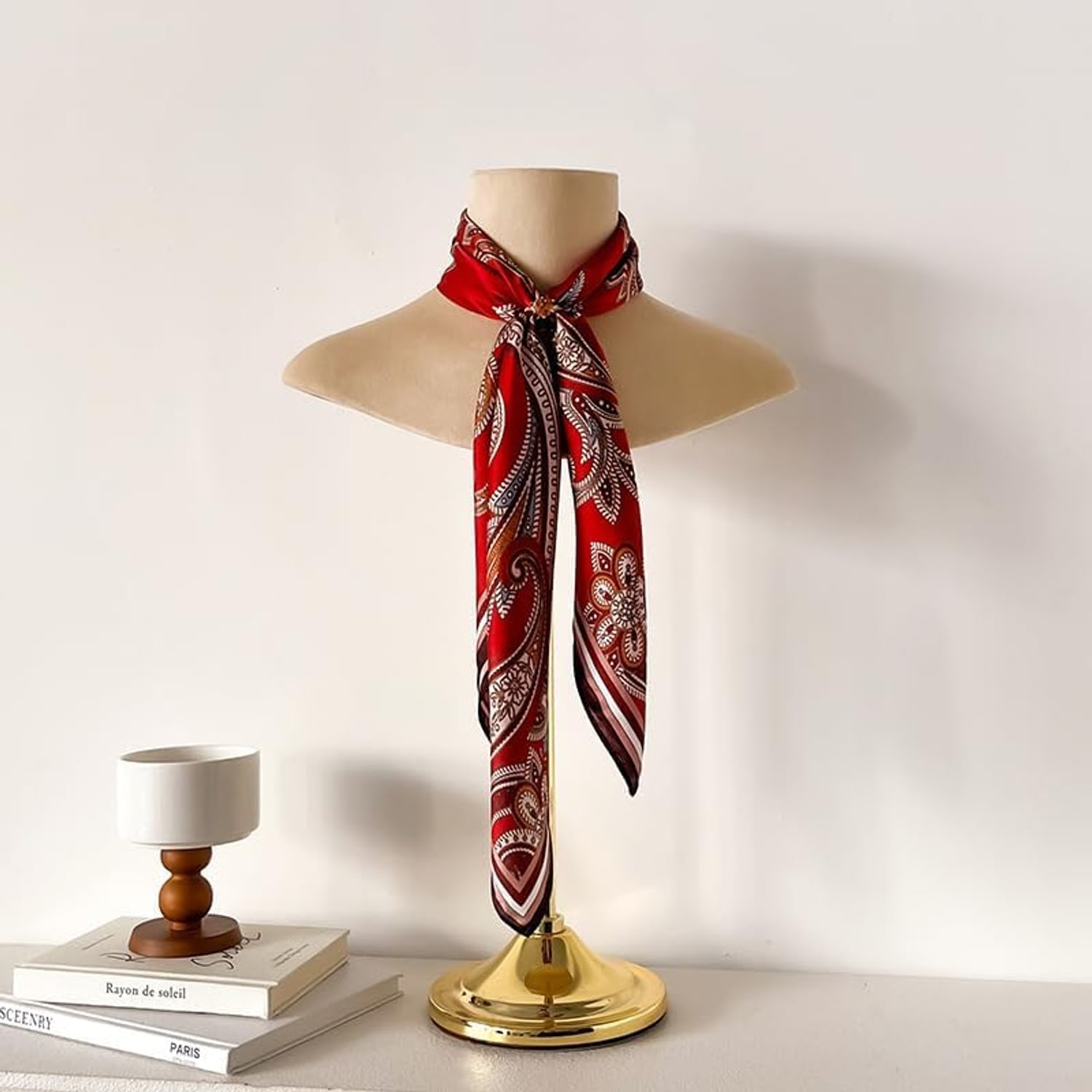
At the neck is the obvious one. Fold into a triangle, roll the long edge down to the width you want, wrap it round and knot at the side. A side knot looks more relaxed than one sitting dead centre. Under an open shirt collar it adds colour without bulk.
In the hair, fold it into a band and tie it over the top of your head with the knot at the nape, or run it under a ponytail and tie on top. If silk slips on you, push two hair pins through the band where it meets your hair. They hold without marking the fabric.
On a bag, roll it thin and loop it once round the base of the handle. One knot, trim ends, done. This is the fastest way to make a plain handbag look deliberate.
Around a hat, wrap the rolled scarf once round the crown of a straw hat and tie at the back. Let the ends hang or tuck them in, depending on whether you want the print to show.
As a head covering, open the square fully, place it over your head and tie under the chin, or wrap it turban style. Some people use this as a night wrap for the same friction reason mentioned earlier.
Those five cover most of it, but people invent their own. The square shape is what makes it flexible.
Choosing a print that you will actually reach for
Here is the honest advice. The scarf you wear is the one that goes with the three or four things you wear most, not the one that is prettiest in isolation.
If most of your wardrobe is navy, black, grey and white, a print with strong colour does the heavy lifting and you cannot really go wrong. If your clothes are already patterned or colourful, pick a print where one of the background colours matches something you own, and the scarf will slot in instead of fighting.
Think about scale too. A large, bold motif shows well at the neck or on a bag, where a decent area of cloth is visible. A fine, busy pattern reads better folded narrow, because at a distance it blends into a texture rather than a picture. Neither is better. They just suit different folds.
The best mulberry silk scarf for most people is the one with a mid-scale print and at least two colours they already wear. That is not exciting advice, but it is the kind that keeps a scarf out of the drawer.
Looking after it
Silk is less fragile than its reputation suggests, but it does have rules and they are easy ones.
Hand wash alone in cool water, below 30 degrees Celsius, with a mild detergent. No washing machine. No bleach, ever. Do not wring it out: lay it in a towel, roll the towel up and press. Then dry flat, out of the sun. Direct sunlight fades printed silk faster than anything else you can do to it.
Ironing is low heat only, preferably from the reverse side while the silk is a little damp. A steamer is even easier. Dry cleaning is also fine if you would rather hand the job over.
How often? Less than you think. Silk does not hold odour the way heavier fabrics do. Airing it overnight on the back of a chair resets it. Wash it when it has picked up makeup, perfume or a spill, not on a schedule.
Store it folded loosely or rolled in a drawer. Avoid hanging it on a hook with any kind of edge, which can snag a thread out of the weave.
Delivery, payment and changing your mind
Orders are tracked and go to every province, with delivery running 10 to 20 working days. Shipping is R250 under R1800 and free above that. Payment is by card only.
If it does not suit you, you have 14 days from delivery to cancel for any reason, provided the scarf is unused and unwashed. Send it back in that state and we will sort the refund out.
The short version
A 70 x 70 cm square of 100% pure mulberry silk, printed on one side, allow 1 to 2 cm variation in the cut. It ties at the neck, folds into a hair band, wraps a hat, dresses a bag handle and packs down to nothing. Hand wash cool or dry clean, low iron, no bleach, dry flat away from the sun. Momme weight, weave and country of origin are not stated by the maker, so judge it as a light dress-weight silk square. If you have never owned one, this is the size to start with.