
The complete guide
How To Choose And Wear A Small Square Silk Scarf
The problem with most scarves in your drawer
Most people own a scarf or two that never gets worn. It is usually either too big, too warm, or too complicated to tie. The big silk square looks beautiful in the shop and then sits folded for three years because arranging it takes a mirror and five minutes you do not have.
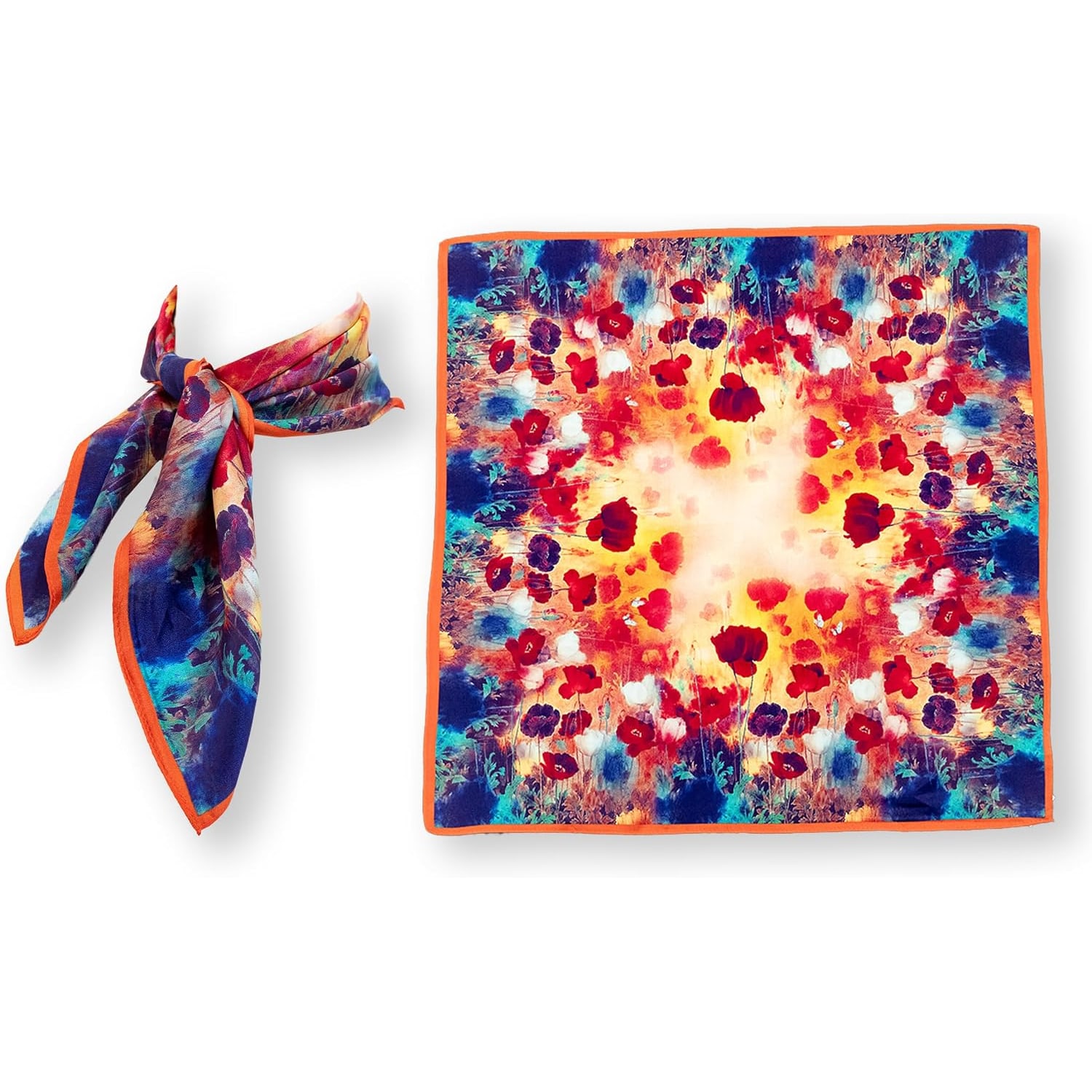
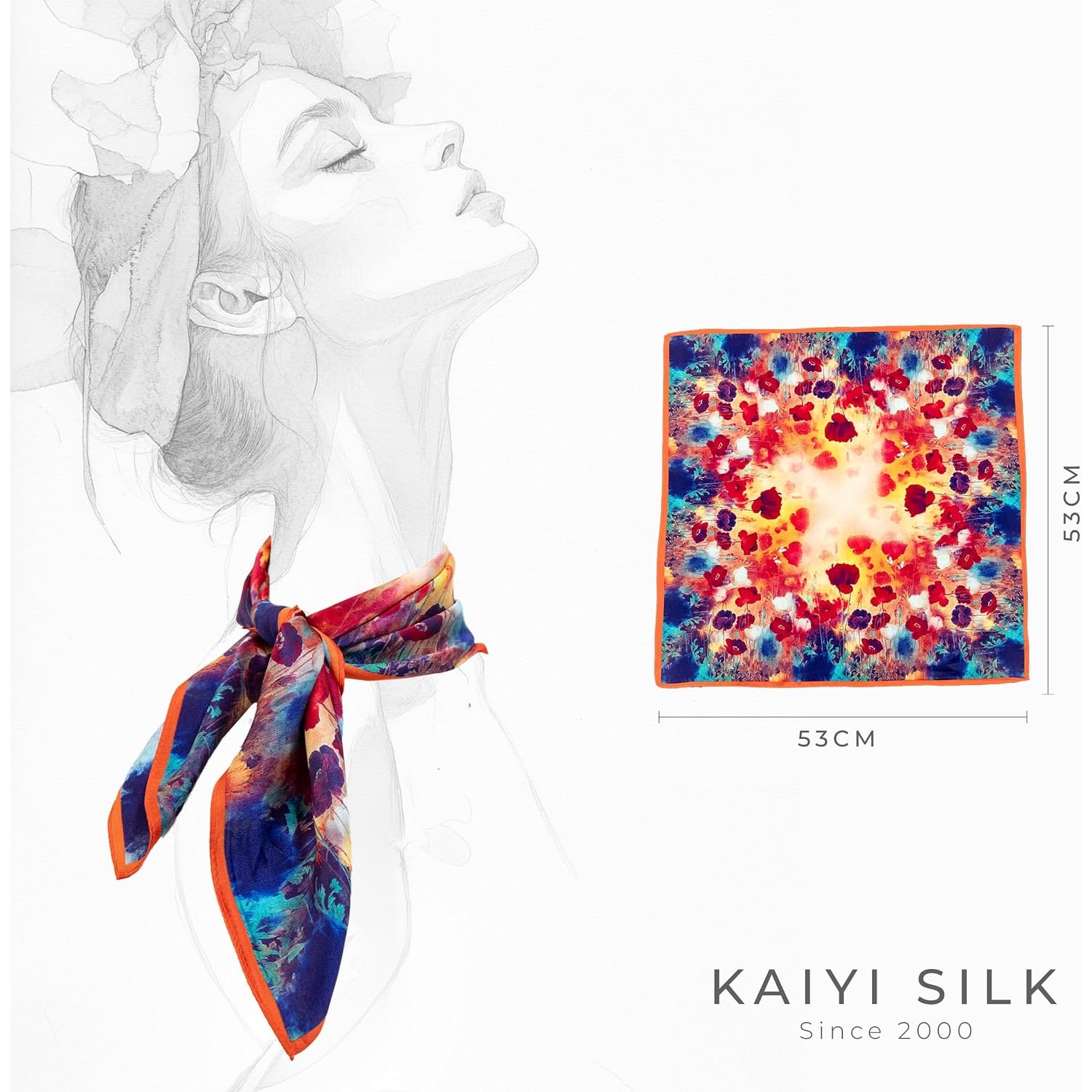
A small square is the answer to that. At 53 x 53 cm (21" x 21"), this one folds on the diagonal, rolls into a band and ties once. The whole thing takes about four seconds. That is the difference between a scarf you own and a scarf you wear.
It also solves a specific wardrobe problem. A plain top, a plain jacket and plain trousers can look unfinished, especially in photographs or on video calls. A small printed square at the throat adds a bit of colour and pattern right where people look. It is the smallest change you can make that reads as deliberate.
What the specs actually mean
Three numbers matter on a silk scarf, and this one gives you all three.
The fibre is 100% mulberry silk. Mulberry silk comes from silkworms fed only mulberry leaves, which produces a long, uniform filament rather than a short broken one. That is why the cloth is smooth instead of slubby, and why it reflects light evenly. There is no blend here and no polyester satin pretending to be silk.
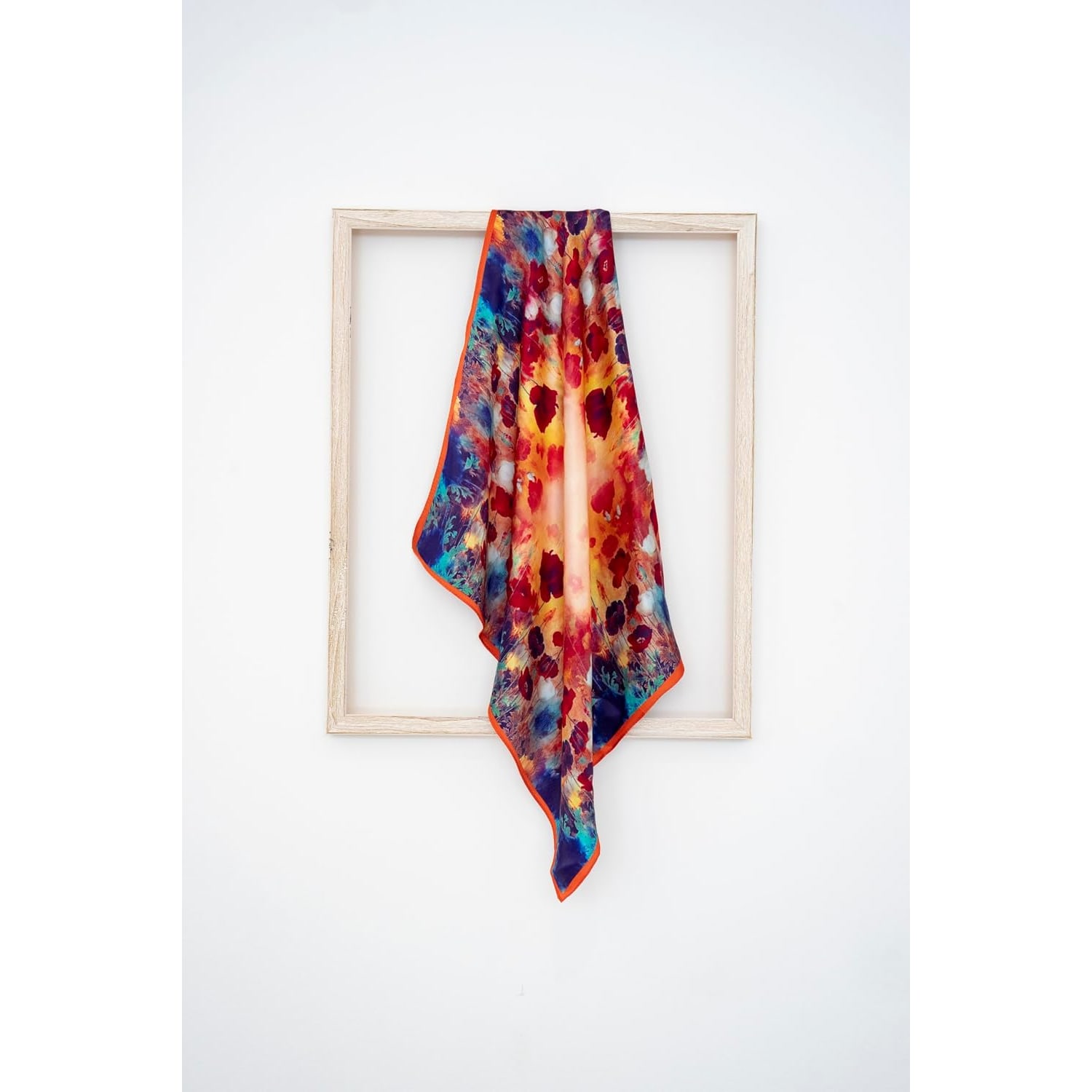
The weave is crepe satin. Satin describes how the threads are interlaced, with long floats on the surface, which is what creates the sheen. Crepe refers to a fine springiness in the body of the cloth. Together you get a scarf with a soft shine on one face and a bit of life in the hand, so it drapes instead of hanging flat and a knot stays roughly where you tied it.
The weight is 12 momme. Momme is the old unit for silk weight, and it works a bit like thread count does for sheets, except it measures mass rather than density. Low momme silks, say 6 to 8, are sheer and float. High momme silks, 19 and up, are substantial and opaque, which is why pillowcases sit at that end. Twelve is the middle ground. For a small square it is close to ideal, because it is light enough to tie into a tidy little knot without a lump at the throat, and firm enough that the square holds its shape in your hand.
The whole scarf weighs 22 g. That is almost nothing. It lives in a handbag pocket and takes up no space in a weekend bag.
Choosing the right size square
Scarf sizes are more meaningful than scarf prices, so it is worth being clear about what each one does.
A small square, around 50 to 55 cm, is the fast one. It ties at the neck, folds into a headband, wraps a ponytail, knots at the wrist and loops through a bag handle. It will not keep you warm and it will not cover your shoulders. This scarf sits squarely in that group.
A medium square, around 70 cm, gives you more fabric to play with and allows for the fuller knots you see in fashion photographs, but it takes more arranging.
A large square, 90 cm and up, is the classic statement scarf. It can be worn as a shoulder wrap or a halter top. It is lovely and it is slow.
If you are buying your first silk scarf, or buying for someone else and you are not sure what they will use, the small square is the safe pick. It is the one that gets taken out of the drawer. People hunting for the best small silk scarf almost always end up at this size for exactly that reason.
Ways to wear it
The neck knot is the default. Fold the square corner to corner into a triangle, then roll the long edge down on itself until you have a band roughly four or five centimetres wide. Place the middle against the front of your throat, cross the ends behind your neck, bring them forward and tie a single knot slightly off centre. Let the ends sit over a shirt collar or tuck them under it.
For hair, the same folded band goes over the crown with the knot underneath at the nape, or at the top for a 1950s look. Wrapped around the base of a ponytail and tied with the ends hanging, it does the job of a hair tie and a decoration at the same time. Many people buy a silk square for this use alone.
As a bandana, take the triangle fold, lay the long edge across your forehead, and knot the two corners at the back under your hair. The 53 cm size is close to standard bandana proportions, so the fit works without bunching.
On a bag, thread it around the handle and knot once, letting the ends trail, or tie a neat bow at the base. This is the laziest use and probably the most effective one, since it changes the look of a plain bag completely.
At the wrist, fold it narrow and tie it over or beside a watch strap. It sounds fussy and it is surprisingly easy to wear.
Who it suits
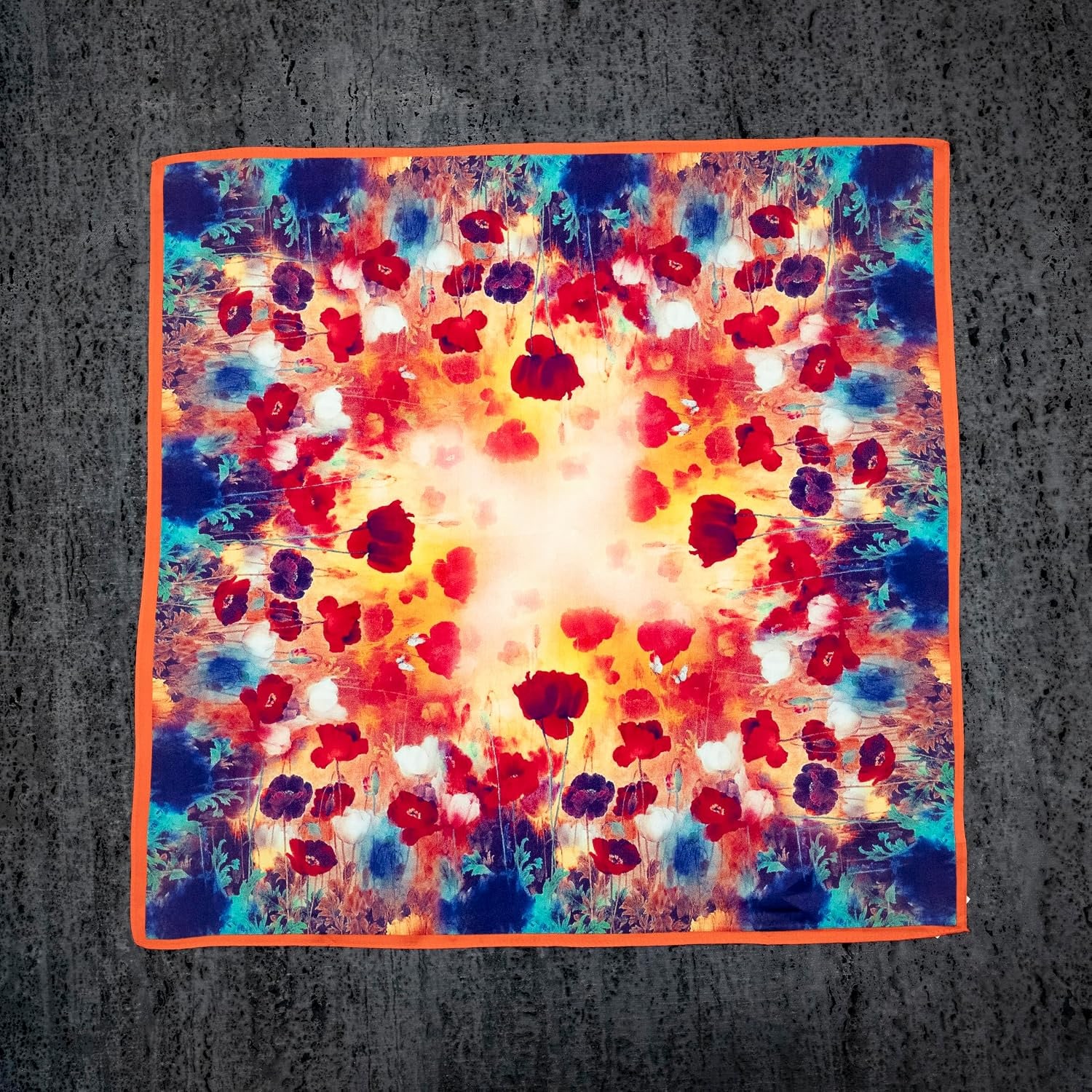
A small printed square is hard to get wrong. Because the scarf is physically small, the print reads as colour and texture from across a room rather than as a loud statement. That makes it easier to combine with other patterns than a large scarf would be.
It works for someone building a first accessory collection, because it is a low-commitment way to find out whether you like wearing scarves at all. It works for someone who already has a drawer full of them, because the small square covers the uses the big ones cannot. And it works as a gift, since there is no size to guess and no fit to get wrong.
The cat print gives it a bit of character. If you want a scarf that disappears into a strict corporate uniform, a plain solid would be quieter. If you want something with a little personality that still behaves itself at work, this sits in that spot.
Caring for silk without the drama
Silk has a reputation for being difficult. It is not difficult, it is just particular.
The care instruction is dry clean or hand wash only. If you hand wash, do it alone, in cool water, with a detergent made for silk or a very mild soap. Move it gently through the water rather than scrubbing it. Do not soak it, do not wring it and never use bleach. Rinse in cool water, lay it on a towel, roll the towel up and press to get the water out.
Dry it flat or on a line, out of direct sun. Strong sunlight is harder on silk colours than washing is.
Ironing is simple if you do it right. Lowest silk setting, on the reverse side, while the scarf is still slightly damp. Keep the iron moving. If you would rather not iron, hang it in a steamy bathroom and most creases fall out on their own.
Two other habits help. Put perfume and hairspray on first and let them dry before the scarf goes on, because alcohol marks silk. And store it rolled or loosely folded in a drawer rather than hanging it on a hook, which eventually leaves a crease line you cannot press out.
The short version
This is a 53 x 53 cm (21" x 21") square of 100% mulberry silk, woven as a 12 momme crepe satin, printed with a cat pattern, and weighing 22 g. Dry clean or hand wash. The maker does not state a colour name or a country of origin.
In plain terms, it is the small, light, easy silk square. The kind you tie once and forget about, that lives in a bag, and that quietly makes a plain outfit look like you thought about it. If you have never worn a silk scarf and want to find out whether you like it, this is where to start.