
The complete guide
Choosing a Navy Mulberry Silk Pillowcase Pair, A Practical Buyer's Guide
The problem with waking up creased
Most people do not think about their pillowcase until they catch sight of themselves in the bathroom mirror at six in the morning. There is a line across one cheek. The hair on the side you slept on has gone its own way entirely. You did not do anything unusual, you just spent seven hours with your face pressed into a woven cotton surface that grips rather than slides.
Cotton is a fine fabric. It is also a textured one. Look at a cotton weave closely and you see a grid of raised and lowered threads, and all night your skin and hair are dragging across that grid every time you move. Silk changes that one variable. The surface is smoother, so there is less friction between your face and the fabric, and less tugging on hair as you turn over. That is the practical reason silk pillowcases became popular, and it is a claim about fabric rather than about biology.
What makes a silk pillowcase actually good
There are three numbers worth knowing, and the rest is mostly marketing.
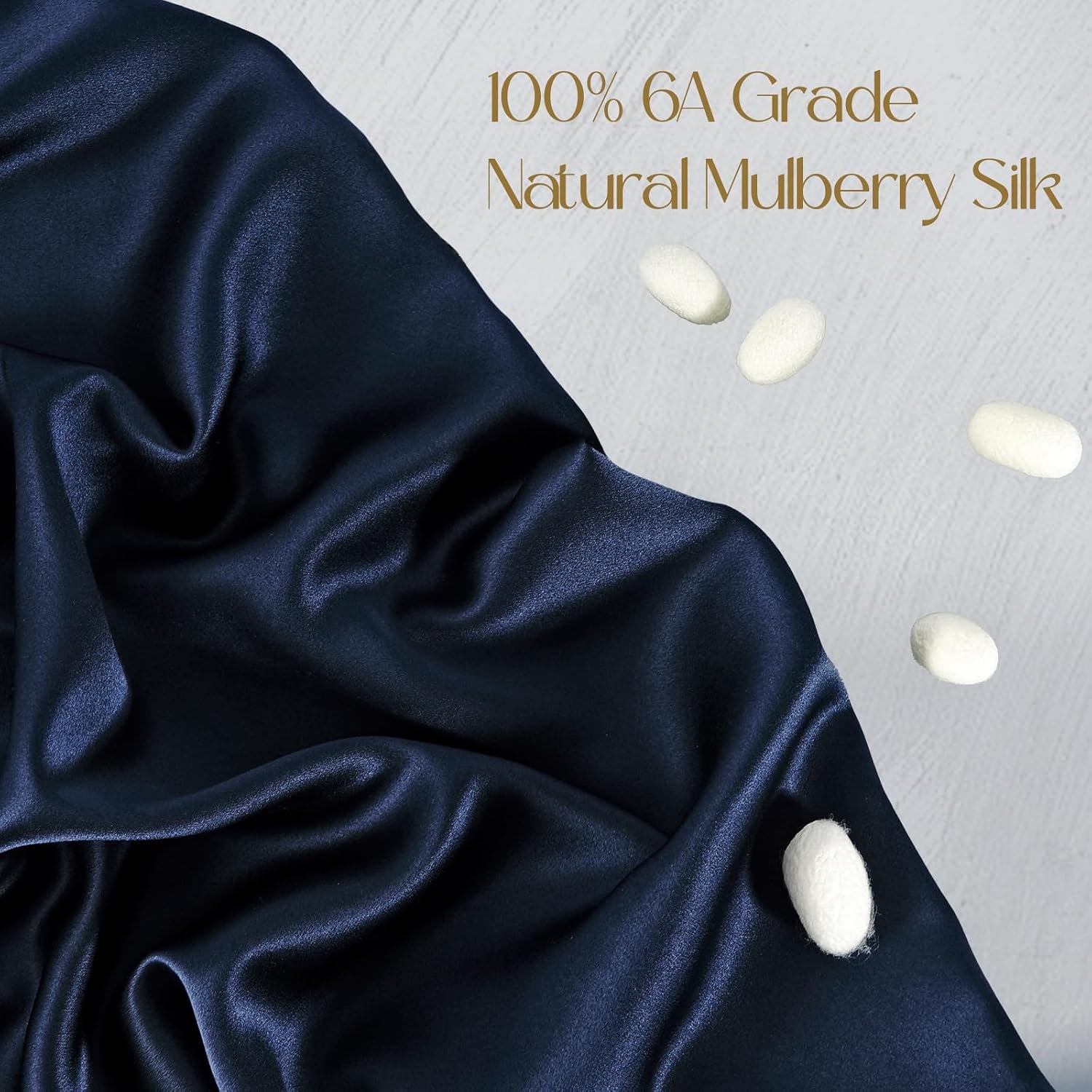
The first is what the silk is. Mulberry silk comes from silkworms fed exclusively on mulberry leaves, which produces long, even filaments. These cases use mulberry silk graded 6A, which is the top of the usual grading scale for fibre length and consistency. Shorter, patchier fibres make a fabric that feels less uniform and pills sooner.
The second number is momme. This is the weight measure for silk, and it tells you how much fabric you are actually getting. A very light silk, around 12 or 13 momme, feels thin and tends to float. Something at the heavy end, 25 momme and above, is lovely but costs a great deal more. These sit at 19 momme, which is the weight most people land on for bedding. It has enough body to drape properly over a pillow and sit still, without being so dense that it loses the cool, fluid feel silk is bought for. If you are comparing options and want the best 19 momme silk pillowcase, that weight on its own is not enough, you also need to check the next point.
The third thing is whether both sides are silk. This catches a lot of buyers out. Plenty of cases on the market use silk on the top face and a cheaper cotton or polyester backing, which halves the material cost and roughly halves the benefit. You get the smooth face for half the night, then you flip the pillow and you are back on a textured weave. These cases are silk on both sides, which is the only sensible way to build one.
The 600 thread count quoted here describes how tightly the weave is packed. On silk, thread count matters less than momme does, so treat it as supporting information rather than the headline figure.
Getting the size right
This is where most returns come from, so it is worth two minutes of your time.
These cases are queen size, 51 x 76 cm, which is the American measurement usually printed as 20" x 30". A standard South African pillow tends to run closer to 45 x 70 cm. That means the case will fit a standard local pillow with a bit of room left over, which most people actually prefer, because the silk stays loose and moves rather than being stretched tight over the corners.
What you should not do is assume. Pillow sizes vary more than you would think, and the pillow you own may have been bought to a different standard entirely. Take the pillow out of its current case and measure it flat, width and length. If your pillow is a true 51 x 76 cm queen, this is an exact match. If it is a 51 x 66 cm standard, the case will be long by about ten centimetres, which is noticeable but perfectly usable. If your pillow is a square continental, this is the wrong shape and you want a square case instead.
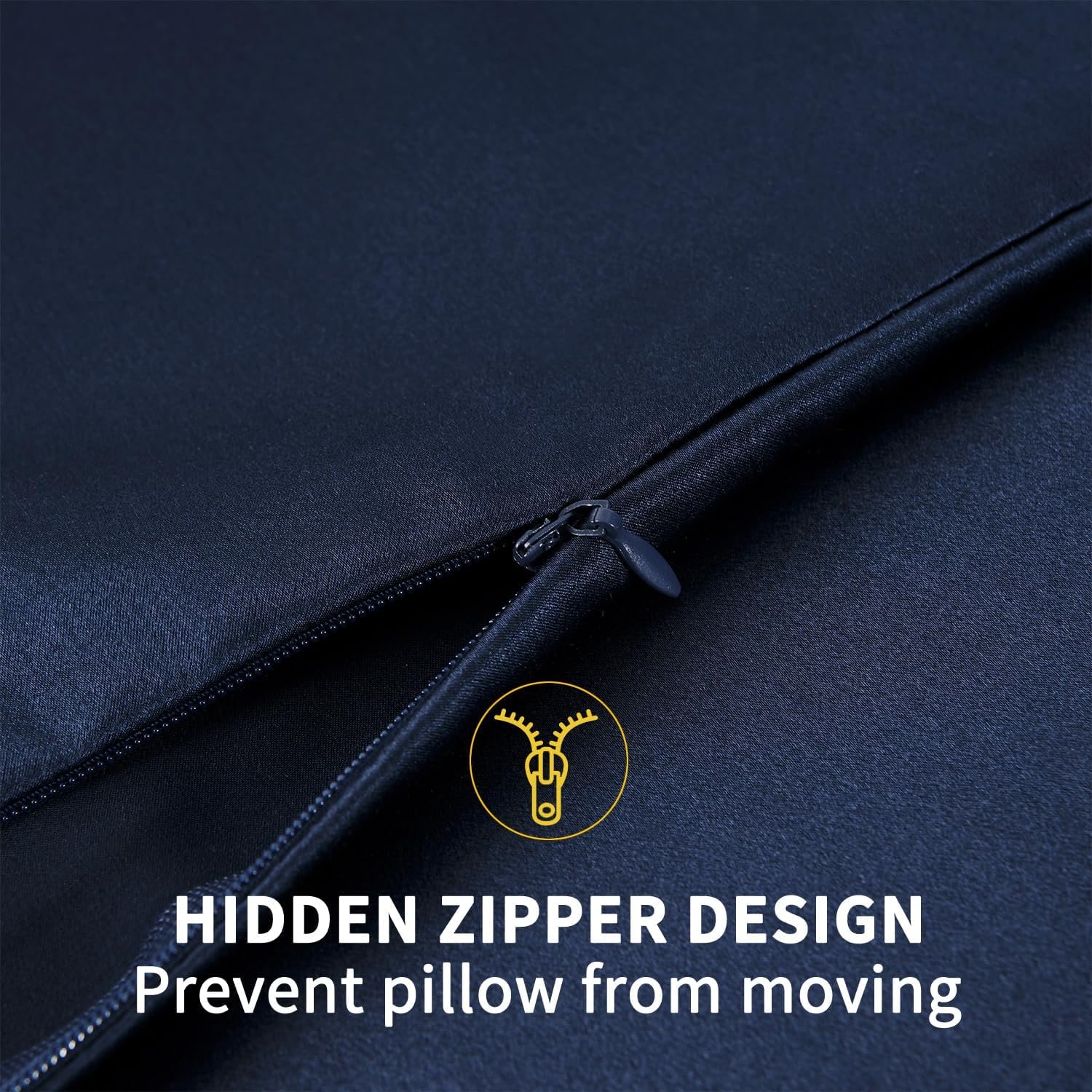
The hidden zip matters here too. On a slippery fabric, an envelope flap can work its way open during the night and leave a corner of bare pillow exposed by morning. A zip encloses the pillow completely. Because it is tucked into the seam rather than sitting on the surface, you do not feel it against your face. If you are a restless sleeper, that detail is worth more than it sounds.
Why navy, and why two
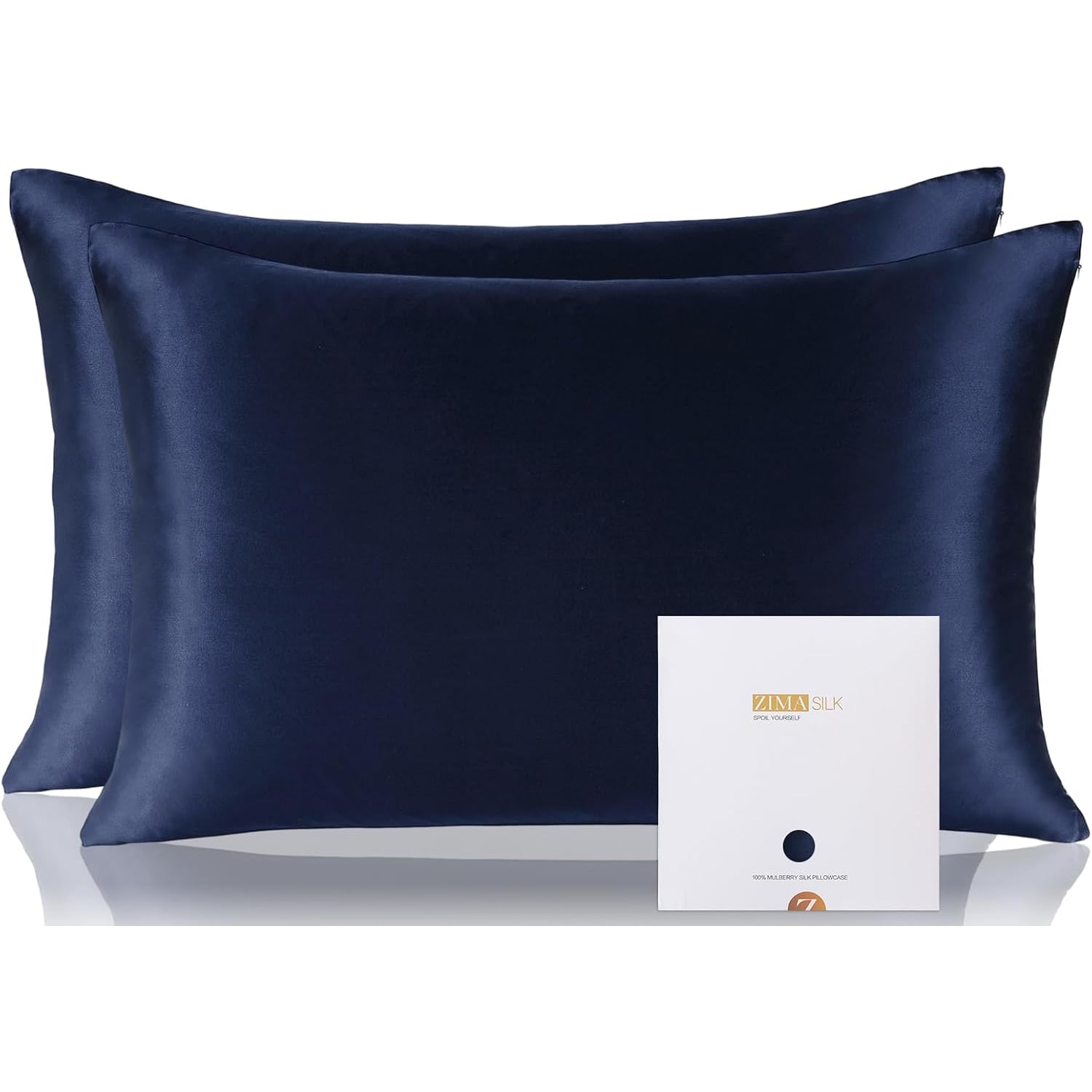
Colour choice on bedding is usually treated as pure taste, but there is a practical side to it. Pale cases show everything. Night cream, hair oil, a trace of mascara you thought you had taken off, all of it reads clearly on ivory or white between washes. A deep navy hides the day-to-day marks far better, which means the case looks presentable for longer. It also sits well against most bedding palettes, white, grey, charcoal, warm neutrals, without needing the rest of the room to agree with it.
The maker describes the dyes as colourfast and resistant to fading through washing. Still, treat dark silk the way you would treat any dark fabric for the first few washes. Cool water, washed on its own, out of direct sun to dry.
The two pack is the other half of the sensible part. Silk is hand washed, not tossed into a machine load with the towels, and that means a case is out of action while it dries. With a pair you can rotate properly, one on the bed and one in the drawer, and you never have to choose between sleeping on a cotton case or sleeping on one you should have washed three days ago. On a double bed, it also means both sides match.
Living with silk
The honest answer is that silk asks for a little more than cotton does, and it is less than most people expect.
Hand washing takes about five minutes. Cool water in a basin, a small squeeze of mild liquid detergent made for delicates, and gentle swirling rather than rubbing or wringing. Rinse until the water is clear, press the water out inside a folded towel and hang or lay the case out to dry in the shade. Silk is thin, so it dries fast.
What to avoid is a short list. No bleach. No oxygen brighteners or heavy biological powders, since the enzymes in those are designed to break down protein and silk is a protein fibre. No hot water, no tumble dryer, no long soaking. If a crease bothers you, iron on the lowest silk setting on the reverse of the fabric, though most creases drop out on their own once the case is back on the pillow.
The other everyday habit worth building is removing rings and watches before bed, and keeping your nails tidy. Silk is smooth but it will catch on something genuinely rough. A splintered headboard edge is the usual culprit.
Who this suits
If you currently sleep on cotton and wake up with hair that has knotted on one side, this is the simplest change you can make to your bed. It takes no adjustment, there is no break-in period, and the fabric does exactly what it does from the first night.
It also makes a straightforward gift. A pair in a dark, neutral colour works for almost anyone, and because it arrives as two matched cases it does not look like half a present. For a housewarming or an anniversary, it lands well.
Who it does not suit is anyone who genuinely will not hand wash. If the case ends up in the machine on a warm cycle, you will not get the life out of it that the fabric is capable of, and that is a shame for a 19 momme silk.
The short version
Mulberry silk, Grade 6A, 19 momme, 600 thread count, silk on both faces. Queen size at 51 x 76 cm with a hidden zip, in solid navy blue, two cases per order. Measure your pillow before you order. Hand wash in cool water, dry in the shade, and keep bleach well away from it. Do that and you have a pair of pillowcases that stay good for a long stretch.
Brand, item weight and country of origin are not stated by the maker, so we have not guessed at them here. Everything above is what is actually known about the fabric and the cut.