
The complete guide
How to Choose a Silk Sleep Mask That You Will Actually Keep Wearing
The problem with light at night
Most people think they sleep in the dark. Then they stand in their bedroom at two in the morning with the lights off and notice the street lamp outside, the standby glow on the television, the strip of light under the door and the first grey of the sky through a gap in the curtain. Eyelids are thin. Light gets through them.
That matters because light is one of the main signals your body uses to decide whether it is night. A room that is almost dark is not the same as a room that is dark. If you have ever slept unusually well in a hotel room with blackout curtains, you already know the difference.
A sleep mask is the cheap, portable version of blackout curtains. It travels with you, it works in a guest room, it works on a plane, and it works at two in the afternoon when you are a night-shift worker trying to get a proper rest while the neighbours mow the lawn. The trick is picking one you will still be wearing in week three rather than one that ends up pushed up on your forehead by midnight.
What makes a silk mask different
The fabric against your face is the whole argument. A cheap mask is usually a polyester shell over foam. It works, in the sense that it blocks light, but it holds heat and it drags on your skin every time you turn over.
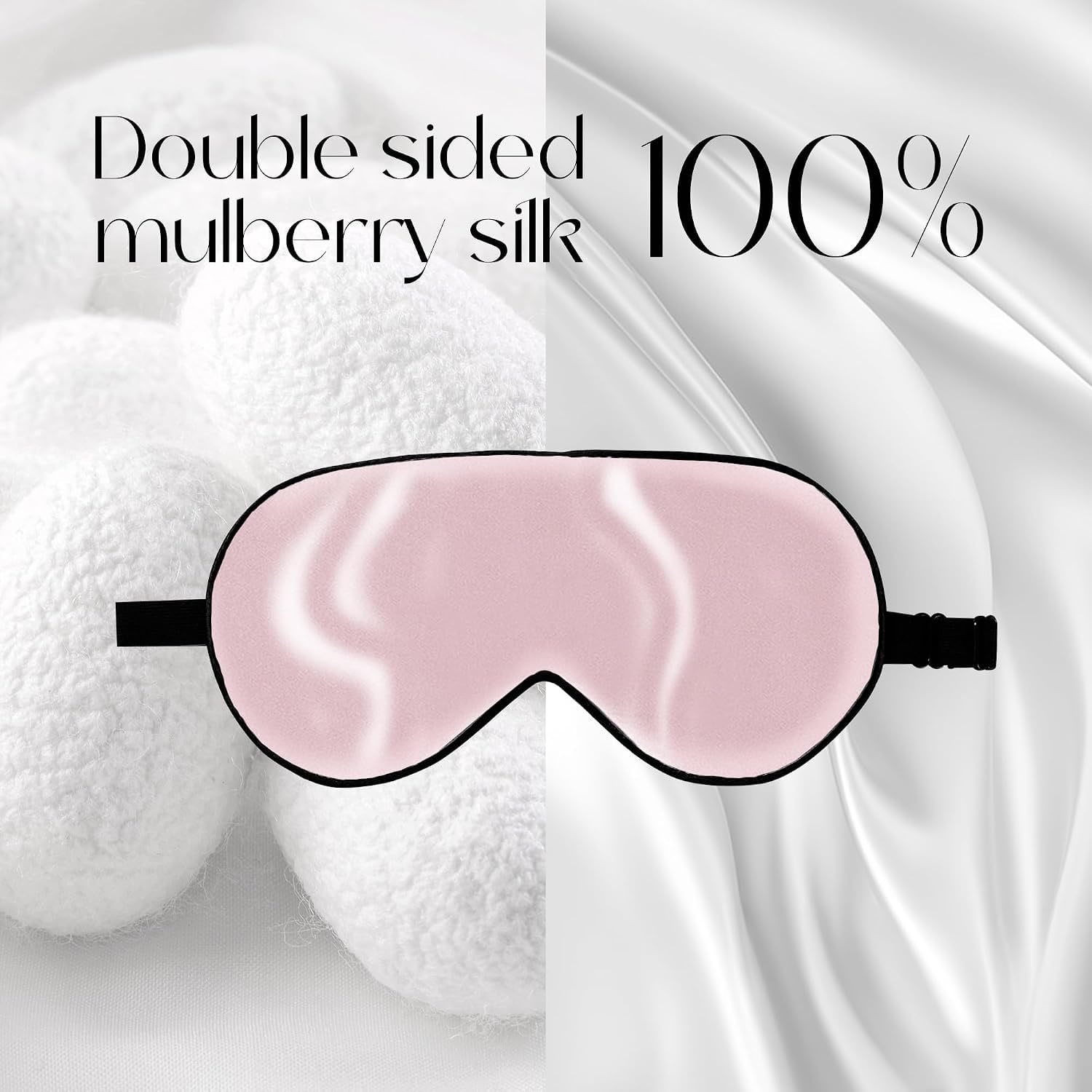
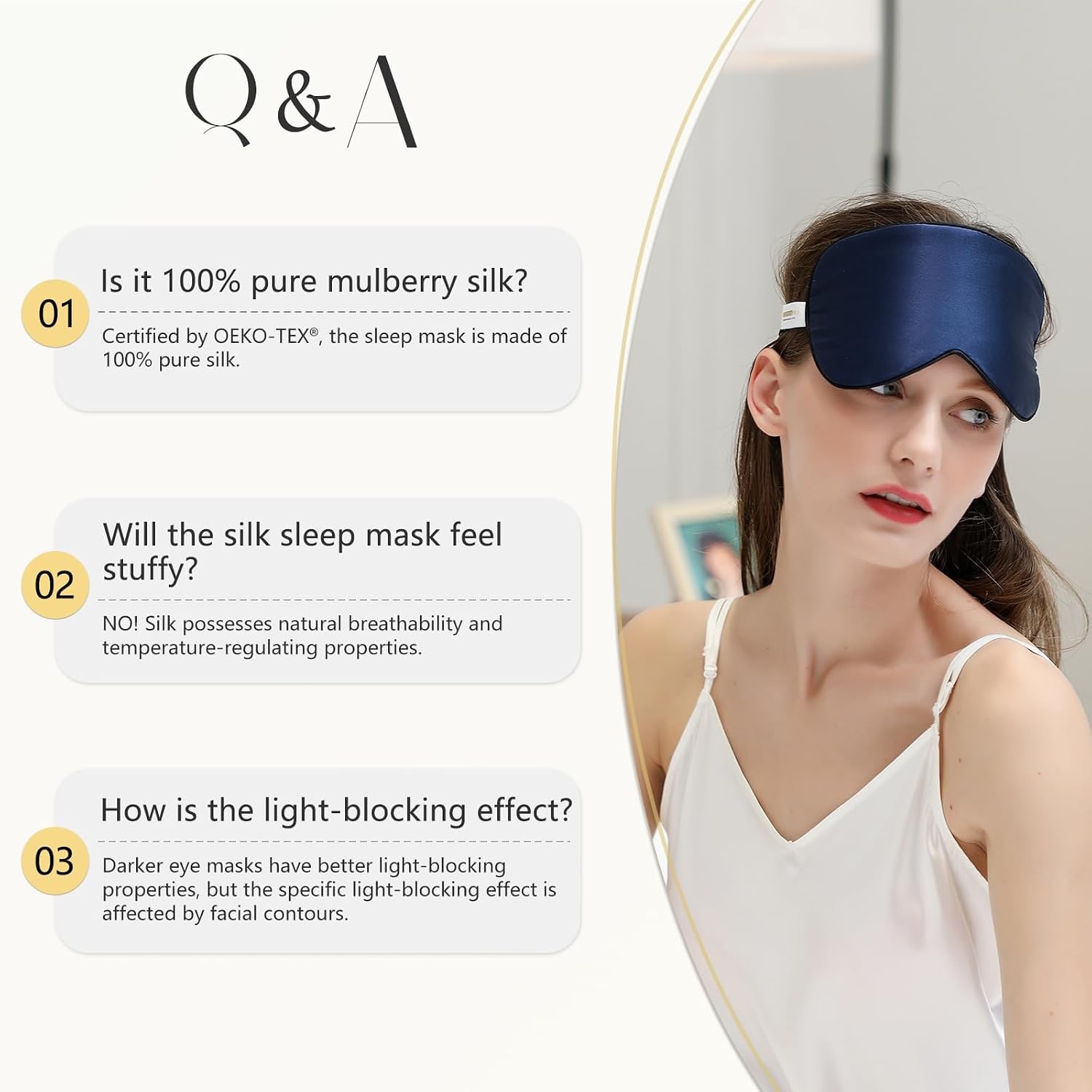
Silk behaves differently. It is smooth, so your eyelids and lashes slide over it rather than catching. It feels cool when you first put it on, which is a small pleasure at the end of a hot day. And it is light, so a silk mask does not have the heavy, clamped feeling of a padded one.
This set is 100% mulberry silk on both sides. That detail is worth checking on any mask you buy, because plenty of them are silk on the outside and something cheaper on the inner face, which is the face that actually touches you. Both sides silk means the surface against your skin is the one you paid for.
What is not stated here is the momme weight, which is the number that tells you how dense the silk is. If you want a mask with a published momme figure, you would need to look at a listing that gives one. What is confirmed for this pair is the fibre content, the colours, the closure and the care.
Why the strap decides everything
People give up on sleep masks for two reasons. Either light leaks in, or the strap annoys them. Both come back to fit.
A fixed elastic band is made to one length. If your head is smaller than average, the mask slides and the gap along your nose lets light through. If your head is larger, the band grips, and after a few hours you have a line across your temples and a dull ache behind your ears.
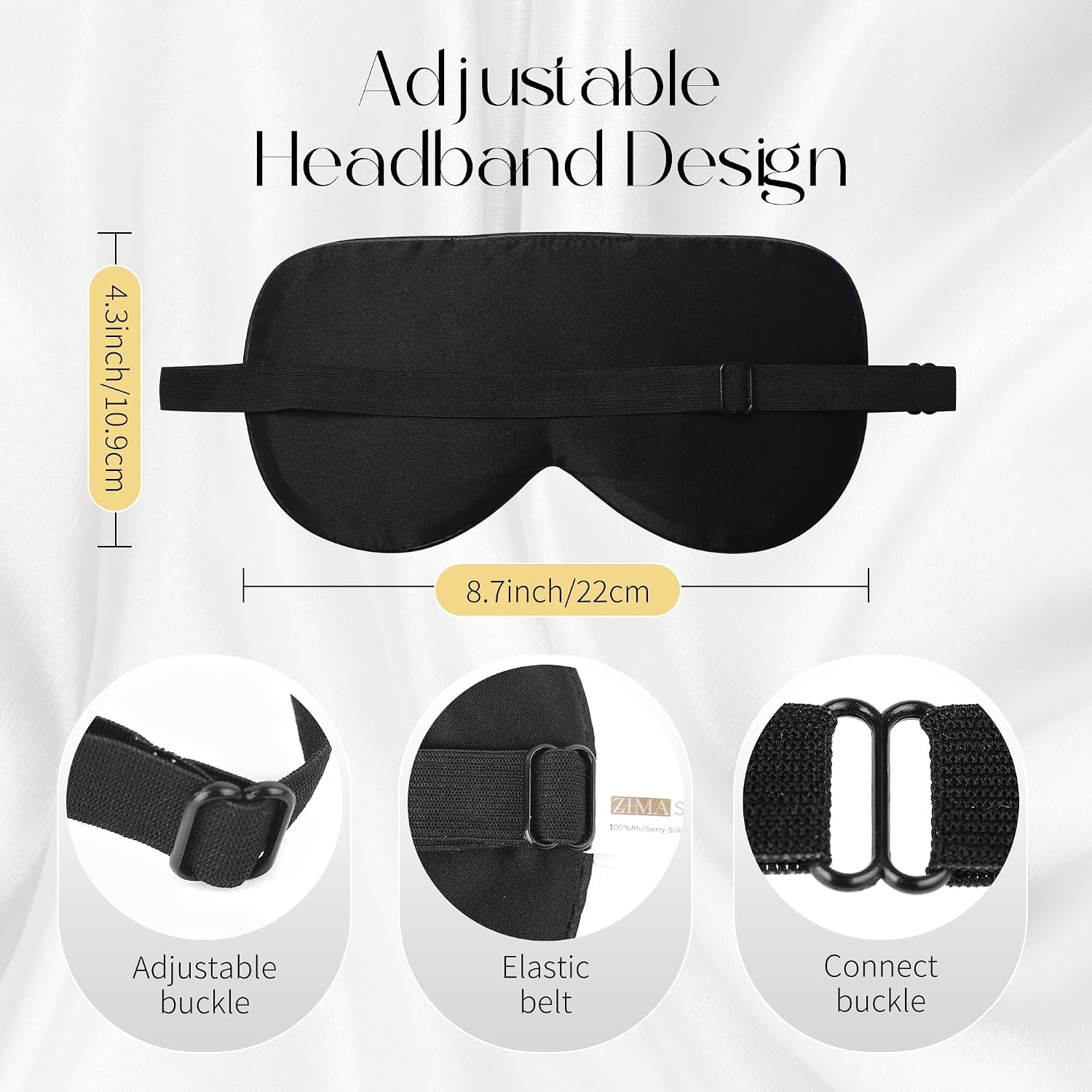
This set uses a buckle. You slide the strap to the length that suits you, and it stays there. Set it once, and the mask goes on the same way every night without fiddling in the dark. That single feature is the difference between a mask you tolerate and one you forget you are wearing.
A buckle has a second advantage over velcro, which is the other common adjustable closure. Velcro hooks grab hair. A buckle lies flat. If you have long hair, the practical routine is to tie it loosely first, lift the strap over the back of your head rather than dragging it down over your face, and sit the buckle slightly off the centre line so it is not directly between your skull and the pillow.
Who this suits
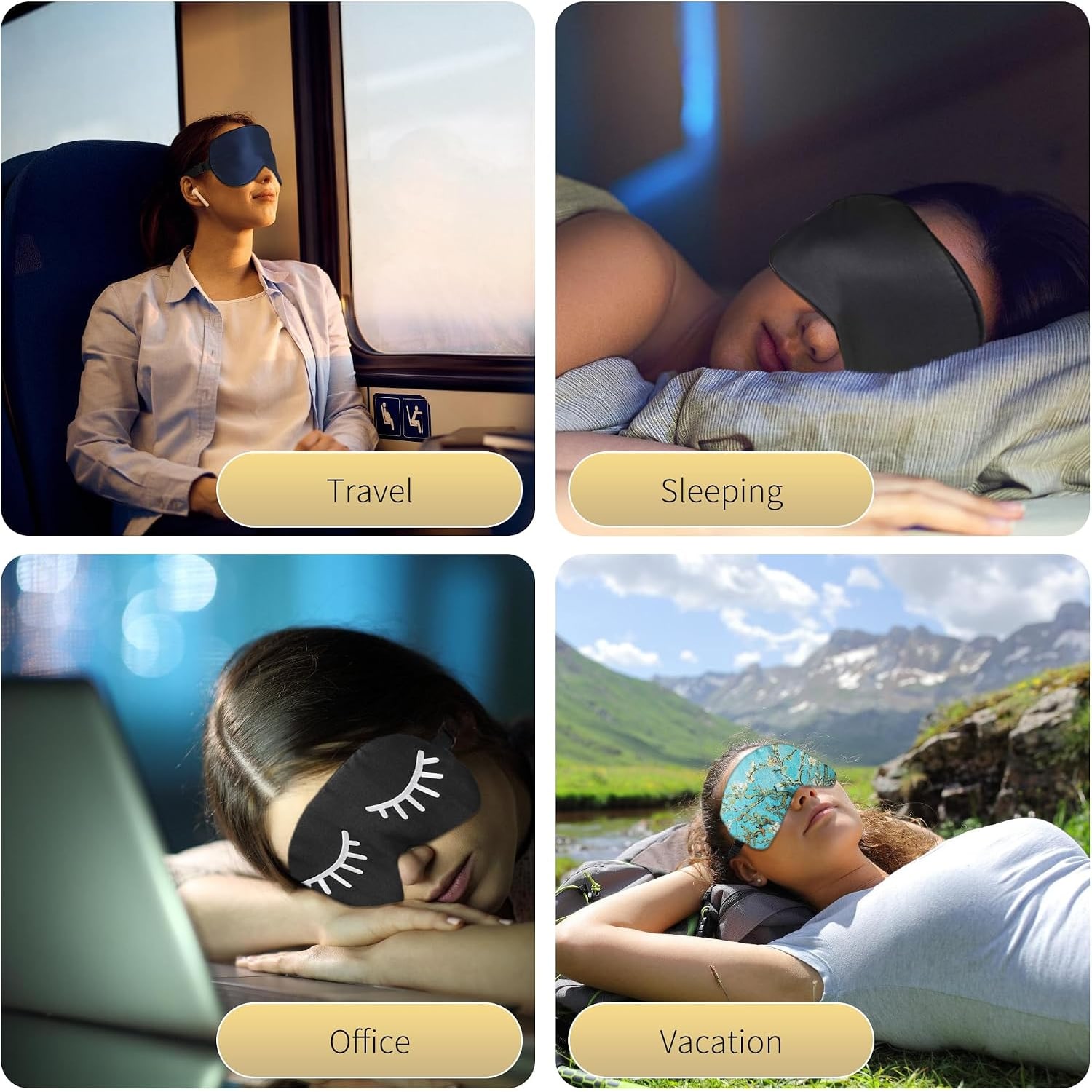
Travellers are the obvious group. An aircraft cabin is never properly dark, and the person two rows up will have their reading light on for the whole flight. A flat silk mask packs into a pocket, weighs almost nothing and does not get crushed in a bag. This is the main reason a silk sleep mask for travel tends to outlast the foam freebie that came with a flight kit.
Shift workers are the group who need it most. Sleeping during daylight is hard work, and a mask is the one piece of kit you can take to a crash room or a spare bed. Pair it with a blind if you can, and you have a reasonable approximation of night.
Side sleepers do well with a flat mask. There is no moulded frame to press into the pillow, and silk does not grip the pillowcase the way a textured fabric does, so the mask stays put when you turn over.
Light sleepers who share a room with someone on a different schedule are the fourth group. If one of you reads late and the other starts at five, a mask is a lot easier to negotiate than a lamp.
Choosing between flat and contoured
There are two broad shapes on the market. Flat masks, like this pair, sit against the face. Contoured or cup masks have moulded eye pockets that leave space in front of the lashes.
Flat masks pack smaller, feel lighter and cost less. They are the better choice for travel and for anyone who dislikes bulk on their face. The trade-off is that the fabric does touch your lashes, which some people notice and most do not.
Contoured masks give you room to open your eyes under the mask and keep anything off your lashes. They are bulkier, warmer and more awkward to carry. If you wear lash extensions or you strongly dislike anything touching your eyes, that extra depth is worth the bulk.
With a flat mask, the setting of the strap does a lot of the work. Snug enough to close the gap at the nose, loose enough that the silk is resting rather than pressing. Give yourself two or three nights to find that point.
Why a two pack is the sensible buy
One mask gets lost. That is just how it goes with small soft objects. It ends up in a hotel bed, in the pocket of a seat back, or at the bottom of a gym bag.
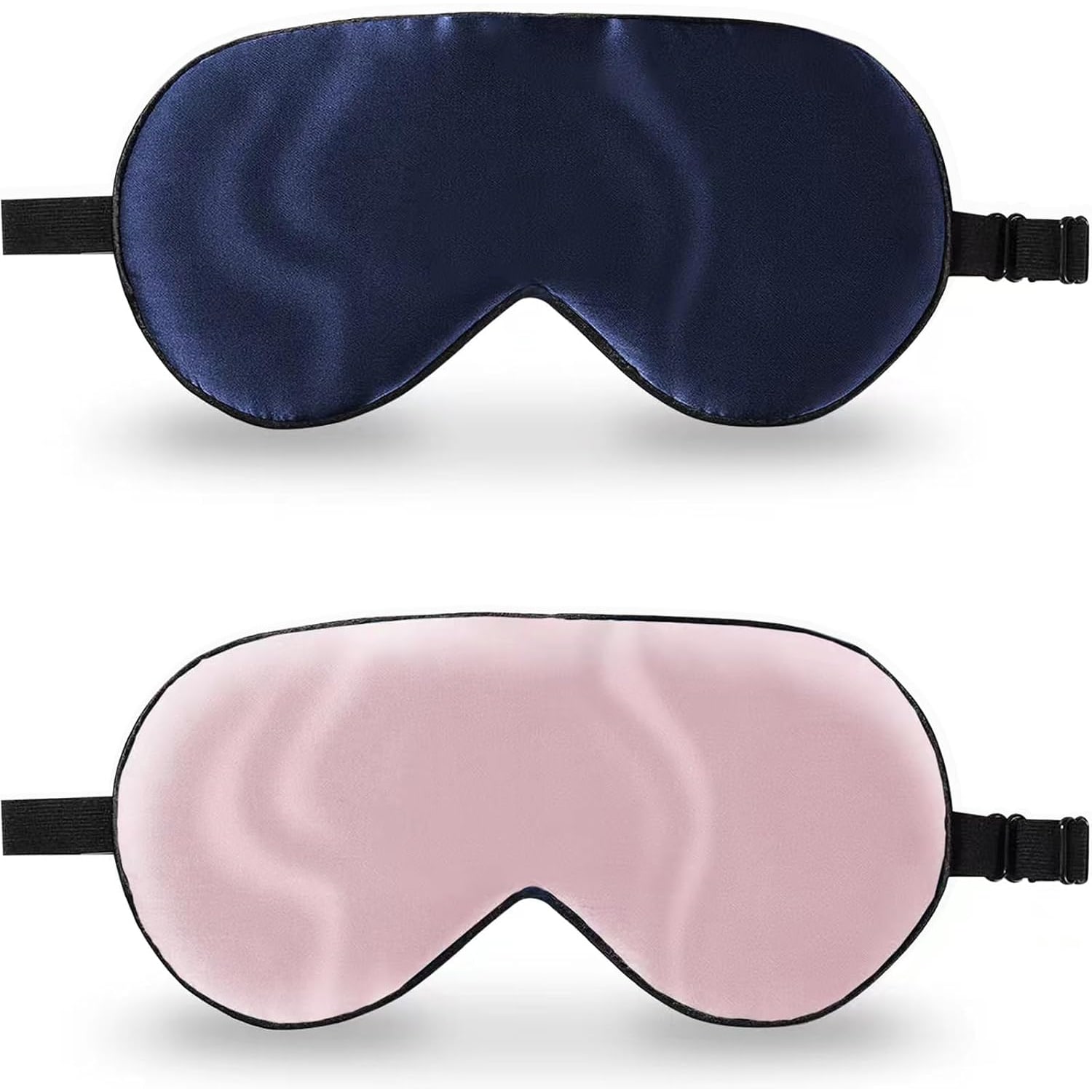
Two masks in two colours solves a few problems at once. One lives permanently in your travel bag so you never pack it and never forget it. The other stays in the bedside drawer. If one is drying after a wash, you still have a mask that night. If two people in the house want one, nobody has to share.
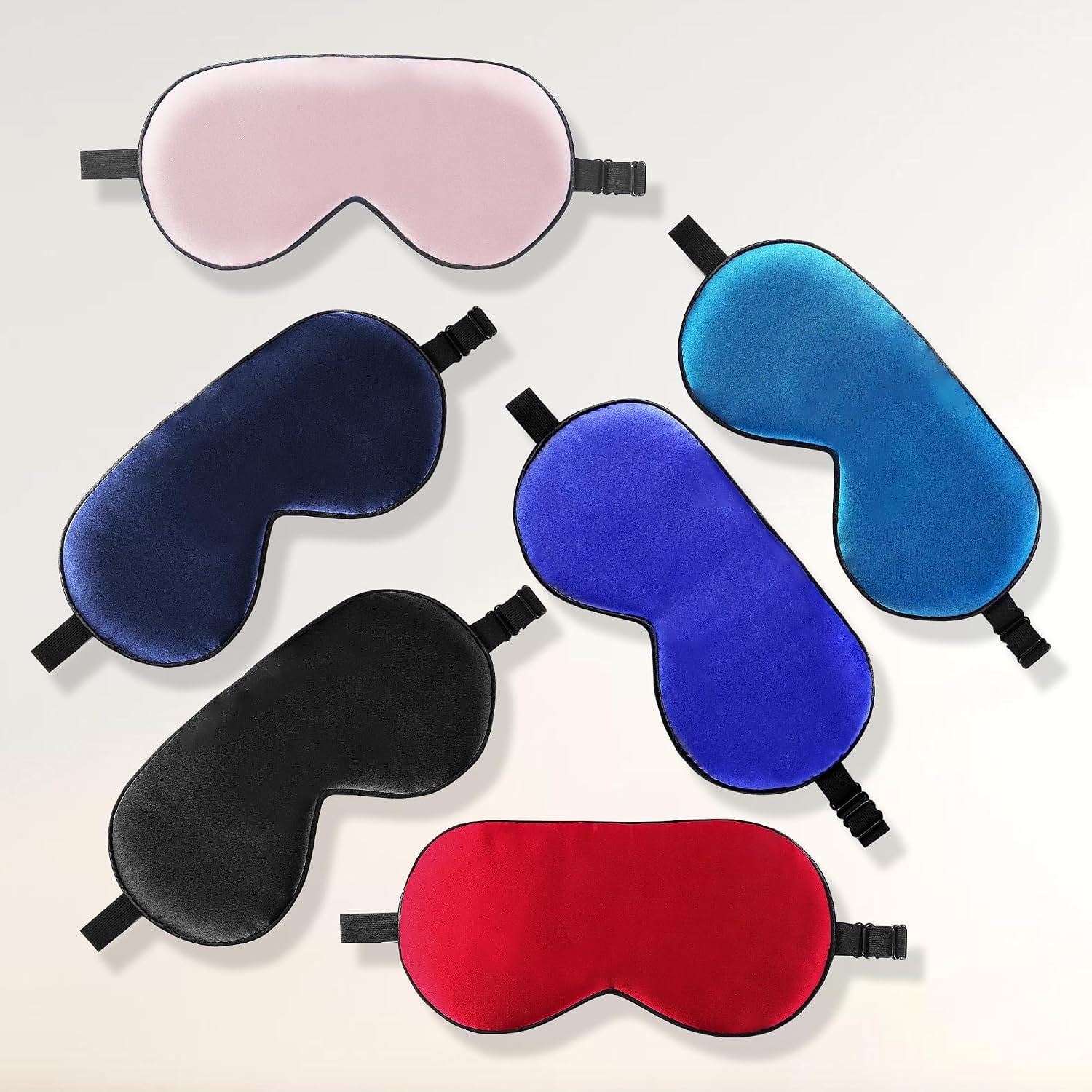
The colours here are navy blue and pink, both solid with no pattern. Plain colours wear well and do not look tired after a few months of use.
Looking after silk
Silk is not fragile, but it does want a gentler routine than a cotton pillowcase. The care instruction here is hand wash only.
In practice that means a basin of cool water, a small amount of a detergent made for delicates, and a minute of gentle squeezing. No scrubbing, no wringing, no bleach. Rinse in cool water, lay the mask on a towel, roll the towel to press out the water, then dry it flat away from direct sun and away from a heater.
Skip the tumble dryer entirely. Heat and tumbling are what turn a smooth silk surface dull. If you need to remove a crease, hang the mask in a steamy bathroom, or iron it on the lowest setting with a cloth between the iron and the silk, keeping well clear of the buckle.
How often you wash depends on your routine. If you use night cream or sleep somewhere warm, every week or two makes sense. If the mask only comes out for flights, wash it when you get home.
Between uses, keep the masks in the storage bag that comes with the set. The single most common way a silk mask gets damaged is a zip or a hair clip at the bottom of a handbag.
A few honest limits
A mask handles light. It does not handle noise, a warm room or a racing mind, and nobody should sell it to you as though it does. If your sleep problem is mostly the neighbour's dog, earplugs will do more than any eye mask.
Some detail on this set is simply not published. The maker does not state a momme weight, a finished panel measurement, a brand or a country of origin. The confirmed facts are the ones in the spec table, 100% mulberry silk on both sides, buckle closure, solid colour, two masks in navy and pink, hand wash only, and a 41 g package.
The short version
If light is what wakes you, a mask is the smallest change with the biggest return. Silk makes it comfortable enough to actually wear all night, and an adjustable buckle strap makes it fit your head rather than an average one. Two masks means you always have one where you need it.
Give it three nights before you judge it. Set the strap, get used to the feeling, and most people stop noticing the mask by the end of the first week. Delivery is tracked to every province in 10 to 20 working days, and you have 14 days from delivery to send the set back unused if it is not for you.