

The complete guide
How To Choose A King Silk Pillowcase That Actually Fits
The problem with buying silk online
Most of the disappointment around silk pillowcases has nothing to do with the silk. It is about size. Someone orders a case labelled "king", it arrives, and it swallows their pillow with 20 centimetres to spare at one end. Or they order "standard" and cannot get the pillow in at all.
This happens because pillow sizing is not consistent between countries. A lot of silk bedding, including this case, is cut to American measurements. A South African pillow you buy locally is often somewhere near 45 by 70 centimetres. An American king pillowcase is 91,4 by 50,8 centimetres, or 36 by 20 inches. Those are not the same shape at all.
So before anything else: go and measure your pillow. Lay it flat, no squashing, and take the length and the width. Write it down. Then compare it to the case. That one step prevents most returns.
What momme actually tells you
Silk is sold by momme, which is a weight measure. It is written as a number followed by the letters mm or the word momme, and it describes how heavy a given area of the fabric is. Think of it the way you think of GSM for cotton towels.
Silk pillowcases generally run from about 16 momme up to around 25. Lower weights are thinner and cheaper, and they can feel slippery and insubstantial. The very highest weights are dense and can feel almost like a light fabric panel rather than bedding.
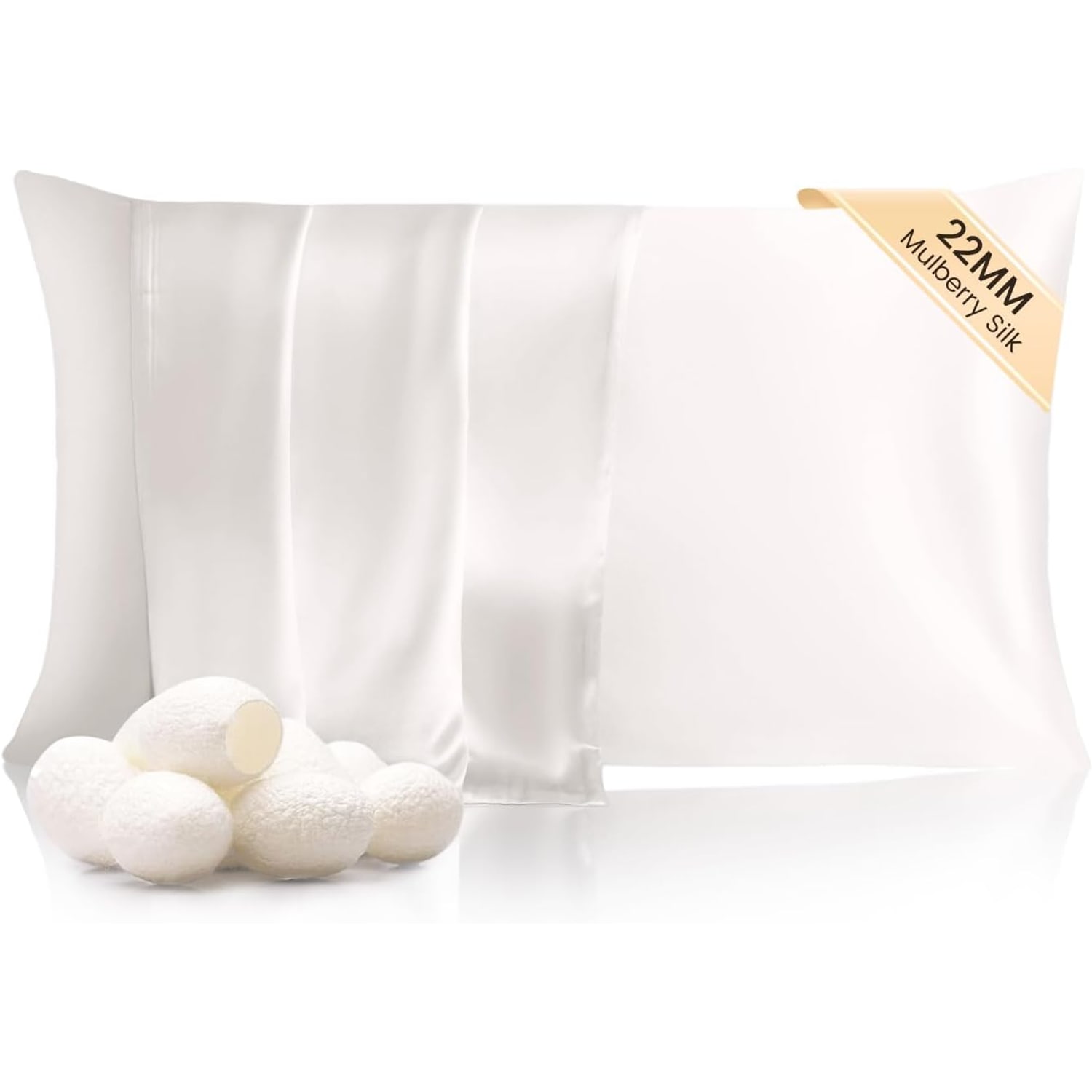
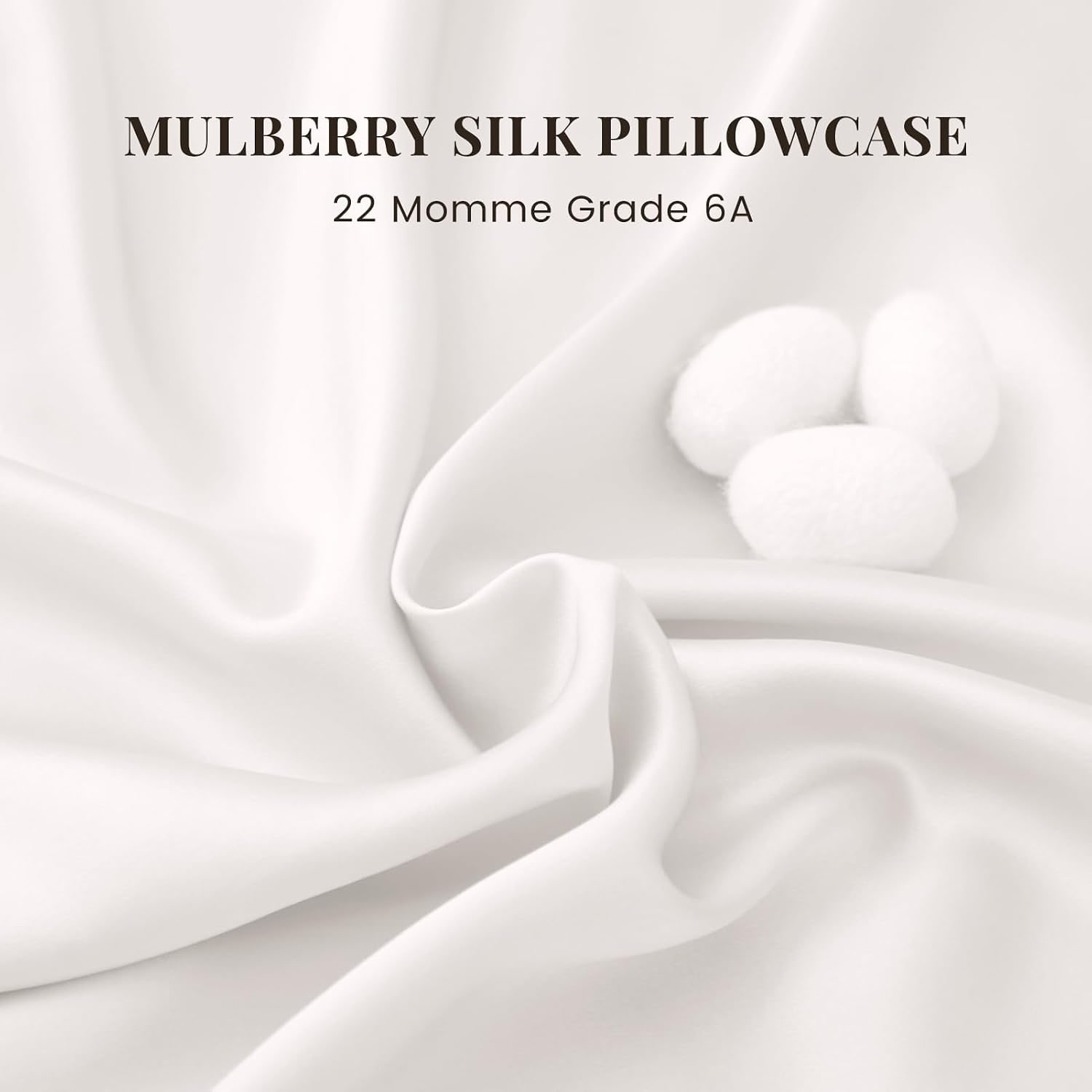
This case is 22 momme, which sits in the upper middle. In practice that means the cloth has body. When you shake it out it has a bit of weight to it and falls into soft folds instead of floating. It does not feel papery. For most people, something in the low twenties is the sensible target for the best 22 momme silk pillowcase experience without paying for weight you will not notice.
Thread count also gets quoted, and here it is 600. In silk, momme is the more useful number, because thread count can be inflated with counting tricks. Still, a high count alongside a solid momme weight describes a close, even weave rather than something loose.
Why friction is the whole point
The practical reason people move to silk is friction, or rather the lack of it.
Cotton, even good cotton, has texture at the fibre level. When you turn over at night, your hair and the side of your face drag across that texture. Over eight hours and three hundred and sixty five nights, that adds up to a lot of small tugging.
Silk is a much smoother fibre. Hair slides over it rather than catching. That is a property of the material itself, not a finish or a coating, which means it does not wash out. It is also the reason a pure silk pillowcase keeps getting recommended by hairdressers.
Silk also breathes. If you sleep warm, that matters. The surface feels cool when you first lie down and it does not trap heat the way some synthetics do.
That is as far as we will go. Silk is a nice fabric to sleep on. We are not going to tell you what it will do to your skin.
Mulberry silk and what makes it different
Mulberry silk comes from silkworms raised on a mulberry leaf diet in controlled conditions. The result is a long, even fibre, which matters because long fibres produce smoother and stronger cloth than short broken ones.
When you see a mulberry silk pillowcase described that way, the fibre length is the point. Shorter wild silks have more character and more texture, which is lovely for a scarf and less ideal for something your face is on all night.
This case is mulberry silk, in white, with no pattern. Plain white is the easiest colour to live with. It goes with the duvet cover you already own, it does not fight with a patterned throw, and it does not look odd in a guest room.
The zip matters more than you think
The closure sounds like a detail. On a king pillow it is not.
A long pillow moves. It gets propped up for reading, shoved around when you shift position, and dragged half off the bed by whoever gets up first. An envelope flap case will slowly ride off that pillow over a few nights, leaving a naked corner poking out.
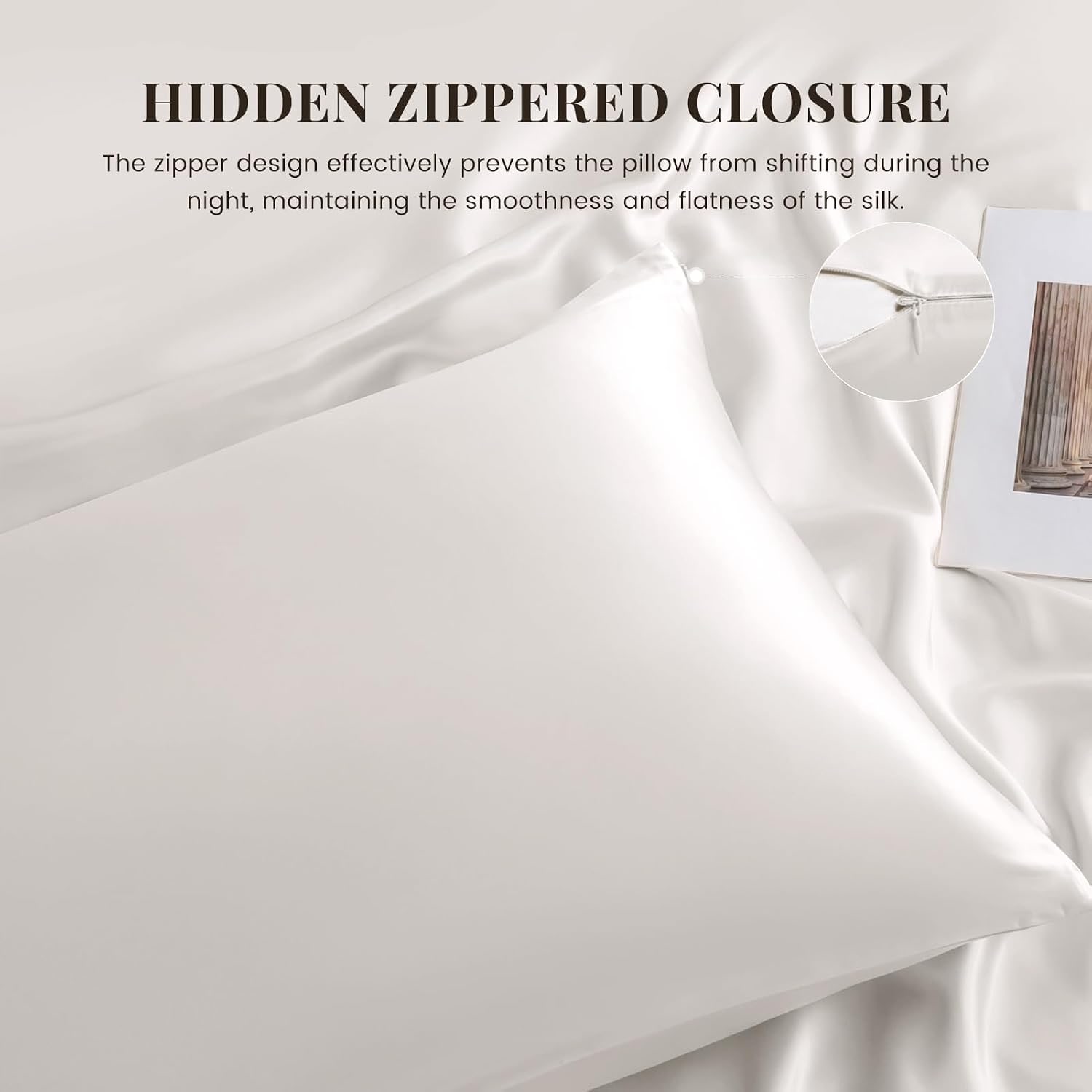
A concealed zip closes the case properly. The pillow stays where you put it. The zip here is hidden in the seam, so the face of the case stays smooth and uninterrupted when it is on the bed.
There is a laundry benefit too. A silk pillowcase with zip opens all the way along one side, so getting a thick pillow in and out is quick rather than a shoving match. If you wash your bedding weekly, that small convenience is worth something.
One habit to build: always close the zip before the case goes into the wash. An open zip can catch on fabric and pull threads.
Washing silk without ruining it
Silk has a reputation for being difficult. It is not, really. It just wants cool water and gentle handling.
Hand washing is the gold standard. Cool water, a small amount of mild detergent meant for delicates or wool, a gentle squeeze rather than wringing, then a rinse. It takes about five minutes.
Machine washing works too. Put the case in a mesh laundry bag, select the gentle or delicates cycle, keep the water cool, and let it go. The mesh bag stops the case tangling around other items or catching on the drum.
Things to avoid: bleach, fabric softener, hot water, and strong enzyme detergents. Bleach damages the fibre. Softener leaves a residue that dulls the surface. Heat is the enemy of silk's finish.
Drying is flat, on a towel, away from direct sun. Silk dries fast, often within a few hours indoors. Sunlight will fade and weaken it over time, so keep it in the shade.
If you want it crisp, iron on the lowest setting on the reverse while slightly damp. Most people skip this entirely.
Having two cases makes the whole routine easier, because one is always in use while the other dries.
Who this suits
This is a good fit if you own king length pillows and want a plain white case that will not clash with anything. It suits people who want a bit more weight to their silk than the cheap lightweight options give you, and people who prefer a zip to a flap.
It is less suitable if your pillows are the shorter local size, if you want colour, or if you want a set rather than a single case. Those are all fine reasons to look elsewhere, and it is better to know now.
Warm sleepers tend to appreciate silk. So do people with long hair, and anyone who has got tired of waking up with pillow creases pressed into one cheek.
The short version
Measure your pillow first. A king case is 91,4 by 50,8 centimetres, which is longer than many South African pillows.
Twenty two momme is a sensible weight, with enough body that the fabric feels like something rather than nothing. Six hundred thread count tells you the weave is close and even.
The zip keeps a long pillow where it belongs and makes washing simple. White goes with everything.
Wash cool, dry flat, skip the bleach and the softener. Do that and the case will stay good for years. And if it turns out not to be right, you have 14 days from delivery to send it back unused and unwashed.