
The complete guide
Choosing a Mulberry Silk Pillowcase, A Practical Buyer's Guide
The problem with a cotton pillowcase
Most of us never think about the pillowcase. It comes with the sheet set, it goes on the pillow, and that is the end of it. Then you notice a few things. Your hair looks slept-on in a way that takes ten minutes to fix. There is a crease on one cheek that takes until mid-morning to settle. On warm nights the fabric feels like it is holding heat against your face, so you flip the pillow for the cool side, and by the time you find it you are awake.
None of that is dramatic. It is just friction and heat, repeated every night for years. A woven cotton surface has a bit of grip to it. Your face and hair drag across that grip every time you move, and cotton holds warmth near the skin. A silk pillowcase changes the surface you are lying on, and that is the whole point of it.
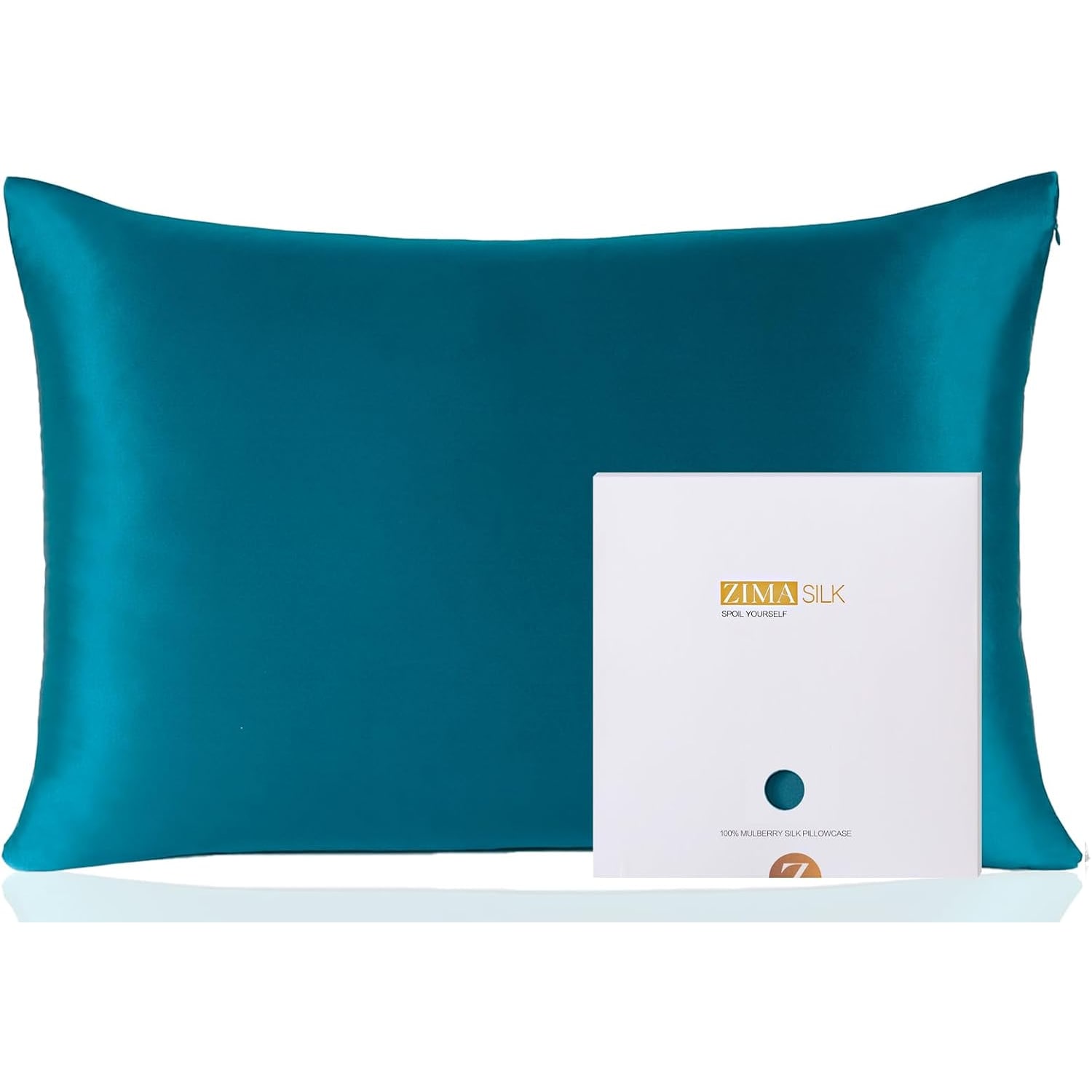
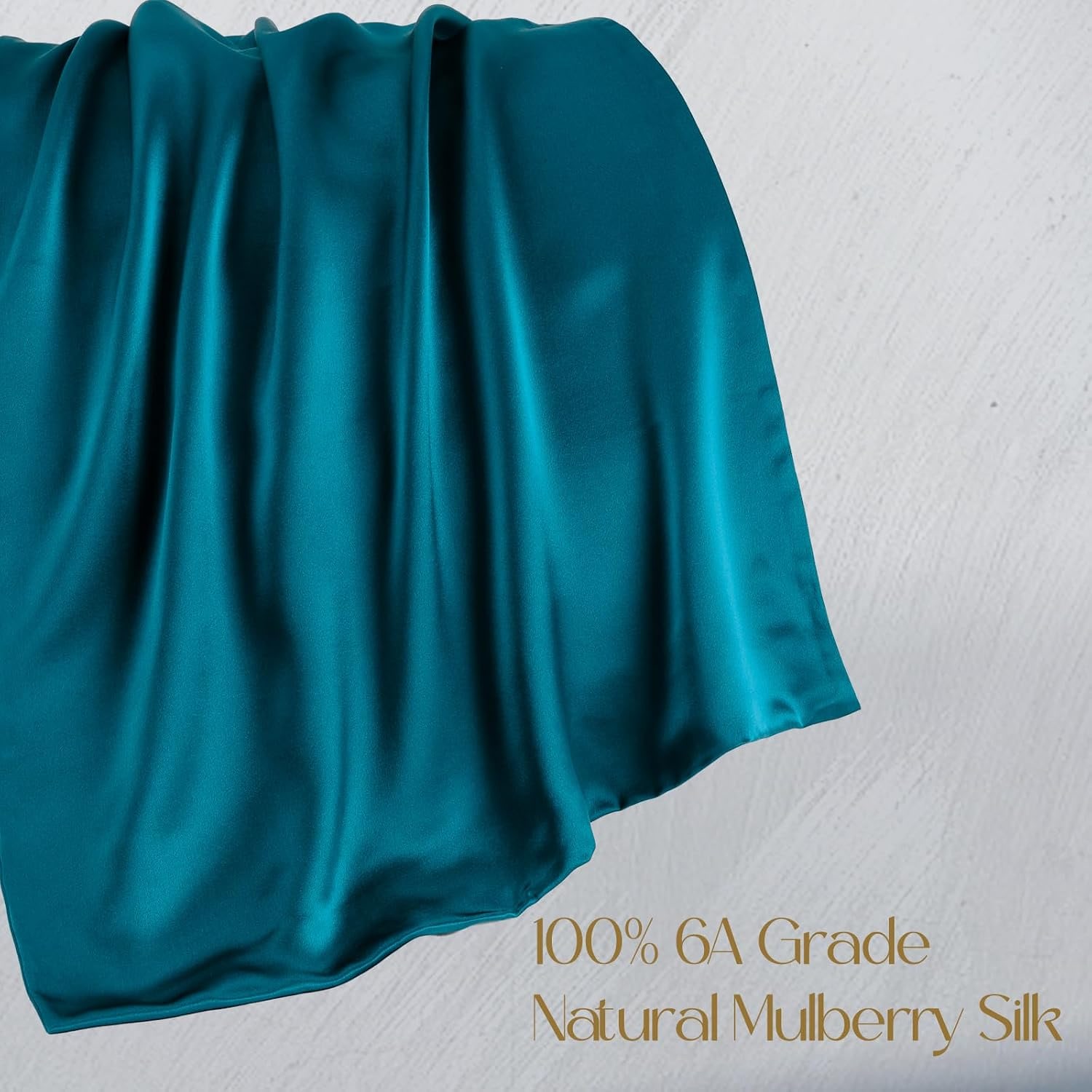
This one is a peacock blue mulberry silk pillowcase in the queen cut, 75 x 50 cm, made from 19 momme Grade 6A silk at a 600 thread count, with silk on both sides and a hidden zip.
How silk actually works
Silk is a protein fibre, spun by silkworms, and the filaments are long and continuous rather than short and spun together like cotton. That is where the smoothness comes from. The surface of a silk weave has far less texture at the microscopic level, so hair and skin slide over it instead of catching.
The second thing silk does is handle heat differently. It does not sit against you like a thick brushed cotton. The maker describes this fabric as breathable, temperature-controlling and cool to the touch, which matches what most people report the first time they lie down on it. In a South African summer that cool first contact is not a small thing.
What silk will not do is work miracles. It is a smooth, cool, pleasant fabric to sleep on. That is enough of a reason on its own.
The one number worth understanding
If you are comparing silk pillowcases, momme is the number to look at. Momme (pronounced "mommy") measures the weight of the silk fabric. Think of it the way you would think of GSM for a towel.
Here is the rough map. Sixteen momme is light, affordable, and perfectly usable, though it feels thinner in the hand. Nineteen momme is the common sweet spot, with enough body to drape nicely over a pillow and enough density to take regular washing. Twenty-two and 25 momme feel denser and more luxurious, and they cost noticeably more.
This case is 19 momme. For most buyers looking for the best 19 momme silk pillowcase without pushing into the top price bracket, that is the number they land on. It is substantial without being heavy.
Thread count is the second number, listed here at 600. It tells you how tightly the fabric is woven. Combined with the momme weight, it is what gives the surface its fine, even feel rather than anything coarse.
Why double-sided matters more than it sounds
This is one of those details that separates a good case from a disappointing one. A fair number of silk pillowcases on the market use real silk on the face and something cheaper, usually cotton or a blend, on the back. It cuts the cost. It also means half the time you are not sleeping on silk at all.
This case is double-sided pure silk. Flip the pillow at three in the morning and you land on the same fabric. It also means the case wears evenly, rather than one side ageing faster than the other.
When you are shopping for the best mulberry silk pillowcase in your budget, double-sided is the first thing to check on any listing, because it is the easiest corner for a maker to cut quietly.
Getting the size right
Silk has no give. A cotton case will stretch a little and forgive a near-miss on size. Silk will not, and a pillowcase that is too tight puts strain on the seams every time you put it on.
This one is cut to 75 x 50 cm, which is 30 by 20 inches, the American queen measurement. A standard South African pillow is usually closer to 70 x 45 cm, so this case will fit with a bit of room to spare. Some people like that slightly relaxed drape. Others want it tight. Either way, take a tape to your pillow, lay it flat and measure it rather than trusting the label on the packaging.
The sizes you will see quoted elsewhere are standard at 51 x 66 cm, queen at 51 x 76 cm, and king at 51 x 91 cm. A king pillow will not fit this case. If your pillow is the long kind that runs most of the width of the bed, you need a king cut.
The hidden zip
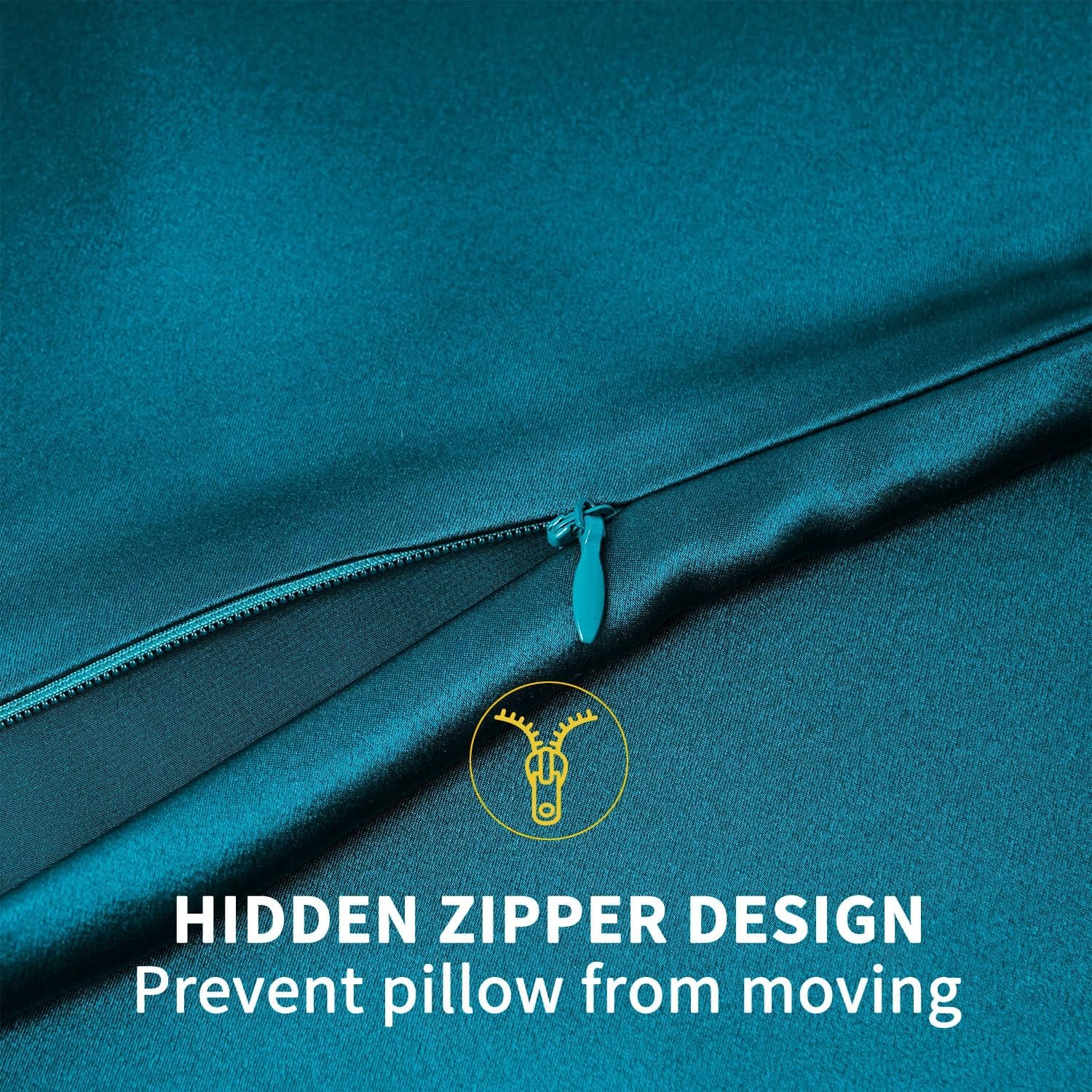
Older silk cases often used an envelope closure, a flap of fabric that tucks over the pillow end. It works, until the pillow slowly pushes its way out over the course of the night and you wake up holding a bare pillow corner.
A hidden zip solves that. The zip runs along the seam, tucked out of sight, and the pillow stays where you put it. It is also better for washing, because you can close the zip before the case goes into the basin and the weave is less likely to snag on anything.
If you are sensitive to feeling seams, just point the zip end away from where your head usually sits. Most people never register it.
Who this suits
People with long hair tend to be the first converts, because the drag reduction is immediately obvious in the morning. Warm sleepers are the second group, since the cool-to-touch surface is noticeable in the first minute. And people who simply like good bedding are the third, because a good silk case is one of the cheapest ways to make a bed feel considerably better.
It also works as a gift. A silk pillowcase gift tends to land well precisely because it is the kind of thing people enjoy but rarely buy for themselves, and a solid peacock blue is easier to match to someone else's bedroom than a pattern would be.
Living with the colour
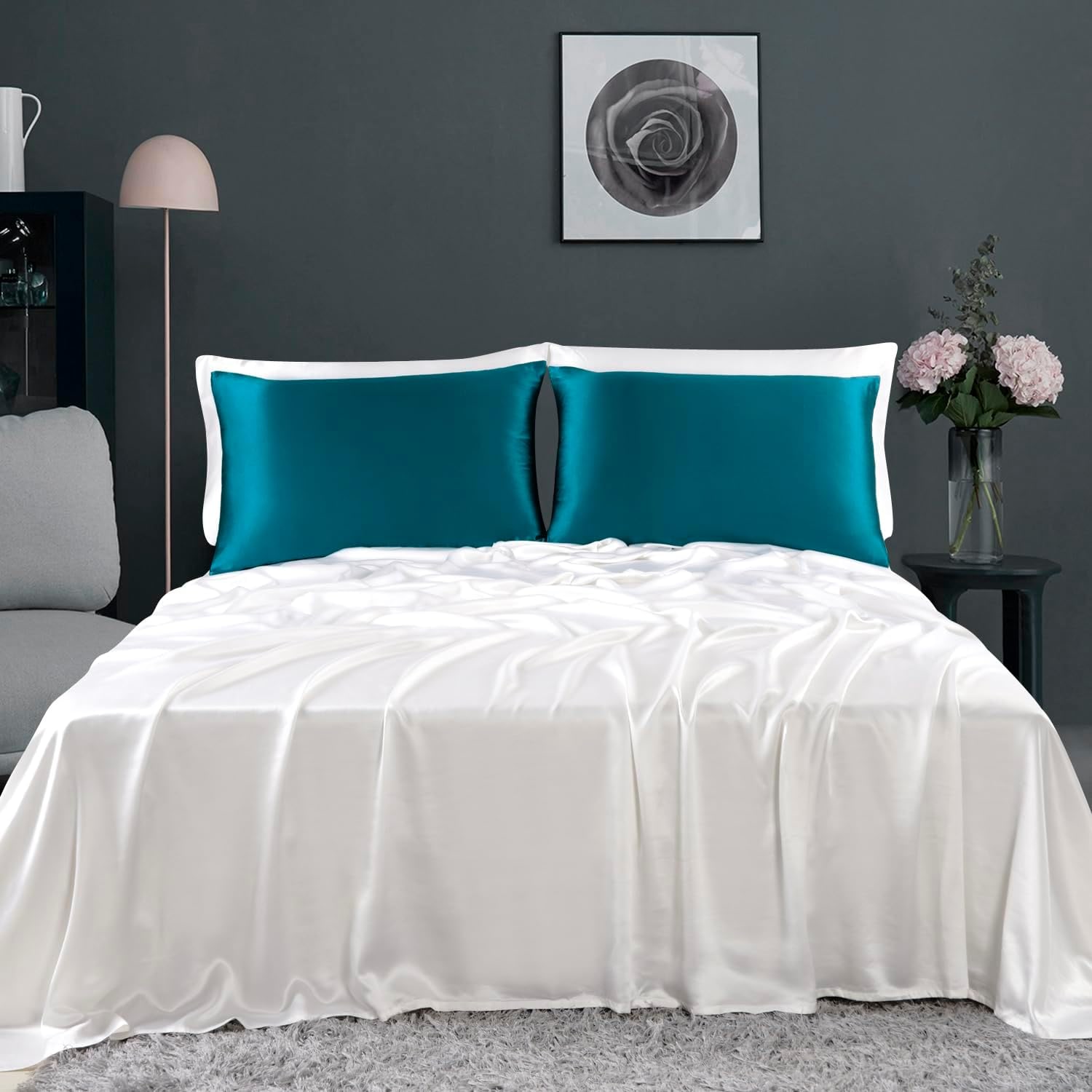
Peacock blue is deep and clear with a teal lean. It is a solid colour, no pattern, no print. Against white bedding it looks intentional. It sits comfortably with grey, charcoal, navy and natural linen tones.
Dyed silk does best out of direct sunlight. Dry it in the shade and the colour stays where it should. That is more about the sun than the washing.
Care, honestly
Care is hand wash only, and it is less of a chore than it sounds. Fill a basin with cool water, add a small amount of a detergent made for wool or delicates, and swirl the case through for a couple of minutes. Rinse in clean cool water. Do not wring it out. Lay it on a towel, roll the towel up, press, then unroll and dry the case flat or on a hanger in the shade.
Avoid bleach and anything with enzymes or optical brighteners. Enzyme detergents are built to break down protein, and silk is a protein. Skip the tumble dryer entirely. If you want it crisp, iron on the lowest setting on the reverse while slightly damp, though most people find the creases drop out on their own.
Washing weekly is a sensible rhythm. More often if you use rich night creams or leave-in hair products.
The short version
This is a single queen-size pillowcase, 75 x 50 cm, in solid peacock blue. The fabric is 19 momme Grade 6A mulberry silk at 600 thread count, silk on both sides, with a hidden zip. Care is hand wash only.
Measure your pillow before you order, since a typical South African pillow is a bit smaller than this American queen cut. If you want a matching pair, order two, because it is sold as a single. Delivery is tracked to every province in 10 to 20 working days, free over R1800 and R250 below that, and you have 14 days from delivery to cancel if it is unused and unwashed.