



The complete guide
How to Choose a Silk Pillowcase, Sizes, Momme and Care Explained
The small annoyance nobody talks about
Most of us inherit our pillowcases. They come in a set with the duvet cover, they are cotton, and we never think about them again until the morning the hair at the back of our head looks like it has been through a hedge. Cotton is a good fabric for a lot of things. It is absorbent, it washes hot, it lasts. But it is also a woven fabric with real texture, and over seven or eight hours your hair and your face are pressed against that texture and dragged across it every time you turn over.
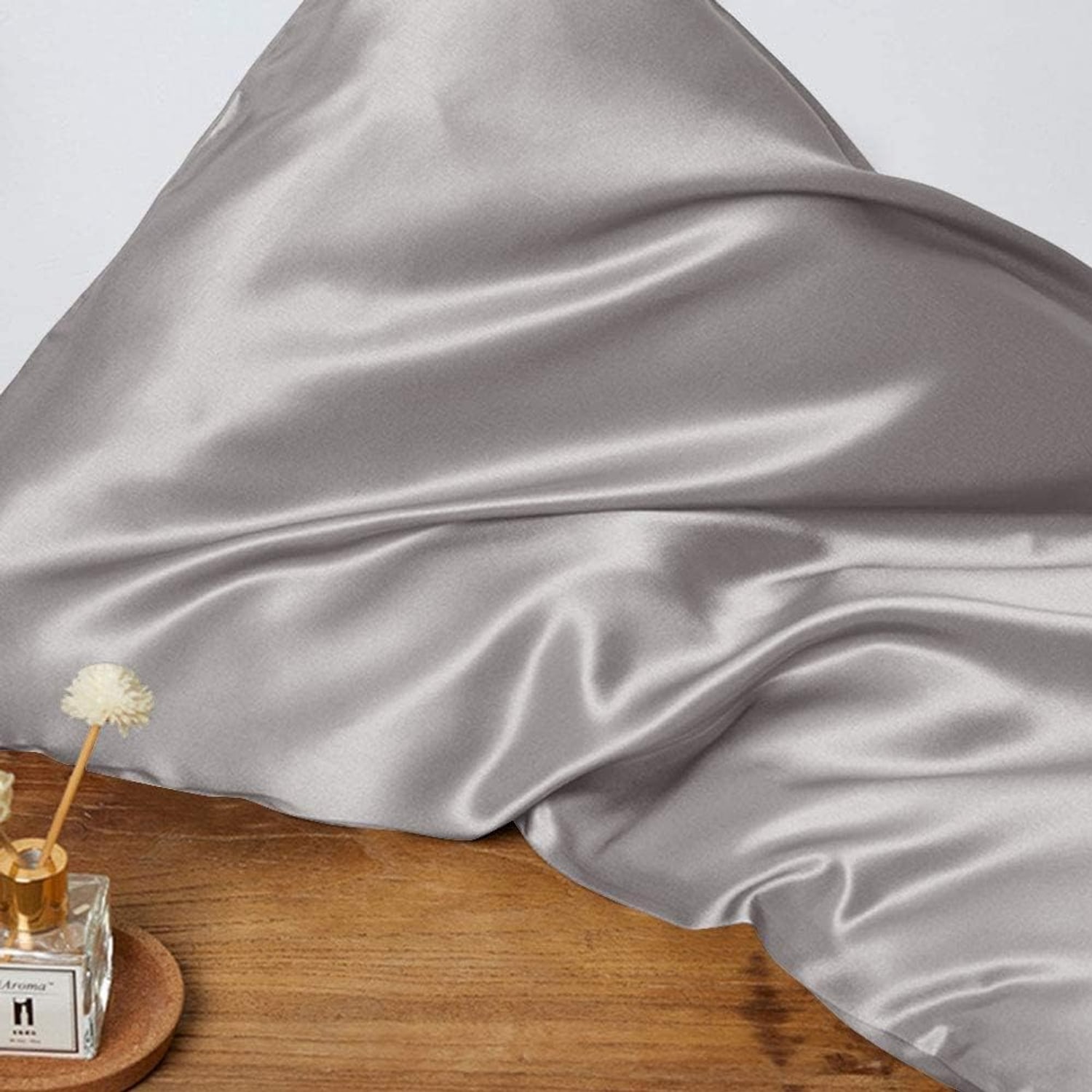
That is the problem a silk pillowcase solves. Not a dramatic one, but a daily one. The surface of mulberry silk is so smooth that hair slides instead of catching, and your cheek moves across the fabric rather than being pulled along with it. You notice it the first night. Plenty of people who buy their first mulberry silk pillowcase end up buying a second within the month.
What mulberry silk actually is
Silk comes from the cocoon of a silkworm. Mulberry silk specifically comes from silkworms fed on mulberry leaves, and that controlled diet produces unusually long, even, uniform fibres. Long fibres matter because they can be spun into a thread with fewer joins and fewer loose ends, and that gives you the flat, low-friction face you are paying for.
Shorter-fibre silks exist and they are cheaper, but they have a slightly fuzzier surface and they pill sooner. When people talk about the best pure silk pillowcase, they almost always mean long-fibre mulberry silk, which is what this case is made from.
Satin is a different thing entirely, and the two words get mixed up constantly. Satin is a weave structure, not a fibre. You can weave polyester into satin and it will look shiny in a photograph, but it will not breathe the same way, and on a warm Highveld night you will feel the difference. Silk is a natural protein fibre and handles body heat far better.
Momme, thread count and which number to trust
Silk is measured in momme, an old unit that describes the weight of the fabric. Higher momme means a denser cloth. Very light silks around 12 or 16 momme feel delicate and wear out faster under nightly use. Heavier silks feel substantial and hold up to regular washing.
This case is a 22 momme silk pillowcase, which sits in the band most people consider the sweet spot for bedding. It is heavy enough to feel like a proper piece of fabric and to survive the wash cycle, without the slight stiffness you get at the very top of the range.
The maker also lists a 600 thread count. Thread count is more meaningful on cotton than on silk, because silk threads are so much finer that the numbers are not really comparable. If you are weighing up two silk pillowcases, momme tells you more than thread count does.
Getting the size right in South Africa
This is where most disappointment comes from, so it is worth slowing down. This pillowcase is cut to the American queen size, 76.2 x 50.8 cm, which is 30" x 20".
A standard South African pillow is usually around 45 x 70 cm. That is noticeably smaller than this case. Your pillow will fit, but it will swim a little and the fabric will gather at the ends. Some people like that slightly loose, hotel-ish look. Others want the case pulled taut.
If you sleep on a larger imported pillow, a continental-style pillow or a deep memory foam pillow, the queen cut is often exactly right. Contoured foam pillows with a moulded wave shape are the one category to be careful with, because they do not always sit flat inside a plain rectangular case.
The fix is simple. Lay the pillow flat without pressing it down, measure edge to edge across the long side, then measure the short side. Compare those two numbers with 76.2 and 50.8. If your pillow is within a few centimetres on each measurement, you will be happy.
Why the zip matters more than you think
Closures sound like a detail until you have slept on both kinds. An envelope closure is a flap of fabric folded over the pillow end. It is cheap to make, it looks tidy, and it works fine if you lie still. If you move around at night, the pillow slowly works its way out and you wake up with a bare corner under your ear.
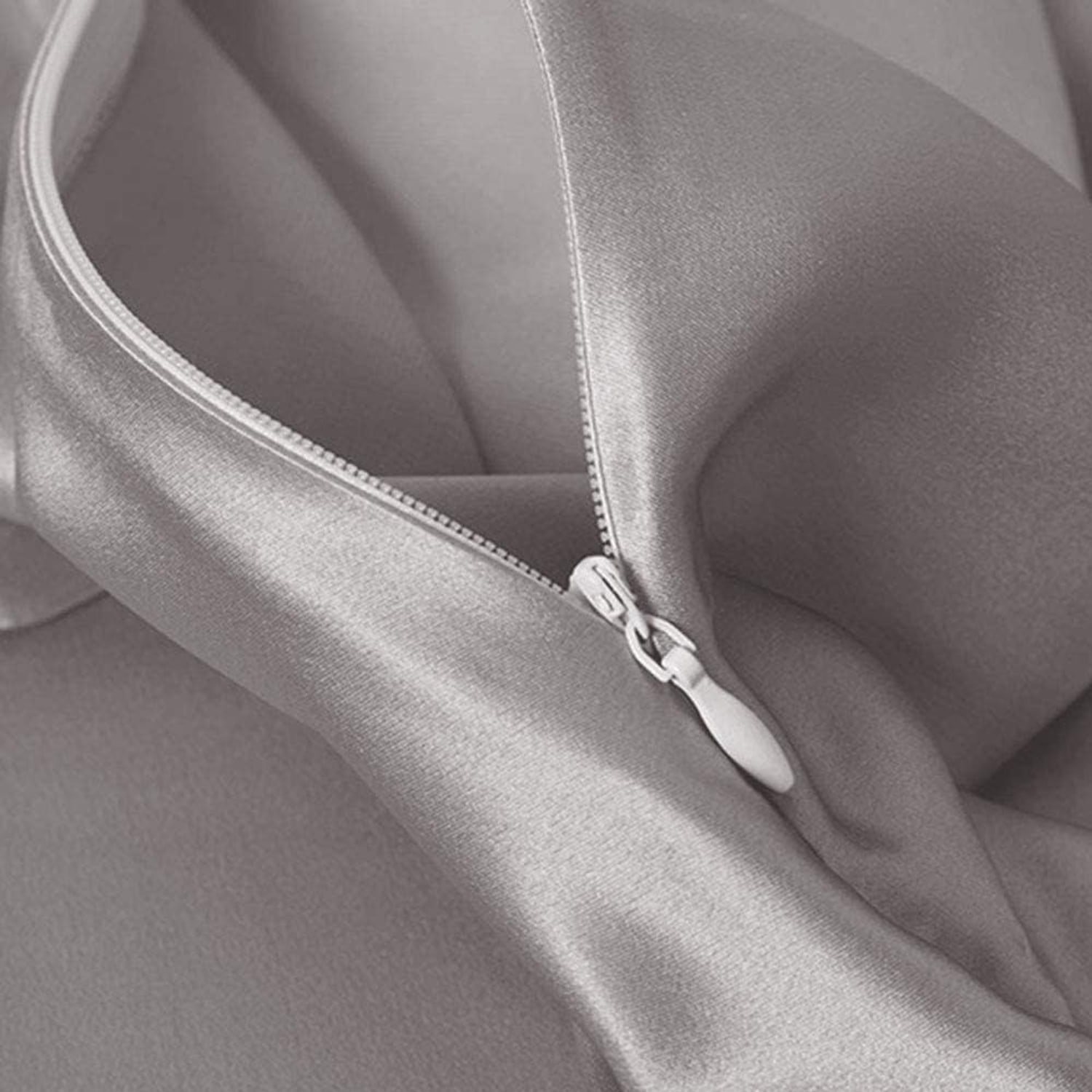
A concealed zip runs along one edge and shuts the case properly. The pillow stays where you put it. The zip on this case sits flush with the seam so it is hidden when the pillow is in, and you do not feel it under your head.
The other benefit is practical. A zip makes it quick to pull the case off, which sounds trivial until you consider that a pillowcase you can strip in five seconds is a pillowcase you will actually wash on schedule. Anyone looking for the best machine washable silk pillowcase should care about this, because the whole routine lives or dies on how easy it is.
Living with grey
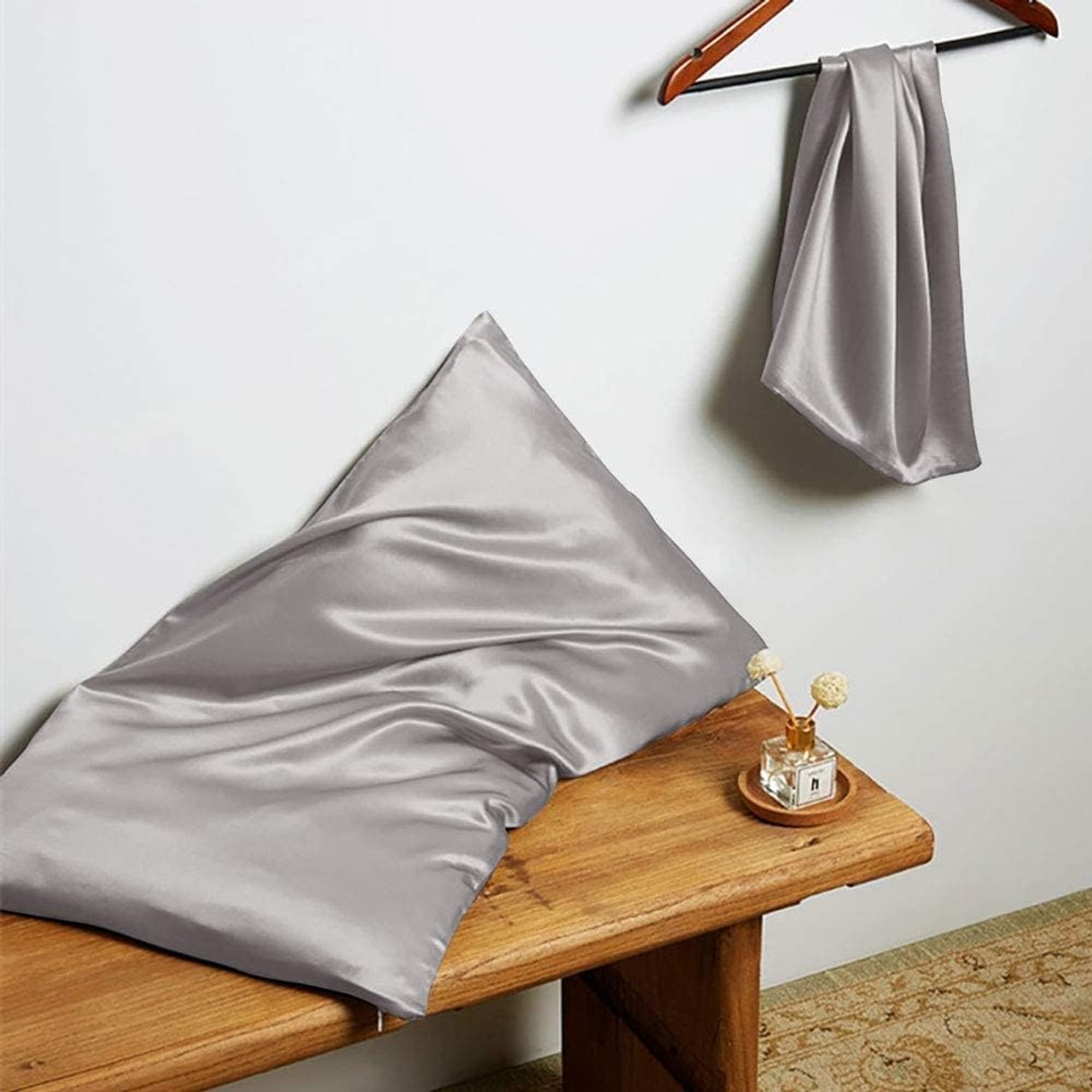
Grey is the colour that does not ask anything of you. It sits next to white sheets, charcoal throws, navy duvets, cream linen and almost anything in between. It does not clash, it does not date, and it does not shout for attention at the end of the bed.
It is also more forgiving than white. Night creams, a smear of mascara you missed, the usual marks of daily life, grey handles all of that better than a bright white case does. If you want to add one piece of better bedding without redoing the whole room, a single grey silk pillowcase is one of the easiest upgrades there is.
Washing it without ruining it
Silk is not fragile, but it is particular. Get these few things right and the case will last years.
Wash cool. Hot water is the fastest way to damage silk fibres and dull the surface. Use a mild detergent made for delicates or wool, nothing with bleach, enzymes or optical brighteners. Skip fabric softener entirely, because it leaves a film on the fibre that takes away the very smoothness you bought the case for.
If you are using the machine, set it to the gentle cycle and put the pillowcase inside a mesh laundry bag. The bag stops the case from wrapping around other items or catching on a zip. Hand washing in a basin of cool water is gentler still and takes about four minutes.
Drying is where people go wrong. Never put silk in a tumble dryer. Lay the case flat on a dry towel or hang it on a line in the shade. Direct sun will fade the dye and weaken the fibre over time. It usually dries in a couple of hours.
If it needs pressing, use the lowest iron setting, work on the reverse side, and do it while the fabric is still a touch damp. Most of the time a good flat dry means you can skip ironing altogether.
Wash it roughly once a week, more if you use heavy products at night. Regular gentle washing is better for the fabric than letting oils build up. Owning two cases makes the rotation painless.
Who this suits
If you have long hair, you will notice the difference most, because long hair spends more of the night in contact with the pillow. If you move around a lot in your sleep, the zip will matter to you. If you run warm at night, a breathable natural fibre is a better bet than a shiny synthetic.
It also makes a genuinely good gift. A silk pillowcase is the sort of thing people enjoy but rarely buy for themselves, and grey is safe for almost any bedroom.
What it is not
It is a pillow cover, not a pillow. Nothing comes inside it. It is a single case, not a pair, so order two if you want the bed to match. And we are only going to tell you about the fabric, the size, the closure and the care. We will not make claims about what it does for your skin or your hair beyond the plain fact that silk is smoother than cotton and creates less friction.
The short version
Mulberry silk, solid grey, queen cut at 76.2 x 50.8 cm, concealed zip, machine washable on a gentle cycle. Measure your pillow before you order, because this is an American queen size and a standard South African pillow is smaller. Wash it cool, dry it flat in the shade, and keep it away from heat and bleach. Do that, and you have a piece of bedding that quietly improves every single night.