

The complete guide
How to Choose a Silk Bonnet That Actually Stays On
The problem with a cotton pillowcase
Most of us sleep on cotton. It is cheap, it washes well, and nobody thinks twice about it. The trouble is that cotton is not a smooth fibre. Look at it closely and the surface is full of tiny fibre ends and loops. Hair does not glide across that. It catches, it drags, and it gets pushed around every time you turn over.
If you sleep still, you may never notice. Most people do not sleep still. Over seven or eight hours you shift position dozens of times, and each shift pulls your hair against the pillowcase. If you have put effort into your hair that day, a braid-out, a set, a blow-dry, a fresh wash, that is hours of friction working against it while you are not awake to do anything about it.
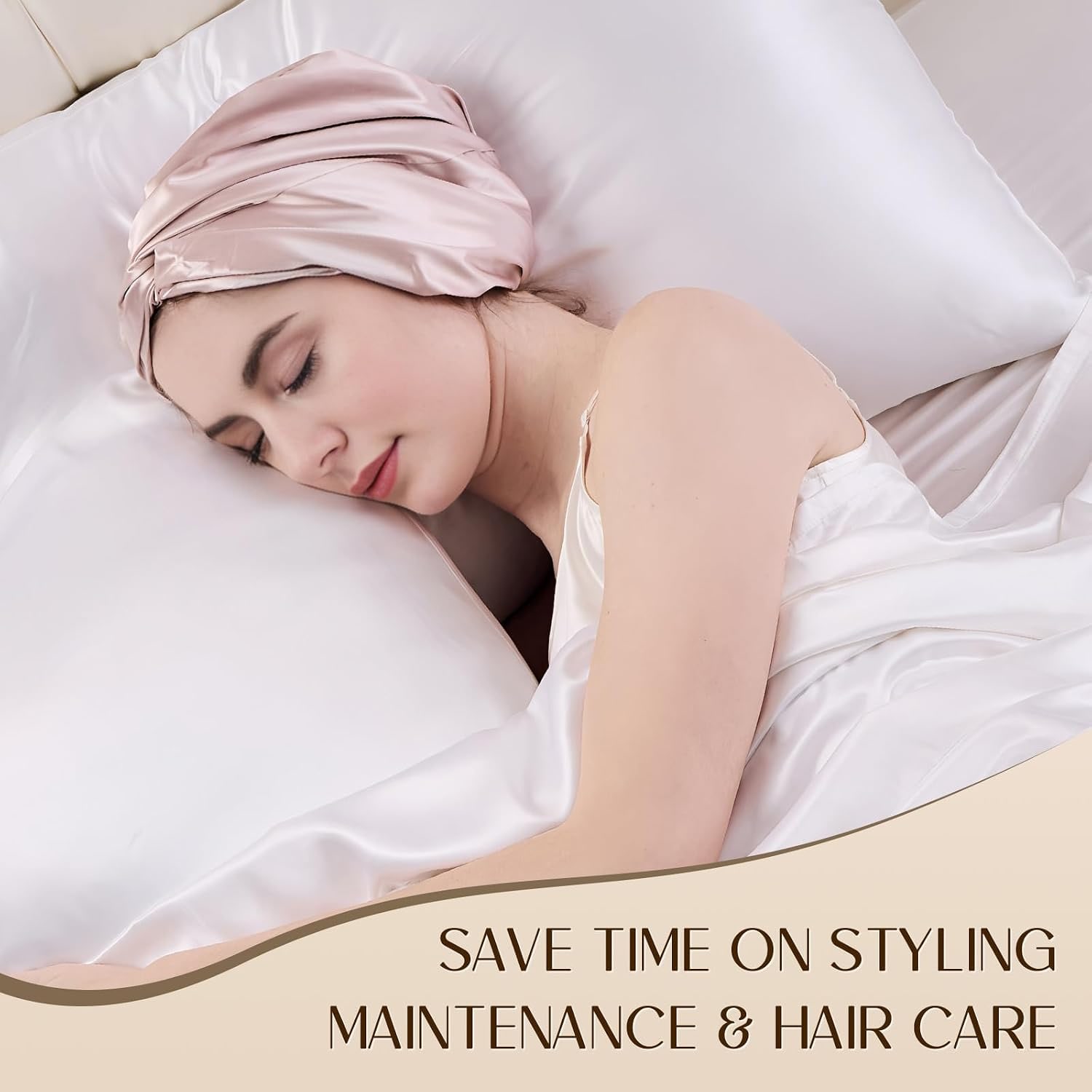
A silk bonnet is one answer to that. It puts a smooth surface between your hair and everything else. Your head can move all it likes and your hair stays in contact with silk rather than cotton weave.
What 22 momme means and why it matters
Silk is sold by momme weight, usually written as mm after the number. It is the old Japanese measure for how heavy a fixed area of silk fabric is. Low numbers, in the range of 12 to 16, give you thin silk, the kind used in scarves and linings. Higher numbers give you a denser, more substantial cloth.
At 22 momme, this bonnet is in the range people tend to want for things they sleep on. It has enough body to hold its shape and feel like a real fabric rather than a wisp, but it is still light and breathable on the head. Heavier silks exist, 25 momme and up, but on a bonnet the extra weight is not always an improvement.
The other thing worth noting is that this one is mulberry silk on both faces. Some bonnets save money by using a silk lining and a cheaper outer shell. That is fine for what it does, since only the inside touches your hair, but a double-sided silk bonnet feels better in the hand, washes evenly, and holds up better where it is handled most.
How the fit works
This bonnet has no stretch. That is normal for woven mulberry silk, and it means the fit comes entirely from the closure, which is a drawstring with a buckle.
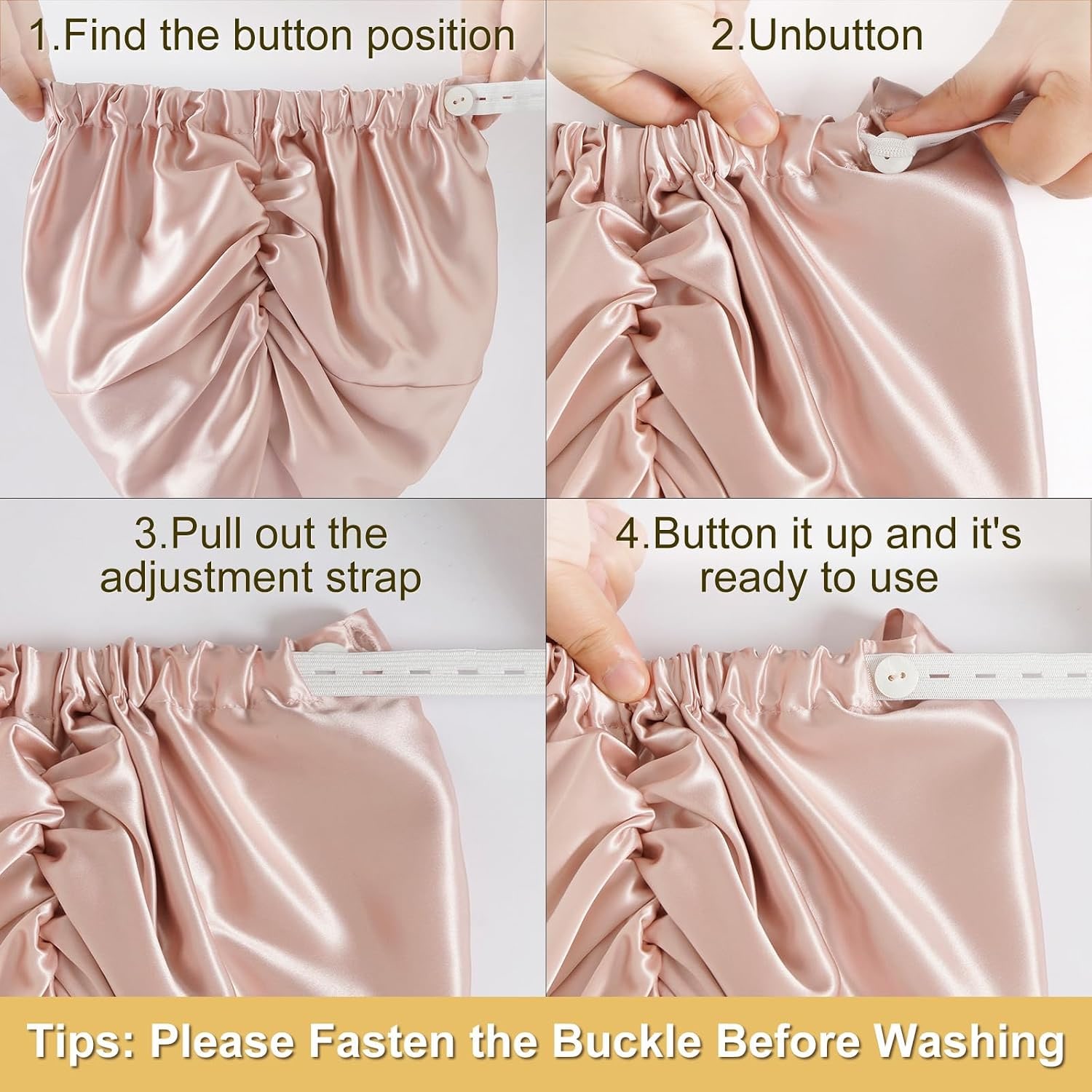
The system is simple. You pull the drawstring until the opening sits where you want it, then the buckle locks that setting. Unlike an elastic band, it will not loosen as the night goes on and it will not slowly tighten into a ridge across your forehead. Once you find your setting, you usually leave it alone and just slip the bonnet on each night.
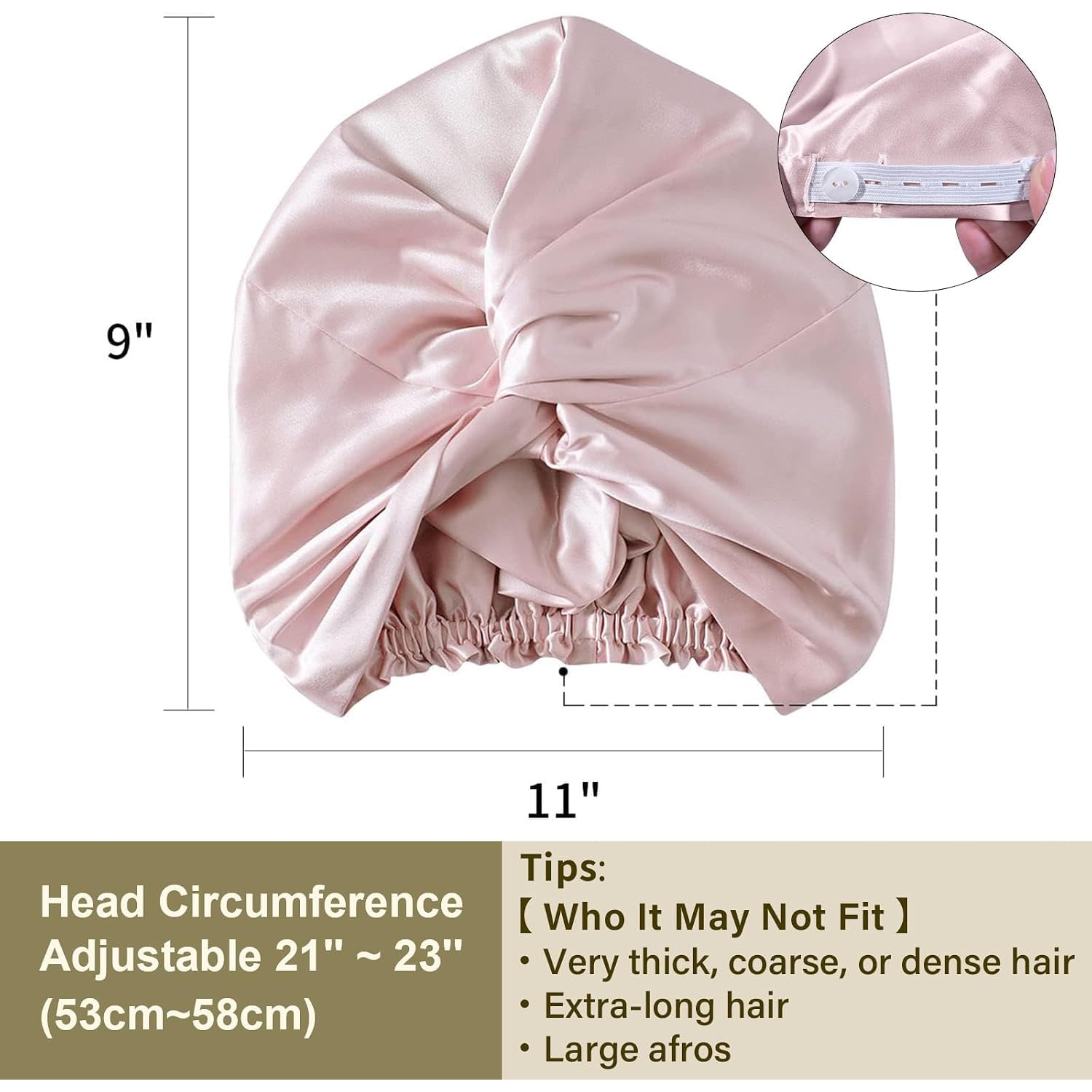
That brings up the one real limitation. Because the fabric does not stretch, there is only so much room inside, and the maker says it is not ideal for very thick or voluminous hair. The flat measurements are 28 x 23 cm, which is about 11 x 9 in. If you have a lot of hair to tuck in, hold a tape measure against those numbers and be honest about whether it will fit comfortably. A bonnet that is packed too full will ride up and come off.
Who this suits
The straightforward answer is anyone with average or moderate hair volume who wants a smooth surface for their hair overnight.
People with curls and coils often reach for a bonnet first, because curl patterns get disturbed most easily by friction. People with braids, twists or a protective style use one to keep the style neat and contained. People with straight hair who have just had a blow-dry or a colour service use one because it keeps the shape from going flat and messy on one side. The reason is the same in every case, which is less drag against the surface the head rests on.
It is listed as an adult item and as suitable for all seasons. Silk is light and breathable, so a silk sleep cap is usually more comfortable in a South African summer than a cotton or fleece one would be.
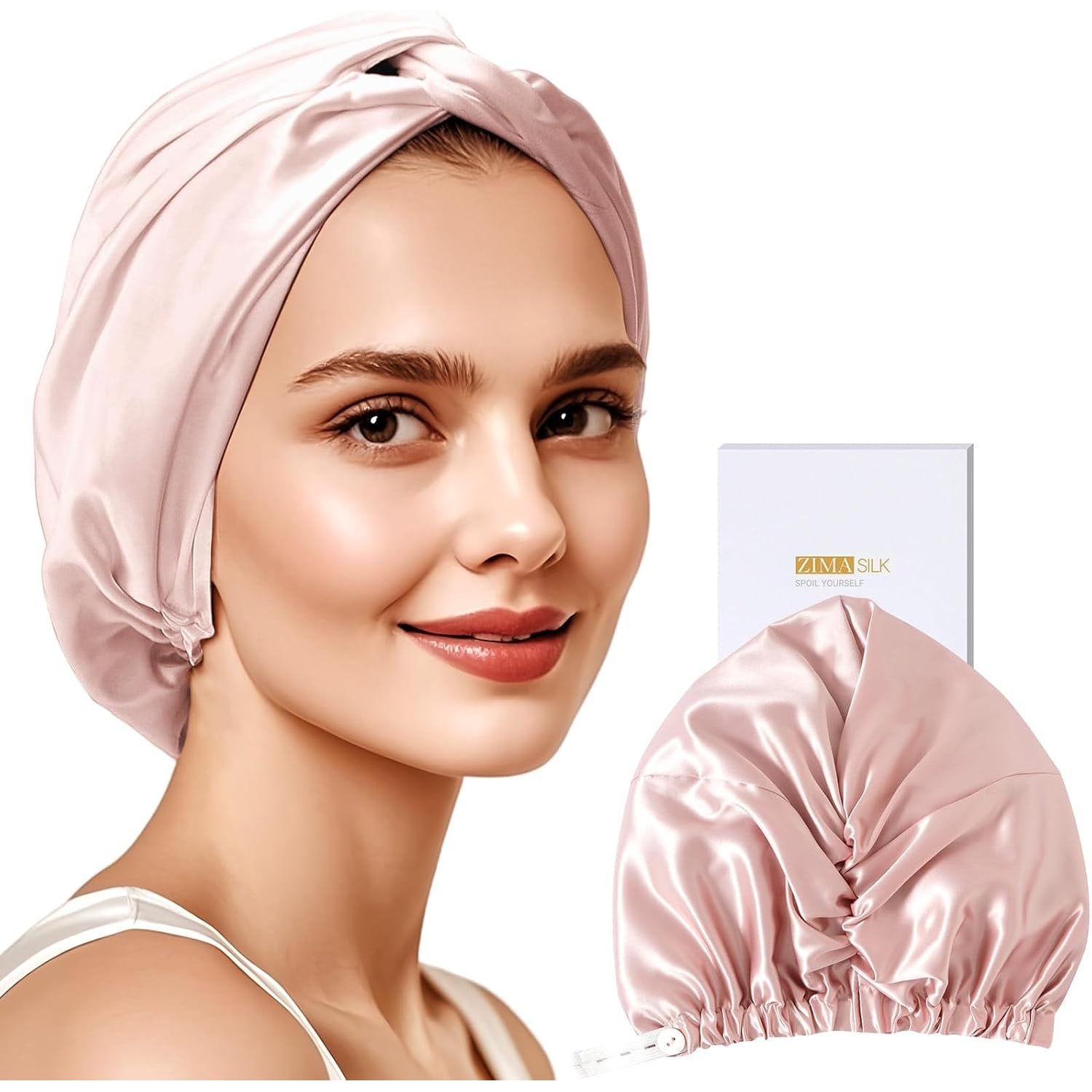
The pink is a solid colour with no pattern, in a plain modern shape. It is the sort of thing that makes an easy gift, since you do not need to know someone's head size for an adjustable closure to work.
How to choose between bonnet styles
There are a few things worth weighing up when you are comparing options.
Material content comes first. "Satin" is a weave, not a fibre, so a satin bonnet can be polyester. If you want silk, look for the words mulberry silk and a momme number. Those two together tell you what you are actually buying.
Then the closure. Elastic bands are the most common and the cheapest. They are easy, but they stretch out over a few months and some people get a mark on the forehead. A drawstring and buckle, like this one has, takes a few seconds to set but then holds its position and does not wear out in the same way.
Then capacity. This is where most people get it wrong. Measure what you need to tuck in rather than guessing. If your hair fills more than the flat size suggests, look for an oversized style instead.
Lastly, single or double sided. Both work. Double sided silk costs more and tends to last better through washing.
Looking after it
Silk rewards gentle handling and this bonnet is hand wash only.
Use cool water, never hot, and a mild detergent made for delicates. Regular laundry powder is too harsh. Fasten the buckle first so the hardware cannot catch the fabric while it moves around in the water. Swirl it gently for a minute or two, rinse until the water runs clear, and do not wring it.
To dry, lay it in a clean towel and press the water out. Then dry it flat or hang it somewhere shaded with airflow. Direct sun and heaters both damage silk over time, so keep it away from both. No tumble dryer, no bleach.
If it needs pressing, use the lowest silk setting on the iron and work on the inside of the fabric, keeping away from the buckle and drawstring.
How often you wash depends on what you put on your hair. Heavy oils or leave-in creams mean a weekly wash. Drier hair with fewer products can go a fortnight. Washing less often than you need leaves product build-up in the fibre, and washing more than you need just shortens the life of the silk.
A few practical notes
Put it on dry hair. Silk and damp hair do not get along, since the fabric holds that moisture against your head for hours and takes a long time to dry out properly.
Give yourself a couple of nights to find your buckle setting. Too loose and it comes off, too tight and you will feel it. Somewhere in the middle it will sit there all night and you will stop noticing it.
It is not water resistant, which is worth saying out loud, because it is a sleep item and nothing more. Keep it away from the bathroom sink and the shower.
The item weight is 227 g, but that figure is packed weight. On your head it is light.
Delivery, payment and returns
Delivery is tracked and goes to every province, taking 10 to 20 working days. It is free on orders over R1800, and R250 on orders below that. Payment is by card only.
If it turns out not to be right, you have 14 days from delivery to cancel for any reason, provided it is unused and unwashed. That is why we suggest checking the fit against the flat dimensions before you wear it overnight.
The short version
This is a pink sleep bonnet in 100% 22 momme mulberry silk, with silk on both faces. It adjusts with a drawstring and buckle rather than elastic, so it holds a fit instead of slowly loosening. The silk surface is smooth, which means hair slides over it with less friction than it meets on cotton.
It measures 28 x 23 x 2 cm laid flat, weighs 227 g packed, comes in solid pink, and is hand wash only. The maker does not state the brand or the country of origin, and notes it is not ideal for very thick or voluminous hair.
If your hair volume is moderate and you want a proper mulberry silk bonnet with a fit that stays where you put it, this is a sensible one to pick.