
The complete guide
How To Choose A Mulberry Silk Pillowcase, Without Overpaying
The small annoyance nobody talks about
You wash your hair, you get into bed, and by morning one side of it looks like it has been through a hedge. Or you wake with a crease across your cheek that takes an hour to settle. Neither of these is a crisis. They are just small daily annoyances that most people assume are part of sleeping.
A lot of it comes down to friction. Cotton, even good cotton, has a surface with texture to it. Every time you turn over, your hair and the side of your face drag across that texture. Silk is different. The fibre is smooth and the weave is tight, so things slide instead of catch. That is the whole idea behind a mulberry silk pillowcase, and it is not complicated.
This page covers how silk pillowcases are made, what the numbers on the label actually mean, how to work out the right size for your pillow, and how to look after the thing so it lasts.
What makes mulberry silk different
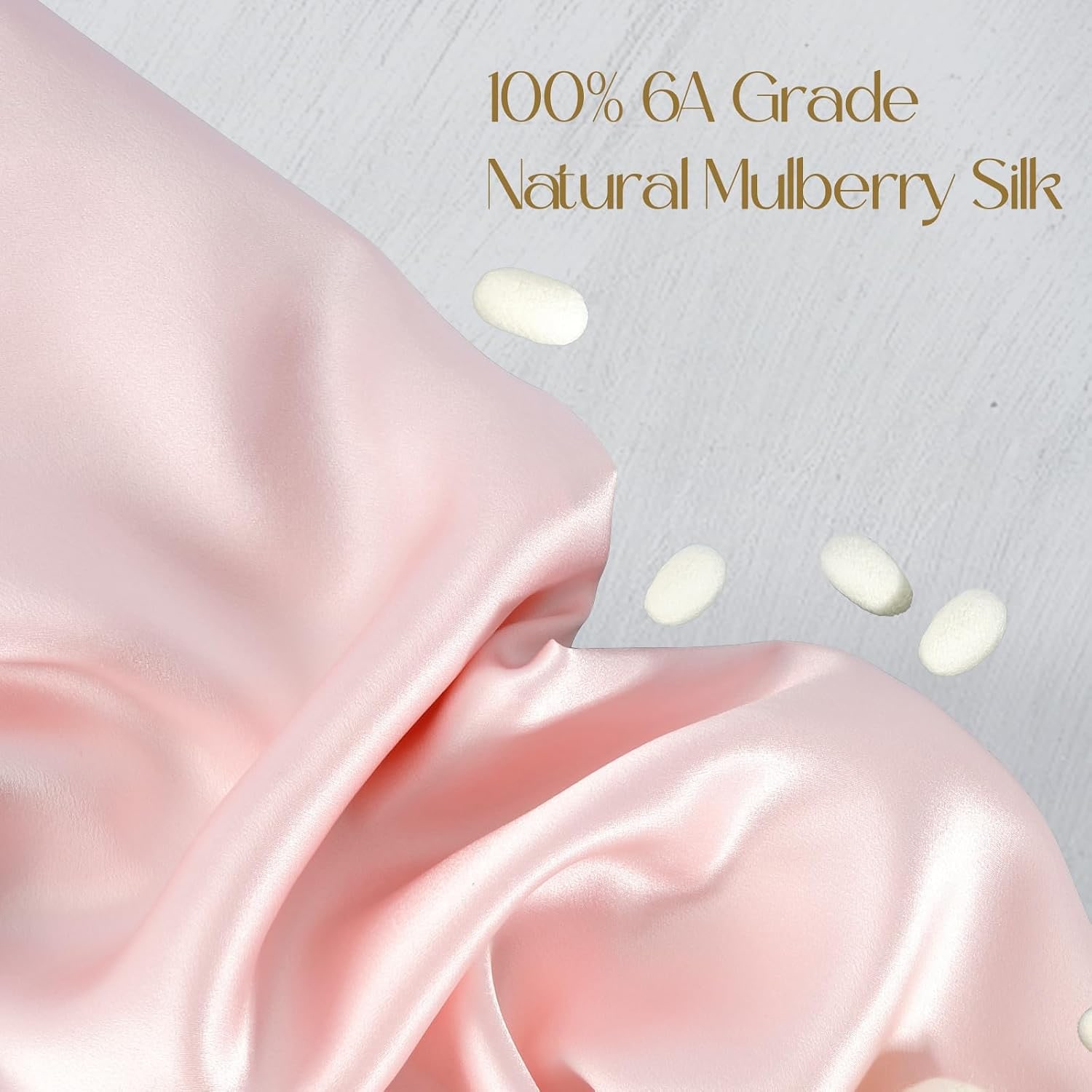
Mulberry silk comes from silkworms raised on a diet of mulberry leaves. The controlled diet produces long, even filaments with a consistent colour. Those long fibres are what give the finished fabric its smooth hand and its strength. Wild or mixed silks are shorter and more irregular, which is fine for some uses but produces a rougher surface.
Grade 6A is the top tier in the grading system silk producers use. It refers to fibre length, evenness and freedom from defects. It is worth saying plainly that this is an industry convention, not an independent certification from an outside body. Still, when a maker states Grade 6A alongside a solid momme weight, you have a reasonable picture of what you are getting.
The pillowcase here is pure silk on both faces. That detail is worth checking whenever you shop. A fair number of cheaper silk pillowcases use silk on the top and something cheaper underneath. It halves the cost and it halves the benefit, because the moment you flip the pillow you are back on the rough side.
Momme, thread count, and which one matters
Two numbers get printed on silk bedding and they measure different things.
Momme is a weight measure specific to silk. It tells you how dense the weave is. Most silk bedding falls between 16 and 25 momme. Below 16 the fabric starts to feel thin and the seams are more likely to give way with repeated washing. Above 22 you pay considerably more and the fabric starts to feel warmer, which is not what most people want from a pillowcase. Nineteen momme is a sensible middle. It has real body to it, it drapes well, and it still feels cool on contact.
Thread count counts threads per square inch. On cotton it is a familiar yardstick. On silk it is measured differently and is less useful on its own, which is why a 600 thread count figure should always be read alongside the momme. Together, 19 momme and 600 thread count describe a mid-weight, tightly woven silk, which is exactly the spec most people searching for the best mulberry silk pillowcase end up choosing.
If you only remember one thing from this section, remember momme.
Getting the size right
This is where more orders go wrong than anywhere else.
Pillow sizing is not standard across the world. In South Africa a common bed pillow runs around 45 x 70 cm. American sizing uses standard at roughly 51 x 66 cm, queen at 51 x 76 cm and king at 51 x 91 cm. A great many silk pillowcases, including this one, are cut to the American measurements.
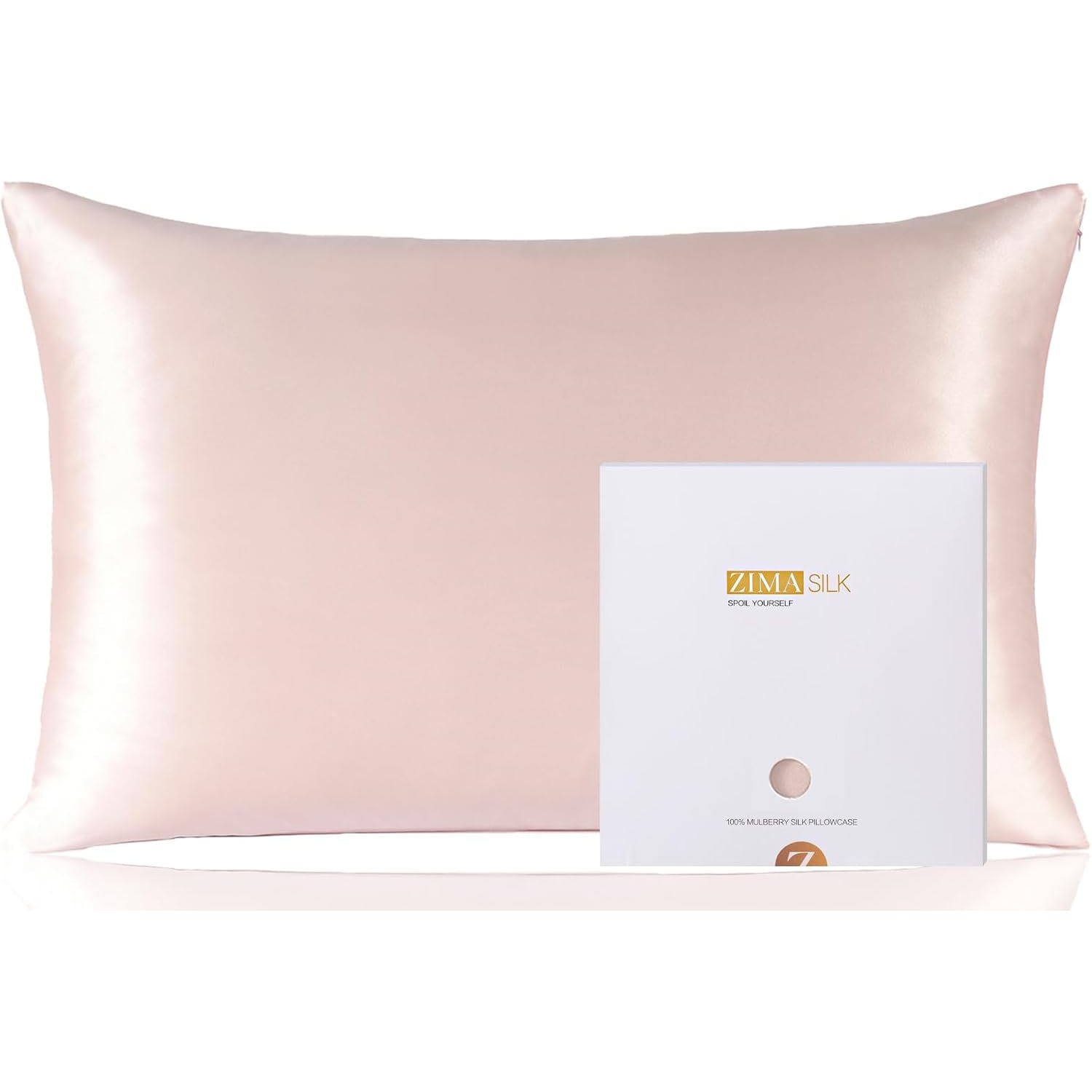
This pillowcase is 75 cm long and 50 cm wide, listed as queen (20 x 30 inches). Over a 45 x 70 cm local pillow that gives you a few centimetres of slack on each dimension. In practice that looks soft and relaxed on the bed, and plenty of people prefer that look. What you want to avoid is the opposite, a pillowcase smaller than the pillow, because the fabric stays under tension and the seams take a beating every night.
So before you order, lay your pillow flat, run a tape measure across the widest point, and write the numbers down. It takes thirty seconds and it saves a return.
Why the closure matters more than you would think
Pillowcases close in one of two ways. An envelope flap tucks the extra fabric back inside itself. A zip fastens the open end shut.
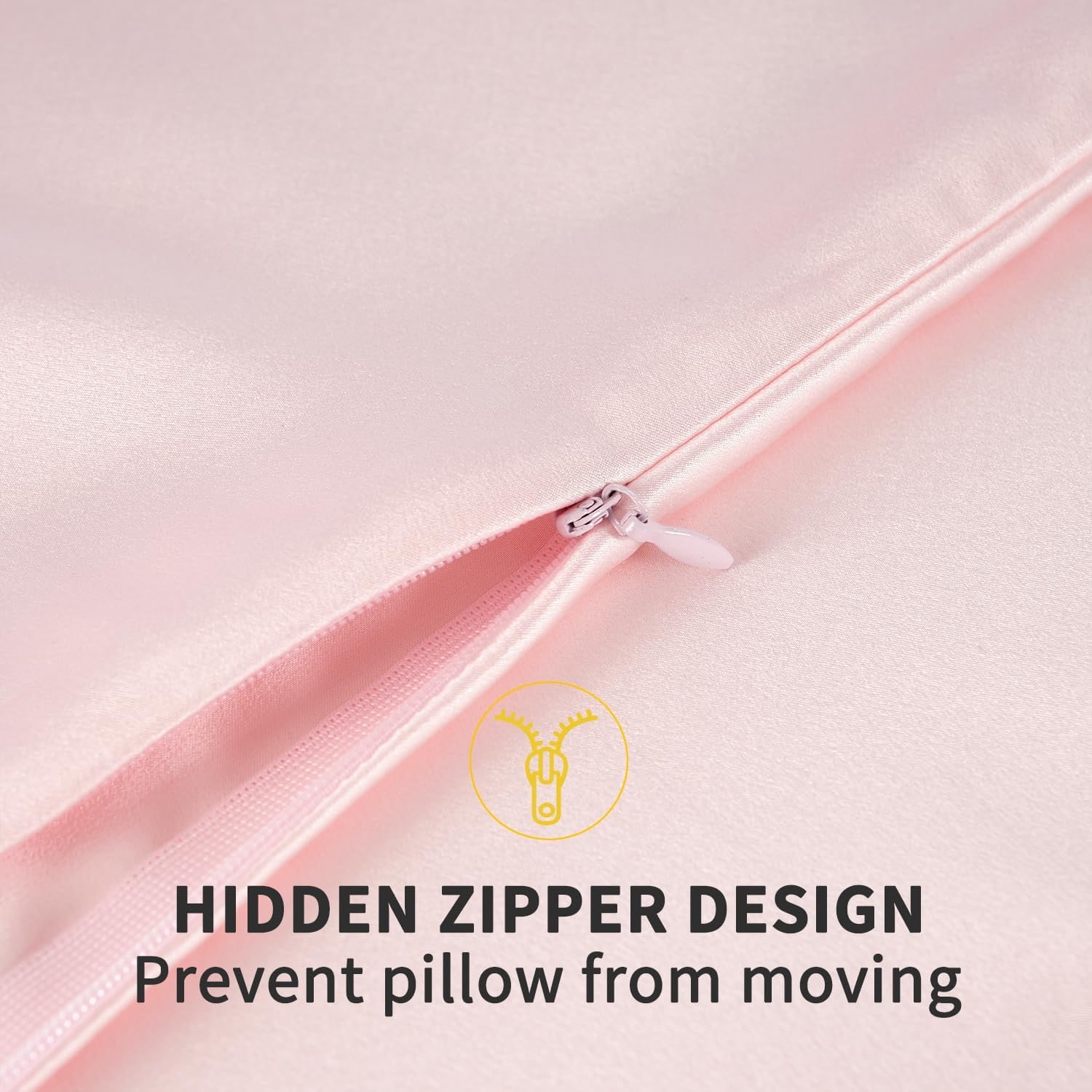
Envelope flaps are simple and cheap to make, but pillows work their way loose from them. If you have ever woken up with the corner of a bare pillow poking out, you know the feeling. A hidden zip solves that. The pillow stays where you put it, the edges of the bed look neat, and you are not retucking anything in the morning.
The zip also helps when you wash. Close it before the pillowcase goes in the water so the teeth cannot snag on the silk. Open it again to dry, so air can move through.
One small habit worth forming: put the zip end at the outside edge of the bed rather than the middle. You will never feel it.
Who this suits
Anyone who sleeps hot is a good candidate. Silk breathes and it feels cool on first contact, which is a genuine relief in a Highveld summer or a humid coastal night. People with long hair, curly hair or anything that tangles easily tend to notice the difference quickly, simply because there is less to catch on.
It also suits anyone who wants their bed to look a bit better without redoing the whole room. A pink silk pillowcase changes the feel of a bed more than you would expect for one item. Pink sits comfortably with white, grey, cream and most natural wood tones, so it rarely clashes.
And it is a sound gift. You do not need the recipient's size for a bed, you do not need to know their taste in patterns, and almost nobody already owns one.
Looking after it
Silk is not fragile, but it does have preferences.
Hand wash in cool water with a detergent made for delicates. Regular washing powder often contains enzymes and brighteners that are hard on protein fibres like silk and wool. Work the pillowcase gently through the water rather than scrubbing it. Rinse until the water runs clear.
Never wring it out. Twisting silk stresses the fibres. Instead, lay the pillowcase on a clean towel, roll the towel up, and press. Then dry it flat or hang it in the shade. Direct sun fades colour and weakens fibre, and a tumble dryer does both faster.
If you iron, use the lowest setting, work on the reverse side while the fabric is a little damp, and keep the iron moving. Many people skip ironing entirely and find the silk relaxes out of its creases once it is on the pillow.
Wash every week or two, the same as the rest of your bedding. More often if you use heavy night creams or leave-in hair products, because residue builds up on any fabric.
Buying with confidence
Delivery is tracked and reaches every province, usually within 10 to 20 working days. Orders over R1800 ship free, and anything under that carries a R250 delivery charge. Payment is by card.
If you change your mind, you have 14 days from delivery to cancel for any reason, as long as the pillowcase is unused and unwashed. No long explanation required.
The short version
Mulberry silk works because it is smooth and hair and skin glide over it instead of dragging. Nineteen momme is a sensible weight, heavy enough to feel like proper silk and light enough to stay cool. Check that the silk runs on both sides, not just the top. A hidden zip keeps the pillow in place and the bed looking tidy.
Measure your pillow before you order, because this one is cut to 75 x 50 cm on the American queen pattern rather than the local 45 x 70 cm. Hand wash in cool water, dry out of the sun, and skip the tumble dryer.
Do those few things and a good silk pillowcase will look after you for a long time.