
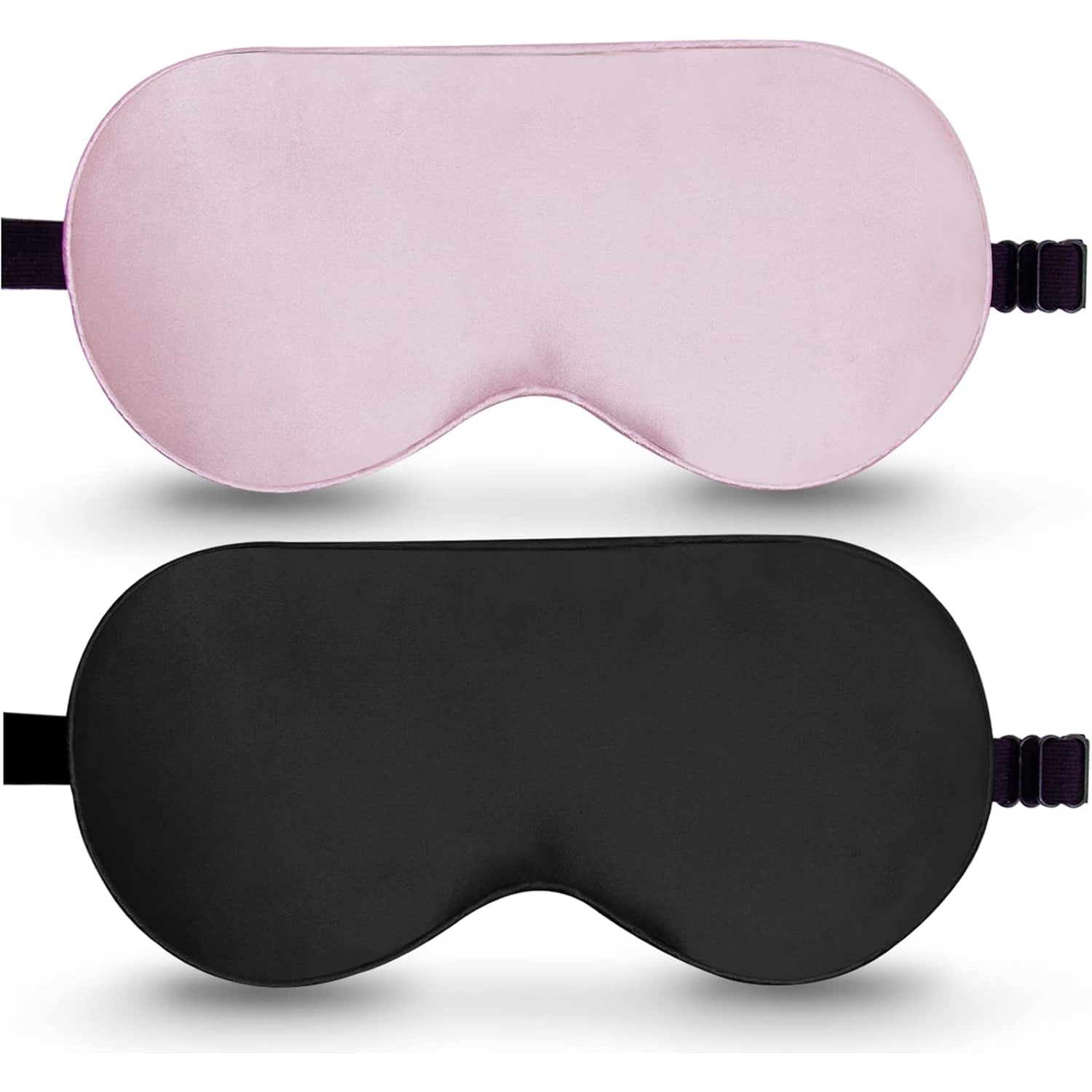
The complete guide
How to Choose a Silk Sleep Mask That You Will Actually Keep Using
The problem is rarely the dark, it is the almost dark
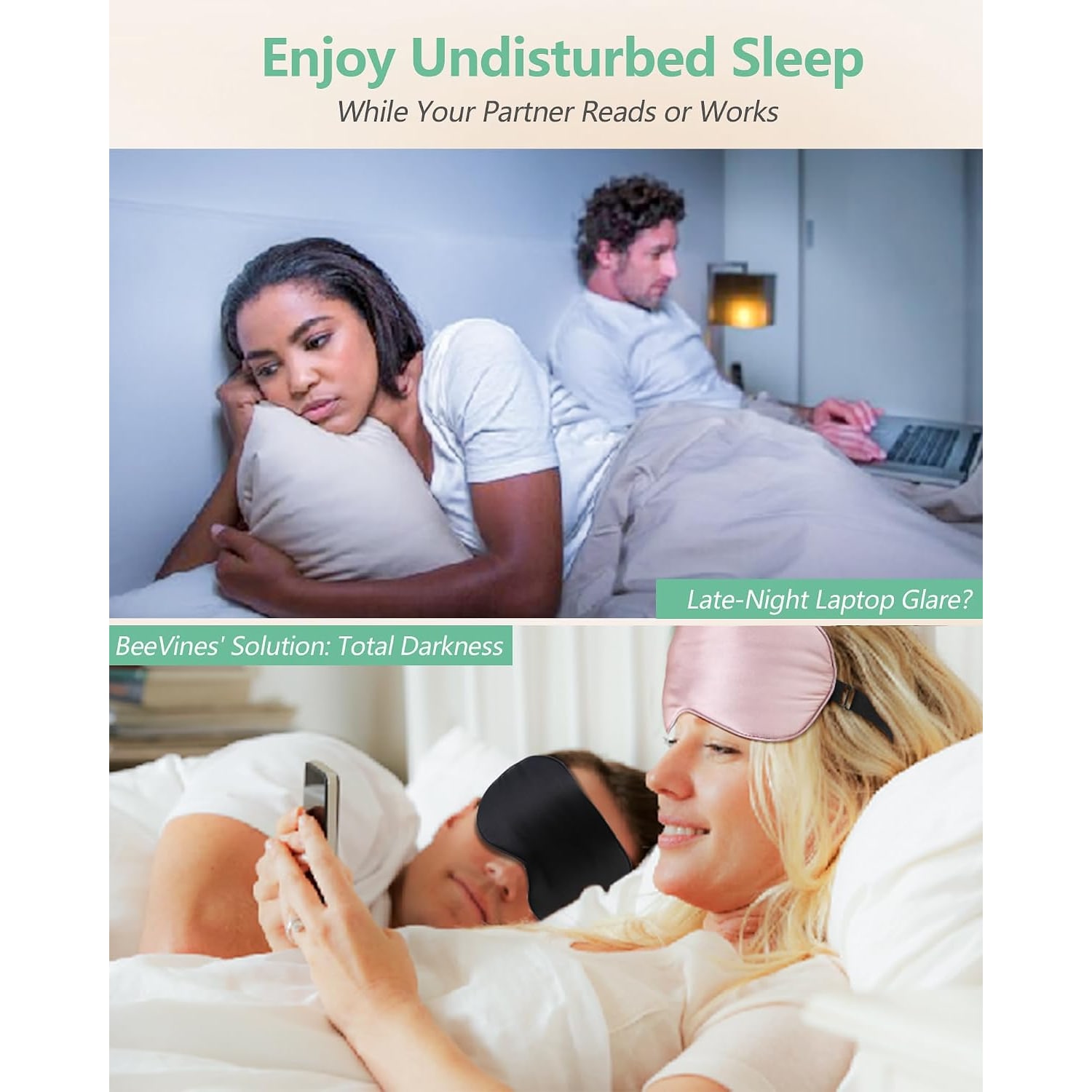
Most bedrooms are not dark. They are almost dark. A streetlight bleeding around a curtain, a standby LED on a plug, a passing car, the first grey light at half past four in summer. None of that will keep you awake on its own. What it does is nudge you towards lighter, patchier sleep, especially in the back half of the night when you are already closer to the surface.
Blackout curtains solve it, but they are expensive, they only work in one room, and they do nothing on a plane or in a guest bedroom. A sleep mask solves it for about the price of a takeaway, travels in a pocket and works anywhere. The catch is that a lot of masks are uncomfortable enough that people stop wearing them after a week. That is usually a fabric problem or a strap problem, and both are fixable if you know what to look at.
Why silk, and why both sides matter
Silk gets talked about a lot, and some of the talk is overblown. Here is the plain version. Silk is a very fine, smooth fibre. Woven into fabric, it gives a surface with less texture than cotton or polyester, so skin and eyelashes slide over it rather than catching. For something that is pressed against your face for seven hours, that smoothness is the whole point.
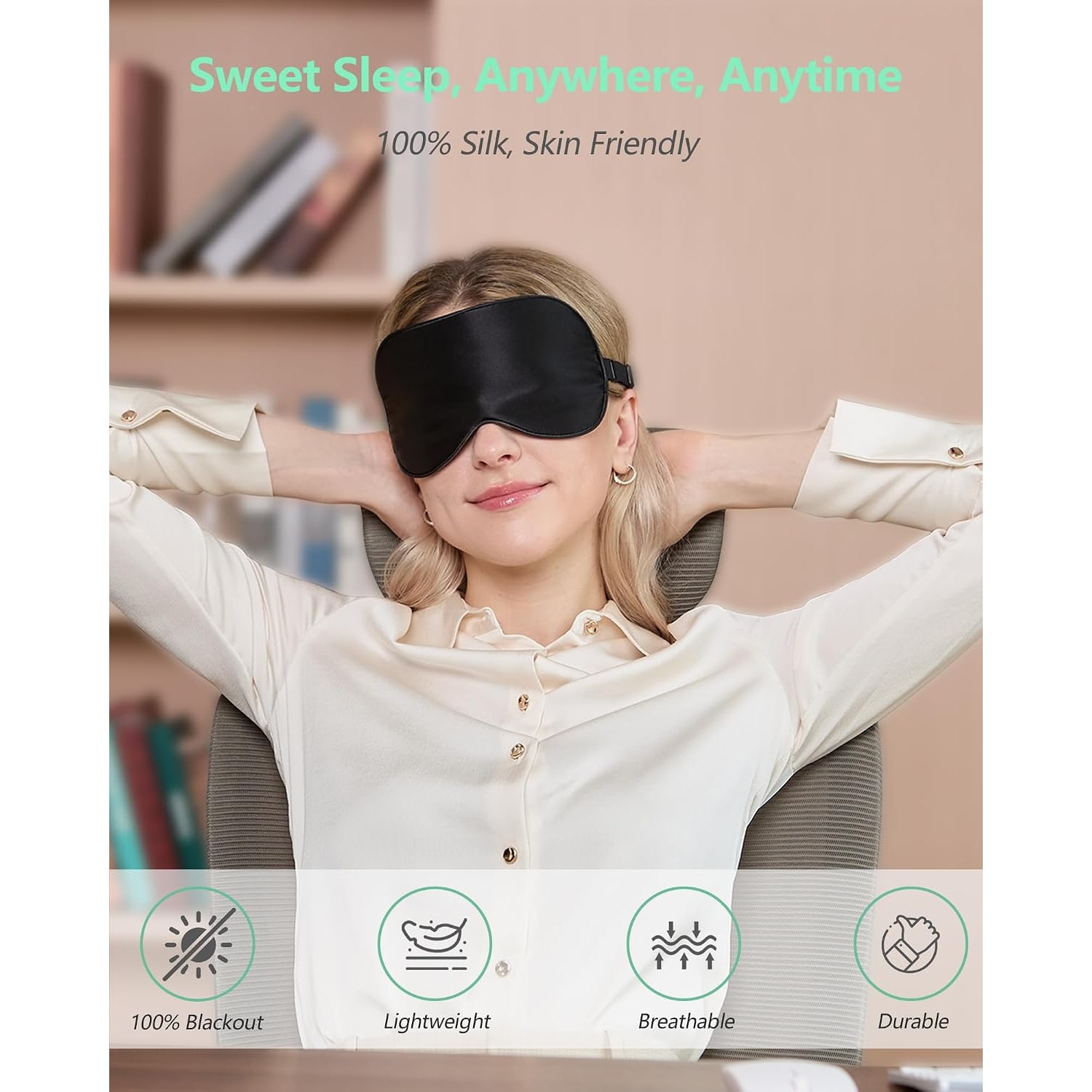
The part people miss is which side of the mask is silk. Plenty of budget masks have a silky-looking outer face and a cheaper lining on the inside. The lining is the half that touches you all night. This pack is made with silk on both faces, so the surface against your eyelids is the same one you see from the outside. If you are comparing masks online and a listing only says "silk front", assume the back is something else and factor that in.
The material here is listed as silk with a natural material feature. Momme weight, which is the standard measure of silk density, is not stated, and neither is the weave. If those numbers matter a lot to you, buy on the understanding that they are not published rather than assuming a figure.
The strap is the part that decides whether you keep it
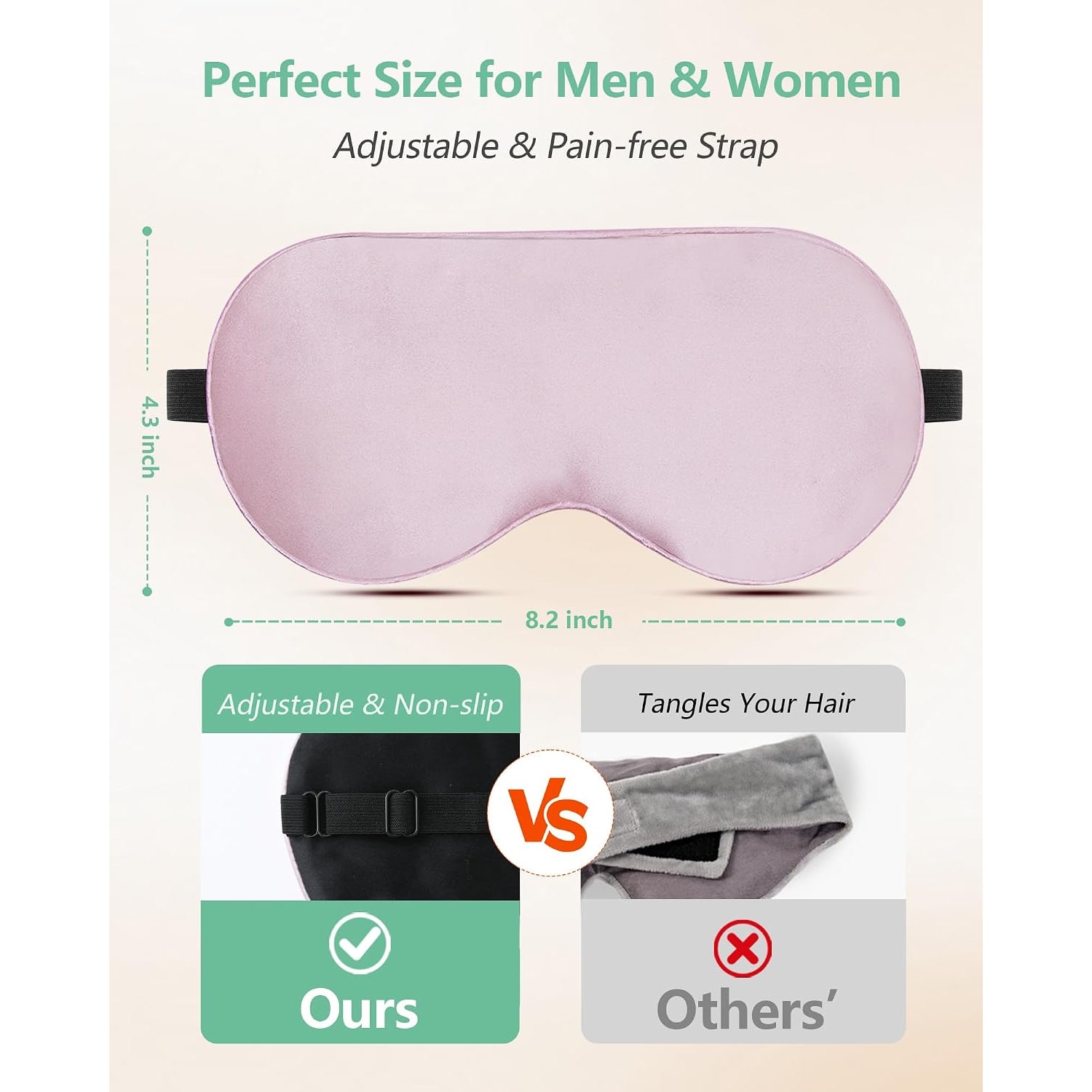
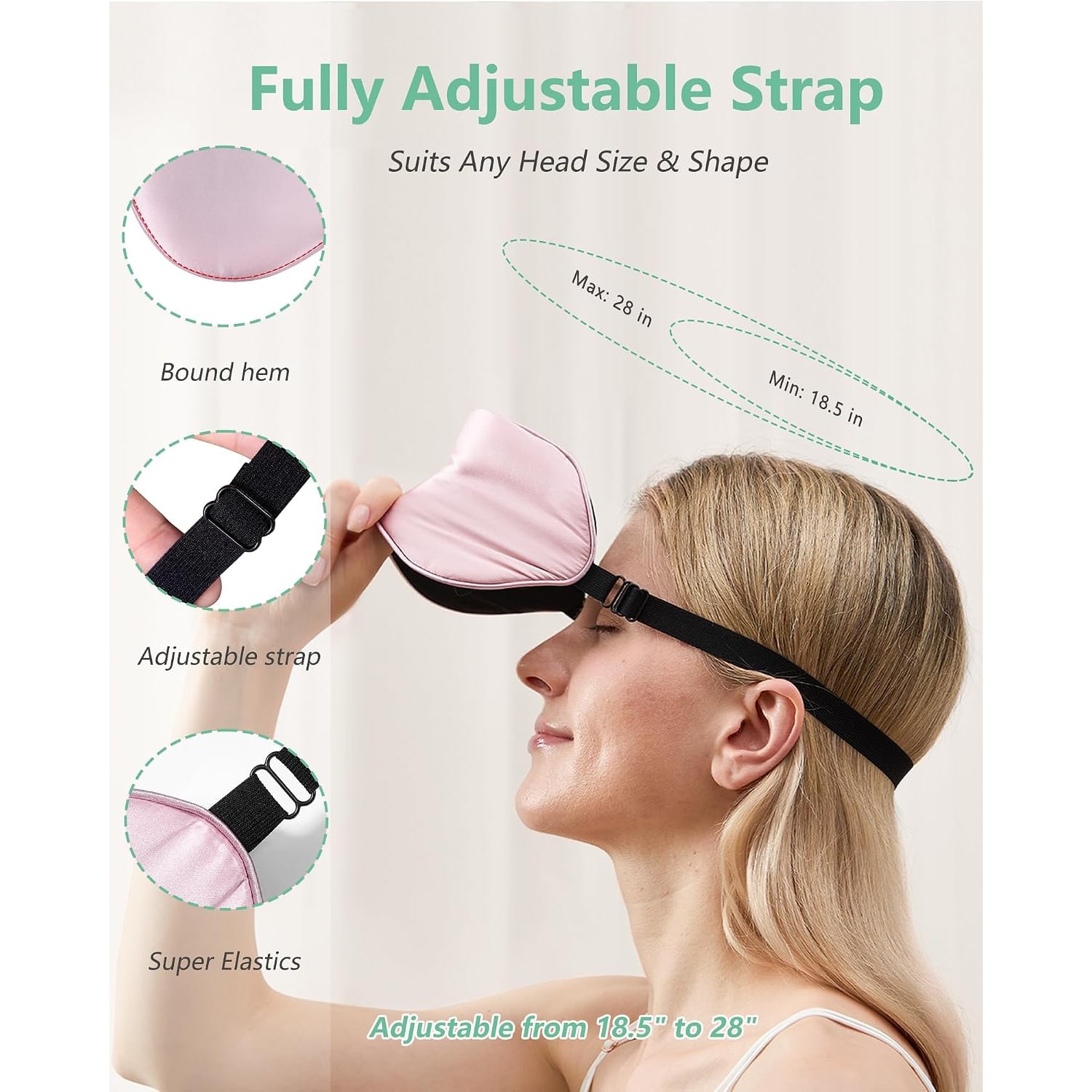
If a mask ends up in a drawer, nine times out of ten the strap is the reason. Fixed elastic loops are made to one length. If your head is bigger than the designer assumed, it digs in and leaves a line across your temples. If your head is smaller, the mask crawls up your forehead by 2 am and you wake up with light in your eyes anyway.
An adjustable strap, like the one on these masks, takes that guesswork out. You set it on the first night, maybe tweak it on the second, and then forget about it. Aim for the tension where the mask stays put when you turn your head side to side on the pillow, but you cannot feel it pressing on your temples. That is the sweet spot. Most people go too tight on the first attempt, so if something feels off, loosen before you tighten.
A second small benefit: elastic relaxes over months of use. With an adjustable strap you just shorten it. With a fixed loop you buy a new mask.
Shape, coverage and side sleeping
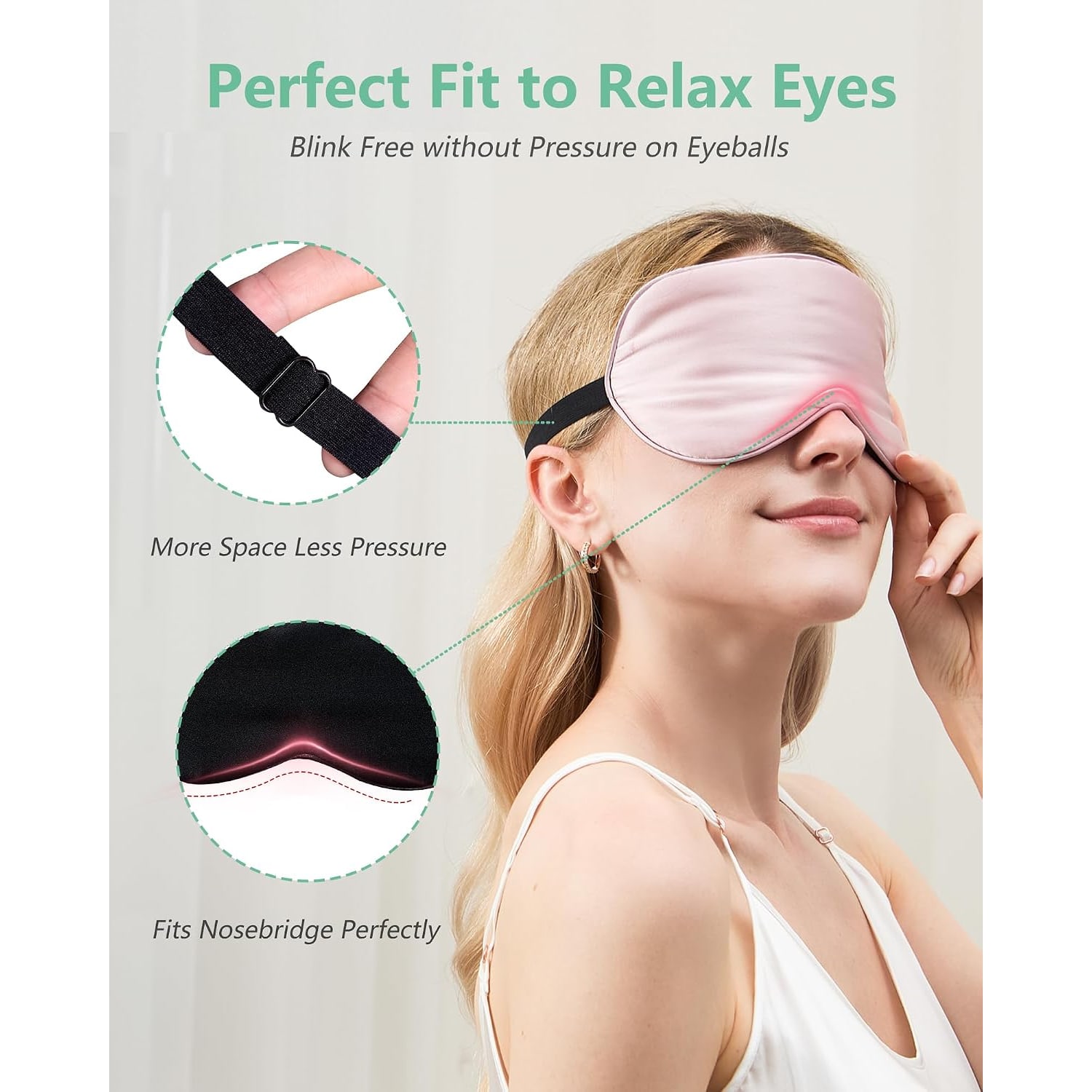
This is a flat panel mask, roughly 24 cm across based on the pack dimensions, in a solid colour with no print. Flat panel masks suit side sleepers better than domed or contoured ones, because there is nothing rigid to push back at you when half your face is on the pillow. They are also thinner in a bag.
The trade off with any flat mask is the nose bridge. Noses vary, and no mask with a soft edge seals perfectly against every face. You may get a thin sliver of light coming up from below on a very bright morning. Pulling the mask slightly lower and setting the strap a notch firmer usually closes it. If you need absolute blackout at any cost, a contoured mask with a moulded nose section will do better, but you lose the thinness and the side-sleeping comfort.
For most people in a normal bedroom, this level of coverage is plenty. You are trying to turn "almost dark" into "dark", not replicate a cave.
Who this suits
Shift workers who sleep during daylight hours get more out of a mask than almost anyone. So do light sleepers who share a room with someone on a different schedule, and anyone who wakes early in summer and would rather not. Frequent flyers are the other obvious group, because cabin lighting is beyond your control and a mask is the only portable fix.
It also suits people who nap. A short afternoon nap works far better in the dark, and most of us nap in rooms that are not dark at all. A lightweight eye mask for flights doubles perfectly well as a nap mask at a desk or in a parked car.
Two masks in the pack covers the practical case well. One lives by the bed, one lives in the travel bag, and neither of them is ever the one you forgot to pack.
Looking after silk without making a project of it
Silk has a reputation for being fussy. It is not, as long as you avoid three things: heat, bleach and the washing machine.
The stated care here is hand wash only. In practice that means cool water in a basin, a small amount of detergent made for delicates, a gentle swirl for a minute or two, then a thorough rinse. Do not wring it. Lay it on a towel, roll the towel up and press to push the water out. Then dry it flat, away from direct sun and well away from a heater or radiator. Direct heat is what makes silk go brittle and dull over time.
Keep hot water off the elastic strap too. Heat is what kills elastic faster than anything else.
Wash every week or two if you wear it nightly, and more often if you use night creams or go to bed with make up on. The second mask in the pack makes rotation painless: wash one, wear the other.
If it creases, the lowest iron setting with a pressing cloth will sort it out. Most of the time laying it flat is enough.
A few things worth knowing before you buy
The brand name and country of origin are not stated for this product, and neither is a momme weight. We would rather tell you that than fill the gap with something invented. What is confirmed is the silk material on both sides, the adjustable strap, the two-mask pack in black and pink, the solid pattern, the roughly 24 cm pack width and hand wash care.
Delivery is tracked to every province and usually lands in 10 to 20 working days. Orders over R1800 ship free, otherwise shipping is R250. Payment is by card. If it turns out not to be right for you, you have 14 days from delivery to cancel, as long as the masks are unused and unwashed.
The short version
A good sleep mask is cheap, portable and fixes a problem most people do not realise they have. Silk is worth paying a little more for because it is smooth against the skin, and silk on both faces is worth checking for because it is the inner face that counts. An adjustable strap is the single biggest predictor of whether you will still be using the mask in six months.
This pack gives you two masks, black and pink, both sides silk, with adjustable straps, in a flat shape that works on a pillow. Hand wash them, dry them flat, keep them away from heat, and they will get a long run out of you.