

The complete guide
How to Choose a Silk Pillowcase (and Get the Size Right)
The small annoyance nobody talks about
You change your pillowcase, you fluff the pillow, you climb into bed. And then at some point in the night you turn over and the cotton grabs. It catches the hair at your temple, it bunches under your cheek, and by morning there is a crease line along one side of your face that takes an hour to fade. None of this is dramatic. It is just a low-level nuisance that most of us have simply decided is normal.
Silk is the quiet fix. The fibre is long and smooth, with none of the short fuzzy surface that cotton has, so your face and hair slide across it rather than catching. That is the whole trick. It is not complicated and it does not need any explanation beyond friction.
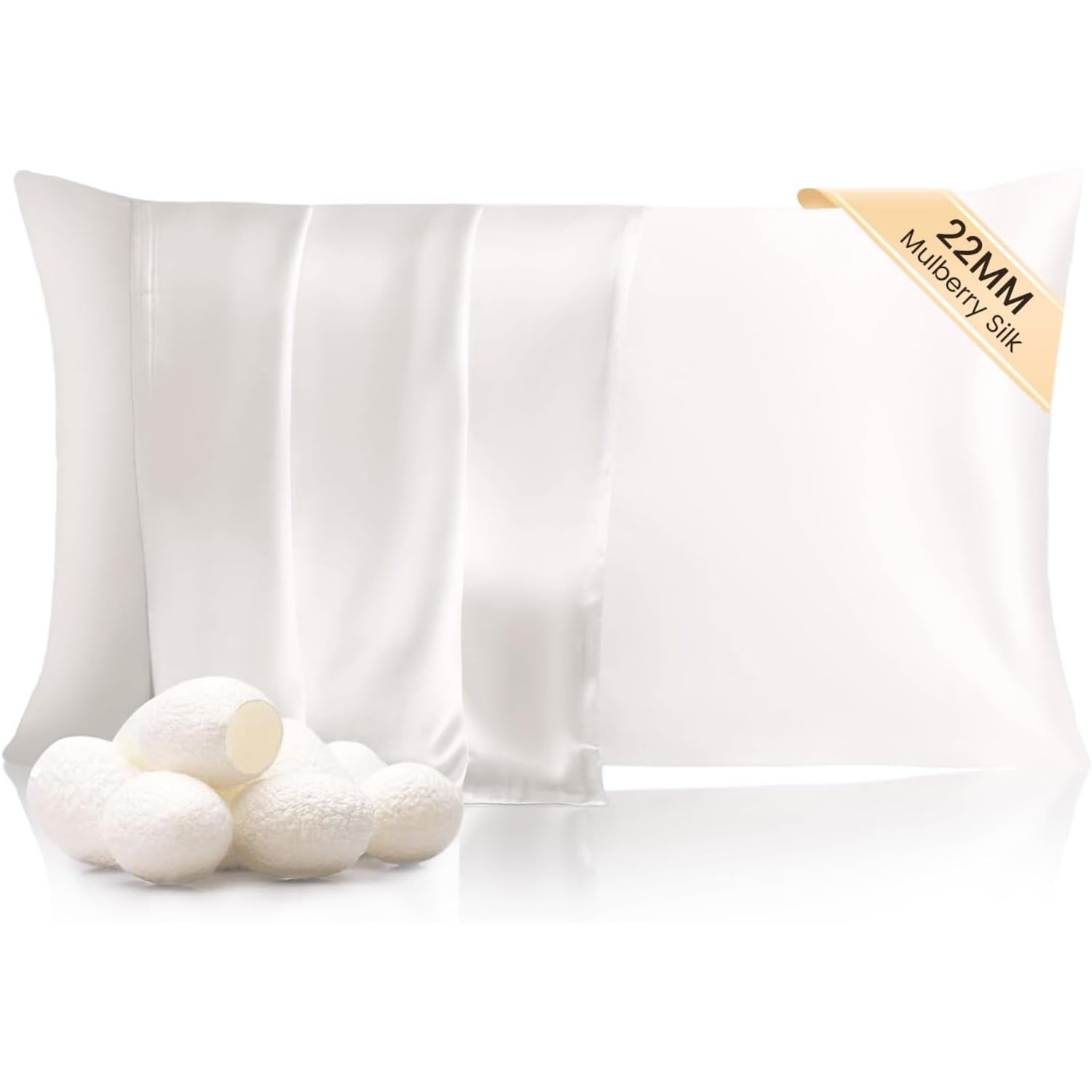
This particular case is plain white, cut to queen size, and woven from mulberry silk at 22 momme with a concealed zip. Below is how to think about each of those things so you end up with a case that actually suits your bed.
What momme actually tells you
If you have shopped for silk before, you have seen the word momme and probably skipped past it. It is worth two minutes of your attention because it is the single most useful number on a silk listing.
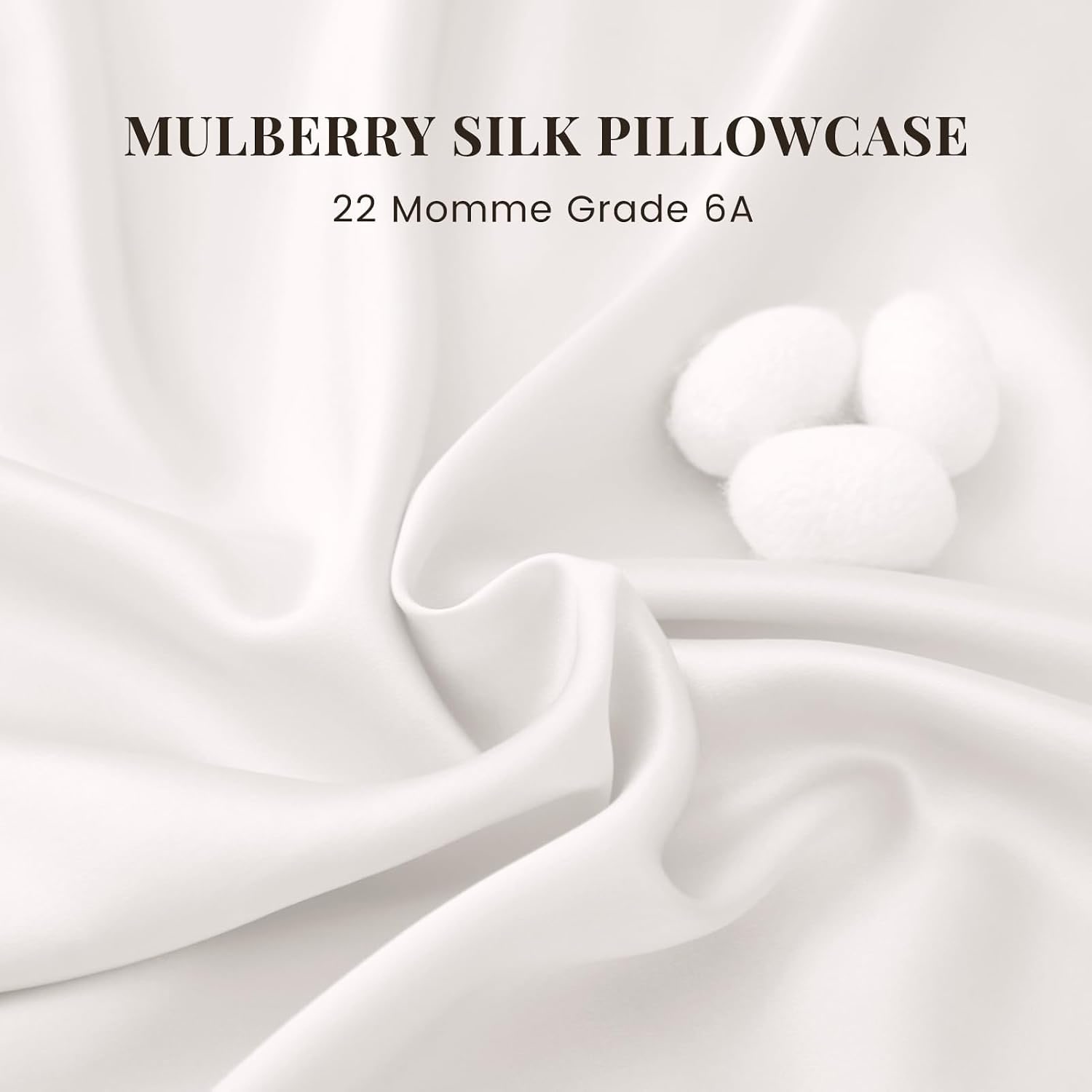
Momme measures how heavy a silk fabric is. The higher the number, the denser the cloth. Silk sold for bedding usually sits somewhere between 16 and 25 momme, and each end of that range behaves differently.
At 16 to 19 momme the fabric is light and lovely to touch, but it can feel insubstantial. It floats when you shake it, it shows the pillow through it slightly, and because the weave is lighter it tends to wear faster if you are washing it every week.
At 25 momme and above you get a very heavy, almost weighty cloth. It is beautiful. It is also noticeably more expensive, and for a pillowcase most people cannot tell you what they are paying extra for.
22 momme is the middle ground that most regular silk users settle on. It has enough weight to hang properly over a pillow, it holds its shape after repeated washing, and it still feels cool and slick rather than stiff. If you are comparing options and trying to work out what makes the best mulberry silk pillowcase for daily use, momme is the number to compare, not thread count.
Speaking of which: this case is listed at 600 thread count. Thread count is a cotton measurement that got carried across to silk marketing, and it does not tell you much. Use the momme figure instead.
Mulberry silk versus everything else
Mulberry silk comes from silkworms raised on a controlled diet of mulberry leaves. The result is a long, even, continuous filament, which is why the finished cloth is so smooth and consistent. Wild silks have shorter, more irregular fibres and a more textured surface, which has its own charm but is not what you want against your face.
Then there is satin, which trips a lot of people up. Satin is a weave, not a fibre. You can weave silk into satin and you can weave polyester into satin, and from across a room they look almost identical. The difference shows up when you lie on them. Polyester satin feels slick for about ten minutes and then warms up and starts to feel clammy, because it does not breathe. Silk does breathe. That is why a silk pillowcase in South Africa makes sense through a hot Highveld summer in a way that a polyester one does not.
The simplest giveaway: anything described with a momme weight is silk. Polyester satin is never sold in momme.
Getting the size right
This is the part that catches people out, so read it before you order.
The case measures 76,2 x 50,8 cm, which is 30 inches by 20 inches. That is the American queen cut, and a great many silk pillowcases are made to American sizes regardless of where they are sold.
A standard South African pillow is roughly 45 x 70 cm. So this case is a bit longer and a bit wider than a standard local pillow. In practice that means a slightly relaxed fit rather than a drum-tight one. Plenty of people prefer that, because the fabric drapes nicely and there is a bit of give at the open end. But if you want the case stretched smooth over the pillow with no slack at all, you should know that going in.
Go and measure. Lay the pillow flat, measure the long side and the short side, and compare. It takes thirty seconds and it saves a return. If your pillow is a long continental, a slim travel pillow, or a king, this queen cut will not be the right shape.
Why the zip matters more than you think
Silk pillowcases come with one of three closures. An open end, which is the cheapest and worst, because the pillow works its way out overnight. An envelope flap, which is better but still lets the pillow creep if the flap is shallow. Or a zip.
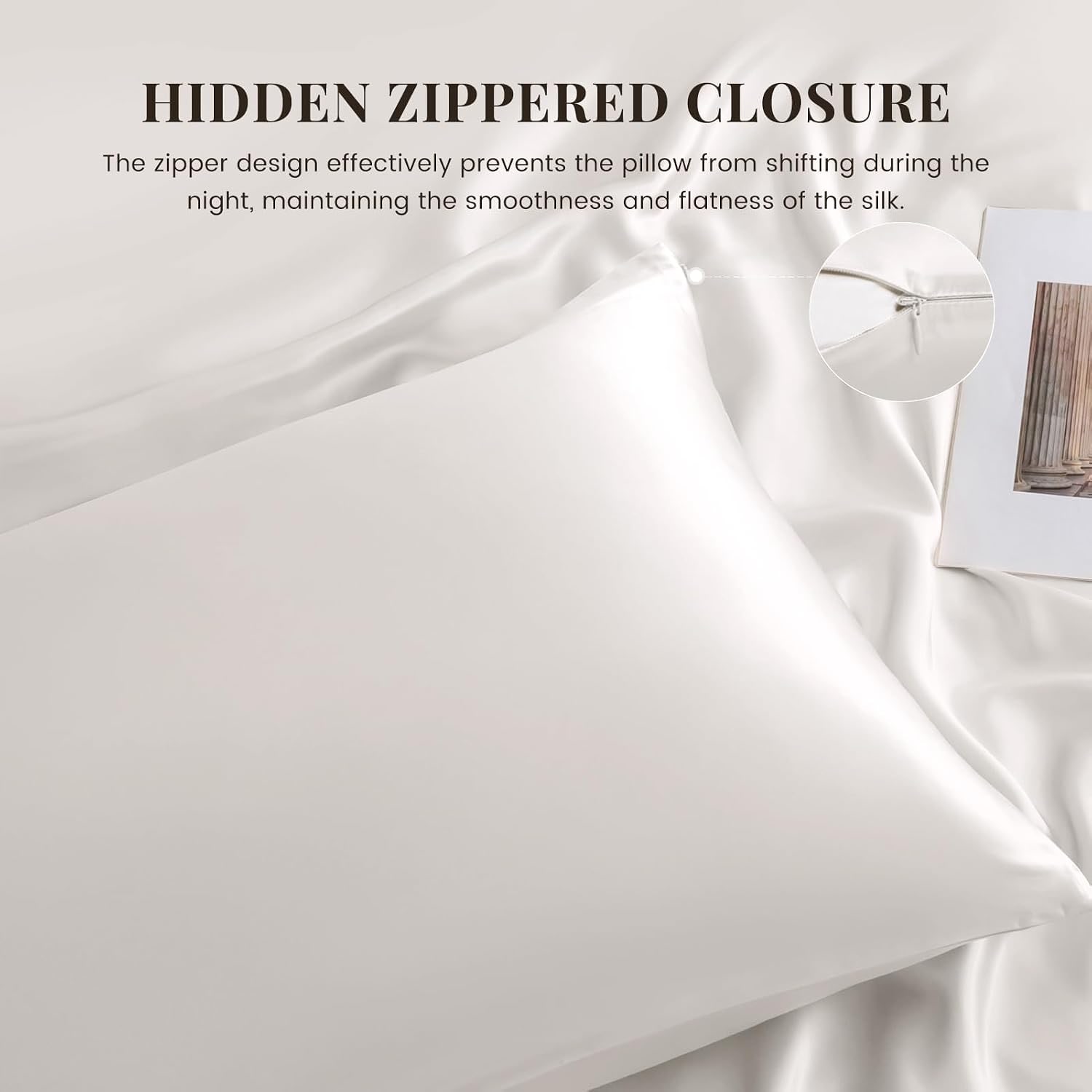
A concealed zip does three useful things. It holds the pillow fully enclosed so nothing shifts while you sleep. It keeps the edges of the case looking square and tailored instead of gaping. And it makes washday quick, because you unzip, slide the pillow out, and you are done rather than wrestling with a flap.
Because the zip is concealed under the fabric and sits along one edge, you do not feel it. If you are sensitive to that sort of thing, turn the zipped edge towards the foot of the bed.
Who this suits
People who wake up with hair knotted around their face. People who find cotton too warm in summer. Anyone who uses leave-in hair treatments or night creams and is tired of cotton wicking half of it away. And people who just like the feel of good bedding and have been meaning to try silk for a while.
It is a plain white solid case, so it does not demand a matching set or a particular decor style. It works on a white bed, a linen bed, a patterned duvet, anything. That neutrality is part of why a plain white silk case is so often the one people buy first.
Caring for it without stress
Silk has a reputation for being precious. It is overstated. Here is the entire routine.
Wash in cool water, either by hand in a basin or in the machine on the gentlest cycle with the case zipped up inside a mesh laundry bag. Use a mild detergent made for delicates. Skip the bleach and skip the fabric softener, since silk is smooth already and softener just leaves a film.
Then line dry in the shade, or lay it flat on a towel. No tumble dryer, ever. Heat is the one thing that genuinely damages silk. In most South African weather it will be dry in well under two hours.
If it needs pressing, use the coolest iron setting, work on the reverse, and ideally do it while the fabric is still a touch damp. Most of the time a good shake and a careful hang means you never need to iron at all.
Wash it about once a week, the same as any pillowcase. If you use heavy oils or creams at night, make it more often.
How many to buy
One case covers one pillow. If you share a double or queen bed and both of you want silk, buy two. Some people buy one and keep a cotton case on the other pillow for a few weeks just to compare. That is a perfectly reasonable experiment and it usually ends with a second order.
The short version
22 momme is the sensible weight for everyday silk bedding, heavy enough to last and smooth enough to notice. Mulberry silk is the smooth, even grade you want against your face, and the momme figure is how you tell it apart from polyester satin. The concealed zip keeps the pillow in and makes washing simple. And the size, 76,2 x 50,8 cm, is the American queen cut, which runs a little larger than a standard South African pillow, so measure before you order.
Get those four things right and the rest takes care of itself. Cool wash, line dry, no heat. That is all a silk case ever asks of you.