
The complete guide
How to Choose and Wear a 70cm Square Silk Scarf
The problem with most accessories
Most accessories ask something of you. Jewellery needs to match. A jacket needs the right weather. A handbag commits you to a colour for the whole day. A square silk scarf asks for almost nothing. You throw it in a bag, and at some point you decide whether it is going around your neck, on your head, or tied to the handle of the bag it has been riding in.
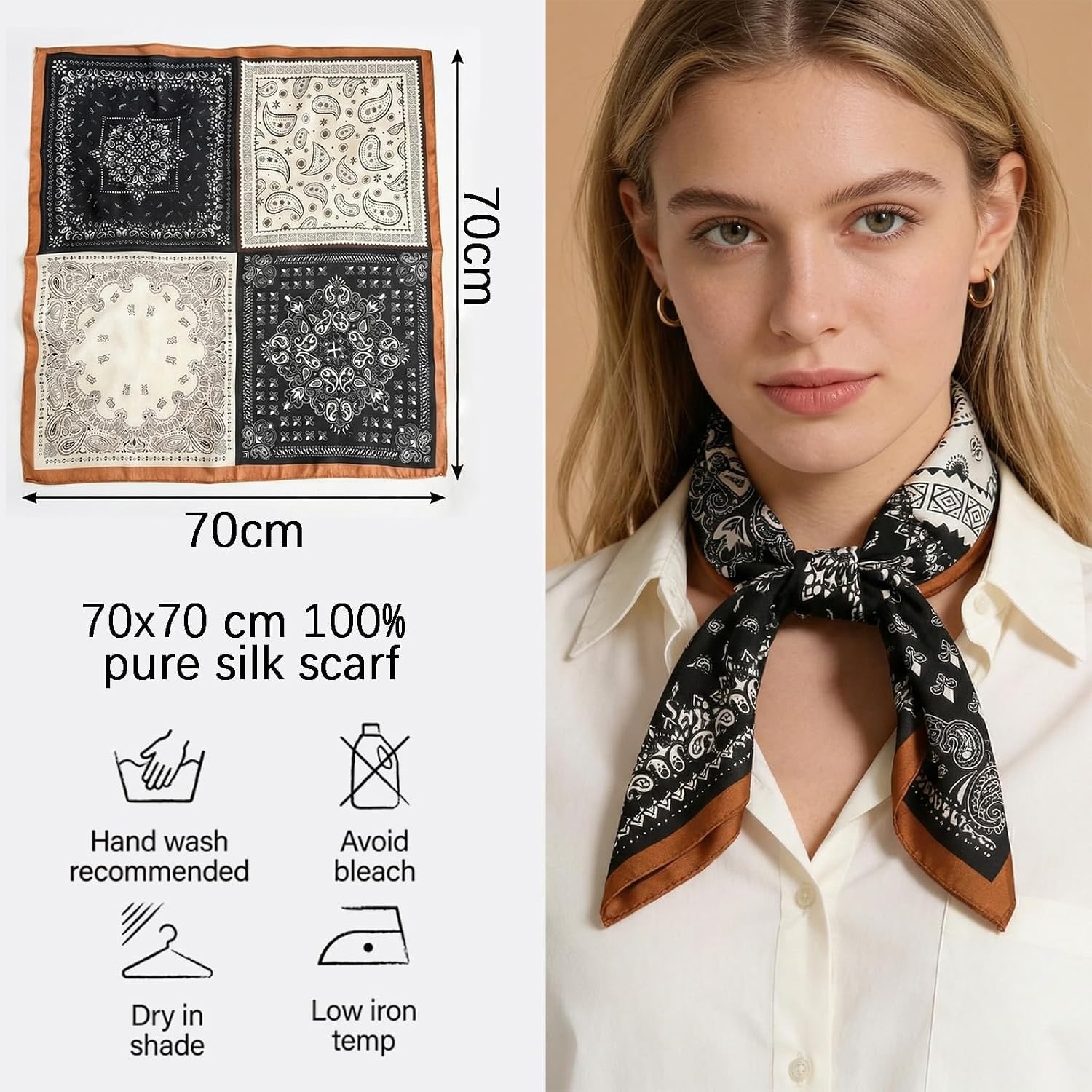
That flexibility is why the 70 x 70 cm square has stayed popular for decades. It is the size that does the most jobs. A 53 cm square is too small for a proper neck knot. A 90 cm square is beautiful but it is a commitment, and it needs practice to tie without looking bulky. Seventy centimetres sits in the middle, which is why it tends to be the square people reach for most often once they own a few.
What mulberry silk actually gives you
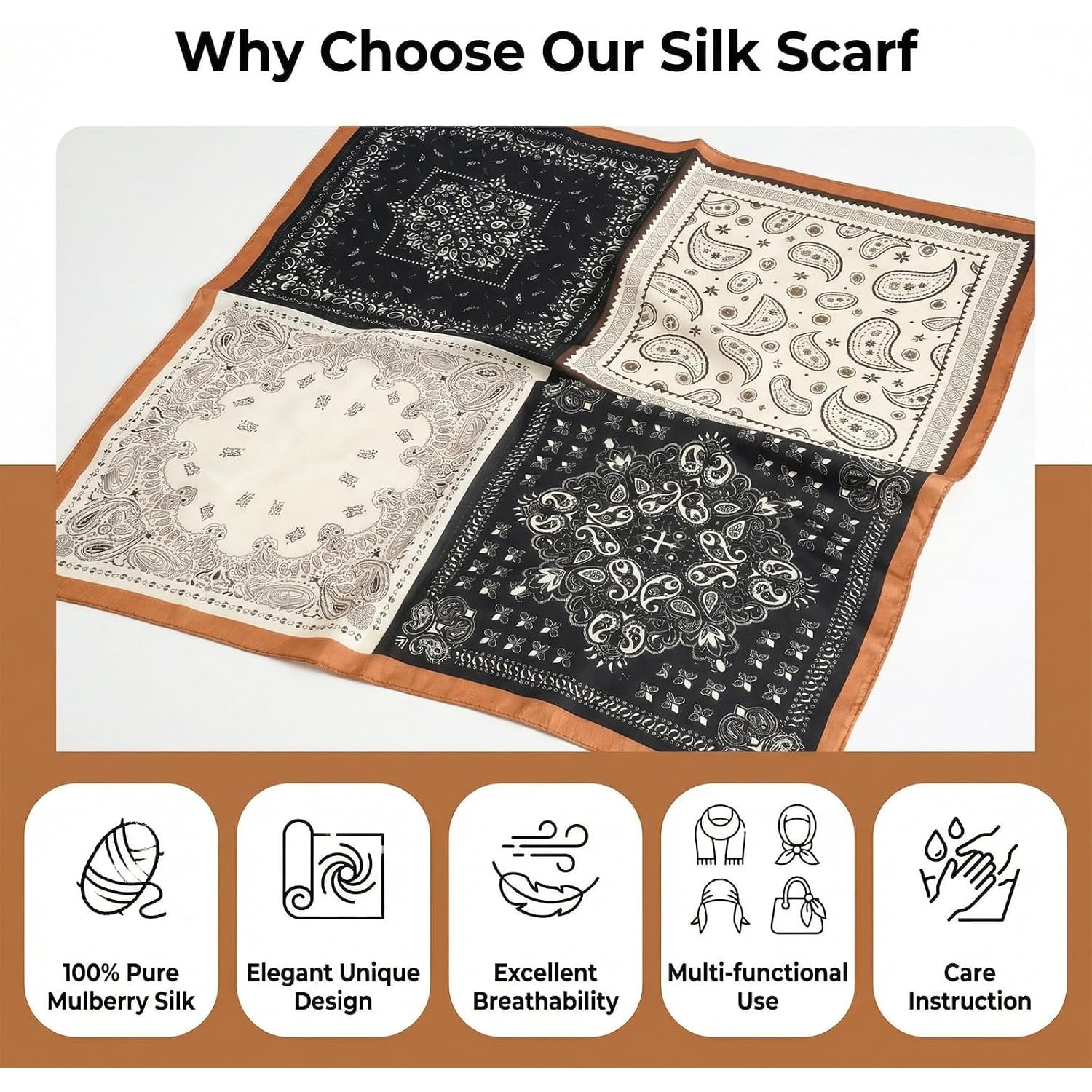
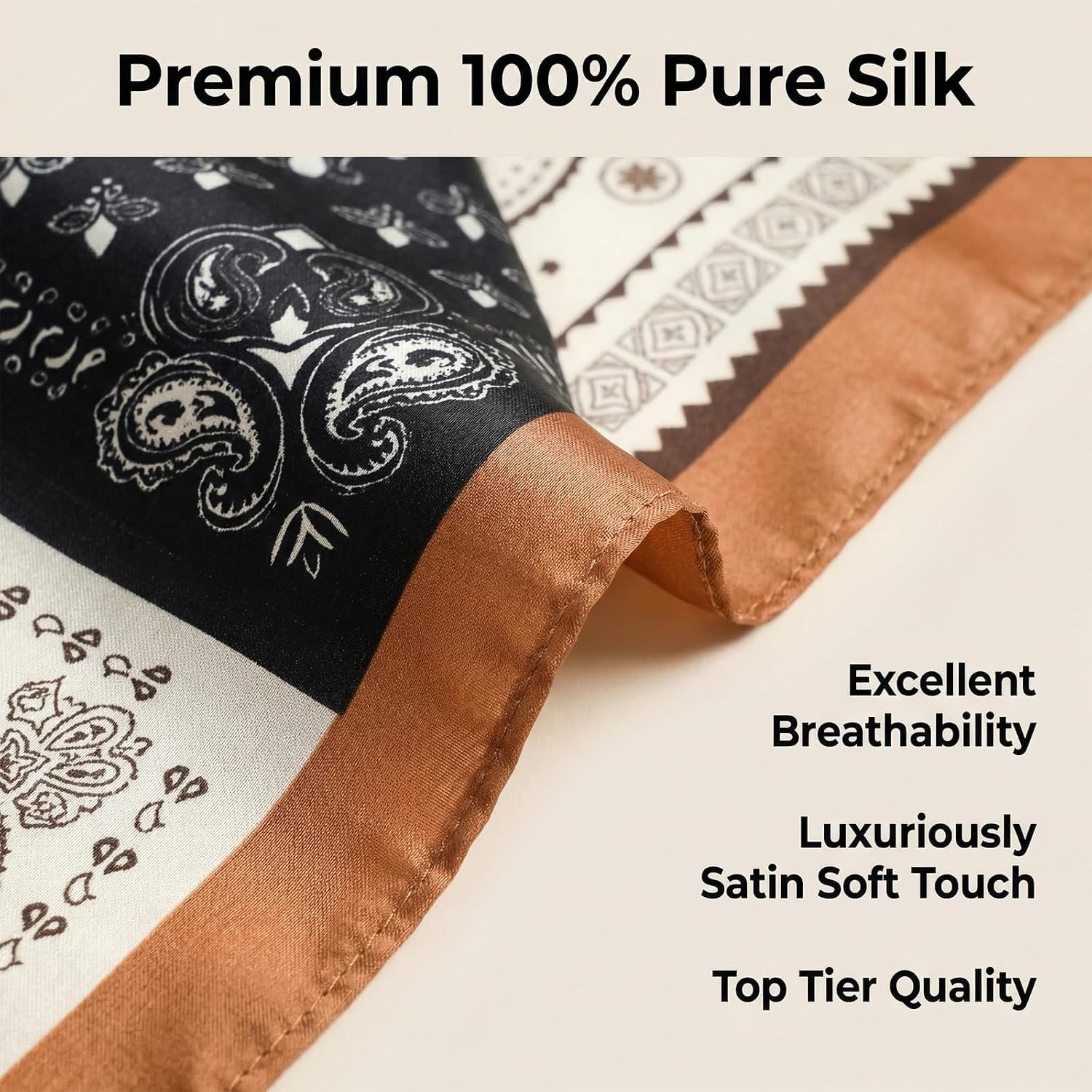
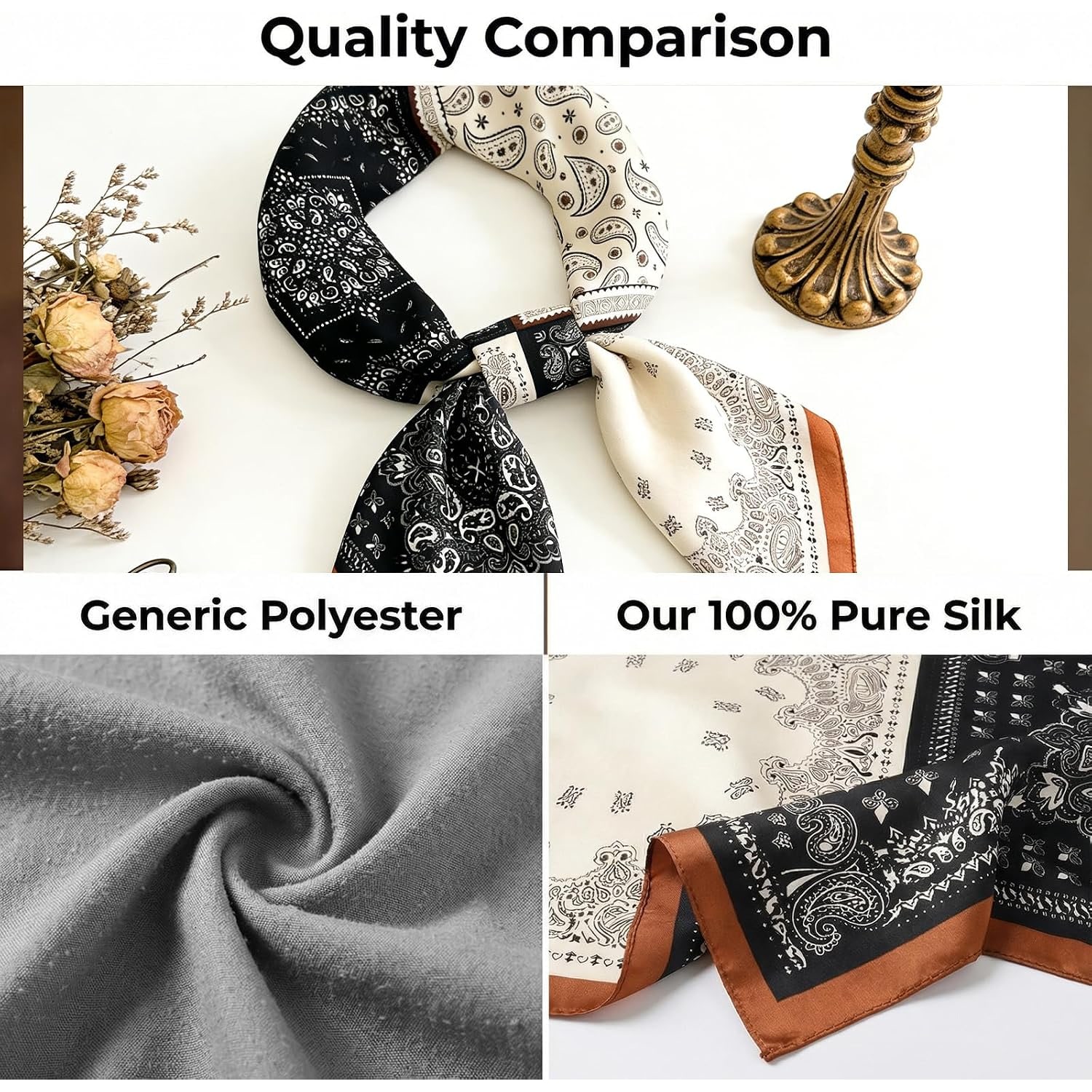
Silk comes from different sources, and mulberry silk is the one with long, even filaments. That length is what you feel. The fabric drapes instead of standing away from the body, knots hold without bulging, and the surface stays smooth rather than catching on dry skin or a wool coat.
Hair and skin slide over silk with less friction than over cotton. That is a plain physical fact about the surface, and it is why a silk head scarf behaves differently at night to a cotton bandana. It is not magic, it is just a smoother fibre.
This particular square is cut light. The maker does not state a momme weight, so there is no exact number to quote, but a light weave is what lets a 70 cm square fold into a thin band without looking like a scarf stuffed under your collar. Heavier silk twill, by contrast, holds a more structured shape and sits better on a 90 cm square.
The single-side print, and why it matters
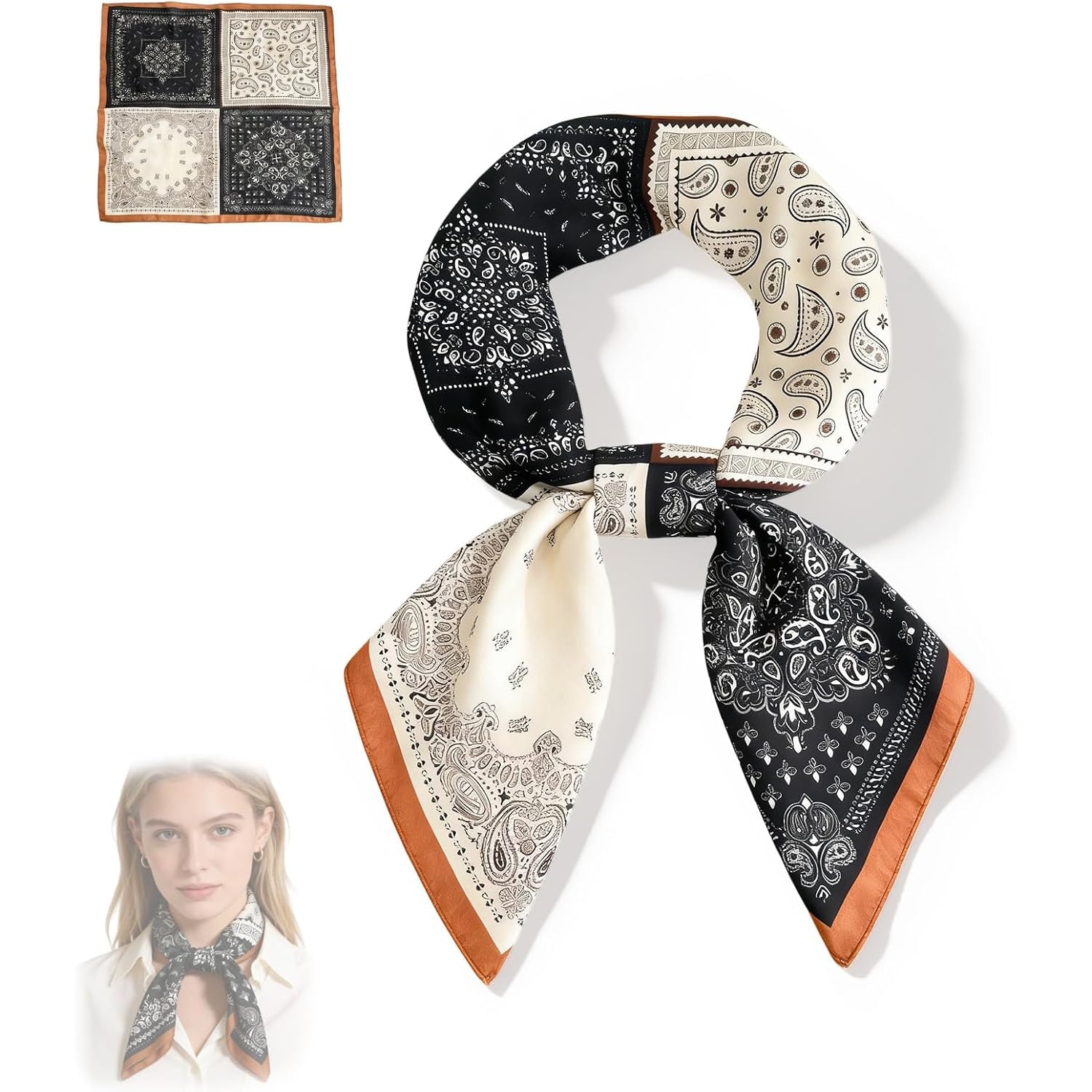
The design here is printed on one face. The reverse shows a paler shadow of the same pattern. This is standard for printed silk and it is not a flaw, but it does change how you tie.
When you fold a square into a triangle, the two outer corners fold toward the centre and the printed face stays on top. When you roll it on the bias into a narrow band, you are showing a strip from the middle of the design, so a scarf with a strong border print will look very different rolled than it does worn open.
The practical advice is simple. Before you buy, look at the image and ask yourself where the colour sits. If the pattern is busy across the whole square, it will look good folded any way. If the interest sits on the border, plan to wear it open or as a loose triangle so the border shows.
Ways to wear it
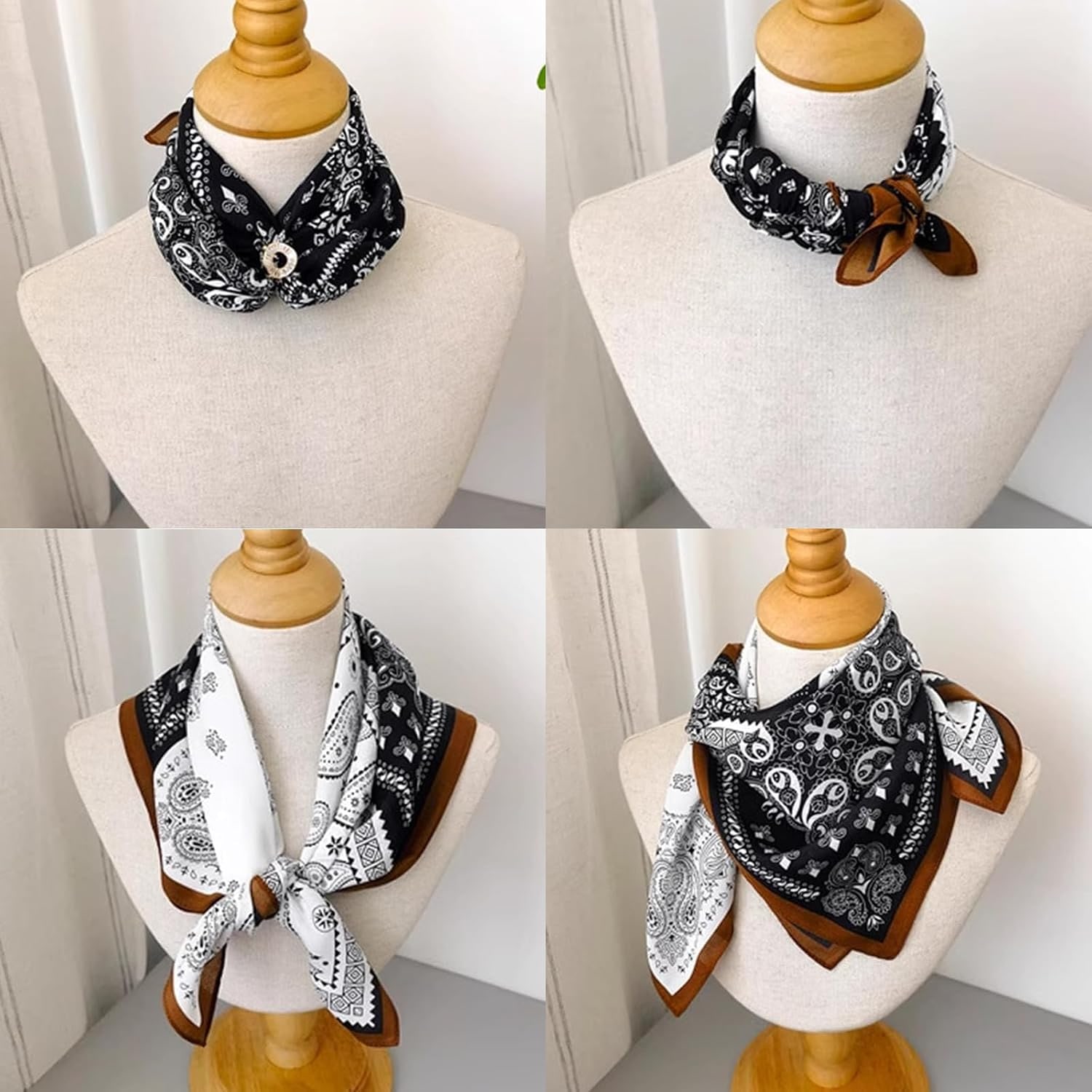
Here are the ties that actually get used, rather than the twenty-step tutorials nobody repeats.
The flat neckerchief. Fold corner to corner into a triangle, then roll the long edge up in bands until you have a wide strip with the point tucked inside. Lay it at the front of the neck, cross at the back, bring the ends forward and tie a small knot slightly off centre. It takes about ten seconds once you have done it twice.
The bias band. Fold the square diagonally, then keep rolling until you have a long narrow strip. This is the base for a headband, a choker, a belt through trouser loops, or a tie around a ponytail. It is the most useful fold to learn, because it turns one square into four accessories.
The hair wrap. Open the square, place it over the head with the straight edge at the hairline, gather the hair into the fabric and tie the two front corners at the nape or on top. People searching for the best silk scarf for curly hair usually land here, because the wrap holds without pulling at the roots.
The bag tie. Bias roll, loop around a handle, double knot, let the ends hang. The cheapest way to make a plain bag look considered.
Choosing between sizes
If you are buying your first silk square, 70 cm is the one to start with. It covers neck and hair, it folds small, and it is forgiving if your knotting is not neat yet.
Go larger, to 90 cm or above, if you want shoulder coverage, a shawl effect, or the big folded triangle look over a coat. Go smaller, to 53 cm, if you only want a pocket square or a tie around a short ponytail.
Think about the print as much as the size. A loud, high-contrast design draws attention to the face, which is great if the rest of the outfit is plain. A quieter, tonal print works harder across more outfits, which matters if you are only buying one. Most people who end up with a drawer of silk squares started with something bold and then bought calmer ones because those got worn more.
Looking after it
Silk is tougher than its reputation suggests, but it has rules, and the rules are not negotiable.
Hand wash only, separately, in water below 30 degrees. Use a detergent made for delicates, swirl rather than scrub, and do not wring the fabric. Press the water out between a clean towel, then dry flat or over a hanger somewhere shaded. Direct sun is the fastest way to dull a print.
Never bleach it. Bleach breaks down silk fibre and strips colour, and there is no recovering from it. For a small mark, dab with cool water and a touch of mild detergent instead of washing the whole square.
Iron on low, ideally while the silk is slightly damp, with a thin cloth between the iron and the fabric. Dry cleaning is fine if you would rather hand the job over.
Store it rolled or loosely folded in a drawer rather than crushed at the bottom of a bag. If it does come out creased, hanging it in a steamy bathroom for ten minutes usually sorts it.
A note on fit and expectations
Silk squares are cut with a small tolerance. Expect roughly 1 to 2 cm variation either way on the 70 cm measurement. It makes no practical difference to how the scarf ties, and it is the norm across the category.
Colours on screen are never exactly colours in hand. Monitors push warmth or coolness differently, and printed silk has a sheen that photographs brighter than it looks in a room. If the shade turns out not to work with your wardrobe, the 14 day cancellation window covers it, provided the scarf is unused and unwashed.
The short version
A 70 x 70 cm mulberry silk square is the most useful scarf size there is. It knots neatly at the neck, wraps the head, bands the hair, ties to a bag and threads through belt loops, all from one piece of fabric that weighs almost nothing and folds down to the size of your palm.
The silk is light and smooth, the design is printed on one face, and the care is straightforward as long as you keep it away from machines, hot water and bleach. Delivery across South Africa is tracked and takes 10 to 20 working days, free on orders over R1800. If it is not right, you have 14 days to send it back unused and unwashed.
Buy the one whose print you would actually wear on an ordinary Tuesday. That is the one that will leave the drawer.