

The complete guide
How to Choose a Silk Pillowcase, A Straightforward Buyer's Guide
The problem with a cotton pillowcase
Most people never think about what their face spends eight hours pressed against. Cotton is the default, it washes well, it is cheap, and nobody questions it. But cotton has a fine, slightly grippy surface. Run a hand across a cotton pillowcase and then across silk and the difference is immediate.
That grip is what causes the small, familiar annoyances. Hair that was smooth at bedtime looks roughed up by morning. A plait that was neat has gone fuzzy at the edges. You wake with creases pressed into one cheek because the fabric held your skin in place every time you turned instead of letting it slide.
A silk pillowcase does not solve every sleep problem. It will not fix a lumpy pillow or a noisy neighbour. What it does change is the single surface your head rests on, and for a lot of people that one change is the best mulberry silk pillowcase upgrade they have made to their bed.
What momme actually tells you
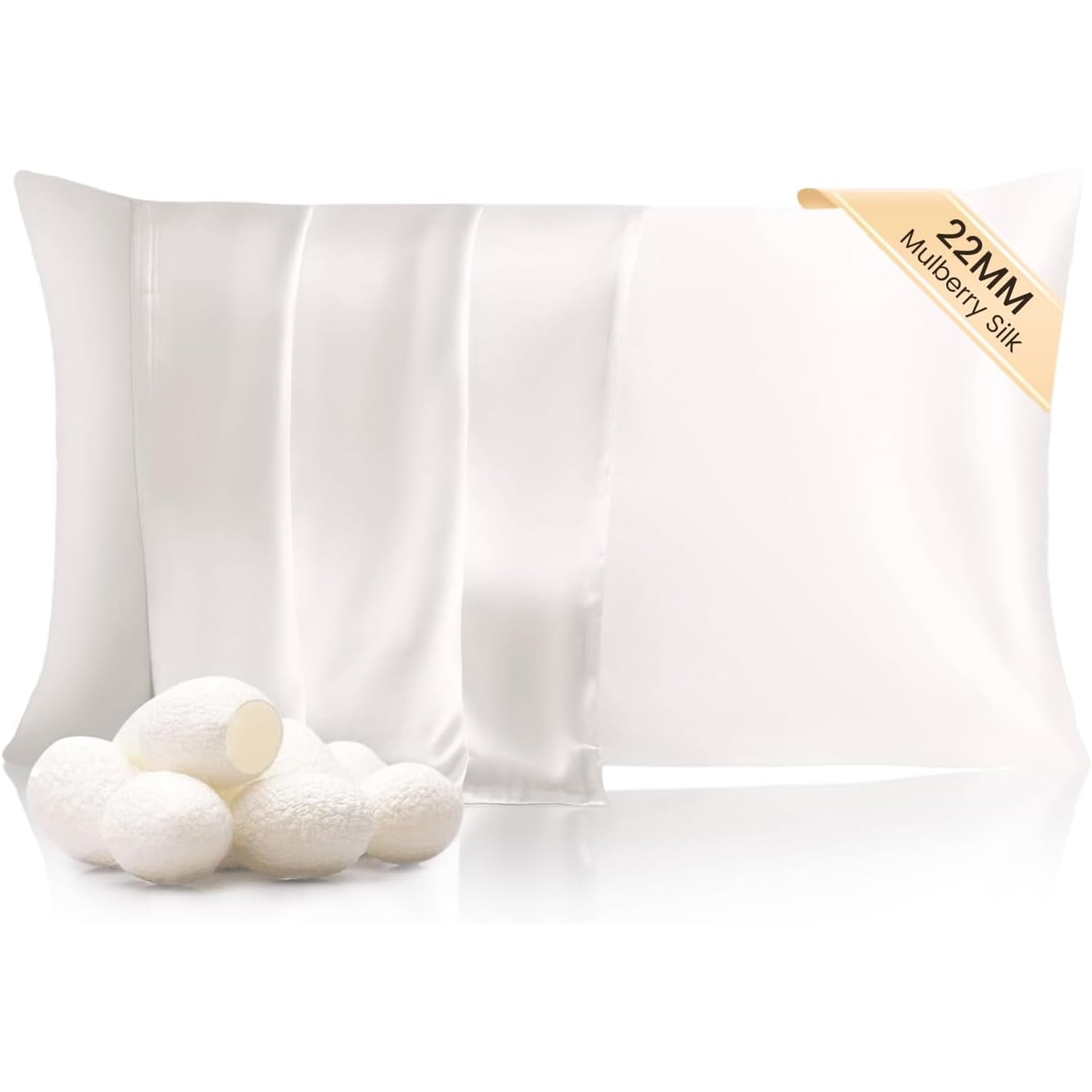
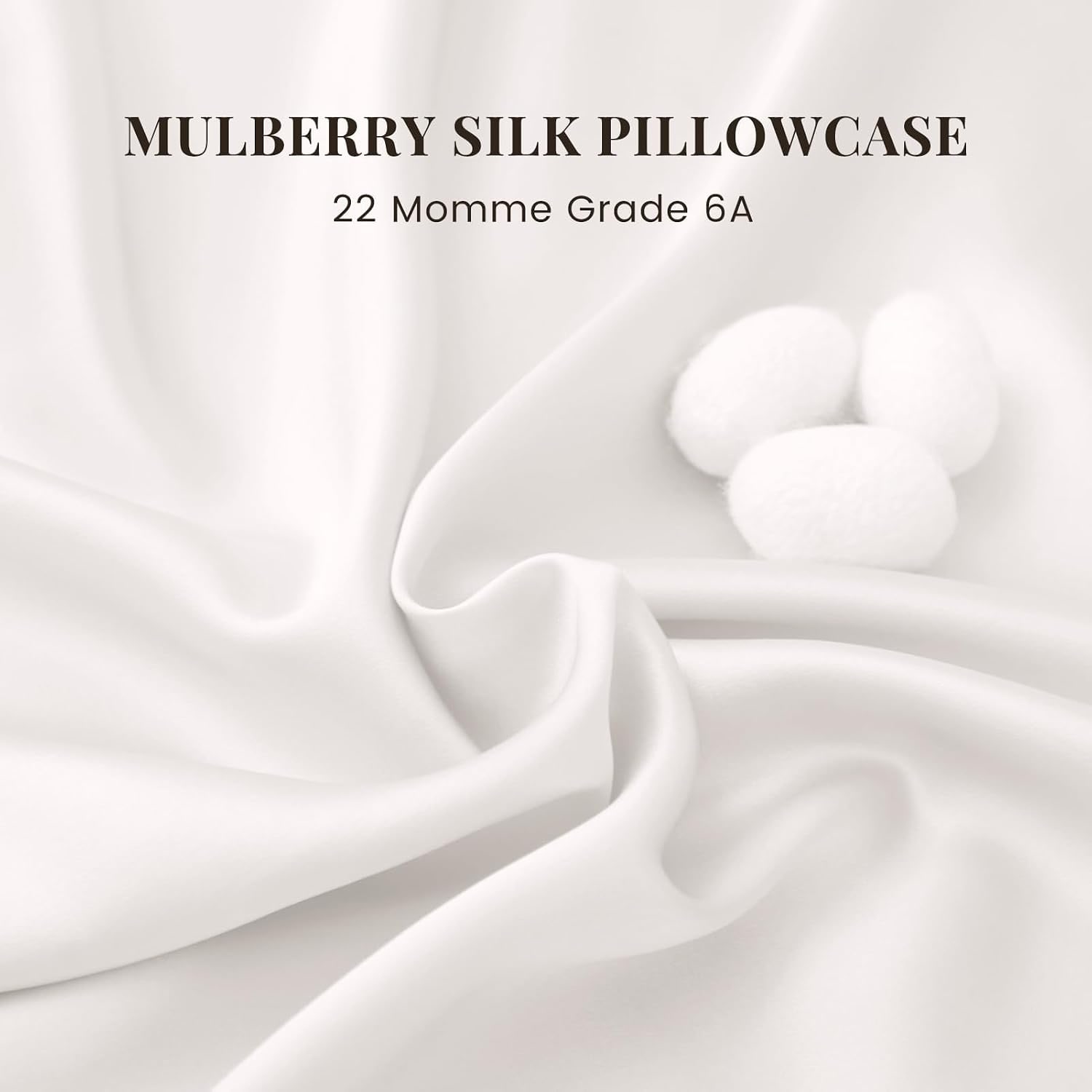
If you compare silk pillowcases online, you will see a number followed by the word momme. It is not marketing language. Momme is the traditional unit for silk fabric weight, in the same spirit as GSM for cotton, and it is the most honest single number for judging quality.
Lower weight silks, in the low teens, feel light and a little papery. They are cheaper to make and they do not last as long, because there is simply less fibre in the cloth to take the wear of weekly washing. Very heavy silks feel dense and can be more than you want against your face on a warm night.
This pillowcase is 22 momme. That weight sits comfortably in the range that most experienced silk buyers settle on. It has enough body that it falls over a pillow in a soft, even drape rather than clinging flat, and enough substance that it does not feel fragile in your hands. It is still light and breathable, which matters in a South African summer.
The stated thread count here is 600. With silk, thread count is less informative than momme, because the counting method varies between fibres and weaving styles. Think of momme as the number to trust and thread count as supporting information.
Mulberry silk versus satin
This is the most common point of confusion, and it costs people money. Satin is a weave, not a fibre. You can weave satin from polyester, and it will be shiny and slippery and cost very little. It is not silk.
Mulberry silk is the real fibre, spun by silkworms fed on mulberry leaves, and it is what this pillowcase is made from. The maker states 100% mulberry silk. The practical differences show up over time. Polyester satin does not breathe in the same way, so it can feel clammy by the small hours, and it tends to pill where silk simply wears smooth.
If you are hunting for the best pure silk pillowcase rather than a lookalike, the fibre content line is the first thing to read on any listing. If a product page talks only about satin and never names the fibre, that usually tells you what you need to know.
Why the zip matters more than you would think
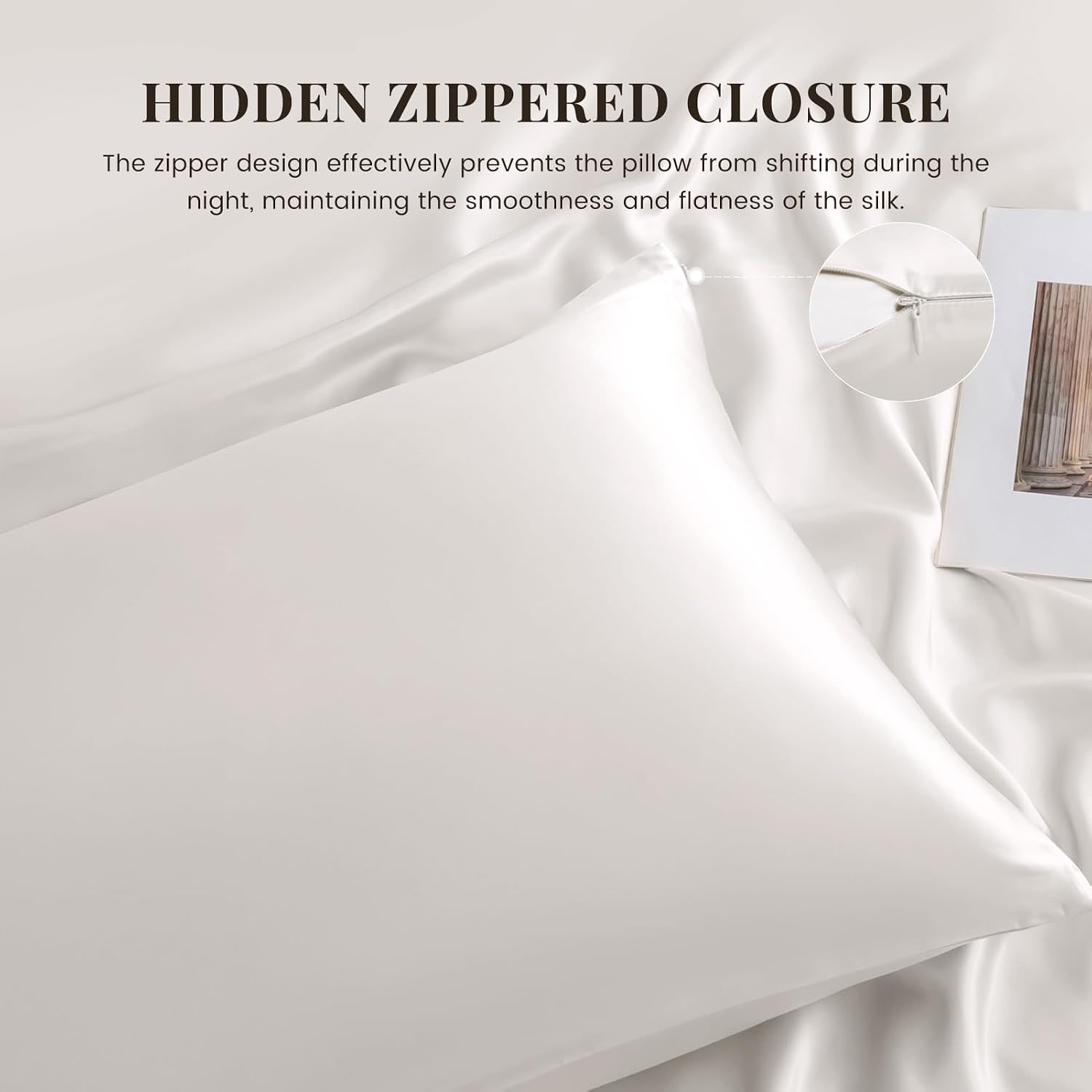
Pillowcases close in one of two ways. An envelope style has a flap of extra fabric that folds back over the open end and tucks under the pillow. A zipped style closes properly.
Envelope closures are fine until you are a restless sleeper. The flap works its way loose, the corner of the pillow pokes out, and by morning the case has shifted halfway down. On a silk pillowcase, which is slippery by nature, this happens more readily than it does on cotton.
The concealed zip on this one sits inside the seam, so you do not see it or feel it, and the outside of the pillowcase stays smooth and uniform. The pillow is fully enclosed and stays put. On laundry day it opens wide and the pillow slides straight out, which is genuinely quicker than wrestling with an envelope flap.
Getting the size right
This is where most disappointed buyers go wrong, so it deserves care. This pillowcase measures 66 x 50.8 cm, which is 26 x 20 inches. That is the American standard size, and it is the size most international silk pillowcases are cut to.
A typical South African standard pillow runs around 45 x 70 cm. You can see immediately that the numbers do not line up neatly. Depending on the pillow you own, this case may fit well with a slight drape, or it may be short along one dimension.
So measure. Take a tape measure to the actual pillow on your bed, not the one on the shelf, and note the length and the width. If your pillow is a little smaller than 66 x 50.8 cm, the silk will drape softly and look perfectly good. If your pillow is larger in either direction, you will struggle to get it in, and forcing a pillow into a case that is too small puts strain on the seams.
If you are shopping for the best standard size silk pillowcase for a guest room, remember that guest pillows are often older and flatter than your own, and may measure differently.
Who it suits
People who care about their hair come to silk first. Hair slides across the surface with less friction than it does over cotton, which is the plain physical reason the best silk pillowcase for hair is such a common search. That applies whether your hair is straight, curly, coiled, long or cropped.
Hot sleepers are the second group. Silk is breathable and does not trap heat the way a thick brushed cotton does, so it stays comfortable through a warm night.
It also suits anyone who simply likes nice things on their bed. A plain white silk pillowcase does not shout. It works with white linen, grey linen, patterned duvet covers, anything. Some people use it as the best luxury pillowcase on an otherwise plain bed, because one good piece lifts the whole look.
And it travels well. Silk is light, packs down to nothing, and some people take theirs to hotels, which is why the best silk pillowcase for travel comes up more often than you would expect.
Looking after it
Silk is a protein fibre, so treat it the way you would treat a good wool jumper. Cool water, mild detergent, no bleach.
Hand washing is easy. Fill a basin with cool water, add a small amount of detergent made for delicates, swish the pillowcase through, rinse until the water runs clear, and press out the excess without wringing. It takes a few minutes.
If you prefer the machine, put the pillowcase inside a mesh laundry bag and run the gentle cycle. The bag matters, because zips and buttons on other garments will snag silk. Do not wash it in with towels or denim.
Drying is the part people get wrong. Never tumble dry silk. Heat and tumbling break down the fibre faster than anything else you could do to it. Line dry it or lay it flat, out of direct sunlight, because strong sun weakens silk over time. It dries quickly.
If you want it crisp, press on the coolest iron setting with the case turned inside out. Most of the time it comes off the line smooth enough that ironing is unnecessary.
Wash weekly, the same as any pillowcase. If you use rich creams or hair oils at night, wash more often.
The short version
Buy on momme weight first. At 22 momme this is a substantial silk, not a thin one, and that is the number that separates a pillowcase you keep for years from one you replace. Confirm it is mulberry silk and not polyester satin, which this one is. Choose the zip over the envelope flap if you move in your sleep.
Then measure your pillow against 66 x 50.8 cm before you order, because size is the only thing here you cannot change after the fact. Wash it cool, dry it on the line, and leave the tumble dryer out of it entirely.
Get those few things right and a silk pillowcase is one of the least complicated improvements you can make to how a bed feels.