
The complete guide
How to Choose a Kids Silk Sleep Mask That They Will Actually Wear
The problem is usually light, not bedtime
Most bedtime battles get blamed on screens, sugar or a late nap. Often the simpler answer is that the room is not dark. South African evenings in summer stay bright well past seven. Streetlights sit close to bedroom windows in most suburbs. A hallway light left on for a younger child spills under the door. On a long drive or a late flight, there is no curtain at all.
Light falling on closed eyelids tells the body it is still daytime. Adults have mostly learned to override that. Children have not. They lie there with their eyes closed, perfectly still, and simply do not drift off.
Blacking out a whole room is a project. Blackout curtains cost money, need fitting and still leak around the rails. A sleep mask solves the same problem in a few centimetres of fabric, and it travels. That is the whole case for one.
Why silk, and what silk does and does not do
Silk is a fine, smooth fibre. Run a piece across the back of your hand and you feel very little drag. Cotton, even good cotton, has a rougher surface at the thread level, and polyester microfibre sits somewhere in between. On the thin skin around a child's eyes, and against eyelashes, that difference is noticeable when they turn over in the night.
Silk is also light. The whole two pack here weighs 50 grams, masks and all. A child who is fussy about things touching their face will notice a heavy mask immediately. A light one tends to disappear after a few minutes.
What silk does not do is anything medical. It will not cure sleep problems, fix skin, or make a restless child a good sleeper. Anyone telling you otherwise is selling you a story. What it does is feel smooth, sit light, and block light. That is enough.
One thing worth checking on any silk mask is whether both faces are silk. A lot of masks use a silk outer and a cheaper lining, which is the face actually touching your child. This set is silk on both sides, so the smooth surface is the one against the skin. It also means nothing changes if the mask gets turned the wrong way out in the wash.
The maker does not state a momme weight or weave for this mask, so we are not going to quote one. Momme is the standard measure of silk weight, and a higher number means a denser fabric. It matters a great deal for a pillowcase, where the fabric takes a nightly beating. On a small mask that barely moves, it matters far less than fit does.
Fit is what decides whether it gets worn
If you take one thing from this guide, take this. The best kids silk sleep mask is the one that fits, and fit is where most masks fail children.
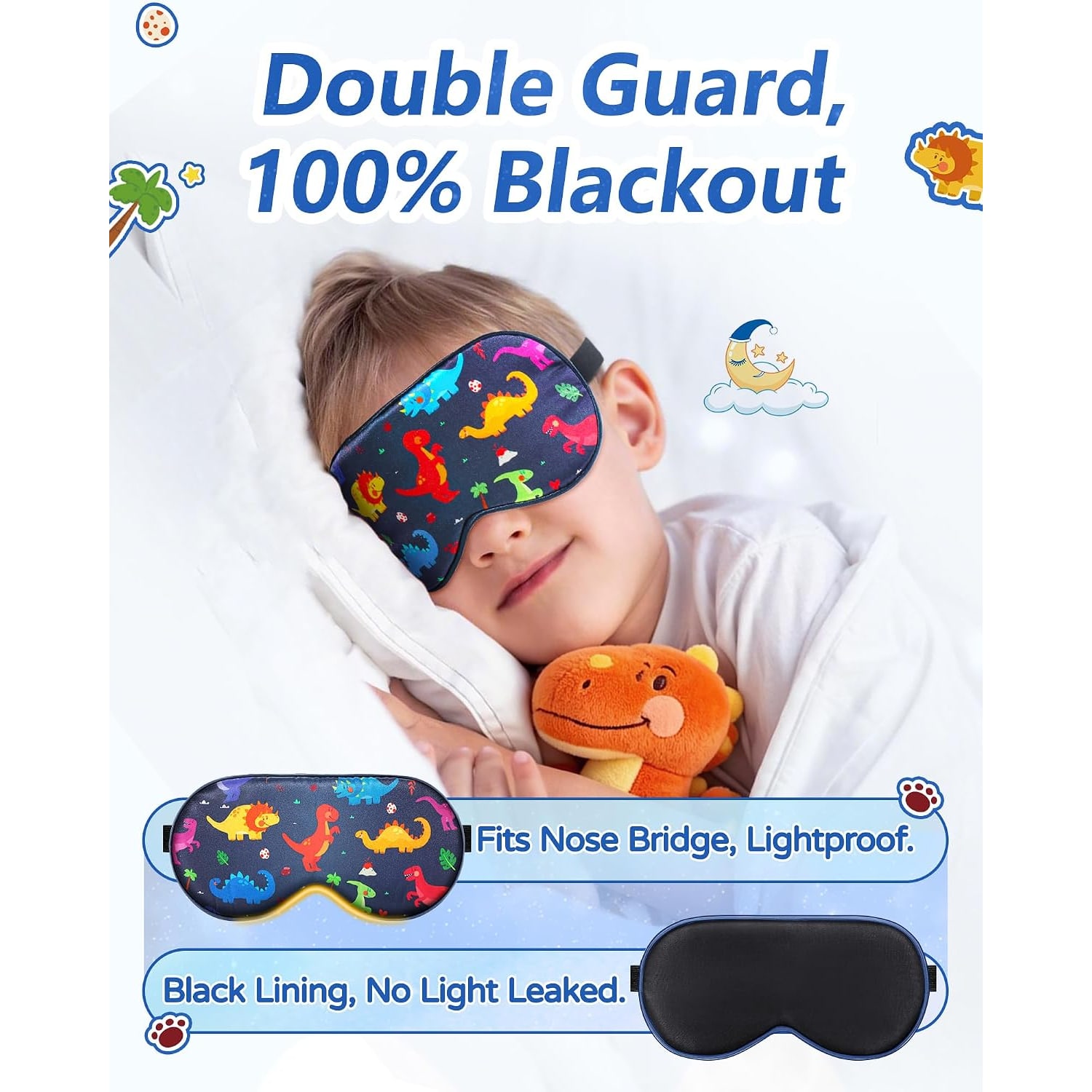
Adult masks are around 20 to 21 cm wide. Put one on a six year old and the edges wrap past the temples, the strap hangs loose, and the lower edge bridges over the nose instead of following it. That leaves two little triangles of light either side of the nose, which is exactly where light bothers a lying-down child most.
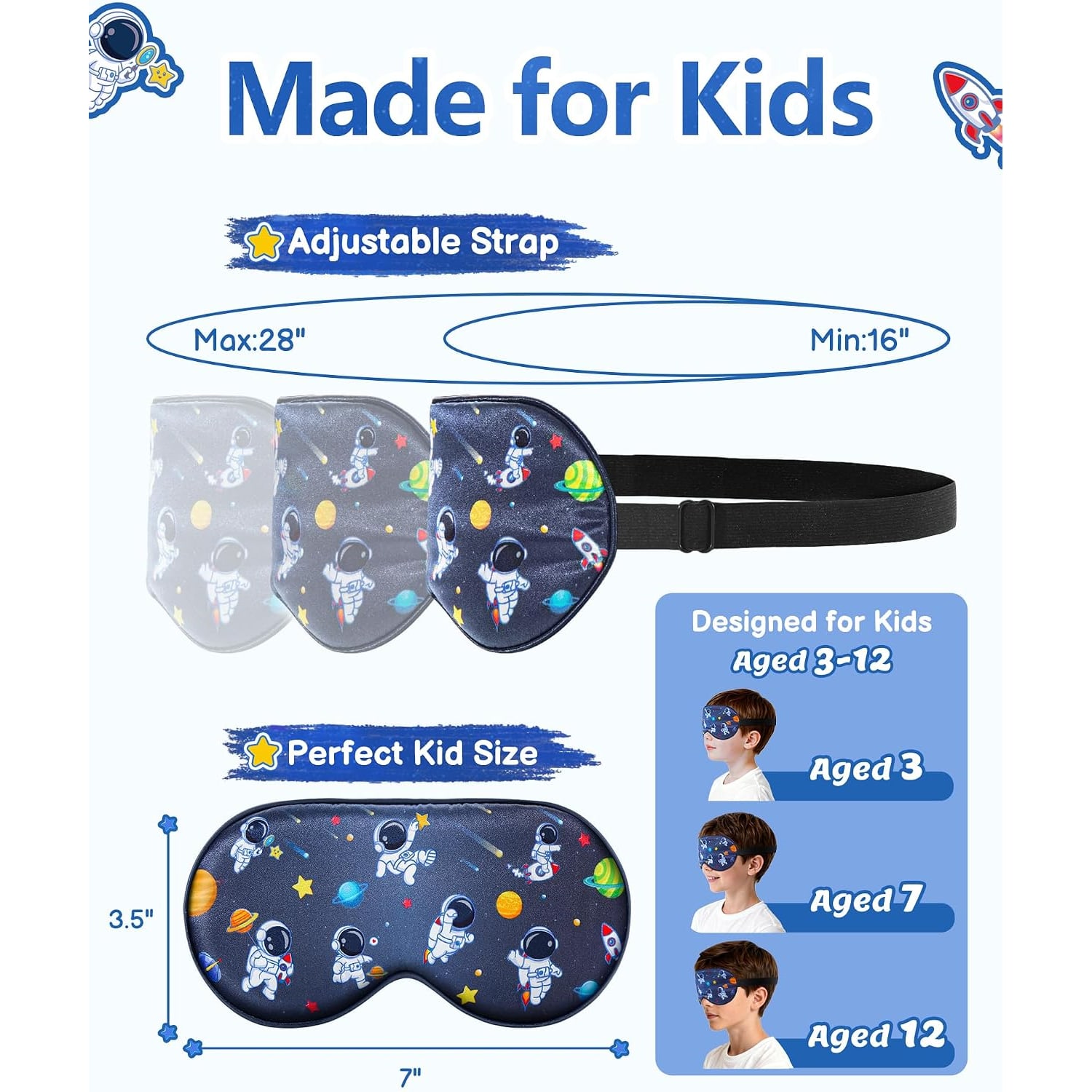
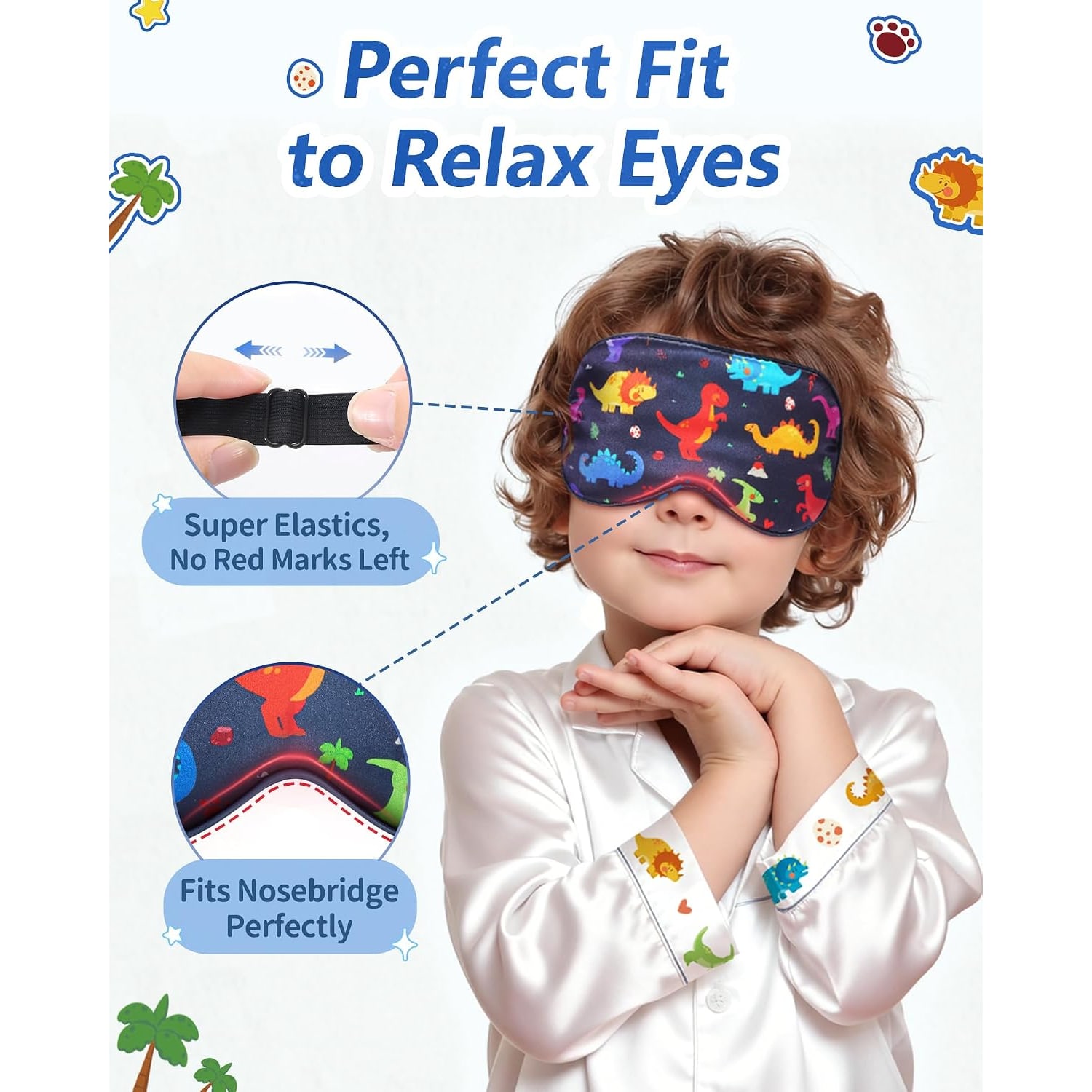
This mask is cut at roughly 18 x 9 cm (7 x 3.5 in), and the lower edge is shaped to hug the bridge of the nose. The brief says it is designed for ages 3 to 10, which is a sensible range for that size. Before you buy, do a quick measure across your child's brow from temple to temple. If that distance is well under 18 cm, you have room to spare. If it is close to 18 cm, your child is probably at the older end of the range and will still be fine, just with less overlap.
The strap runs through a buckle. Slide it to set the loop length, then leave it. The target is a mask that stays put when your child rolls, without a visible dent on the forehead in the morning. Two fingers should slide under the strap at the back. Tighter than that is not darker, it is just tighter.
Who this suits, and who it does not
It suits a child whose room is bright at bedtime, or who naps during the day. It suits families who travel, because the mask packs flat into any bag and needs no power, no app and no spare parts. It suits a household where a younger sibling needs the hallway light on. It suits long drives at dusk, where blocking the moving light through the window is the difference between a sleeping child and a grumpy one.
It does not suit a child who is genuinely frightened by having their eyes covered. Some children find a mask comforting because it gives them a darkness they control and can remove in a second. Others hate the idea and will fight it every night. You will know within two tries. Let them try it in daylight first, sitting up, before you ever ask them to sleep in it.
It also does not suit very young toddlers, and we would not push it there. The suggested range starts at three for a reason.
Getting a child to take to it
The first night is the whole battle. A few things help.
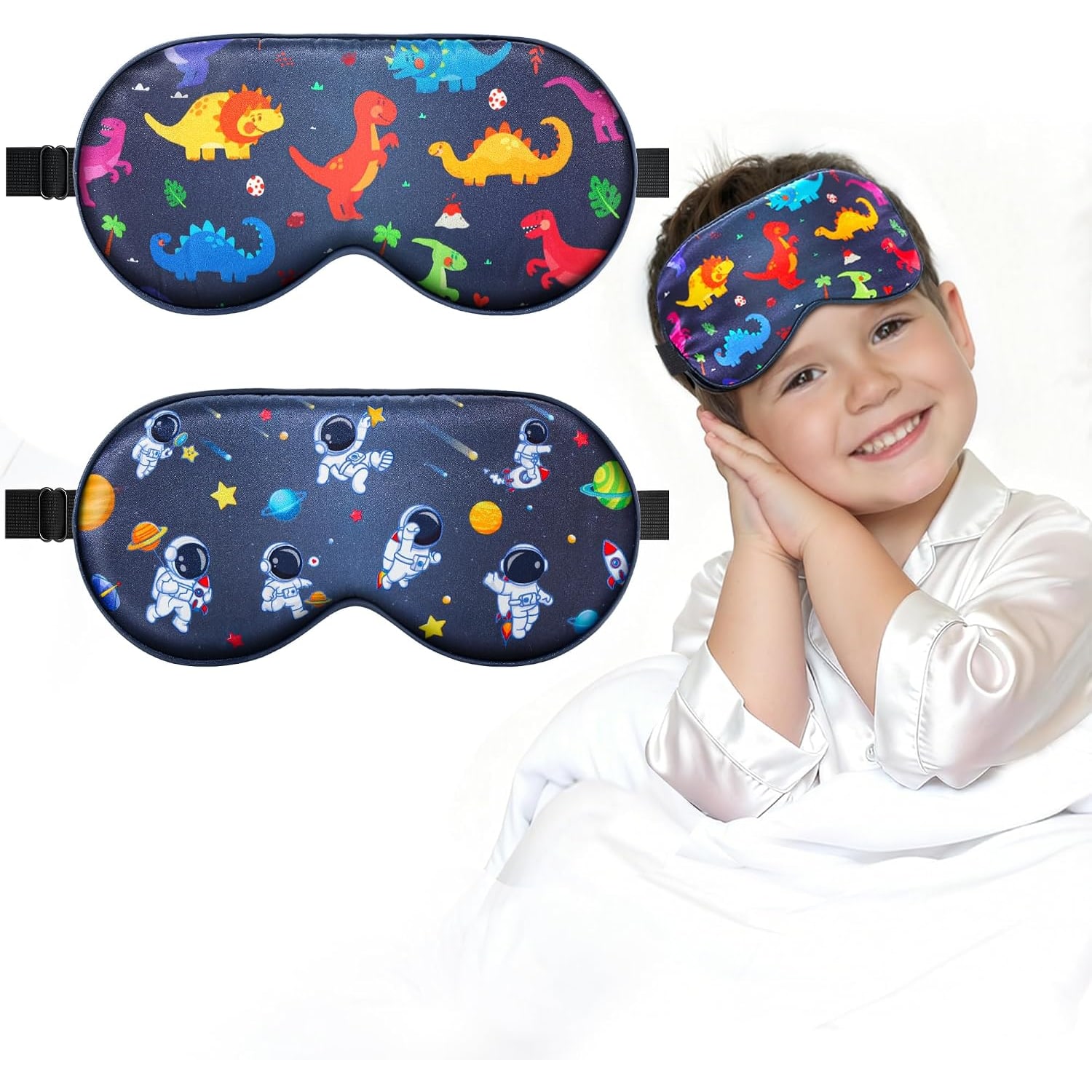
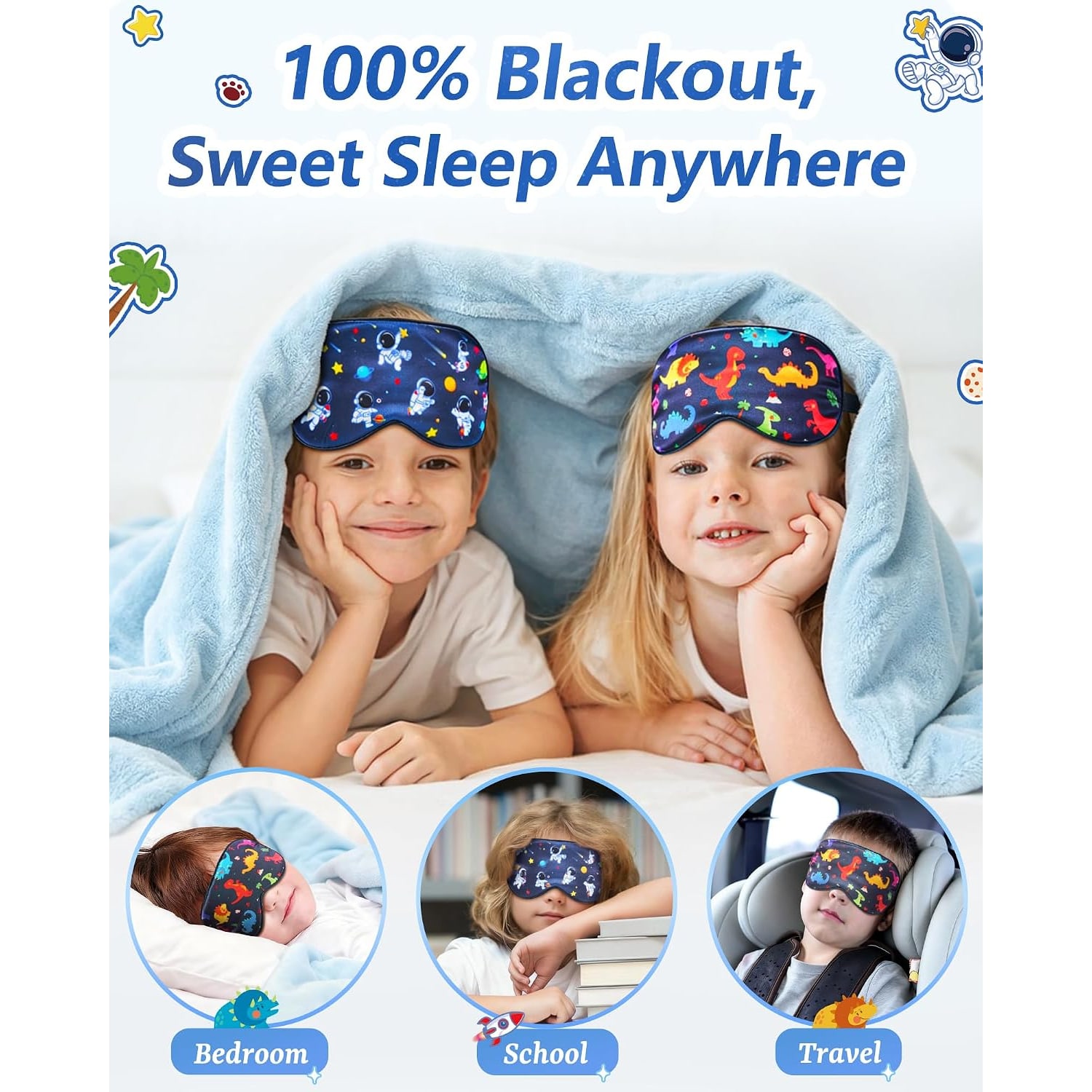
Let them choose. The set has two prints, a starry astronaut and a dinosaur, and letting a child pick which one is theirs turns the mask from something imposed into something owned. If you have two children, the different prints double as name tags.
Try it on in the afternoon, not at lights-out. Ten seconds with the mask on while they are sitting on the floor playing is a much easier sell than first contact at 7pm when everyone is tired.
Set the strap yourself before you hand it over. A loose mask that slides off after two minutes teaches the child it does not work. A well set one teaches the opposite.
And do not make it a rule. If they pull it off at midnight, fine. Most children who are going to take to a mask do so within a week, and then it becomes part of the routine without anyone mentioning it.
Looking after them
Silk is not fragile, but it does not like heat or harsh chemicals. Hand wash in cool water with a mild detergent made for delicates. Skip the bleach and skip long soaking. Press the water out rather than wringing, reshape the mask, and dry it flat in the shade.
Direct sun and tumble dryers are the two fastest ways to wear out both the silk and the printed design. If you want the astronaut to still look like an astronaut in a year, keep both away.
Wash every week or two with regular night use, and sooner if your child has been ill. This is the quiet benefit of a two pack: one is always clean while the other is in the wash. Keep the elastic strap out of hot water, and if you iron, use the lowest silk setting with a cloth over the top.
Ordering, delivery and changing your mind
Prices here are in rand. Delivery is tracked and reaches every province in 10 to 20 working days, free on orders over R1800 and R250 below that. Payment is by card.
If it turns out not to be right, you have 14 days from delivery to cancel for any reason, provided the masks are unused and unwashed. If you are unsure, have your child test the fit over the packaging before you open it.
The short version
Two mulberry silk masks, silk on both faces, cut at about 18 x 9 cm for children roughly 3 to 10. Adjustable buckle strap, a shape that follows the nose to keep light out, blue with two exploring prints. Fifty grams for the pair, which makes them easy to travel with. Measure your child's brow, set the strap properly, let them pick their print, and wash by hand in cool water. That is most of what there is to know.