
The complete guide
How To Choose A Silk Pillowcase, And What 22 Momme Actually Buys You
The problem with the pillowcase you already own
Most of us never think about the pillowcase. It comes with the sheet set, it goes on the pillow, and that is the end of it. Then one night you notice the creases pressed into your cheek, or you wake with your hair knotted on one side, or the cotton feels hot and slightly damp by 2am and you flip the pillow for the fourth time.
Woven cotton has texture. Run your fingers across a percale pillowcase and you can feel the grid of it. Your face spends seven or eight hours pressed into that grid, and your hair drags across it every time you roll over. It is a small amount of friction, repeated a few thousand times a night.
Silk is the obvious alternative because it is smooth in a way cotton simply cannot be. The fibre is long and continuous rather than short and spun, so the surface of the cloth has very little grip. Hair slides. Skin slides. That is the whole pitch, and it is honest. We are not going to tell you it will change your face.
What momme means, and why 22 matters
Momme is the measure that separates a good silk pillowcase from a disappointing one, and almost nobody explains it properly.
It is a weight. Specifically, it tells you how heavy a given area of the silk fabric is. Think of it the way you think of GSM for a towel or a sweatshirt. A higher momme number means more silk packed into the same square metre, which means a denser, heavier, more substantial cloth.
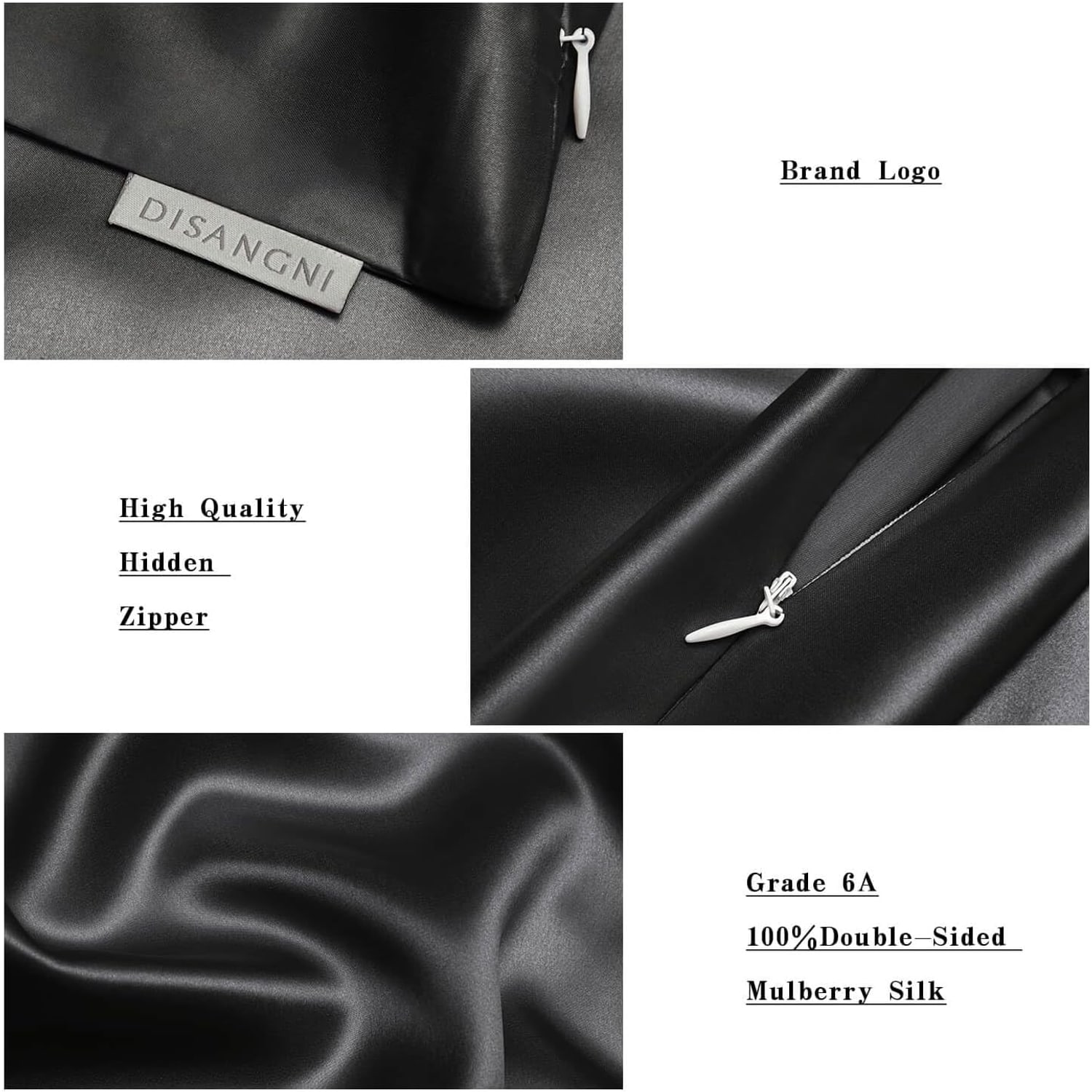
Silk bedding usually runs somewhere between 16 and 25 momme. Below 19 and the fabric starts to feel thin and papery, and it tends to wear out faster because there is simply less material to take the abuse. At 22 momme you are in the range most people settle on. It drapes properly over a pillow instead of clinging to it, it has body in the hand, and it survives repeated cleaning without going limp.
The 600 thread count listed here describes the weave rather than the weight. It tells you how tightly the threads sit against each other, which affects how smooth the surface feels. Both numbers are useful, but if you are comparing two silk pillowcases and can only check one figure, check the momme.
Silk on both sides, and why that is not a given
A surprising number of silk pillowcases are only silk on one face. The top panel is silk and the underside is cotton or a blend, which keeps the price down and lets the seller still use the word silk in the title.
The catch is obvious the moment you flip your pillow in the middle of the night. You land on the wrong side and get the exact cotton texture you were trying to avoid. These are silk on both faces at the full 22 momme, so there is no wrong side.
Getting the size right
This is where silk pillowcases trip people up more than anything else, and it is worth slowing down for.
These are cut to 51 x 66 cm, which is 20 by 26 inches. That is the American standard size, and a very large share of silk pillowcases sold anywhere in the world are made to American measurements because that is where the volume is.
A typical South African standard pillow is closer to 45 x 70 cm. Notice what that means. The pillow is narrower than the case but about four centimetres longer. A pillow that is narrower is fine, it just sits a little relaxed inside. A pillow that is longer than 66 cm will be a squeeze, and forcing it in puts strain on the seams and the zip.
So measure. Take the pillow off the bed, lay it flat without squashing it, and run a tape from edge to edge in both directions. Write the numbers down. If your pillow is 70 cm long, this case will be snug and you may prefer to look at a queen cut, which usually runs 51 x 76 cm. If your pillow is 66 cm or under, you are sorted.
It is a two minute job that saves a return.
The zip, and how to treat it
The open end closes with a hidden zip rather than an envelope flap. There is a real argument for each, but the zip wins on one practical point. It holds the pillow completely inside. Envelope closures let the pillow work its way out over a night of tossing, and you wake up with a bare corner poking out.
The zip also gives a cleaner edge when the bed is made, which matters if the bedroom is somewhere you actually look at rather than just sleep in.
The one thing to remember is to close it before cleaning. An open zip tumbling around with delicate fabric is the single most common way silk gets snagged. Close it, and the problem disappears.
Who this suits
Anyone who sleeps on their side or their front gets the most out of a silk pillowcase, because that is where the friction happens. If you sleep flat on your back with your hair tucked away, you will notice the cooling more than the smoothness.
People with long hair tend to be the keenest converts. The same goes for anyone with curls, where the drag of cotton is the enemy of a style that took effort to set.
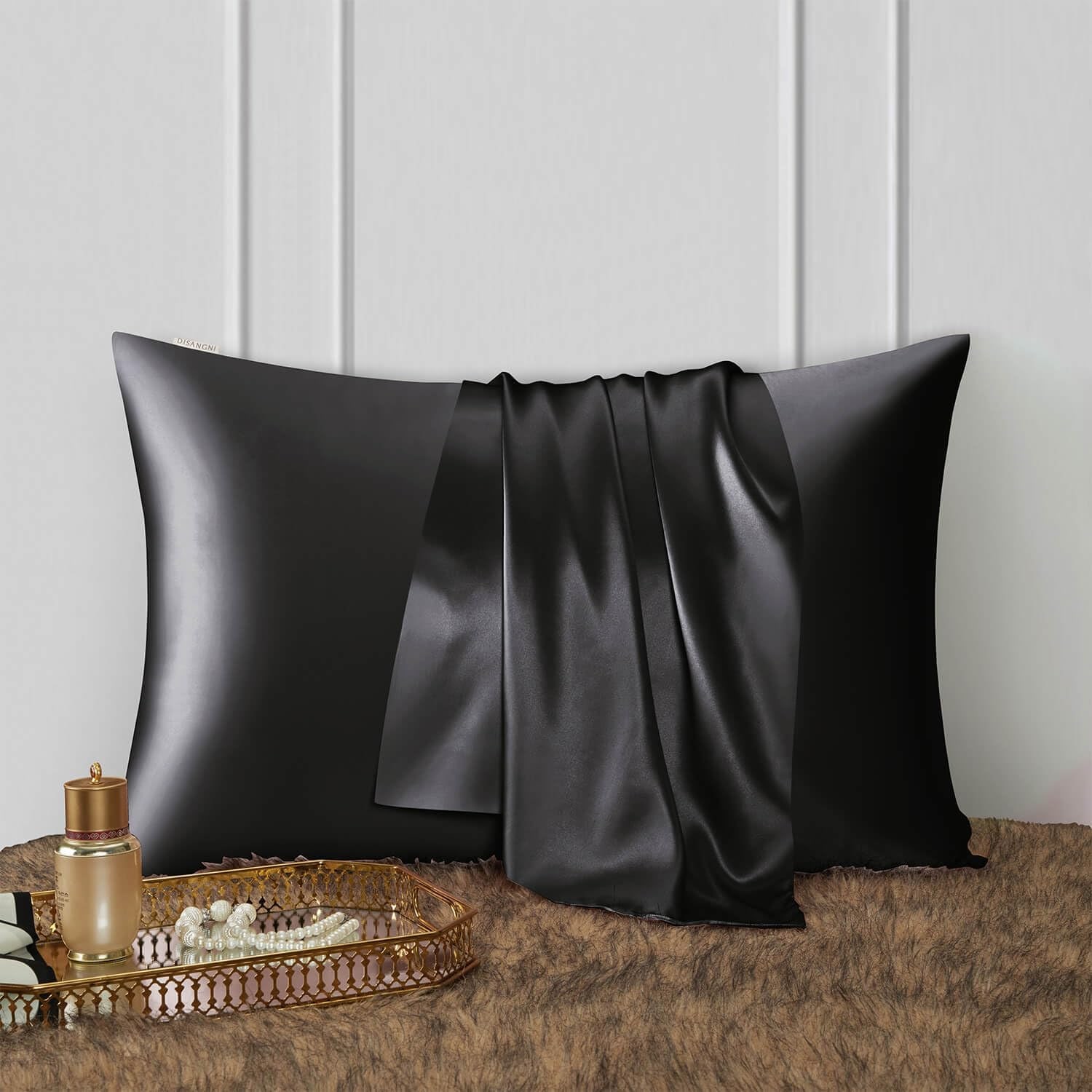
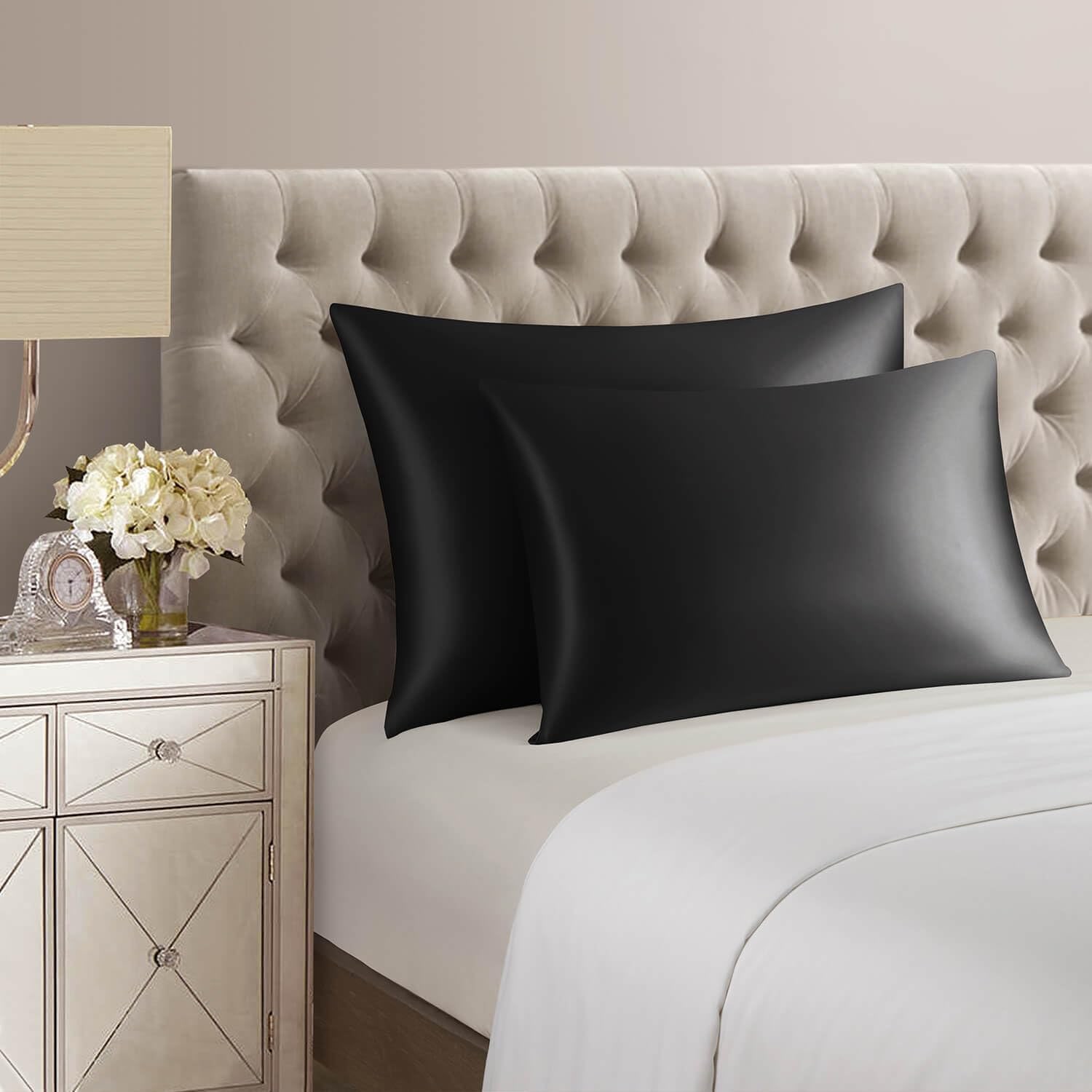
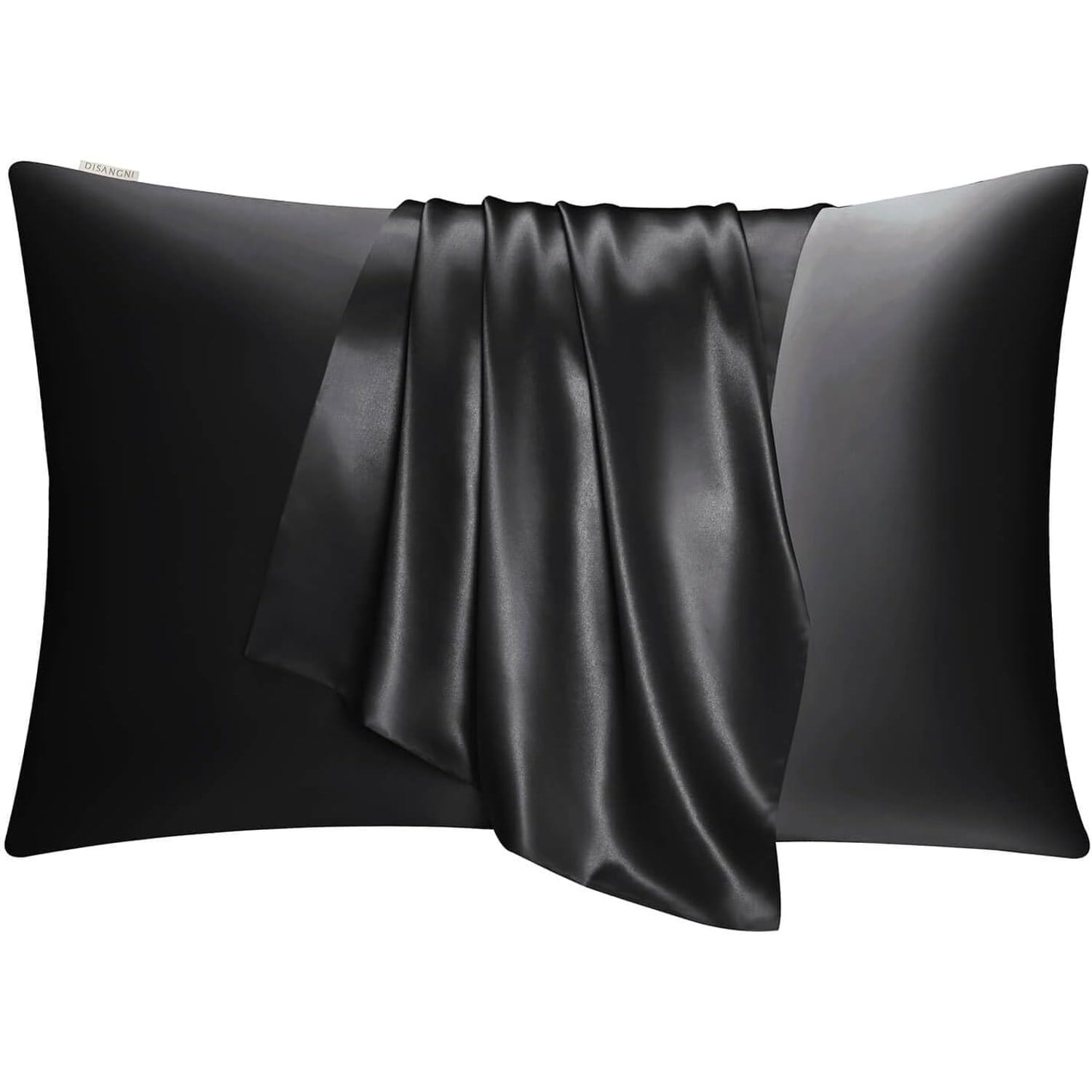
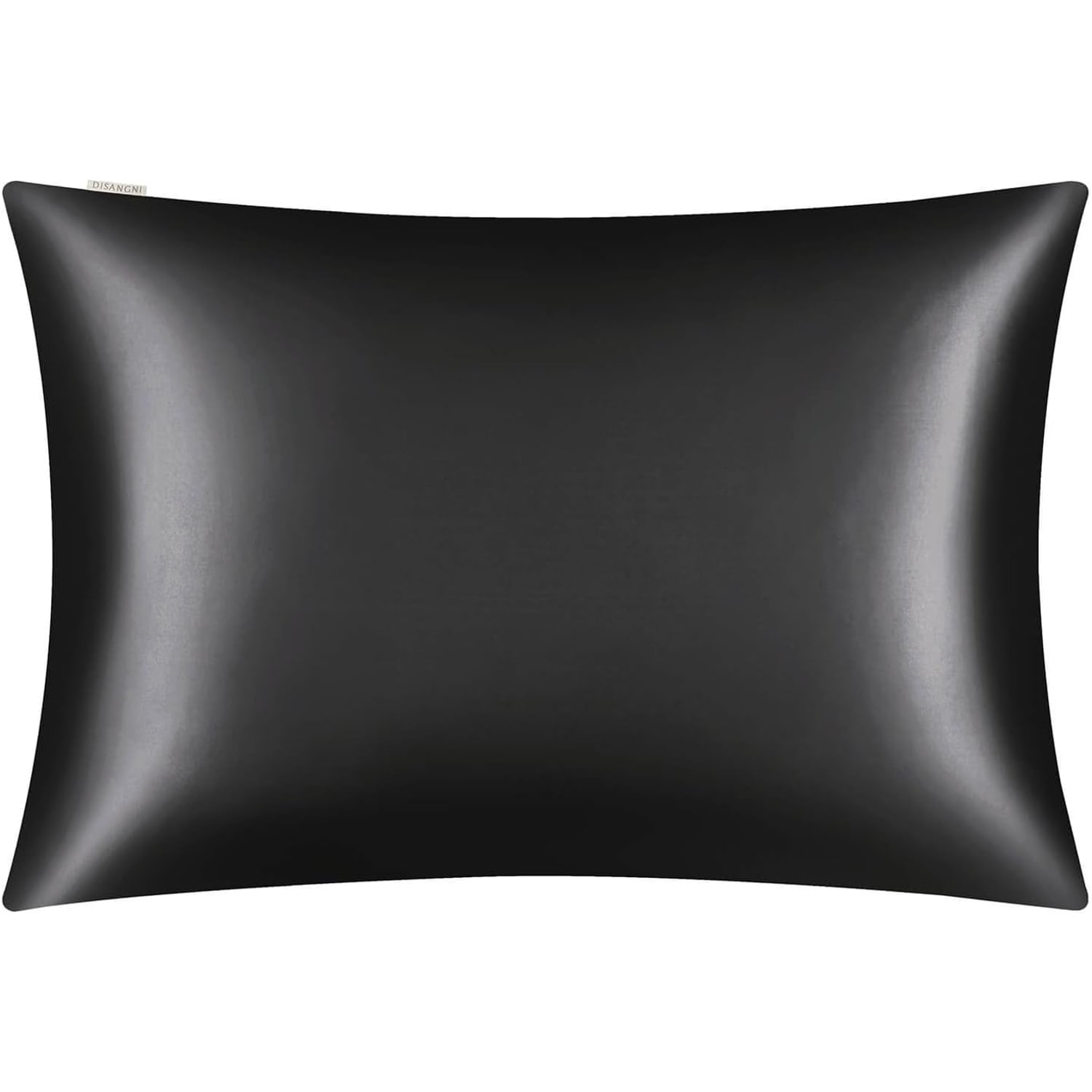
Black makes it an easy choice for people who would hesitate over ivory or blush. If you use hair oil, or you fall into bed without taking make-up off as often as you should, a dark pillowcase is more forgiving. It is also the reason this works as a gift. You do not need to know anybody's colour scheme to know black will fit in.
Looking after it
The care label says dry clean only, and that is the instruction the maker gives.
If you decide to launder it at home, treat silk the way you would treat a good wool jumper. Cool water, a detergent made for silk or delicates, no bleach, no fabric softener. Wash it on its own or with other silks rather than throwing it in with towels and zips. Close the pillowcase zip first.
Never tumble dry. Heat is what kills silk, taking the sheen off and making the fibres brittle. Dry flat or hang it out of direct sun, and it will usually be ready in a few hours.
If it creases, press on the reverse at the lowest heat setting. Honestly, most creases fall out on their own once the case is stretched over a pillow.
Plan on cleaning roughly once a week. This is the practical reason a two pack beats a single: one is on the bed, one is clean and waiting, and you never have to put a cotton case back on in the meantime.
The short version
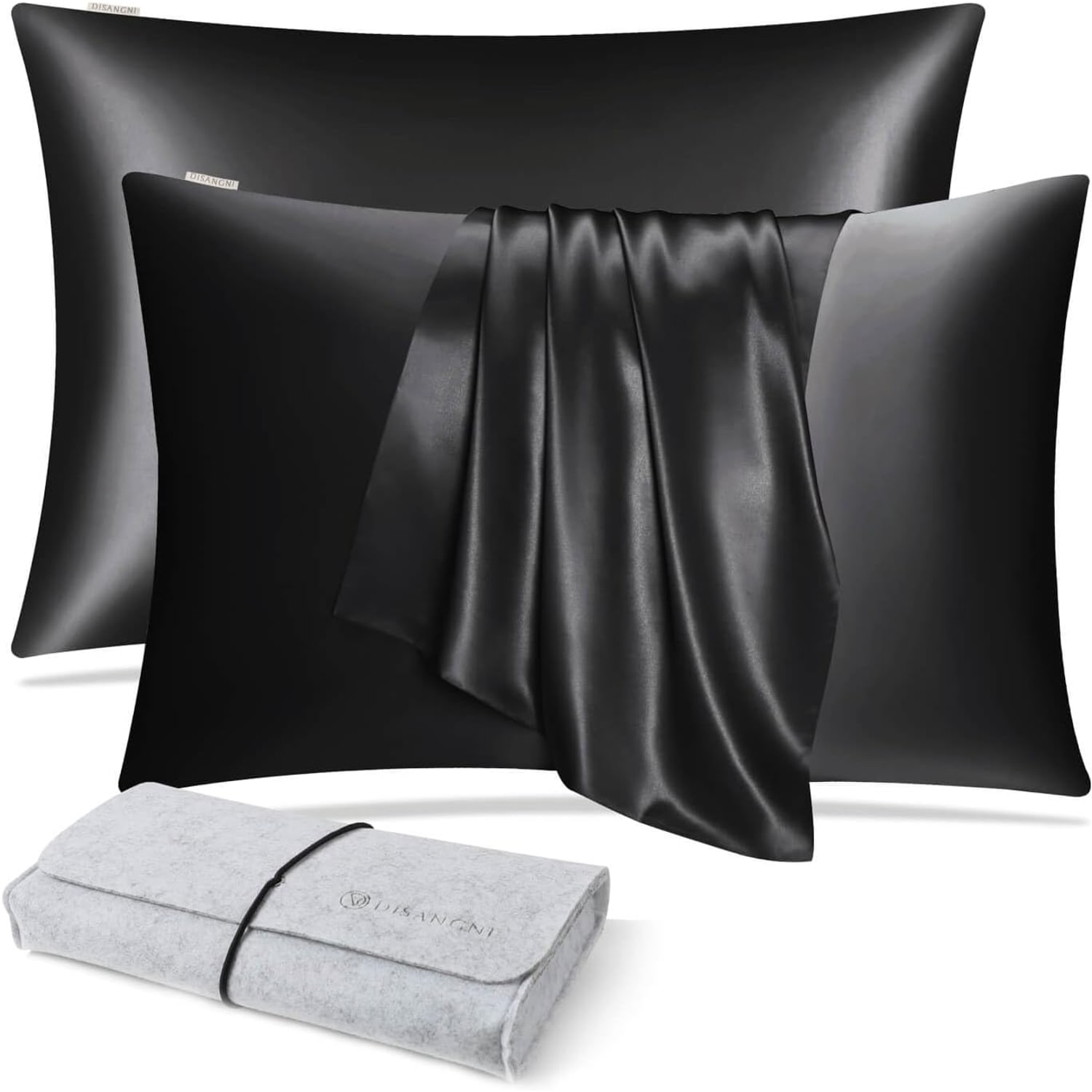
You are buying two black pillowcases in mulberry silk at 22 momme, silk on both faces, woven at 600 thread count, closing with a hidden zip, cut to 51 x 66 cm.
The weight is the part that matters most. At 22 momme the fabric has enough substance to drape and to last, which is the difference between a silk pillowcase you still like in two years and one that goes thin by winter.
Check your pillow against 51 x 66 cm before you order. Keep them out of the tumble dryer. Beyond that, there is not much to it, and the first night usually tells you whether it was worth the swap.