
The complete guide
How To Choose A 30 Momme Silk Pillowcase
The problem with a pillowcase you never think about
Most people buy pillowcases the way they buy dish cloths. Whatever comes in the set, whatever matches, whatever was on the shelf. Then one morning you notice the fabric has been rubbing a crease into your cheek, or your hair looks like it lost a fight with the pillow, or the cotton feels hot and a bit rough by about 3am.
Cotton is a good fibre. It is just a rough one at the microscopic level. Woven cotton has a surface with a lot of texture, and anything that moves across it (hair, skin, the corner of your face) catches on that texture. You do not feel it as friction in the moment. You notice the result later.
Silk sits at the other end. The fibre is smooth and continuous, so there is far less to catch on. That is the whole case for a silk pillowcase, and it is a material fact rather than a promise. It feels smoother because it is smoother.
What momme actually measures
Here is where silk shopping gets confusing. Cotton gets sold on thread count. Silk gets sold on momme, and the two numbers are not interchangeable.
Momme (pronounced "mommy") is a weight measurement. It tells you how much a specific size piece of that fabric weighs, which in practice tells you how much silk is in it. Higher momme means denser cloth.
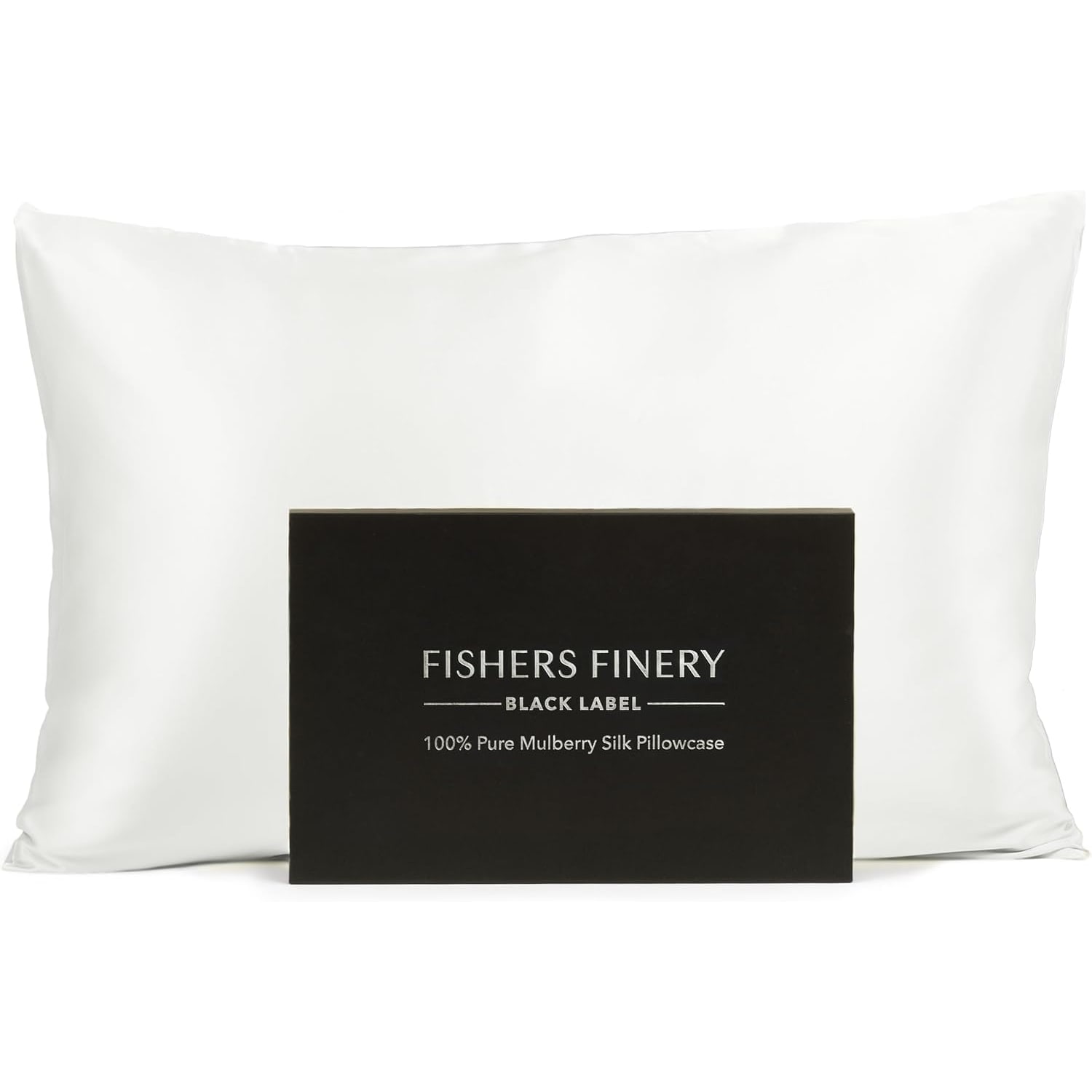
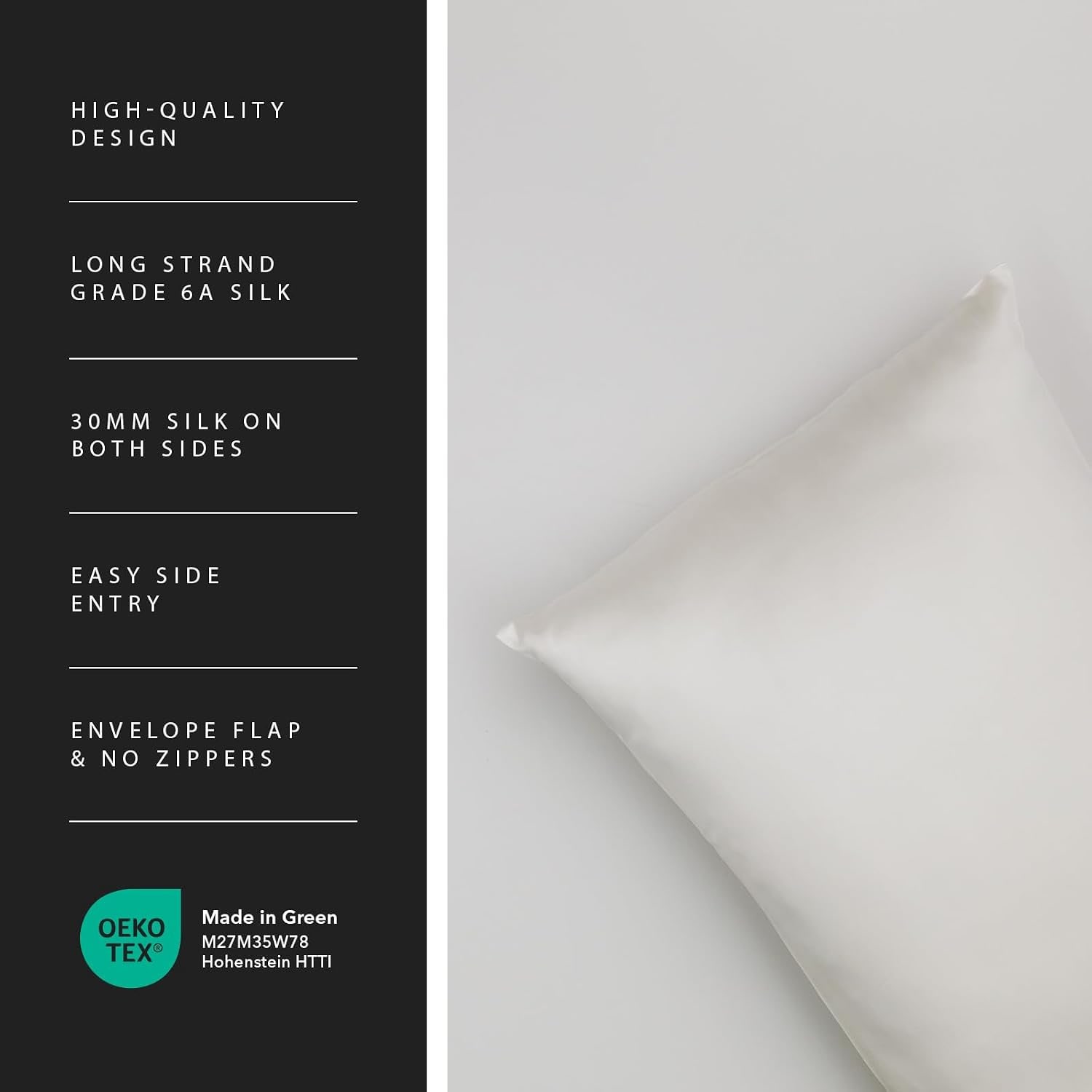
Typical silk bedding lands at 19 or 22 momme. That is the sweet spot the market settled on because it balances feel against cost. This pillowcase is 30 momme, which is noticeably further up the scale. You can feel the difference as soon as you pick it up. It has weight. It falls rather than floats, and it sits flat on the pillow instead of bunching.
The trade-off is price. More silk per square metre costs more, and there is no way around that. Whether the extra weight is worth it to you is a question of preference, not quality. A 19 momme case is not a bad case. It is a lighter one.
This item also lists a 300 thread count. That number matters less in silk than it does in cotton, because the weight tells you more. Take it as supporting detail rather than the headline figure.
Silk on both sides, and why it matters
A fair number of silk pillowcases are silk on one face only. The back panel gets made in cotton or polyester to cut costs. It is not dishonest as long as it is stated, and for a sham that barely gets slept on it is fine.
For a pillowcase you actually sleep on, it is annoying. Pillows get flipped. You turn over at night, the pillow rolls, and suddenly the cheap face is against your cheek. You half wake up and flip it back.
This one uses mulberry silk front and back. Both faces are the same, so there is no wrong side. Small thing, but it is the kind of detail you notice every single night rather than once.
Undyed natural white
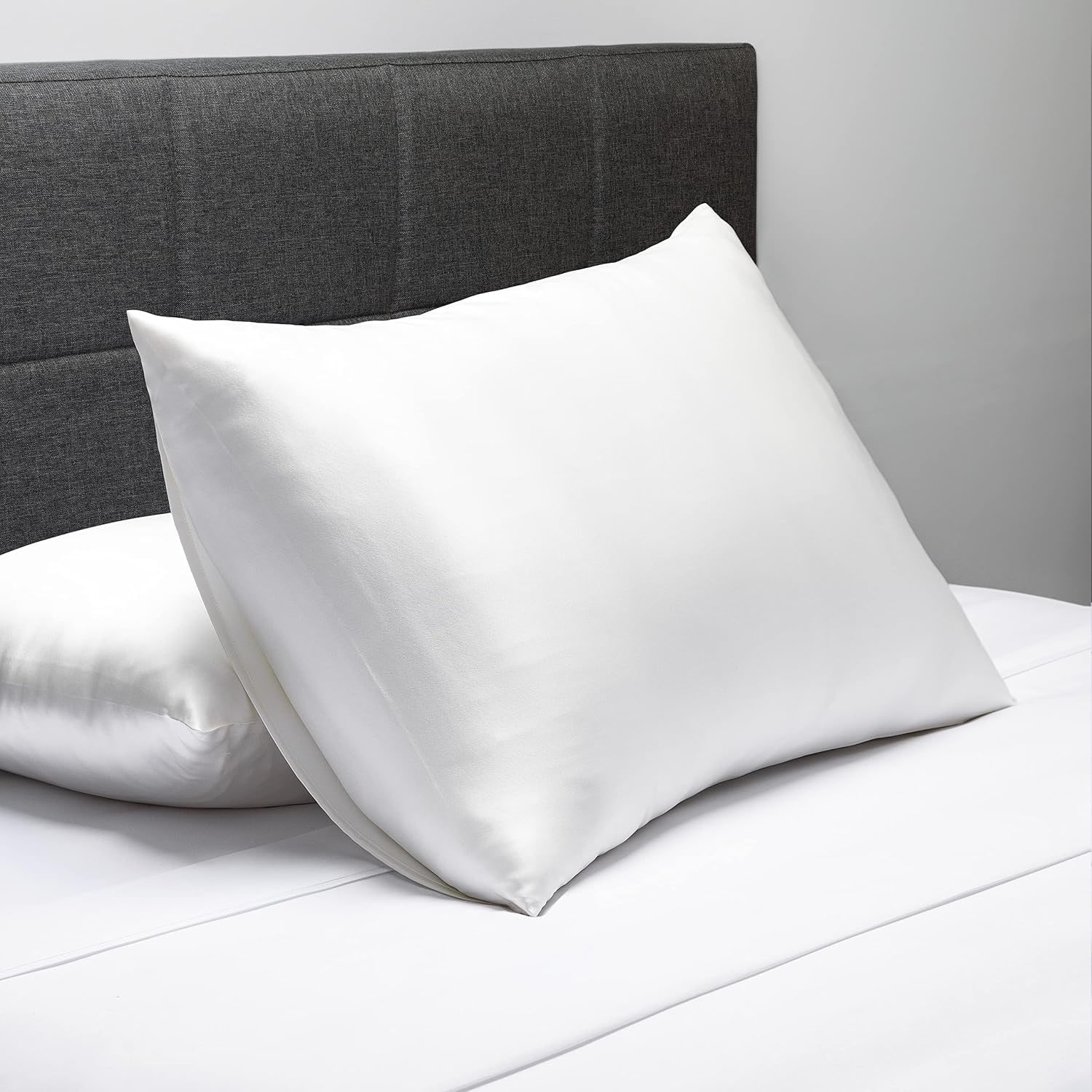
The colour here is the silk's own. No dye has been put through the fabric. That gives you a white that tends toward warm or ivory rather than the hard, bright white you get from bleached and optically brightened cotton.
If your bedding is crisp hotel white, be aware of that. The silk will read slightly softer next to it. Some people like that contrast and some do not. If your sheets are cream, stone, grey or natural linen, an undyed silk pillowcase slots in without any fuss at all.
Practically, undyed fabric also means there is no dye to run in the wash, which makes the first few launderings less nerve-wracking.
The closure, and why side entry beats a zip
There are three common ways to close a pillowcase. A zip, a button placket, or an envelope flap.
Zips are secure and horrible. You will eventually catch a strand of hair in one, or feel the cold metal against your ear. Buttons are better but you can still feel them.
An envelope flap is just fabric folded over fabric. Nothing hard, nothing to catch. This case uses one, and the opening is set at the side rather than the end, offset slightly from the edge. Two things come out of that. The pillow is less likely to creep out during the night, because it is held at the side rather than being able to slide straight out the end. And because the opening is hidden from the front, the case can sit on a made bed as a sham without showing a gap.
If you have ever woken up with a bare pillow corner sticking out, you will appreciate the first point.
Getting the size right
This is the part people get wrong, so read it twice.
The case measures 71.1 x 50.8 cm, which is 28 by 20 inches. That is the American standard size. It is the most common silk pillowcase cut you will find, simply because so much silk bedding is made to American measurements.
A typical South African pillow is nearer 45 x 70 cm. So in most cases this will fit, with a bit of room to spare at the sides. A slightly loose fit on a pillowcase is normal and not a problem, since the envelope closure takes up some of the slack.
Where you can go wrong is if you have an oversized or continental pillow. A 65 x 65 cm continental will not go in. A deep or very plump pillow may be a tight squeeze even if the flat measurements look close, because loft eats width.
So take a tape measure to the actual pillow. Lay it flat, measure the long side, measure the short side, and compare. Thirty seconds of measuring saves a return.
Looking after it
Silk is less fragile than people assume, but it does want a different routine to cotton.
Wash it in cool water with a detergent made for delicate fibres. Hand washing is gentlest. If you want to machine wash, use the gentle or delicate cycle and put the case inside a mesh laundry bag so it does not get tangled around other items. Dry cleaning is also fine.
Skip the bleach and skip the fabric softener. Bleach breaks down the protein fibre. Softener coats it and dulls the surface, which defeats the point of buying smooth fabric in the first place.
Drying is the bit that matters most. Lay it flat or hang it somewhere shaded and let it air dry. Avoid the tumble dryer and avoid direct sun, since both are hard on silk over time. A heavyweight 30 momme fabric holds its shape well and usually dries fairly smooth.
If you want to press it, use the lowest heat setting, work on the reverse face, and ideally do it while the fabric is still a little damp. Often you will find you do not need to bother, because the weight of the silk pulls out most of the wrinkles on its own.
Who this suits
Someone who already knows they like silk and wants the heavier version. Someone with long hair who is tired of fighting the pillow every morning. Someone who wants a case that works as a sham by day and a sleeping case by night without swapping anything over. Someone buying a gift for a person who is hard to buy for, since natural white goes with almost everything.
It suits less well if you are buying on price, or if you have a continental or unusually oversized pillow, or if you need an exact match to bright bleached white bedding.
The short version
Thirty momme is heavyweight silk, roughly half again as much silk as the standard 19 momme bedding on the market. It is mulberry silk on both faces, so there is no wrong side to wake up on. The colour is the fibre's own undyed white, warmer than a bleached cotton white. The offset side-entry envelope flap means no zip, no buttons, and a hidden opening that lets it work as a sham.
It is cut to 71 x 51 cm, an American standard. Measure your pillow first.
Wash it cool and gentle, skip the softener, dry it flat in the shade. Done properly, a good silk pillowcase outlasts the cotton ones it replaced.
Delivery is tracked to every province in 10 to 20 working days, free over R1800 and R250 below that. Payment is by card. You have 14 days from delivery to send it back unused and unwashed if it is not what you wanted.