
The complete guide
How to Choose a Silk Sleep Bonnet That Actually Stays On
The problem with waking up to a bird's nest
You go to bed with your hair in decent shape. You wake up and it has been rearranged by something that apparently hates you. The frizz at the crown, the flattened side, the tangle at the nape that takes ten minutes and a wide-tooth comb to sort out. If this sounds like your morning, the culprit is friction.
Cotton is a grabby fabric. Its fibres sit at angles and under a microscope the surface looks a bit like a ploughed field. Every time you turn over, your hair drags across that surface. Over seven or eight hours, with maybe thirty or forty position changes, that is a lot of dragging. Silk is woven from a long, continuous filament and lies far smoother, so hair slides rather than catches.
A silk bonnet is the cheapest way to put a smooth surface between your hair and everything else. It travels with you, it works on any pillow in any bed, and you do not have to convince anyone else in the house to change their bedding.
What double-layered actually means here
The word layered gets thrown around loosely in the bonnet world, so it is worth being precise. Plenty of bonnets described as silk have one silk face and a different fabric behind it, usually polyester or a cotton blend. The silk touches your hair, which is the part that matters most, but the outside is something else and the price reflects a smaller amount of silk than you might assume.
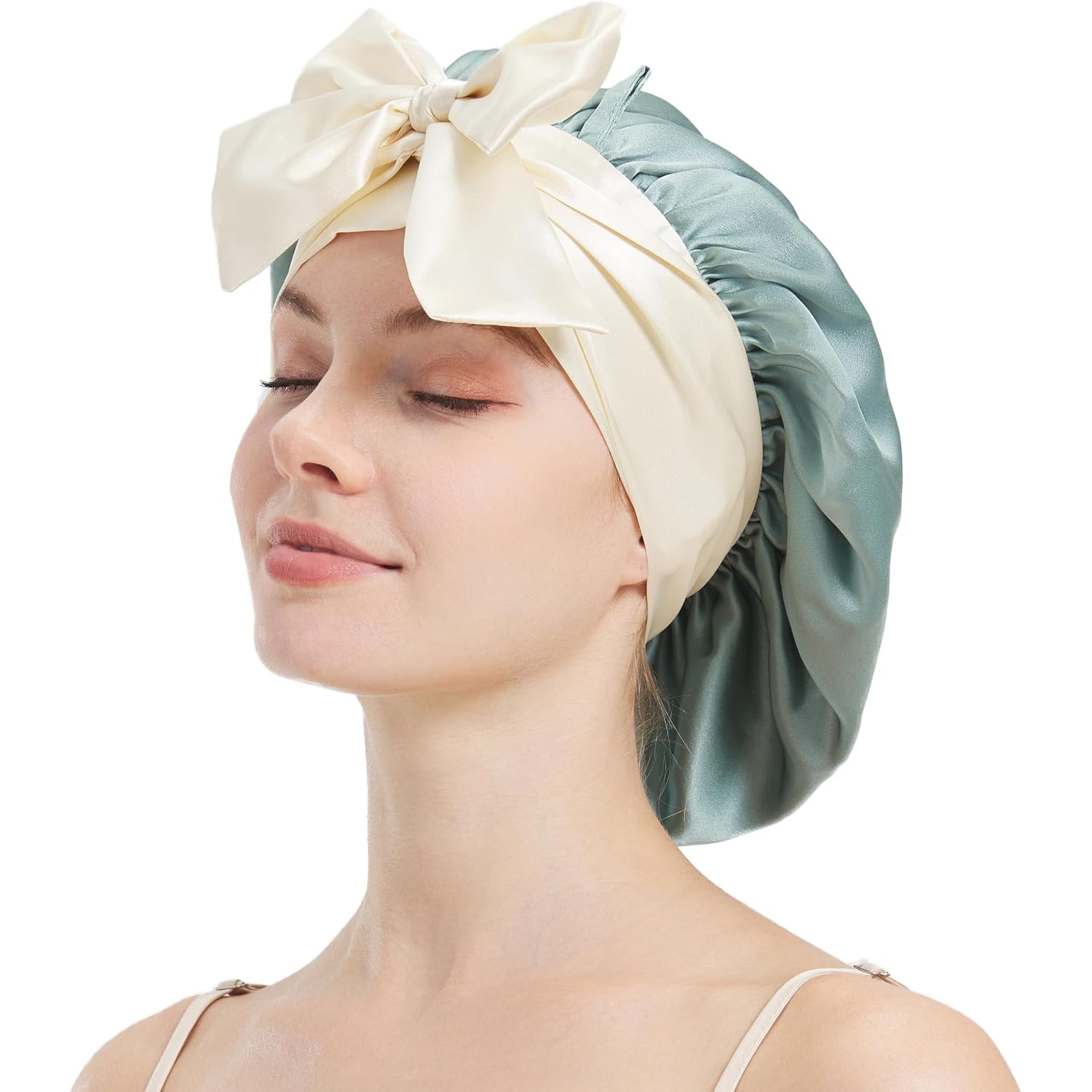
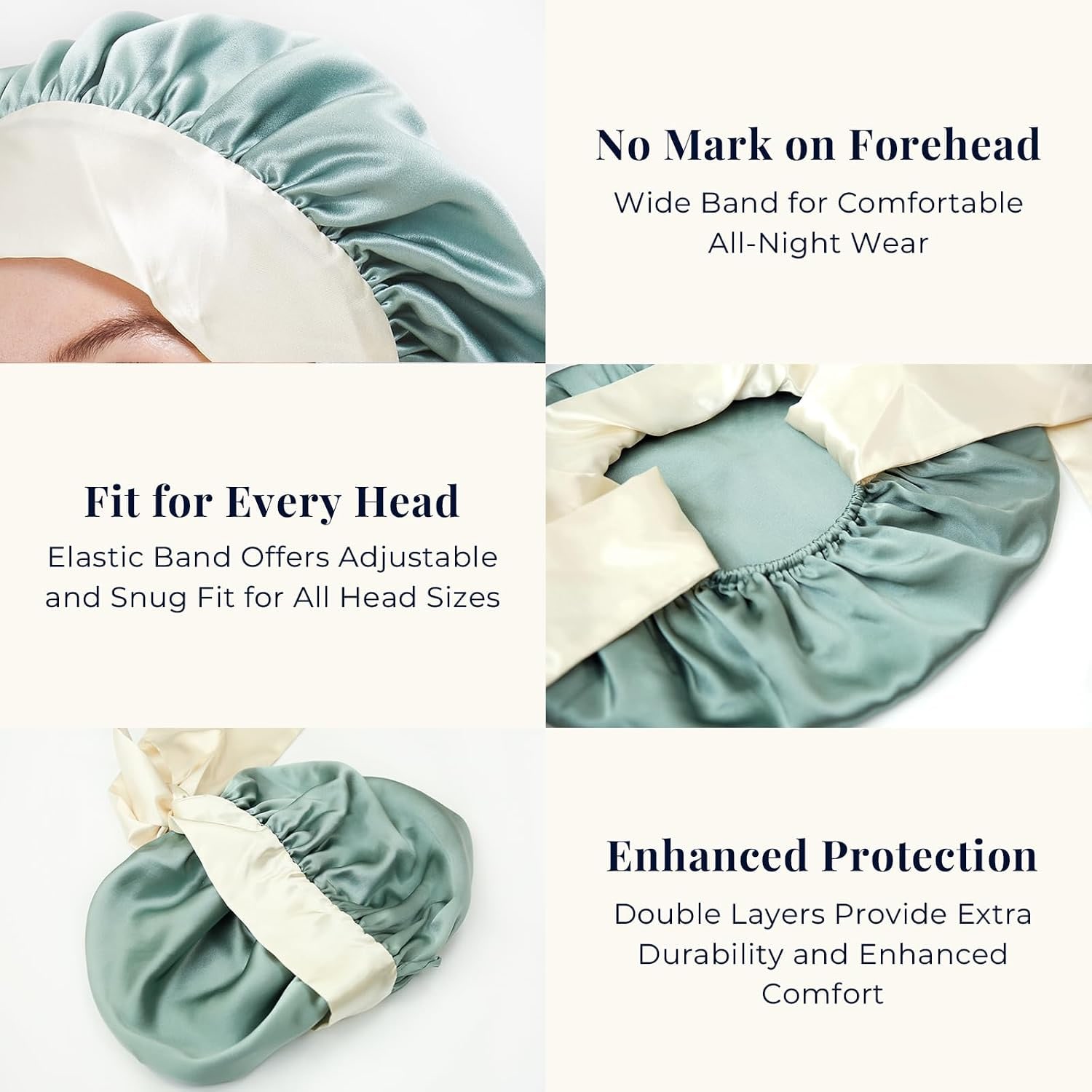
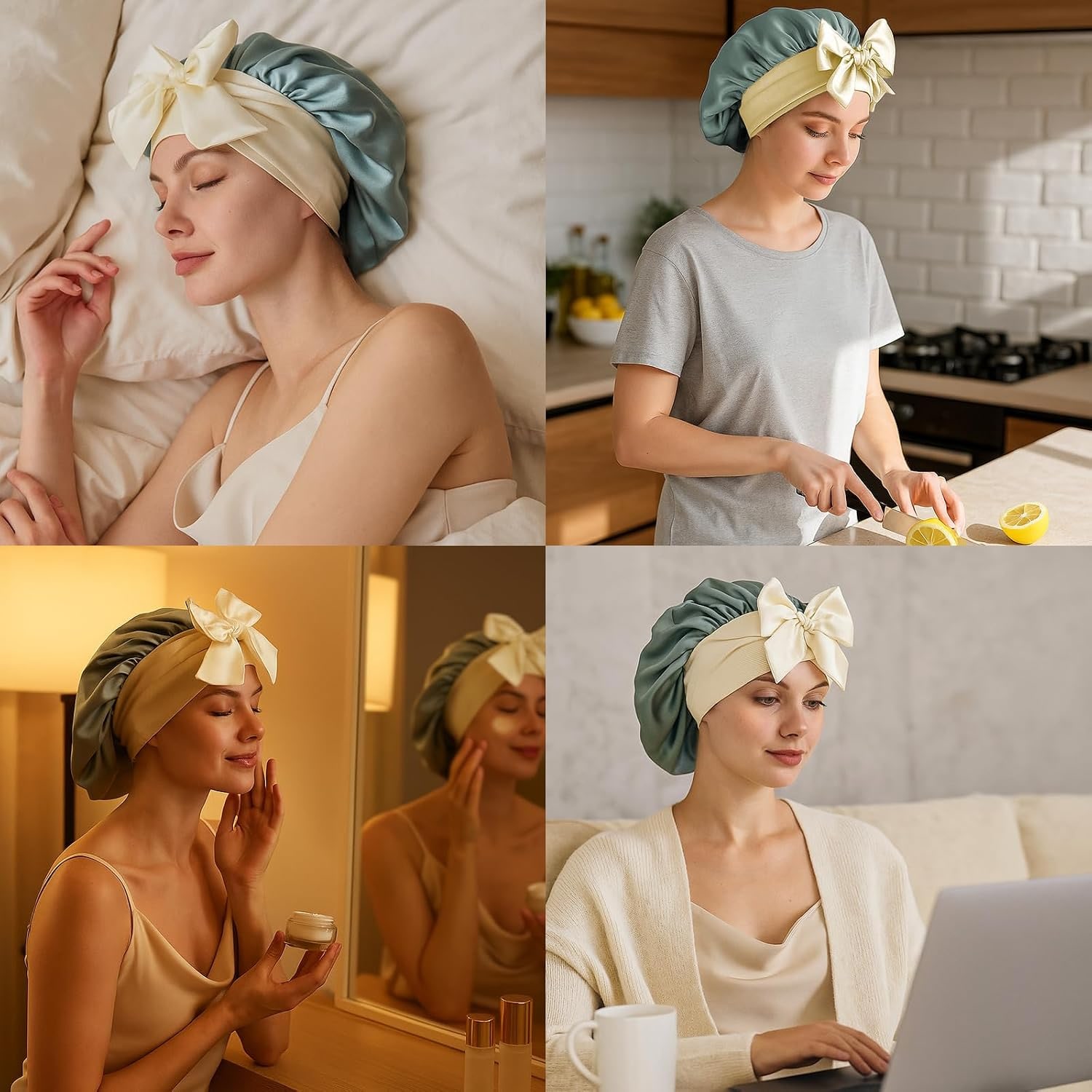
This one uses mulberry silk for both the inner and the outer layer. Two layers of the same material. The practical difference is that the bonnet behaves consistently, feels the same from either side, and does not have a cheaper fabric quietly holding the shape. It also gives the bonnet a bit more body than a single thin layer, which helps it hold its form over your hair instead of collapsing flat.
Mulberry silk is the standard grade used for bedding and hair accessories. It comes from silkworms raised on a mulberry leaf diet, which produces a longer and more uniform filament than wild silk. That uniformity is why it feels smooth rather than slubby.
Why ties beat elastic
Here is the thing nobody tells you when you buy your first bonnet. Elastic is a compromise, and it is a compromise that gets worse.
A new elastic band is usually too tight. It leaves a line across your forehead and after an hour you can feel a dull pressure at the temples. So you wash it a few times, the elastic relaxes, and for a short happy period the fit is perfect. Then it keeps relaxing. Within a few months the bonnet is sliding off somewhere around two in the morning and you find it under the duvet.
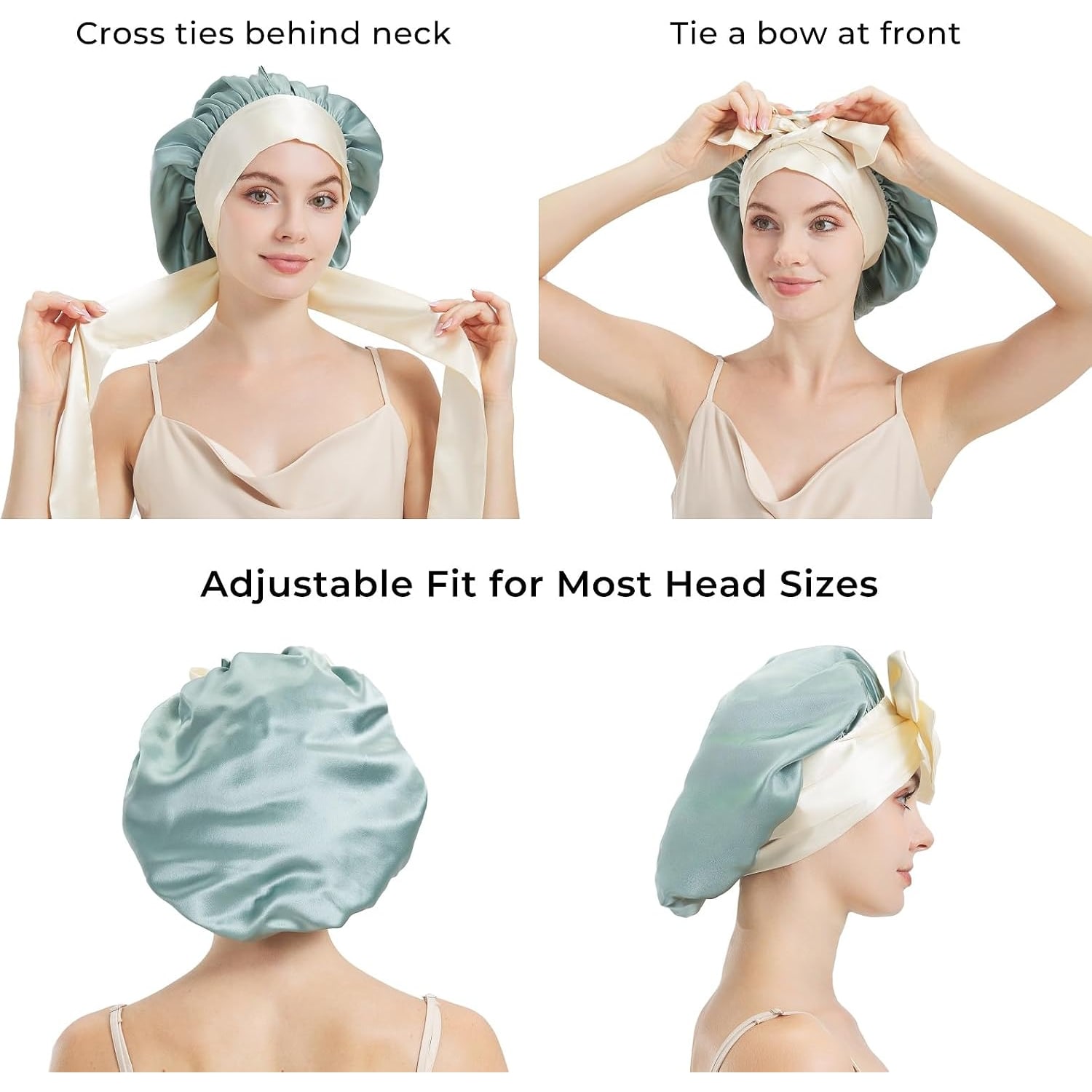
Ties remove that whole arc. You set the tension on night one and you set it again on night two hundred, and it is the same decision each time. If your hair is freshly washed and fuller, you tie a little looser. If you have a style you want held firmly, you tie tighter. If you sleep like a rotisserie chicken, you tie tight enough to deal with it.
There is a small learning curve. The first couple of nights you will probably over-tighten or under-tighten. Give it three or four nights of small adjustments and you will find your knot.
Getting the size right
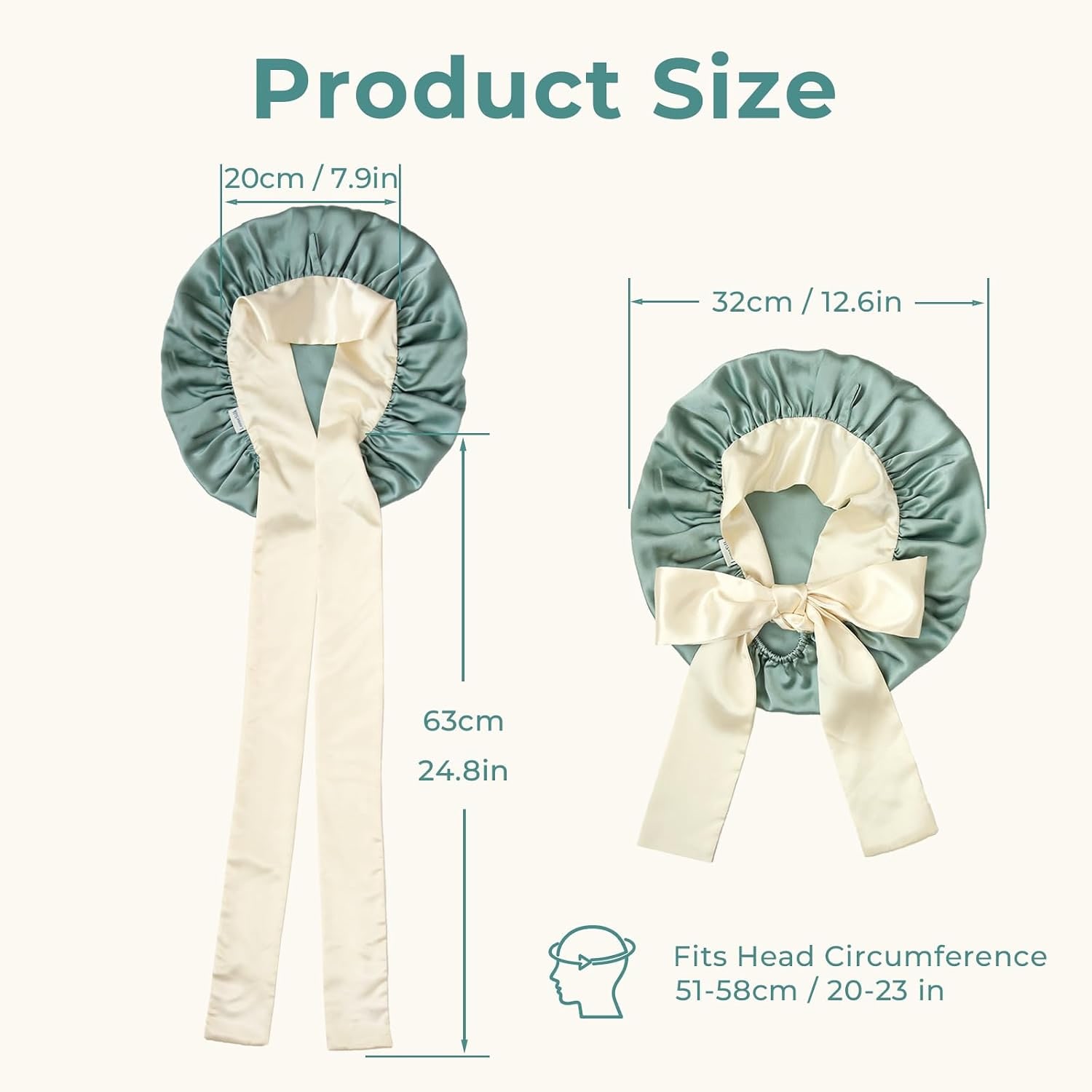
The fit range is 51 to 58 cm, or about 20 to 23 inches. To measure yourself, take a soft tape measure and run it around your head just above your ears and across the middle of your forehead. Keep it level and snug but not pulled tight. That number is your head circumference.
Most adults sit somewhere in the middle of that range. If you are near the bottom at 51 cm, the ties will take up the slack. If you are near 58 cm, the ties still work but you will be tying closer to their limit, so check your measurement carefully before ordering.
Head size is only half the question. The other half is hair volume. The crown of the bonnet needs to hold your hair, not squash it. If you have a lot of length, coil it loosely on top of your head rather than leaving it hanging, and tuck it in before tying. If you wear braids or locs, the same approach applies. Gathering first and tying second gives a tidier result than trying to stuff everything in afterwards.
Who this suits
Anyone whose hair tangles. That is the short answer, and it covers more people than you might think.
Textured hair gets the most obvious benefit, because curls and coils have more surface area catching on cotton and more to lose when a style gets disturbed. If you have spent time on twists, a wash-and-go or a braid-out, a bonnet is the difference between the style lasting one night and lasting four.
Long straight hair benefits too, in a quieter way. Less tangling at the nape, fewer knots to work out in the morning, less pulling with a brush. Fine hair in particular responds well because it tangles with very little provocation.
It is also handy well outside of bedtime. Keeping hair off your face while you do a skincare routine, or while you clean, or while you cook. It takes two seconds to put on and it saves you from the hair-in-the-eyes problem without a clip digging into your scalp.
Living with silk
Silk is not difficult, it is just particular. This bonnet is hand wash only, and that instruction is worth following.
Fill a basin with cool water and add a small amount of detergent made for delicates. Put the bonnet in, swirl it about with your hands for a minute or two, and leave it to sit for a few more. Rinse in clean cool water until the water runs clear. Do not wring it. Lay it on a towel, roll the towel up and press, then unroll and reshape the bonnet. Dry it flat somewhere with air moving but no direct sun and no radiator.
The whole process takes about five minutes of actual attention. Washing every one to two weeks is about right for most people, more often if you use oils or heavy leave-in products that transfer onto the fabric.
Avoid bleach, skip the tumble dryer, and if you need to iron, use the lowest setting on the inside of the fabric. Honestly, smoothing it flat while damp usually does the job on its own.
One more practical note. Keep a second bonnet if you can, or wash yours in the morning so it has all day to dry. Going to bed with a damp bonnet is a miserable experience.
Things to check before you buy
Measure your head. It takes thirty seconds and removes the main source of disappointment.
Think about hair volume honestly. If your hair is big, you want the crown to accommodate it rather than compress it.
Decide whether you want ties or elastic, knowing that ties take a few nights to get used to and then stay reliable, while elastic is instant and then degrades.
Check that silk is on both sides if that matters to you. Here it is, with mulberry silk forming the inner and outer layers.
The short version
A bonnet solves a small, daily irritation with very little effort. Smooth silk between your hair and the pillow means less dragging, fewer tangles and styles that survive the night.
This one uses mulberry silk on both layers rather than one, and closes with ties instead of elastic, which means the fit stays yours rather than drifting over time. It fits heads from 51 to 58 cm with room inside for hair that has some body to it.
Care is hand wash in cool water and dry flat. Do that and it will keep doing its job for a long while. Delivery is tracked to every province in 10 to 20 working days, and you have 14 days from delivery to send it back unused if the fit is not right.