

The complete guide
How to Choose a Brushed Silk Scarf That You Will Actually Wear
The scarf problem most people have
Most of us own one or two scarves that never leave the cupboard. They are too bulky to wear with a coat, too bright to wear with anything, or so slippery that the knot gives up by the second block. Then winter arrives and we reach for the same tired thing we have worn for five years.
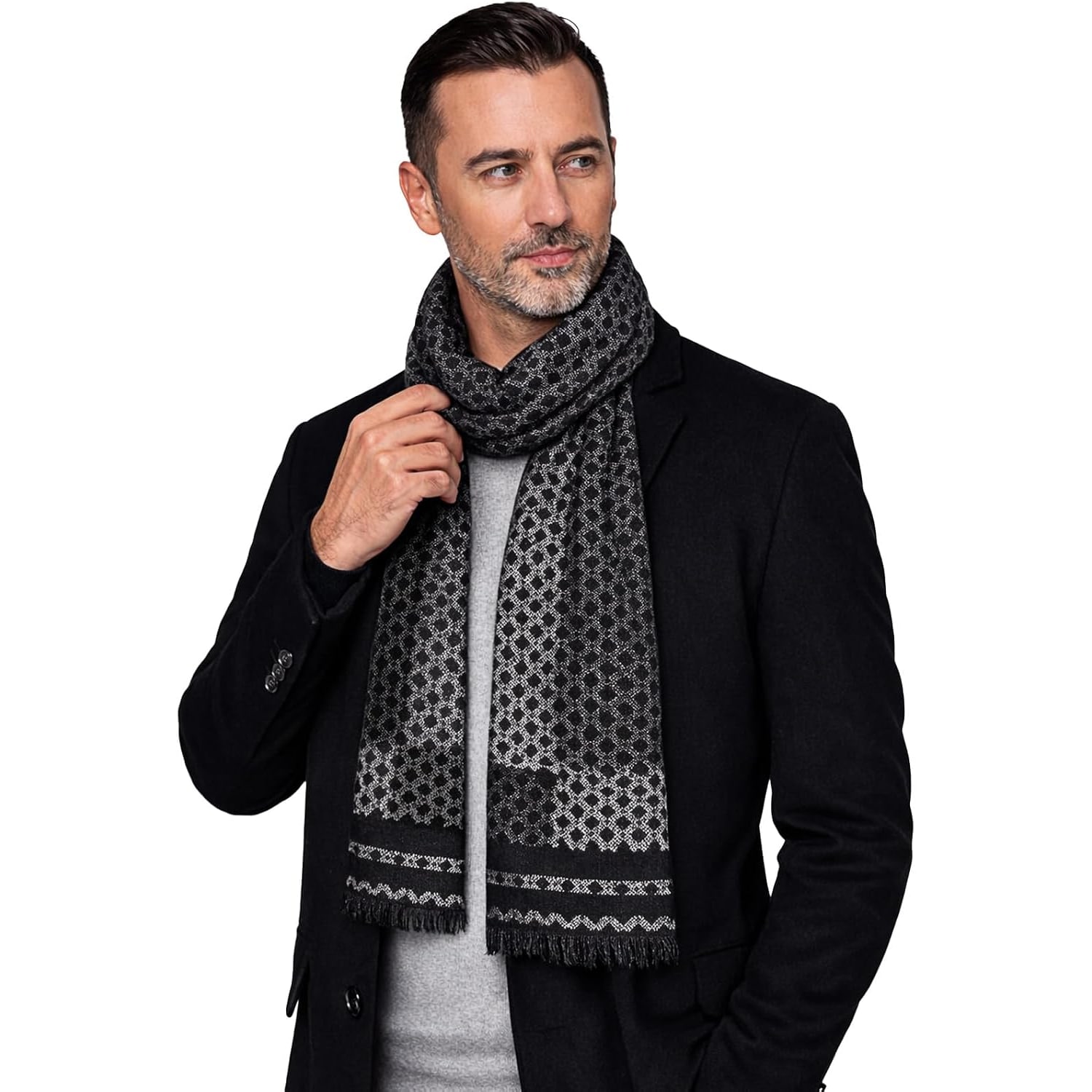
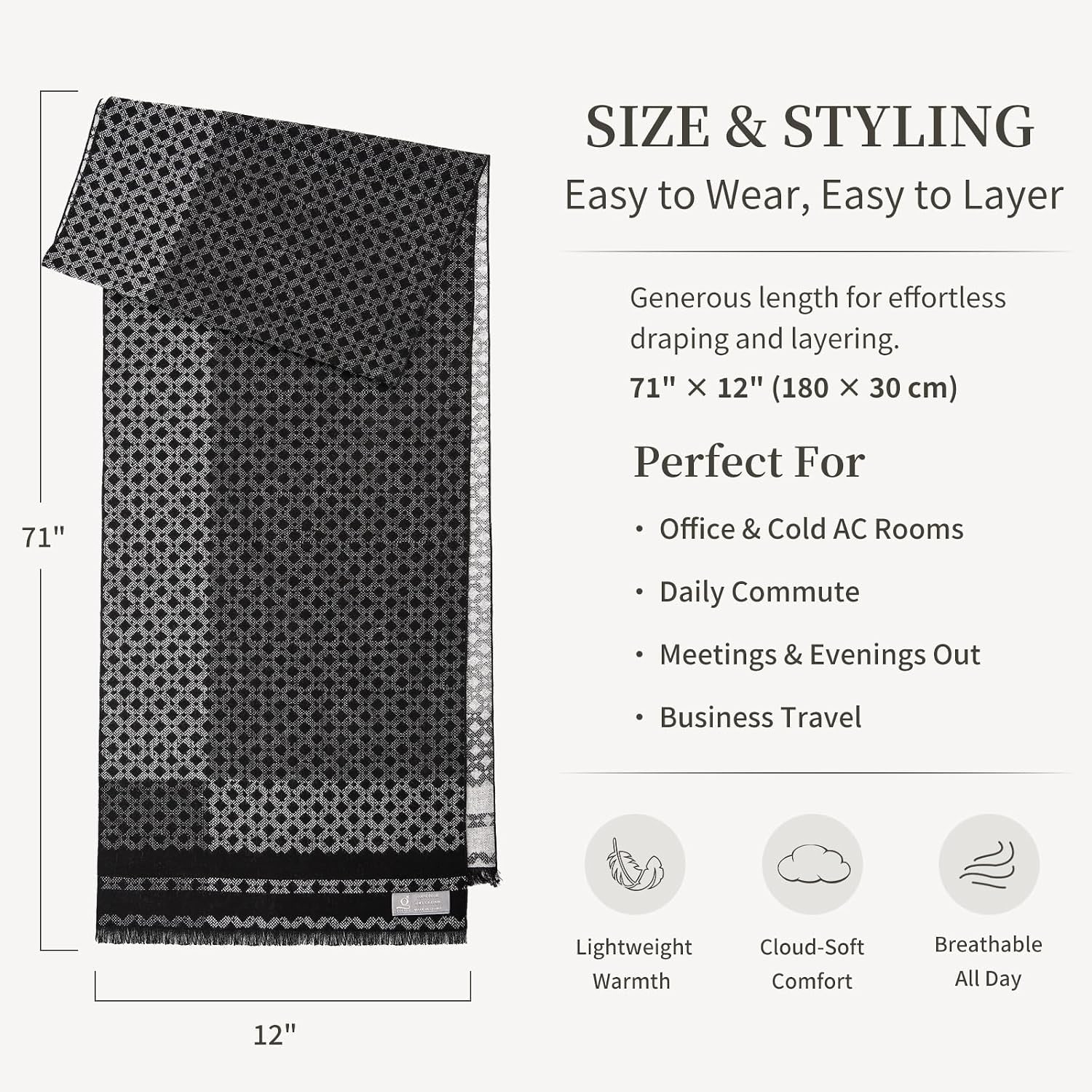
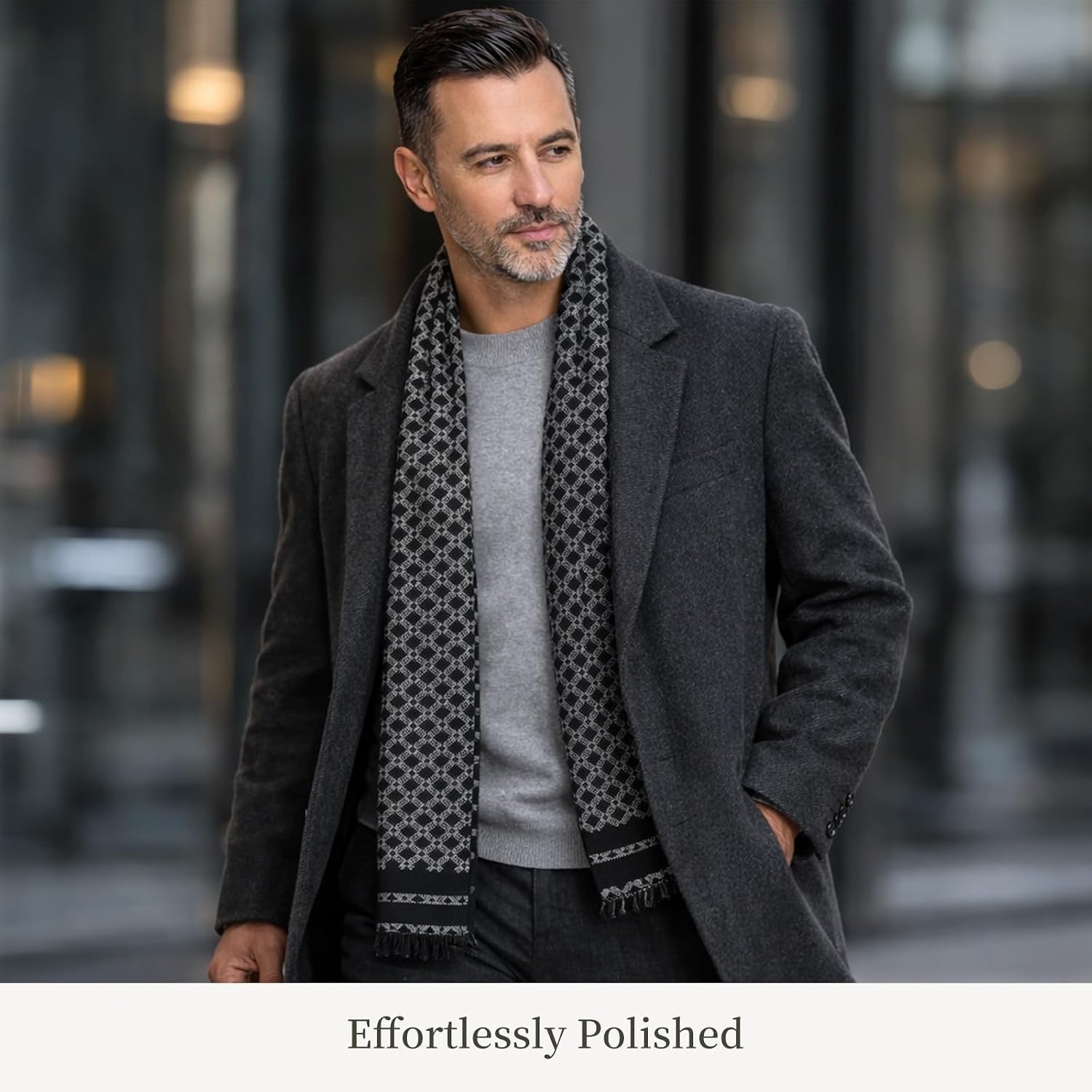
A brushed silk scarf is a quiet fix for that. It is thin enough to disappear under a coat collar, warm enough to be worth putting on, and muted enough that you do not have to plan an outfit around it. This one is 180 x 30 cm (71" x 12") in grey and black geometric weave, which is about as easy a combination as you can get.
What brushing does to silk
Plain woven silk has a hard, smooth face. It feels cool, it catches the light, and it slides. That is lovely for a dress scarf tucked into an open-neck shirt, but it has two drawbacks for everyday wear. It looks formal, and knots work themselves loose.
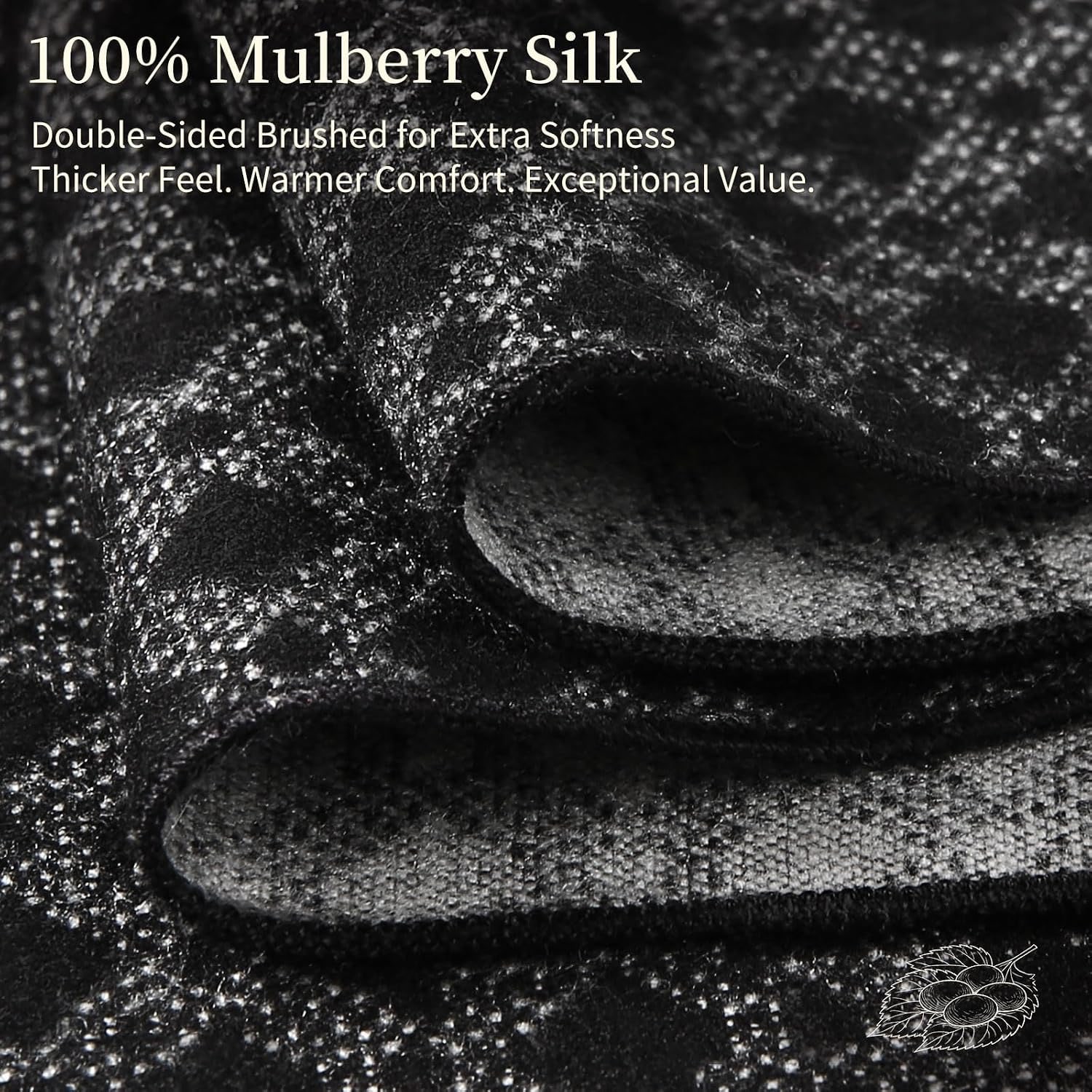
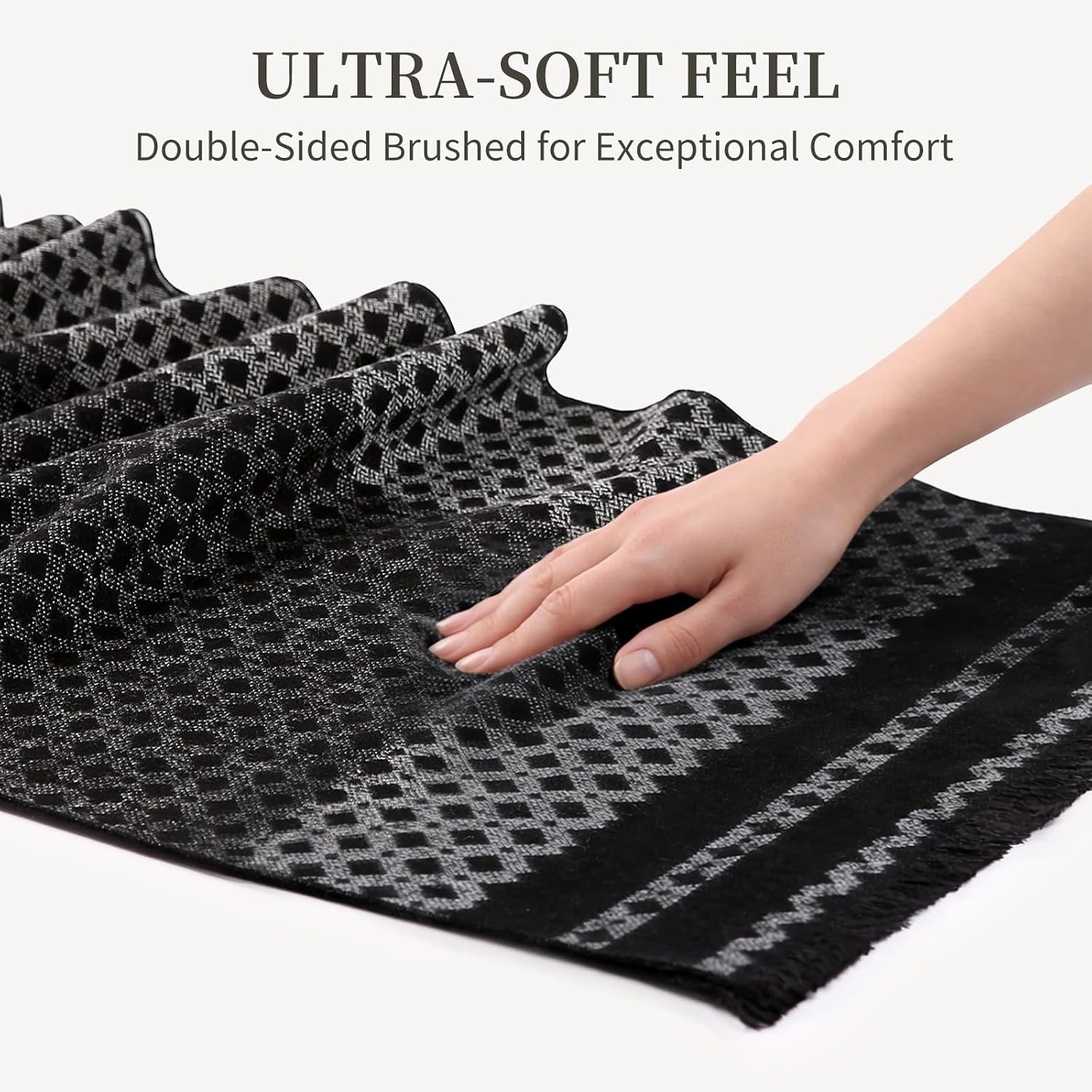
Brushing is a finishing step that lightly raises the surface fibres. The cloth keeps the thin, light build of silk but gains a soft, slightly fuzzy face. Three things change. The shine drops, so the scarf reads as casual rather than dressy. The handle softens, which is why people describe brushed silk as velvety. And the surface grips itself a little, so a simple loop stays where you put it.
If you have tried a satin-finish silk scarf and found it too formal or too fiddly, this is the version that tends to stick.
Why mulberry silk gets named
You will see "mulberry silk" on good scarves and pillowcases. It refers to silk from silkworms fed on mulberry leaves, which produces long, unbroken filaments. Long filaments mean a smoother, more even cloth with fewer slubs and less tendency to pill.
That is the whole claim. It is a quality marker about the fibre, not a promise about anything else. We are not going to tell you a scarf will change your skin or your health, because that is not what a scarf does. What silk genuinely offers is a smooth surface, very low weight for the warmth it gives, and a drape that heavier fabrics cannot match.
Momme weight, which is the standard way silk thickness is measured, is not stated for this scarf. Neither is the exact fibre percentage or the country of manufacture. The maker does not state them, so we do not either. What we can tell you is the size, the finish, the pattern and how to look after it.
Does a long, narrow cut suit you?
Scarf dimensions matter more than most people expect. There are roughly three families. Square scarves, usually around 90 x 90 cm, which you fold into triangles and tie at the neck. Wide rectangles or wraps, often 70 cm or more across, which behave like shawls. And long narrow rectangles like this one.
At 180 cm long and 30 cm wide, this is squarely in the third family, and that is the most versatile everyday shape. Here is what the numbers buy you.
The 180 cm length is enough for a double wrap on most adults with the ends still hanging to about mid-chest. It is also enough for a loose single drape down the front of a coat, which is the easiest way to wear a scarf and the hardest to get wrong.
The 30 cm width keeps the volume at your neck low. Wide scarves bunch up under a coat collar and push it out of shape. A narrow one tucks flat. That is why this cut works equally well with a tailored overcoat and a chunky jumper.
What it will not do is act as a shawl. If you want something to pull over your shoulders on a cool evening, you need a wrap that is at least double this width.
Reading the pattern
The grey and black geometric design is woven into the cloth rather than printed on top. Woven patterns hold their edges over time, they do not crack or wear at the fold lines, and they look like a proper textile rather than a decal.
Visually, a woven geometric in muted tones does something useful. From a distance it reads as texture, so it does not fight with whatever you are wearing. Up close it has enough going on to be interesting. That is the sweet spot for a scarf you want to wear more than once a fortnight.
Colour matching is straightforward. Grey and black go with navy, charcoal, black, camel, cream, olive and most denim. They do not go brilliantly with warm orange-reds or bright browns, so if your coat is tan with a strong orange cast, hold it up next to a grey swatch before deciding.
Warmth without bulk
Silk is an odd fabric in that it is far warmer than its weight suggests. The fibre holds a thin layer of still air against the skin, and still air is what actually insulates you. A thin silk layer at the throat closes the gap where cold gets into a coat, which is where most of us feel the chill first.
The flip side is that silk does not hold heat the way thick wool does, so you do not cook when you walk indoors. For a cold morning commute, a draughty office or a flight, that balance is exactly right. For standing outside in a hard frost for an hour, you want wool over the top.
It also packs. Rolled up, a scarf this size takes almost no room in a bag, which is why it is a sensible travel scarf. Planes run cold and hotel rooms are unpredictable.
Looking after it
Silk is not fragile, but it is unforgiving of three things: heat, bleach and rough handling. Avoid those and a scarf lasts years.
Wash it by hand only, in cool water with a detergent made for delicates. Swish, do not scrub, and never wring it out. Lay it in a towel, roll the towel, press gently, then dry the scarf flat somewhere shaded. Direct sun and radiators both do damage, sun to the colour and heat to the fibre.
Keep bleach and stain-removal sprays away from it entirely. If something spills, blot it straight away with cool water rather than reaching for a chemical.
If you need to press it, use a cool iron on the reverse side with a cloth in between, and keep the steam off the brushed face so you do not flatten the nap. Most of the time hanging it in a steamy bathroom for ten minutes will drop the creases on its own.
Store it loosely folded or rolled in a drawer. Thin hangers leave a mark along the fold line.
One more thing worth saying: you do not need to wash a scarf as often as a shirt. It sits over clothing, not against skin all day. Air it between wears and wash it when it picks up perfume, make-up or a spill.
Buying it as a gift
Scarves are among the few clothing items where you cannot get the size wrong, which makes them a reliable present. This one arrives in a gift box, so it is ready to hand over without wrapping.
The muted grey and black pattern is the part that makes it safe as a gift. Bright or heavily printed scarves are a gamble on someone else's taste. A woven geometric in neutral tones slots into almost any wardrobe, and it reads as considered rather than loud.
Delivery, payment and changing your mind
Delivery is tracked and goes to every province, usually within 10 to 20 working days. It is free on orders over R1800 and R250 below that. Payment is by card.
If it arrives and it is not what you pictured, you have 14 days from delivery to cancel for any reason, provided the scarf is unused and unwashed. No long explanation required.
The short version
This is a long, narrow brushed mulberry silk scarf, 180 x 30 cm, in a woven grey and black geometric pattern. The brushed finish makes it softer and less shiny than a classic silk scarf, and knots hold better because of it. The cut is the versatile one: long enough to double wrap, narrow enough to sit flat under a coat collar.
It suits cool mornings, cold offices and travel. It does not replace a heavy wool scarf in serious cold, and it is not wide enough to work as a shawl. Hand wash it, dry it flat in the shade, and it will keep its look for a long time. It comes boxed, which makes it an easy gift.