

The complete guide
How To Choose A Brushed Silk Scarf That You Will Actually Wear
The scarf problem nobody mentions
Most people own more scarves than they wear. There is usually a good wool one that scratches, a thin printed square that does nothing in the cold, and two or three that were gifts in colours that do not match anything in the wardrobe. They sit in a drawer. Every winter you buy another.
The scarf you actually wear is almost always the one that solves a small daily problem without asking anything of you. It has to be warm enough for the gap between your collar and your jaw. It has to be light enough that you do not resent carrying it indoors. And it has to be a colour you do not have to think about at the door.
A brushed mulberry silk scarf hits all three. That is the whole case for it.
What brushing actually does to silk
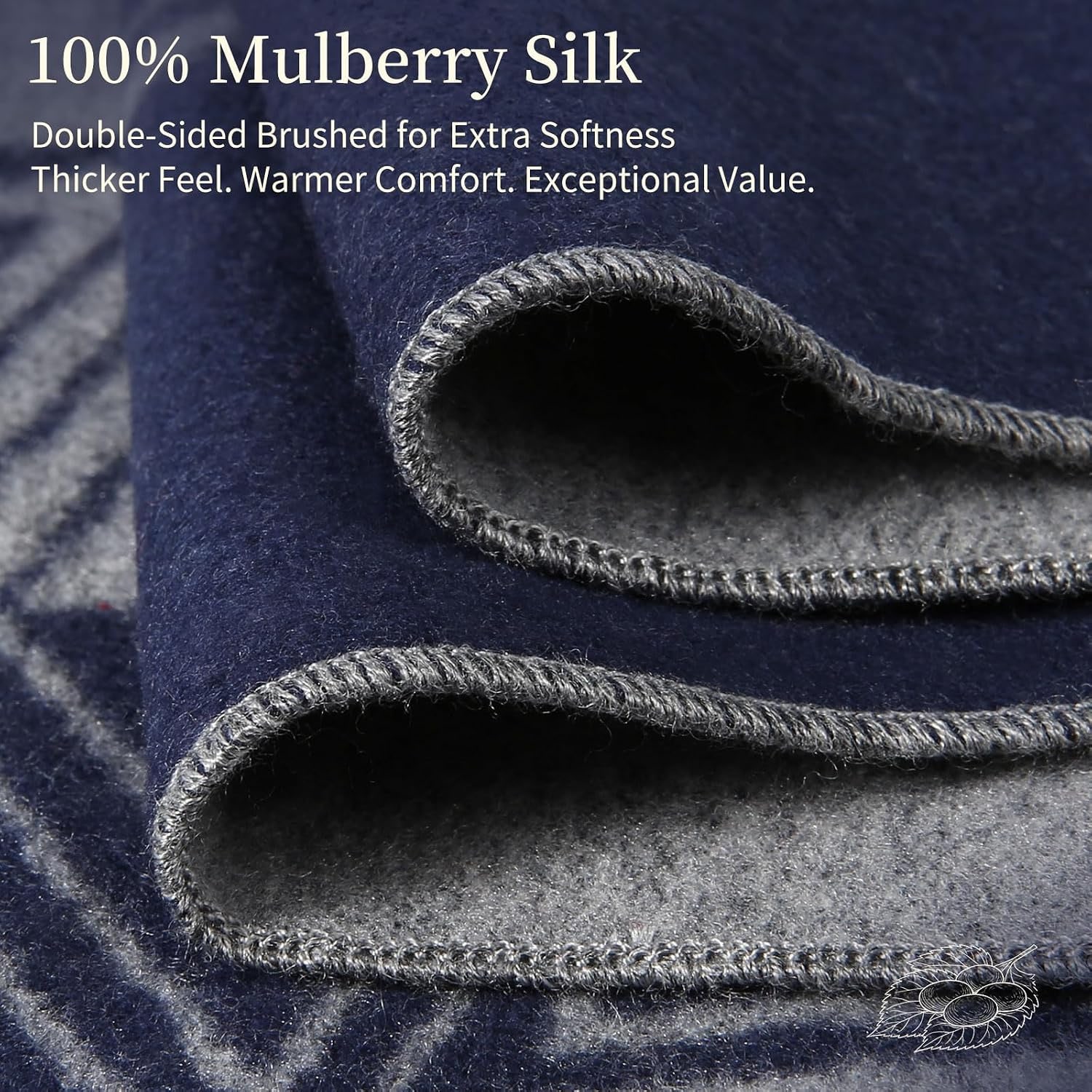
Plain woven silk has a smooth, slightly reflective face. It feels cool on the skin and it looks polished, which is lovely for a dress scarf but not especially warm. Brushing changes that. The surface of the cloth is worked so that tiny fibre ends lift away from the weave, creating a soft nap.
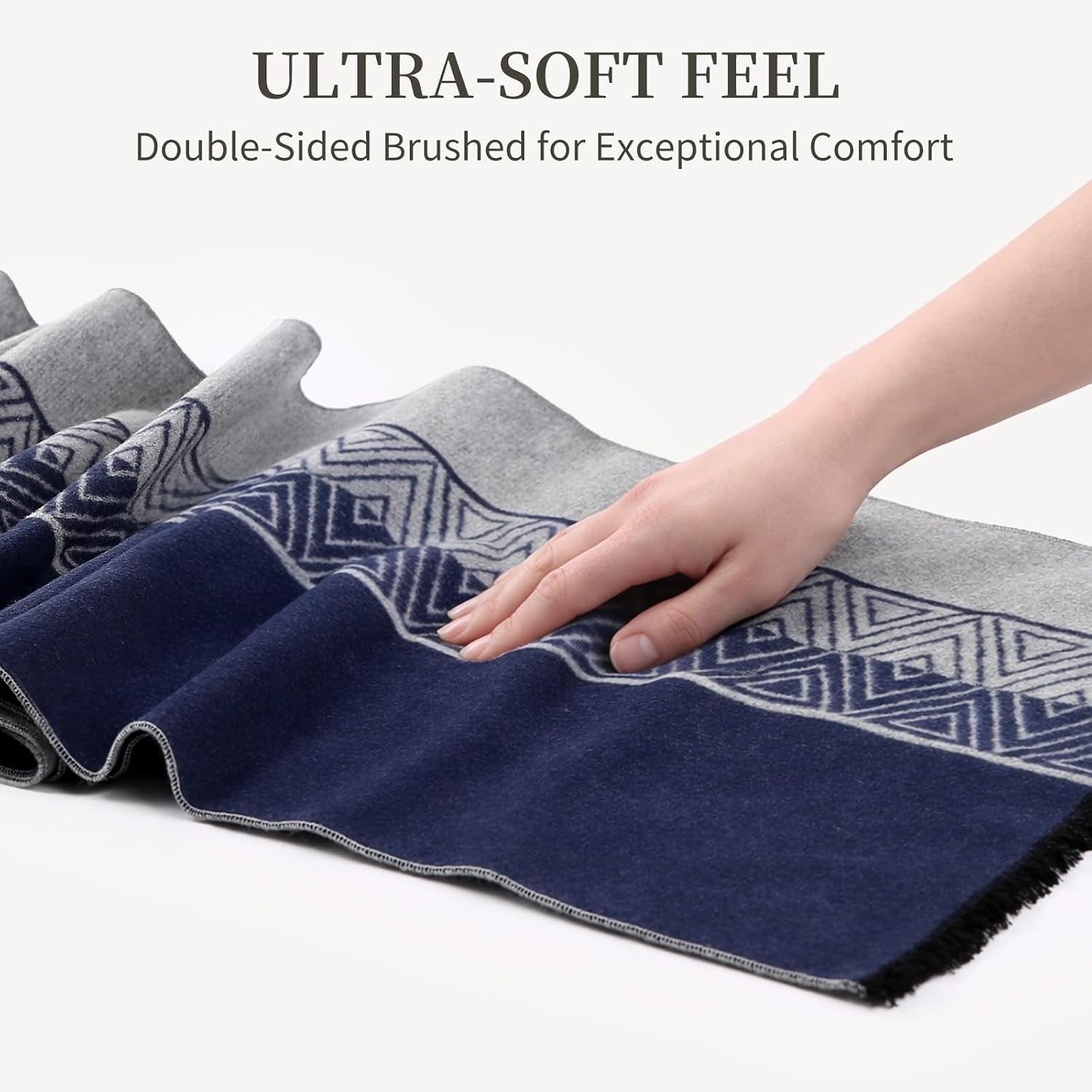
Two things follow from that. First, the handle changes. Instead of slipping across your fingers, the fabric has a gentle drag to it, closer to a very fine flannel than to satin. Second, that raised nap holds a thin layer of still air against your skin, and still air is what keeps you warm. It is the same principle that makes a brushed cotton sheet feel warmer than a percale one at the same thickness.
What you end up with is a fabric that is still silk, still light, still folds down to nothing, but behaves more like a knit when the temperature drops. It also looks softer. The matte surface photographs better and reads as more understated than a shiny scarf, which is why it works as easily with a wool coat as with a plain jumper.
Why length is the spec that matters most
People shop for scarves by colour and material and then wonder why the finished look is wrong. Nine times out of ten, the problem is length.
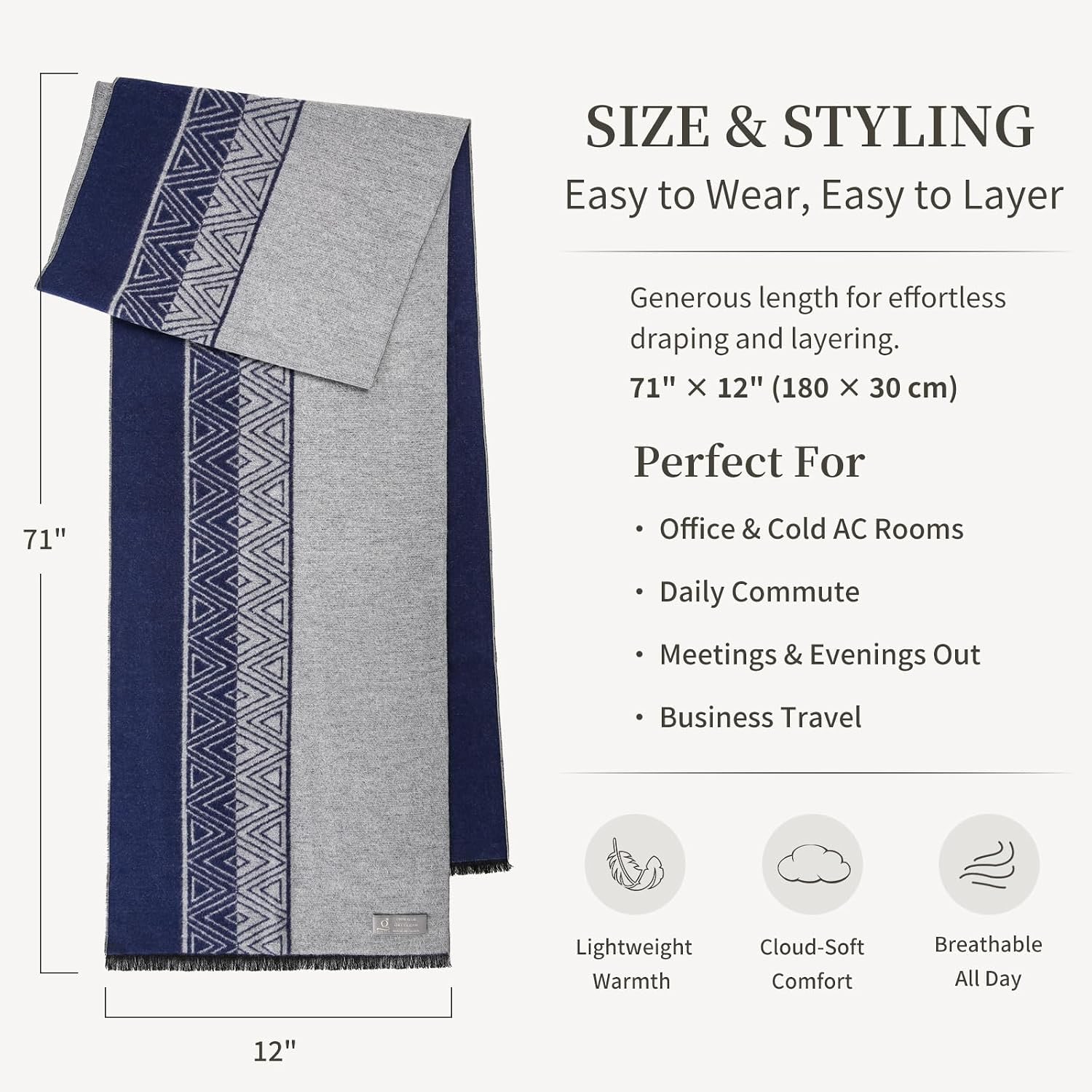
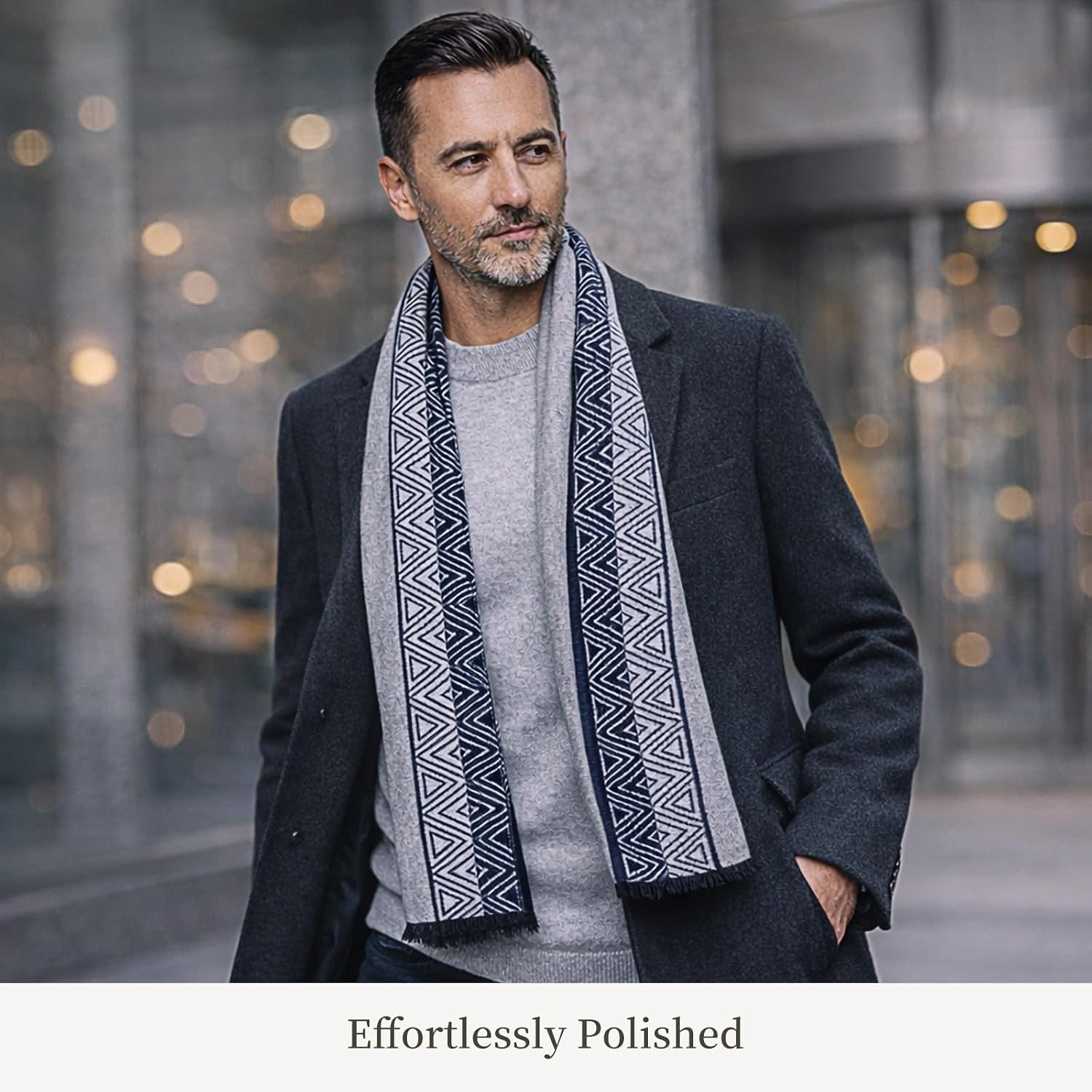
This one is 180 cm long and 30 cm wide, or roughly 71 by 12 inches. That is a long, narrow rectangle. Here is what that buys you.
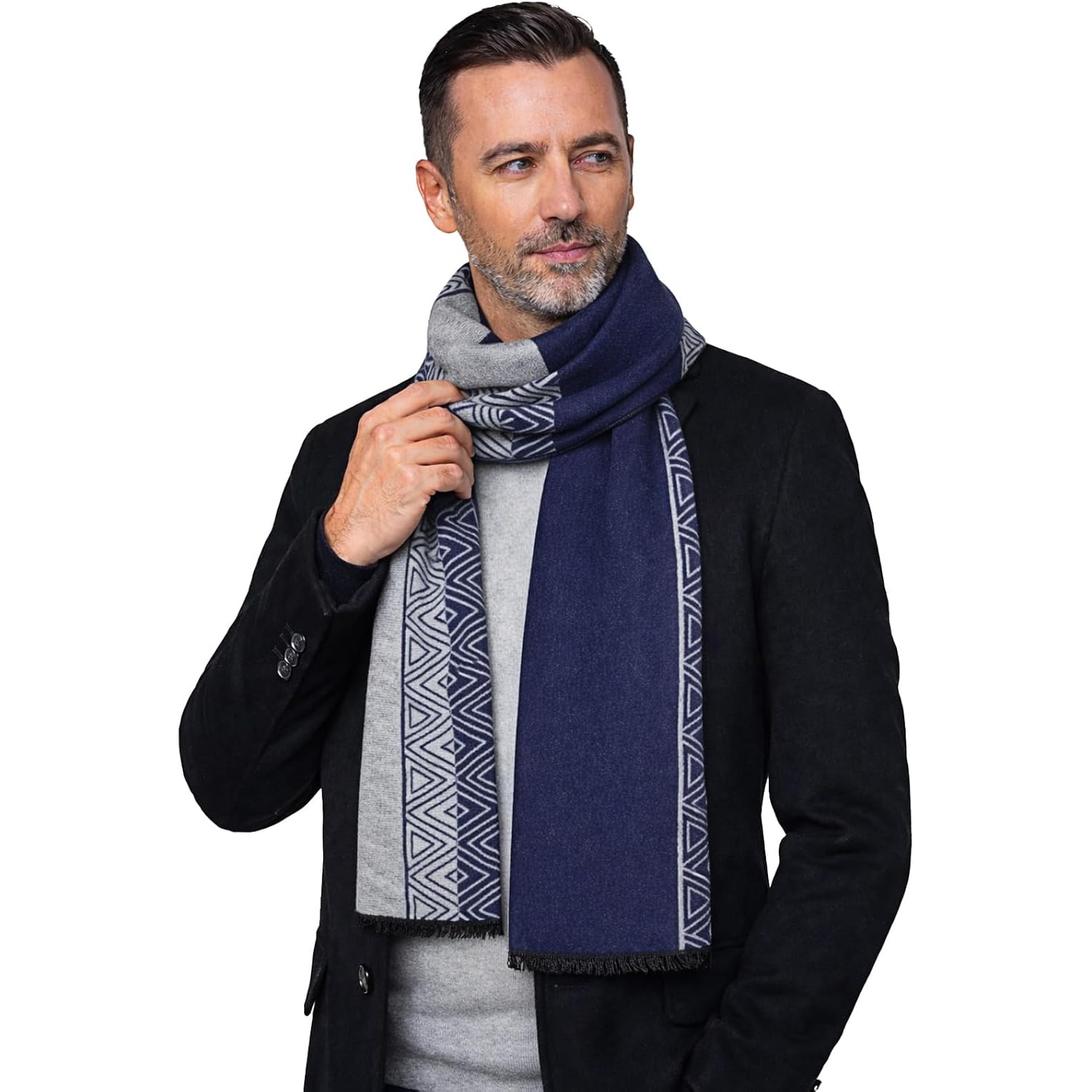
A single loop, with both ends hanging, gives a relaxed line down the front of a coat. Because the scarf is long, the ends sit at a flattering point rather than stopping awkwardly at the chest. A double loop closes the gap at the neck for genuinely cold days and still leaves short tails. A slip knot, where you fold the scarf in half and pull the ends through the loop, gives you the tidiest version, good under a blazer or for a meeting. And left completely open, it runs the length of a long coat and adds vertical line.
A shorter scarf, say 140 cm, can really only do the knot. A much longer one, over 200 cm, starts to bunch unless you are tall. The 180 cm mark is the sweet spot for most adults, which is why it has become the standard length for the best long silk scarf styles.
The 30 cm width is also deliberate. Narrow enough to sit flat under a collar without bulking up, wide enough to drape properly when open. It is a scarf, not a wrap, so do not buy it expecting shoulder coverage.
Who this suits
If you commute, work in an air conditioned building, or spend a lot of time moving between heated interiors and cold outdoor air, this is close to the ideal accessory. Wool is a commitment. You put it on and you are warm whether you like it or not, and then you are carrying a heavy loop of fabric around the shops. Silk lets you adjust. On, off, in the bag, back on in the evening.
It also suits anyone who finds wool itchy at the neck. Silk is smooth against skin and the brushed surface, while softer, is not scratchy. Hair and skin slide over silk with less friction than over cotton or wool, which is one reason people with sensitive necks gravitate toward it.
It works for men and women. The narrow cut and the muted grey blue are not gendered. Under a coat collar it reads as classic tailoring; worn loose over a jumper it reads as casual.
Where it is less suited: proper winter wind on an exposed coastline, or anyone who wants a big statement print. This is a quiet scarf. That is the point of it, but it is worth saying plainly.
How to judge the colour before you buy
Grey blue is a shifting colour. In daylight it leans cool and bluish. Under warm indoor light it reads closer to grey. That variability is a feature, because it means the scarf agrees with more of your wardrobe than a committed colour would.
A quick test: open your cupboard and look at the three coats or jackets you wear most. If any of them are navy, charcoal, black, camel, cream or denim, this scarf will sit well with them. If your outerwear is mostly rust, olive or burgundy, a warmer neutral might serve you better.
The other thing to consider is what you wear underneath. Muted mid tones are forgiving over patterns. If you wear a lot of stripes, checks or prints, a plain scarf calms the whole outfit down rather than competing with it.
Looking after silk without making it a chore
Silk has a reputation for being delicate. It is more accurate to say it is specific. It does not like heat, harsh detergent, chlorine or rough handling. Give it none of those and it lasts a very long time.
Hand washing takes about five minutes. Cool water, a small amount of mild detergent, a gentle squeeze rather than a scrub. Rinse until the water runs clear. Do not wring it, ever, because twisting breaks the long filaments that make silk strong in the first place. Lay it on a clean towel, roll the towel up and press, then unroll and dry the scarf flat somewhere out of direct sun.
Dry cleaning is the alternative if you would rather not bother. Either method is fine; the care instruction allows both.
For storage, flat in a drawer or loosely rolled is best. Hanging a silk scarf on a narrow hook for months puts all its weight on one small area and leaves a mark. Keep it away from damp and away from strong light, which fades dyes over time.
If it creases in a bag, hang it in a steamy bathroom for twenty minutes. That usually fixes it without any ironing at all. If you do iron, use the coolest setting with a cloth between the iron and the silk.
Giving it as a gift
Accessories are good gifts because there is no size to get wrong. A scarf in a neutral colour removes the second risk, which is taste. You are not asking someone to wear your preference; you are giving them something that fits into what they already own.
This one arrives in a gift box, so there is no wrapping to organise. Add a card and it is done. It travels well in the post if you are sending it to another province, and it is light enough that posting it onward is cheap.
The short version
Buy a brushed silk scarf if you want warmth at the neck without weight, in a colour you do not have to plan around. The brushing is what makes it warmer than ordinary silk. The 180 cm length is what gives you more than one way to wear it. The grey blue is what makes it easy to grab on the way out.
Wash it gently, dry it flat, store it rolled. Delivery is tracked to every province in 10 to 20 working days, free over R1800 and R250 below that, and you have 14 days from delivery to send it back unused if it is not right.