
The complete guide
Choosing a Silk Pillowcase, Momme Weight and Size Explained
The problem with a cotton pillowcase
Most of us sleep on cotton without ever thinking about it. Cotton is cheap, it washes well, and it has been the default for generations. But cotton has one property that becomes obvious the moment you try something else: the surface is dry and slightly grabby.
Run your hand across a cotton pillowcase and you can feel it. Hair catches on it. Skin drags across it. When you move in your sleep, and most people move dozens of times a night, your face and hair are pulled along a textured surface over and over for seven or eight hours.
Silk does not behave that way. The fibre is smooth and the weave is fine, so things slide rather than catch. That is the whole difference, and it is why people who switch usually do not switch back.
What momme actually means
If you shop for silk bedding you will see the word momme everywhere, often written as a number followed by "mm". It is confusing at first because it looks like millimetres. It is not.
Momme is a weight measurement for silk fabric, dating back to Japanese textile trade. It tells you how dense the cloth is. Higher momme means more silk per square metre, which means a heavier, more substantial fabric.
Here is roughly how the scale plays out for pillowcases:
Silk at 16 momme is the entry point. It is genuinely silk and it feels nice, but it is light. Hold it up to a window and you will see plenty of light through it. It tends to show wear sooner.
Silk at 19 momme is a middle ground. Noticeably more body than 16, and a common price-conscious choice.
Silk at 22 momme, which is what these green silk pillowcases use, is where most regular buyers settle. The fabric has real weight to it. It drapes over a pillow properly instead of clinging, and it stands up to regular hand washing without going thin.
Silk at 25 momme and above is the heavyweight end. It is lovely, but it costs considerably more and some people find it almost stiff until it has been washed a few times.
So when you see 22 momme on a listing, you are looking at the weight that balances feel, durability and price. It is the figure to look for in a best mulberry silk pillowcase without stepping into luxury pricing.
Thread count, and why momme matters more
These cases are woven to a 600 thread count. Thread count is the number of threads in a measured square of fabric, and in cotton it is the headline number everyone quotes.
With silk, it is secondary. You can have a high thread count using very fine, light threads and end up with a flimsy fabric. Momme accounts for both the number of threads and their weight, which is why it is the more honest measure.
That said, 600 thread count alongside 22 momme describes a tightly woven cloth with a fine, even surface. The two numbers together tell you more than either one alone.
Double-sided silk, and why it matters
Some silk pillowcases are silk on one side only, with cotton or polyester on the back. The listing will usually not shout about this.
The problem is obvious once you think about it. You flip your pillow during the night. Children flip pillows constantly. If only one face is silk, half your sleeping time is spent on something else.
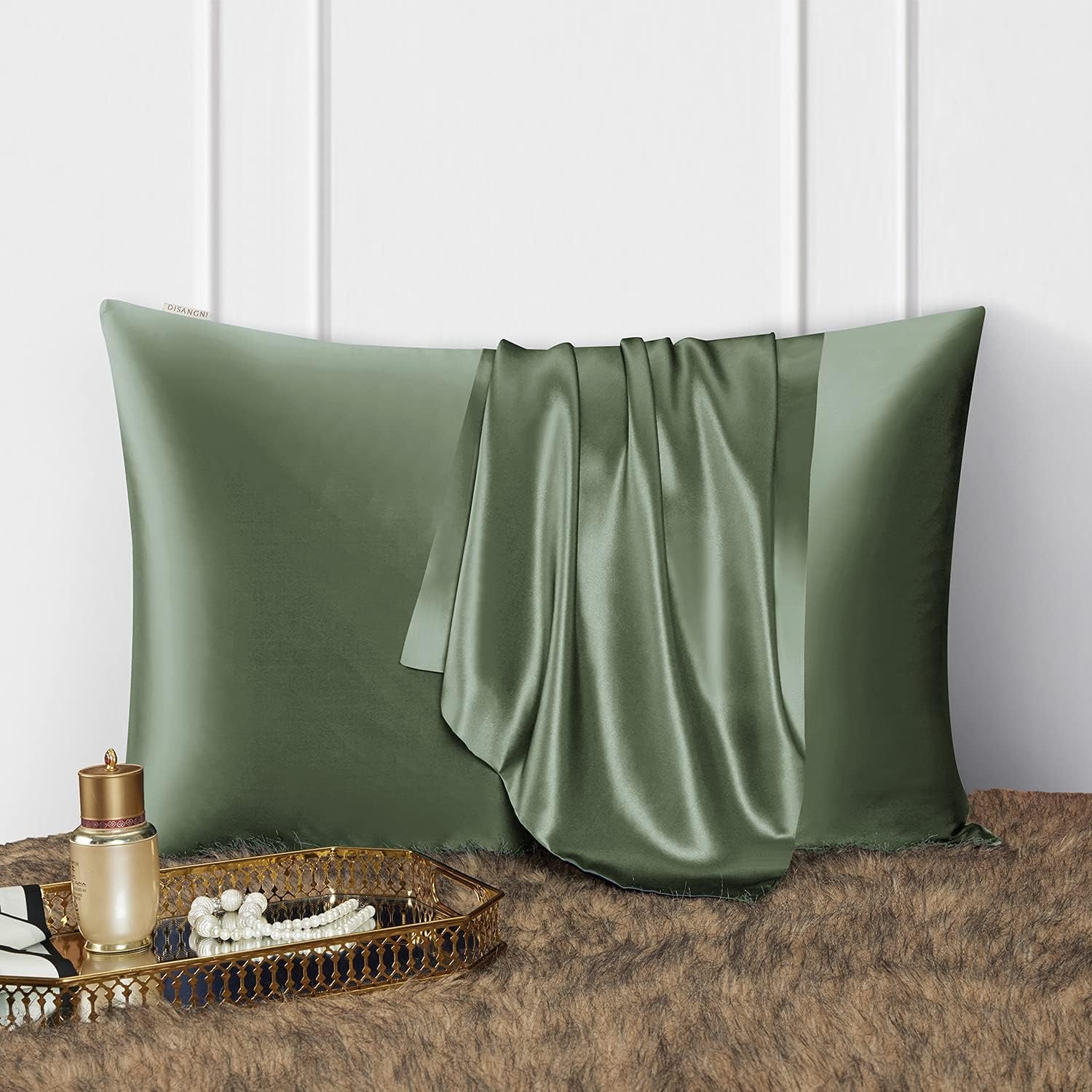
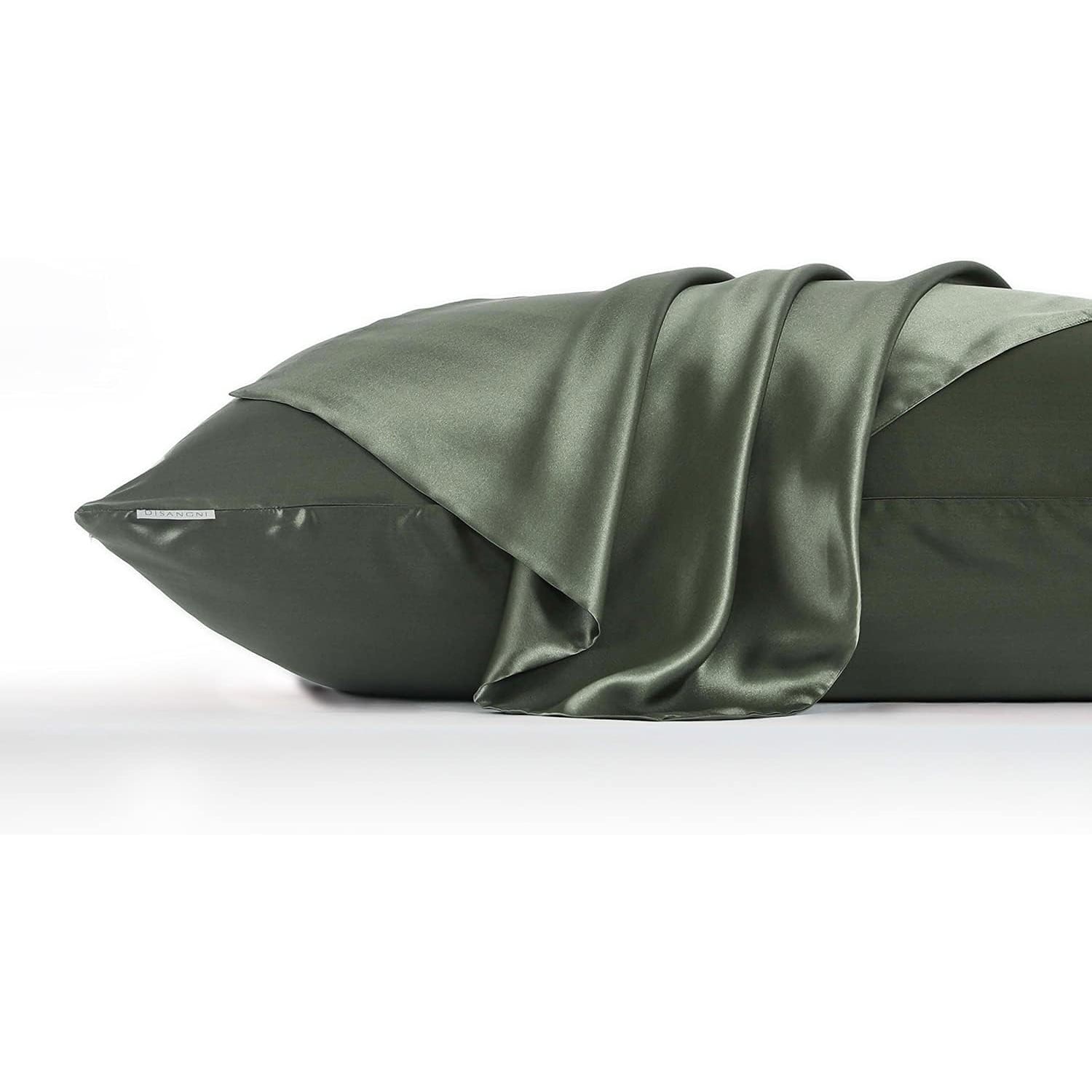
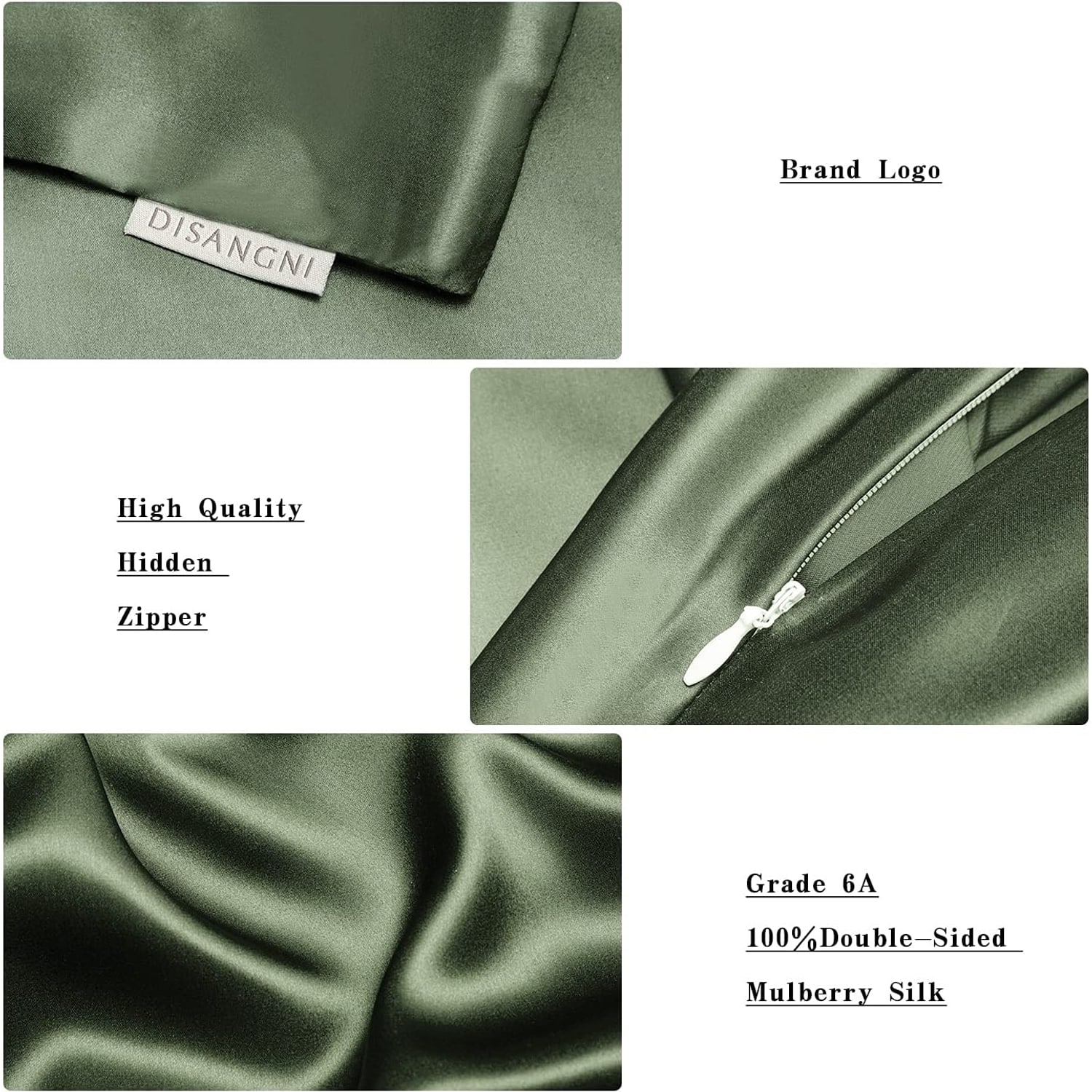
This pair is 100% mulberry silk on both faces. Whichever way the pillow lands, you are on silk. It costs more to make a case this way, and it is one of the things worth checking on any silk pillowcase before you buy.
Getting the size right
This is where most silk pillowcase purchases go wrong, so read this part carefully.
These cases measure 66 x 50.8 cm, which is 26 by 20 inches. That is the American standard size.
South African pillows do not always match American sizing. A common local pillow runs about 45 x 70 cm. That is narrower and longer than the American standard. On a case cut to 66 x 50.8 cm, a 45 x 70 cm pillow will be a squeeze lengthways and loose across the width.
Other sizes you may have at home:
A queen pillow is often around 51 x 76 cm. Too long for this case.
A king pillow is often around 51 x 91 cm. Much too long.
The fix is simple. Take a tape measure to the pillow you actually sleep on, before you order anything. Measure the length and the width while the pillow is lying flat and not squashed. If the numbers come in at or just under 66 x 50.8 cm, this standard size silk pillowcase will fit well. If your pillow is longer, you need a different size.
A slightly loose fit is fine and even looks good, because the silk falls in soft folds. A too-tight fit strains the seams and pulls the fabric flat.
The zip, and why it is not a minor detail
Pillowcases close in one of two ways. An envelope flap is a folded tail of fabric that tucks the pillow in. A zip runs along one edge and seals it.
On a cotton case, an envelope flap works fine. Cotton has enough grip to stay put.
On silk, it often does not. The fabric is slippery by design, which is the point of it, and a flap can slide open while you sleep. You wake up with the pillow half out.
These cases use a hidden zip set into the seam. The pillow stays in. The zip itself is tucked away in the hem so it is not pressing against your cheek, which is a detail some cheaper zipped cases get wrong.
Why buying a pair makes sense
Silk pillowcases need hand washing, and hand washing takes a little planning. A single case means your pillow goes bare while the silk dries.
With two in the pack, you rotate. One is on the bed, one is drying. There is no gap and no night spent back on cotton. This is the practical reason a silk pillowcase pair tends to be the sensible buy, particularly if you are new to silk and want to keep the habit going.
How to wash and care for silk
The rules are short and they matter.
Keep the water cool. The maximum given is 30°C, which is 86°F. Hot water is what damages silk fibres faster than anything else.
Hand wash, not machine wash. A basin and five minutes is all it takes.
Dissolve the detergent in the water before the silk goes in. Undiluted detergent sitting on a patch of silk can mark it. Use a mild one and not much of it.
Soak the case in clean water first. This helps the fabric relax before any detergent touches it.
Wash alone or with similar colours, especially for the first few washes, since the green is a solid dye.
Never bleach. Not even a little. Avoid detergents with optical brighteners too.
Treat marks the same day they happen. Silk holds onto set-in stains far more stubbornly than cotton does.
Dry flat or on a line, out of direct sun. Do not tumble dry. Do not wring the water out, just press it gently between your hands or in a towel.
If you want to press it, use a cool iron on the reverse while the fabric is still a touch damp. Most people find they never bother.
Follow those points and a 22 momme case will keep its hand and its colour for a long time.
Who this suits
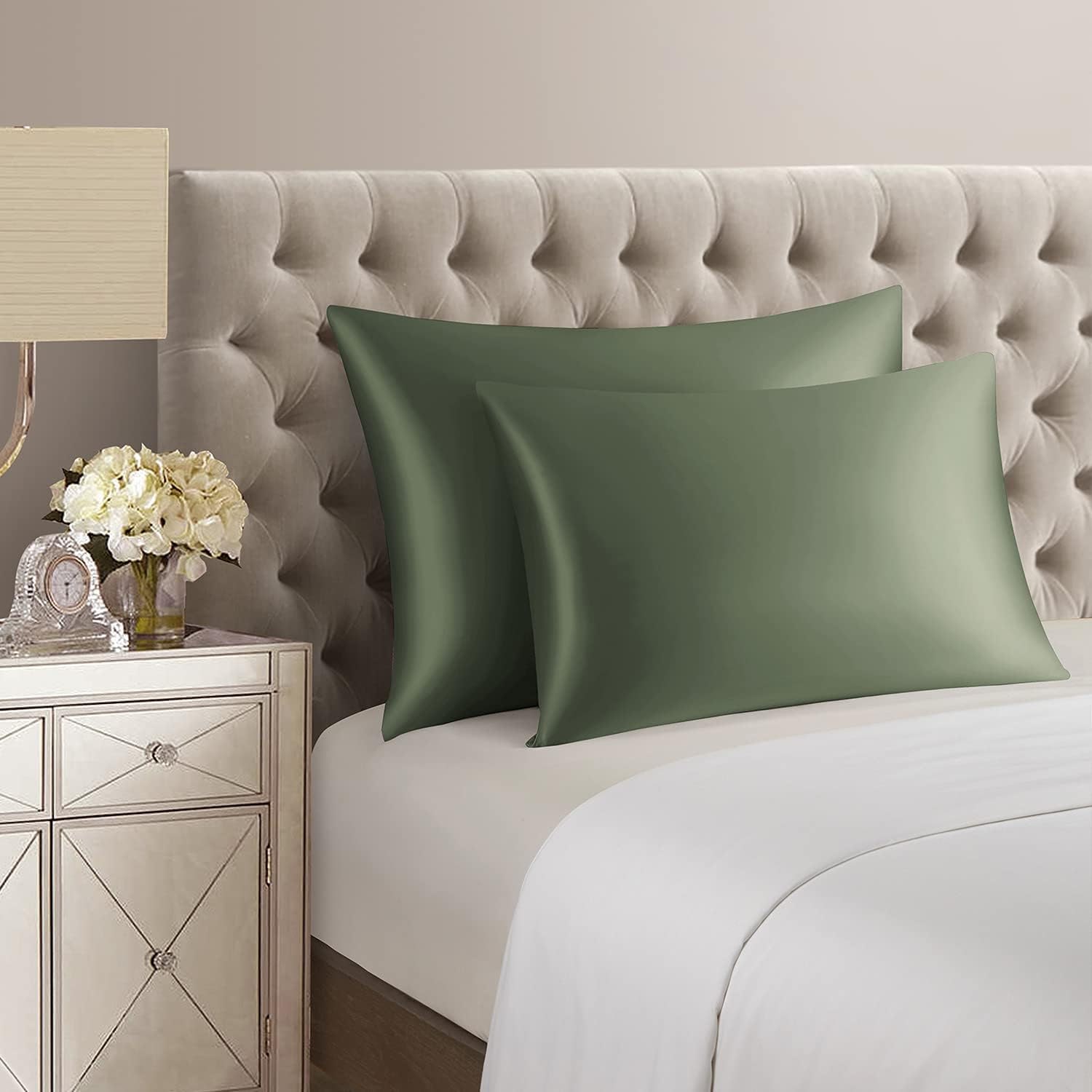
Anyone who wants to try silk bedding without going to the heaviest and most expensive weight. Anyone with long hair who is tired of waking up with it tangled against cotton. Anyone redoing a bedroom in a softer colour palette, since the solid green works with a lot of linen and neutral schemes.
It also makes a straightforward gift. Two matching cases cover a full bed, which is more useful than a single. If you are buying for someone else, try to find out their pillow size first.
The short version
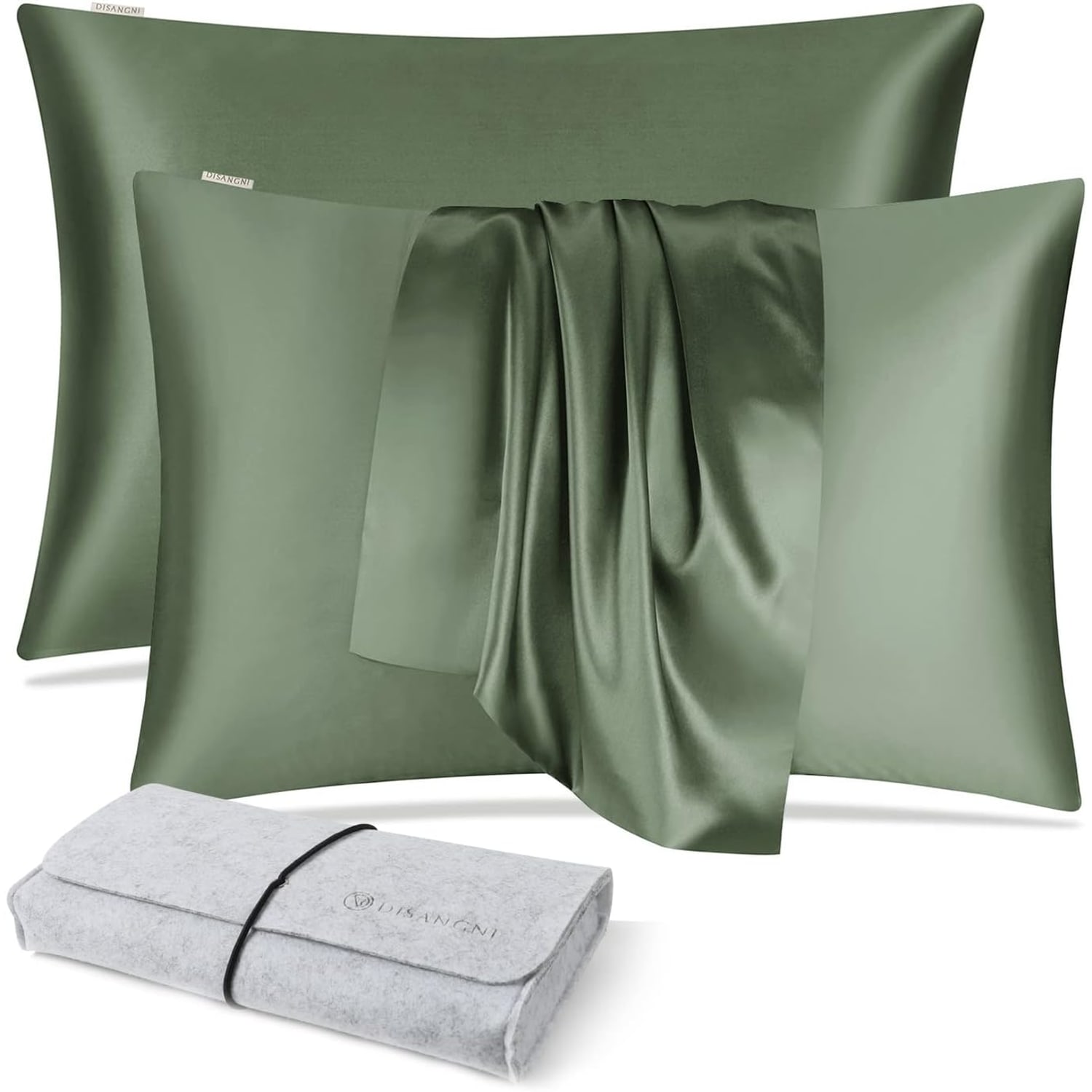
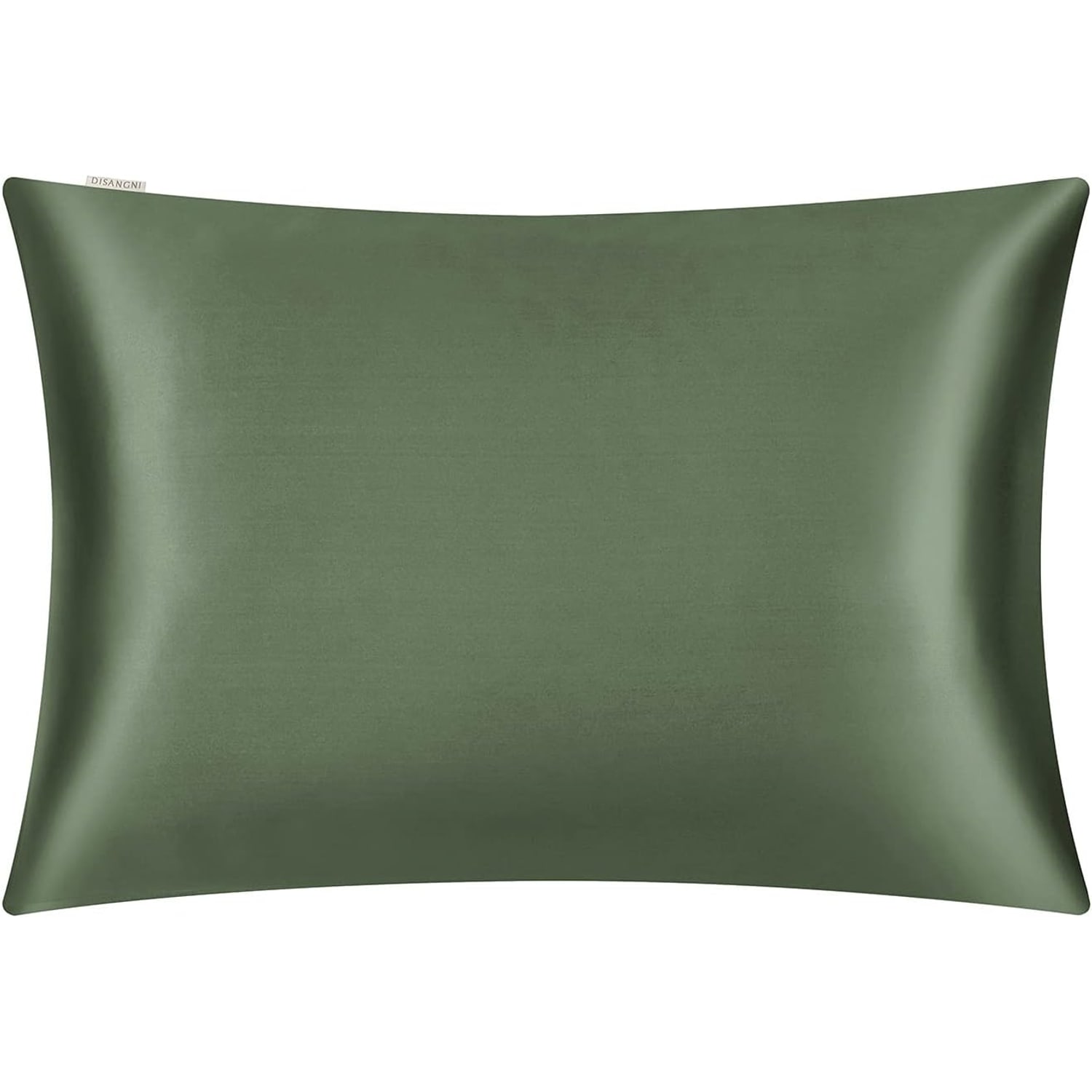
This is a pair of green silk pillowcases in standard size, 66 x 50.8 cm (26" x 20"), made from 100% mulberry silk on both faces at 22 momme and 600 thread count, closed with a hidden zip.
The 22 momme weight is the sweet spot for everyday use. The double-sided construction means real silk whichever way the pillow turns. The zip keeps the pillow where it should be. Two in the pack means you are never caught without a clean one.
Measure your pillow before you order. That one step prevents almost every problem people have with silk pillowcase sizing. Then hand wash cool, skip the bleach, line dry out of the sun, and the pair will serve you well.