


The complete guide
The Buyer's Guide to Black 22 Momme Silk Pillowcases
The problem with the pillowcase you already own
Think about what happens over eight hours. Your head turns maybe twenty times. Each time, your cheek and your hair drag across whatever fabric is on the pillow. With standard cotton, that fabric is a grid of short fibres with tiny raised points along the surface. Hair catches on them. Skin presses into them and holds the creases. In the morning you get the sleep lines on one side of your face and the hair that has to be dealt with before you leave the house.
Nobody designed cotton pillowcases to be a problem. They are cheap, they wash hot, and they last. But they are not smooth, and smoothness is the whole point of silk.
A silk pillowcase changes the surface. Silk is a continuous filament fibre, which means each strand runs long and unbroken rather than being spun from short staples. Lay those long fibres side by side in a tight weave and you get a surface that hair slides over instead of snagging on. That is not marketing. It is just the physical shape of the fibre.
What 22 momme actually tells you
Momme is the number that separates real silk bedding from the thin stuff. It measures the weight of a fixed length of fabric, and it is the silk equivalent of GSM for cotton. Higher momme means more silk packed into the same area.
Here is the rough map. Around 16 momme is light, which is fine for a scarf and thin for a pillowcase that gets used nightly. Somewhere between 19 and 25 momme is where most quality bedding sits. Above about 25 the fabric gets heavy and starts to lose the fluid drape people like about silk in the first place.
At 22 momme this case sits comfortably in the middle of the useful range. You can feel the difference when you pick it up. It has weight. It falls over a pillow rather than floating on top of it. And the extra density matters for wear, because the fabric that takes your weight every single night needs something to it.
The 600 thread count is a separate measurement describing how tightly the fibres are packed into the weave. The two numbers work together. A high thread count on a light fabric still gives you a light fabric. Here you get both the density and the weight.
Why mulberry silk and not satin
Satin is a weave, not a fibre. You can weave satin from silk, from polyester, from nylon or from a blend. Satin polyester looks shiny in a photograph and costs very little, and that is why so much of it ends up in the same search results as real silk.
The difference shows up once you sleep on it. Polyester does not breathe. It traps the heat coming off your head and holds it against your face, which is exactly the wrong thing on a warm night in Durban or Pretoria. Mulberry silk is a natural fibre with a different structure, and most people describe it as cool when they first lie down.
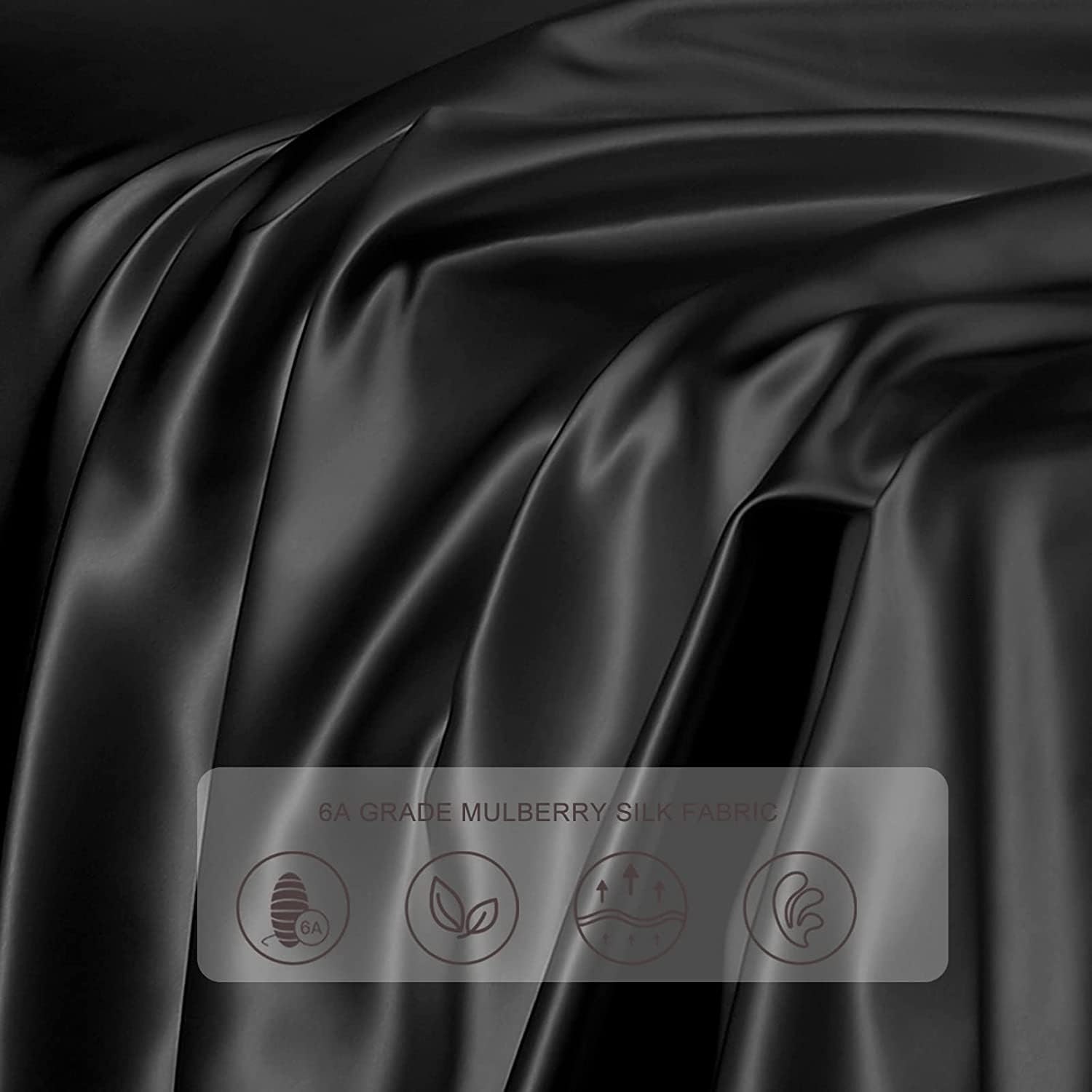
Mulberry silk specifically comes from silkworms raised on a mulberry leaf diet, which produces long, even, uniform filaments. Long filaments mean fewer joins, a smoother thread, and a more consistent cloth. That consistency is what you are feeling when you run your hand across it.
Getting the size right
This is the part that trips people up, so it is worth slowing down.
This case is cut to the American standard, 51 x 66 cm, which is printed as 20" x 26". Plenty of silk pillowcases sold internationally use that same cut, because it is the dominant size in the market they were designed for.
A typical South African pillow runs closer to 45 x 70 cm. So compared to the case, your pillow is likely a bit narrower and a bit longer. The narrower part is not an issue at all. The longer part might be, because 70 cm of pillow does not want to go into 66 cm of pillowcase without looking strained at the corners.
Not every pillow is 70 cm, though. Pillow sizes vary quite a lot between brands here, and plenty of them come in shorter. Before you order, lay your pillow flat, do not squash it, and run a tape along the long edge. If you are at 66 cm or under, you are fine. If you are at 68 or 70, the fit will be tight and the silk will take more strain than it should at the seams.
Buying the best standard size silk pillowcase only works if standard means the same thing in your bedroom as it does on the label, so check first.
Living with the zip
Envelope closures are the usual alternative, where a flap of fabric folds over the pillow end. They work well enough until the pillow starts creeping out in the night and you wake with half your head on the bare pillow.
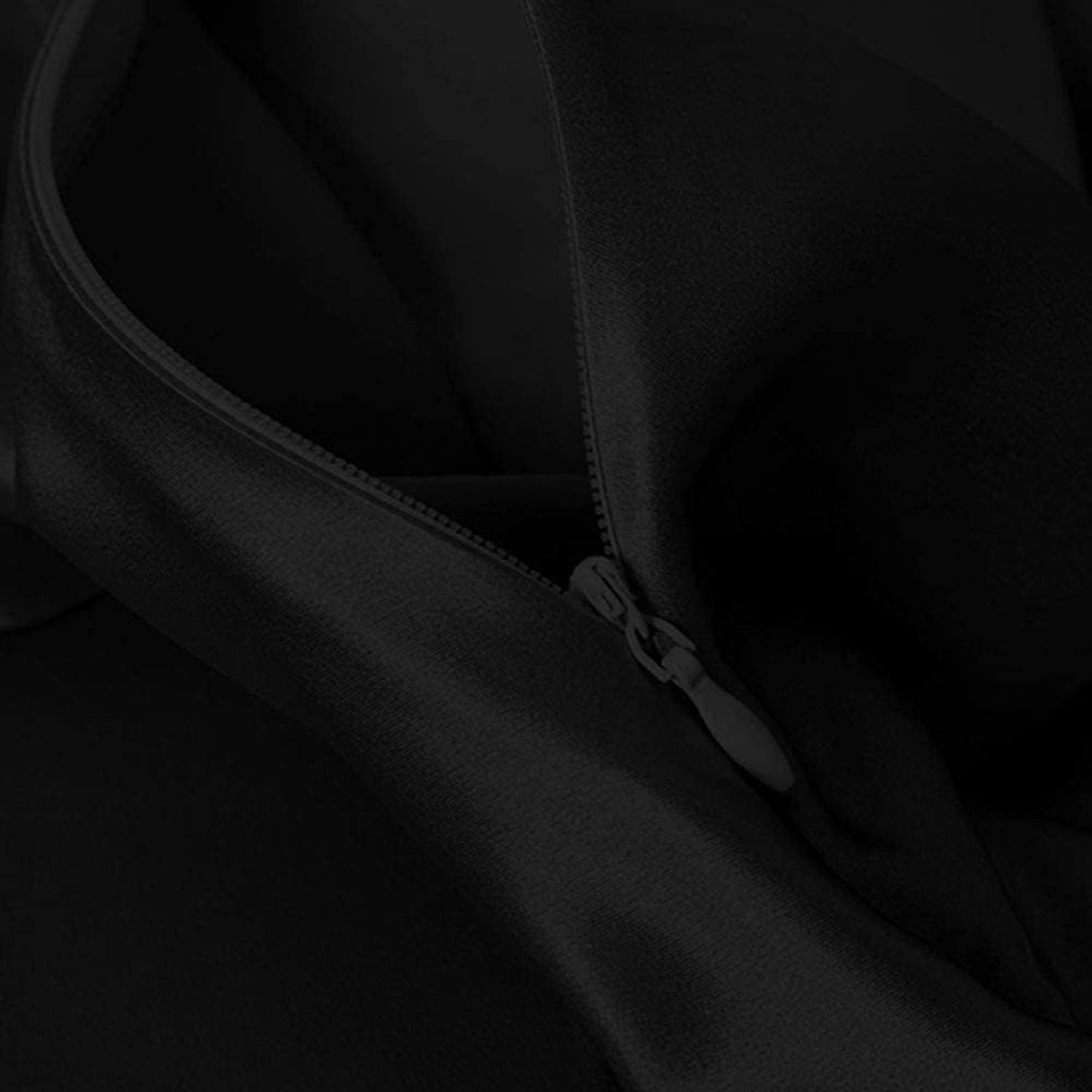
The concealed zip here runs along one edge, set into the seam. Zip it closed and the pillow stays where you put it. The edge stays flat and clean with no flap sticking out, which is part of why the case looks tidy on a made bed.
Practical tip. Put the zipped edge at the foot end of the pillow rather than the head end. You will never think about it again. And always zip the case shut before it goes in the wash, so the slider cannot catch on anything.
Looking after it
Silk is less fragile than its reputation suggests, but it does have rules.
Wash in cool water. Hot water is the main thing that damages silk and pulls dark dye out of fabric. Use a gentle detergent made for delicates, and skip anything with enzymes, since enzymes are formulated to break down protein and silk is a protein fibre. No bleach and no fabric softener, which just coats the fibres and dulls the surface you paid for.
Hand washing is the kindest method. A machine on the gentle cycle also works, provided the case goes inside a mesh laundry bag so it cannot tangle with zips or buttons on other items. Keep the spin speed low.
Dry it flat, or hang it in the shade. Direct sun is hard on both silk and dark dye, and the tumble dryer is hard on everything. Silk dries fast on its own.
Because this one is black, wash it separately for the first few cycles. Any deeply dyed fabric sheds a little colour early on, and you do not want that landing on a white sheet.
Once a week is a reasonable washing rhythm. More often if you use heavy hair products or go to bed with wet hair.
Who this suits
People with long hair, curly hair or hair they spend money on tend to notice silk fastest. The reduction in friction means less catching and less roughing up overnight.
Warm sleepers like it too, because silk does not hold heat the way a thick cotton weave can. In a South African summer that counts for something.
And it makes a straightforward gift. Silk is the kind of thing people enjoy but do not often buy for themselves, and plain black means it will not clash with whatever bedding the recipient already has.
The short version
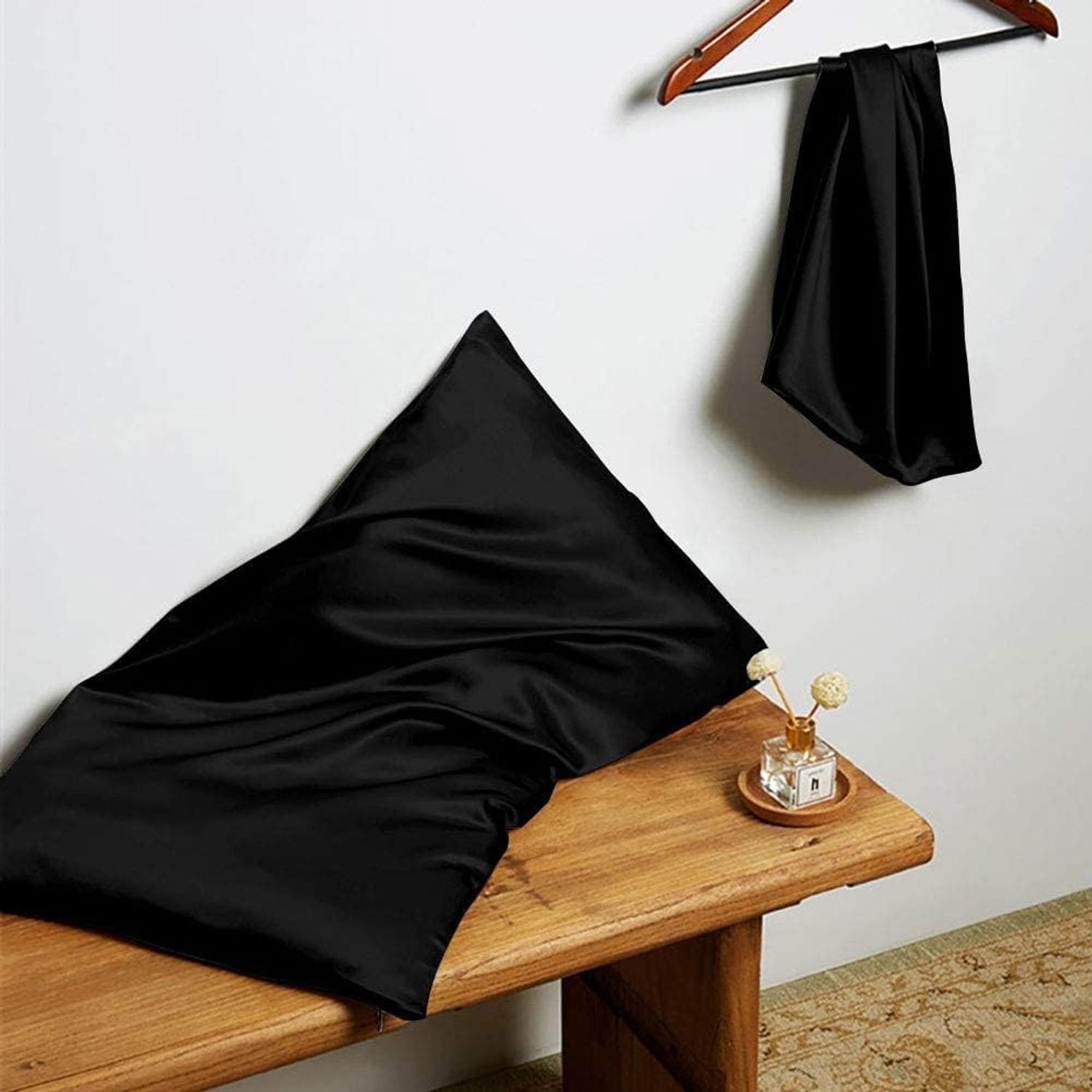
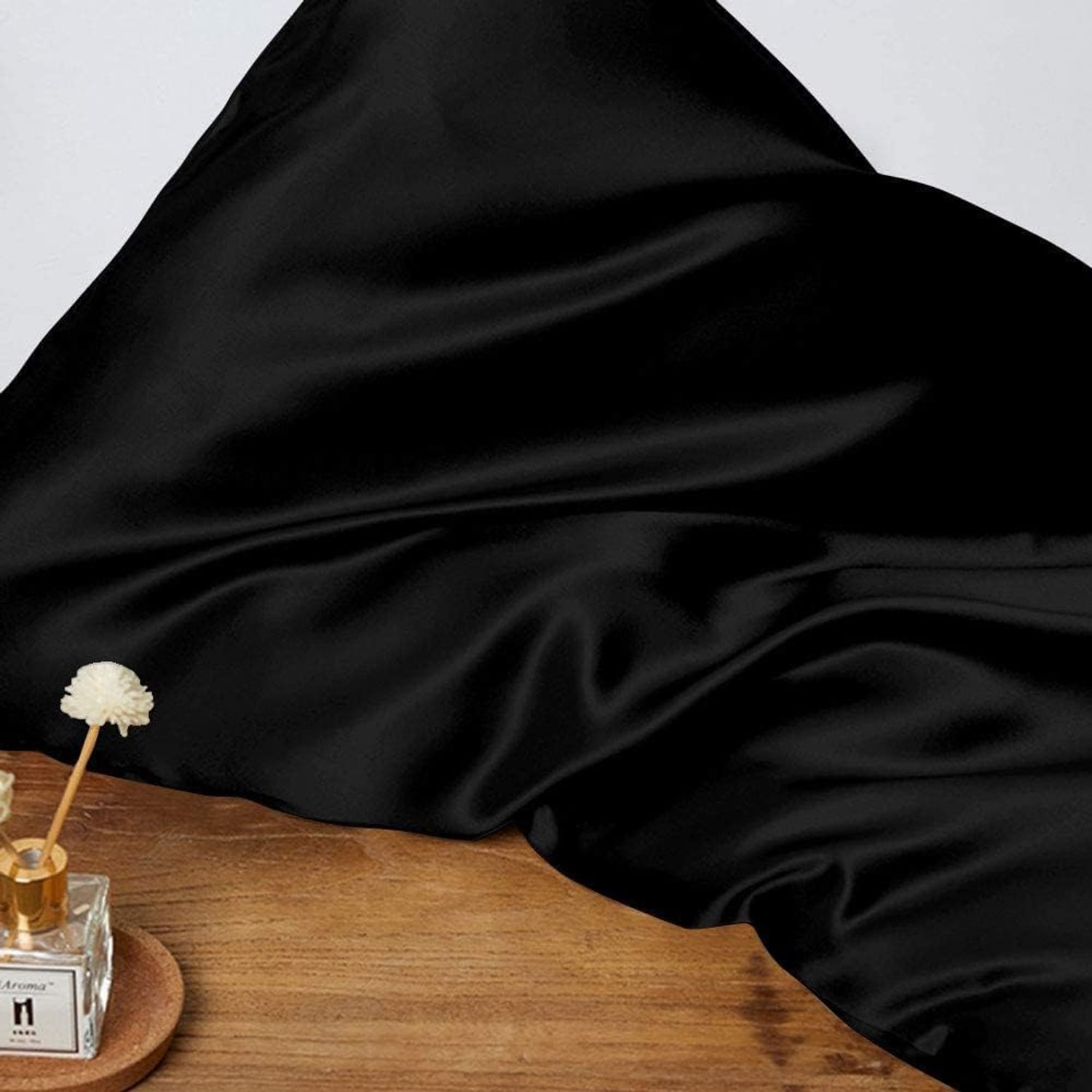
A 22 momme, 600 thread count, 100% mulberry silk pillowcase in solid black, cut to 51 x 66 cm with a concealed zip. The weight is right for nightly use, the zip keeps the pillow in place, and the colour goes with almost anything.
Measure your pillow before you order, wash it cool, dry it out of the sun, and keep it away from bleach and fabric softener. Do those things and it will stay smooth for a long time.