
The complete guide
The Buyer's Guide to Silk Bonnets, Fit and Care
The problem a bonnet actually solves
Most hair damage does not happen in the salon chair. It happens slowly, in the dark, over hundreds of nights. You roll over, your hair drags across a cotton pillowcase, and the cotton weave catches at the cuticle. Multiply that by a full night and then by a full year and you get frizz at the crown, rough ends, and a set that falls flat on one side by Tuesday.
Cotton is also thirsty. It pulls moisture out of hair and skin, which is why a lot of people wake with hair that feels drier than it did when they went to bed. None of this is dramatic on any single night. It is cumulative, and that is exactly why it is worth fixing with something as simple as a cap.
A silk bonnet puts a smooth surface between your hair and everything else. Your hair sits inside, it slides rather than snags, and the shape you went to bed with has a much better chance of still being there in the morning. That is the whole mechanism. No mystery to it.
How a silk sleep cap works
Silk is a protein fibre spun as a long, continuous filament. Because the filament is long and even, the woven fabric has very few of the short fibre ends that give cotton its slightly rough hand. Run your palm across both and you can feel the difference immediately.
That smoothness is what matters for hair. Less friction means less catching at the cuticle, fewer tangles to comb out, and braids or curls that keep their definition longer. The same principle is why people use silk pillowcases. A bonnet just takes the idea further by covering the whole head rather than one patch of bedding.
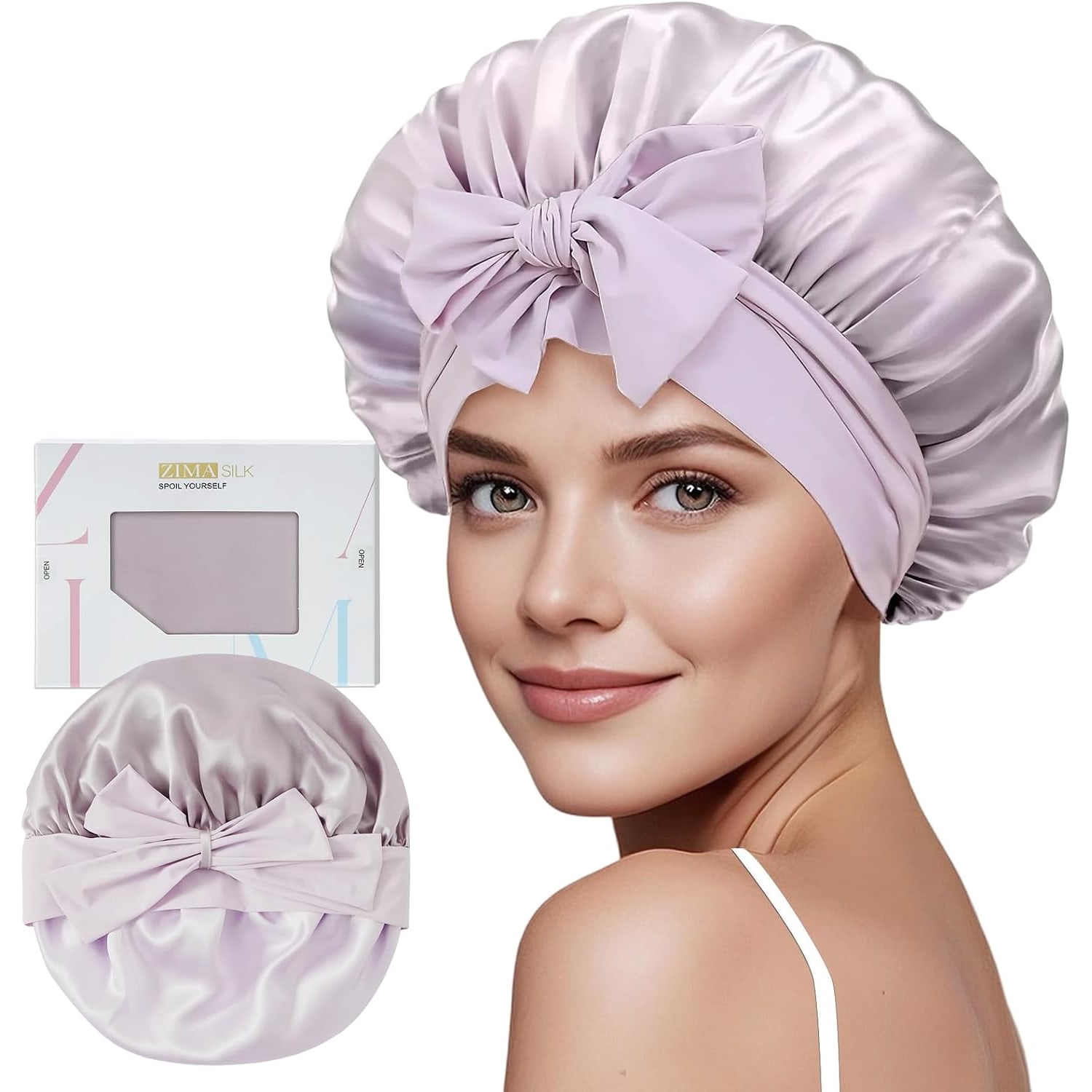
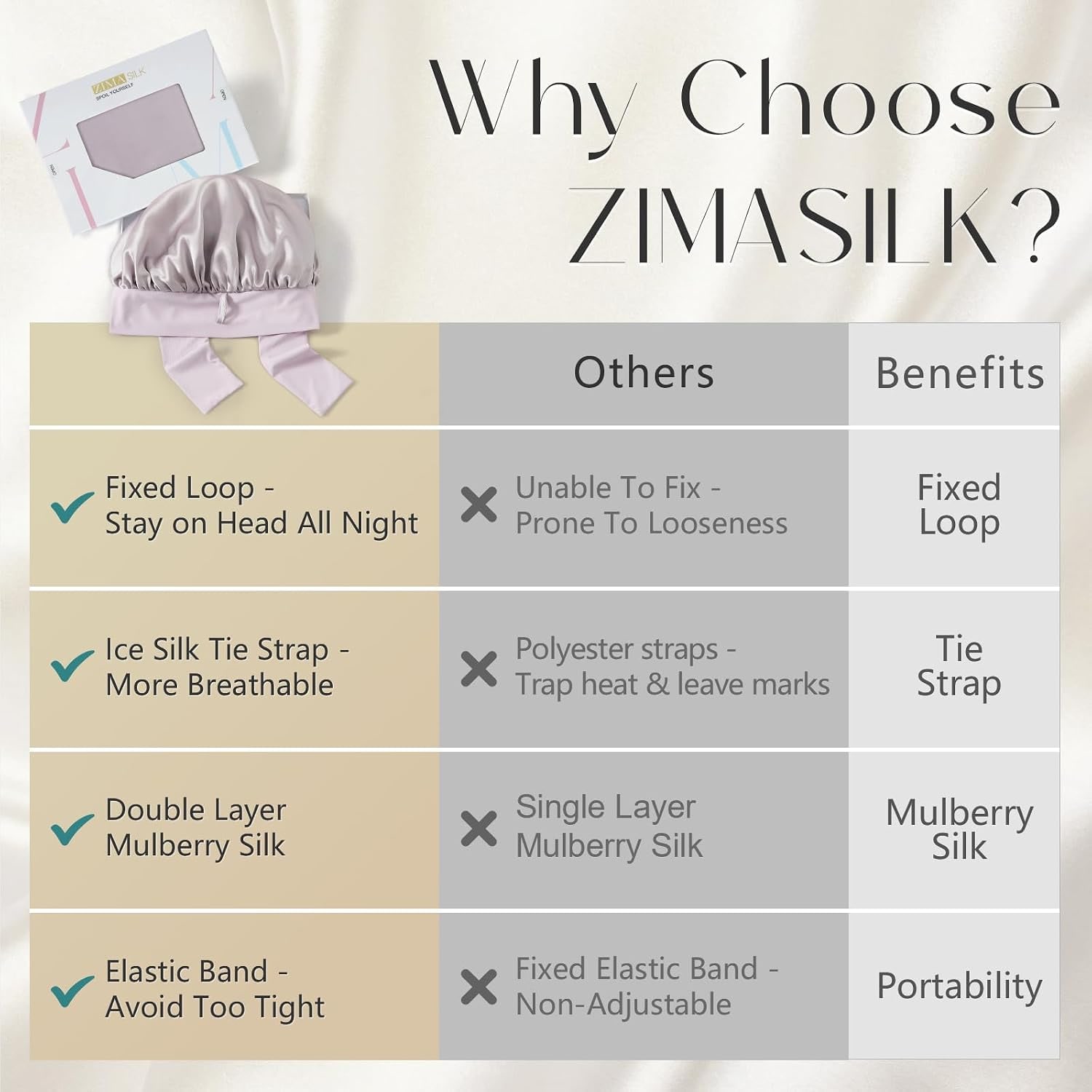
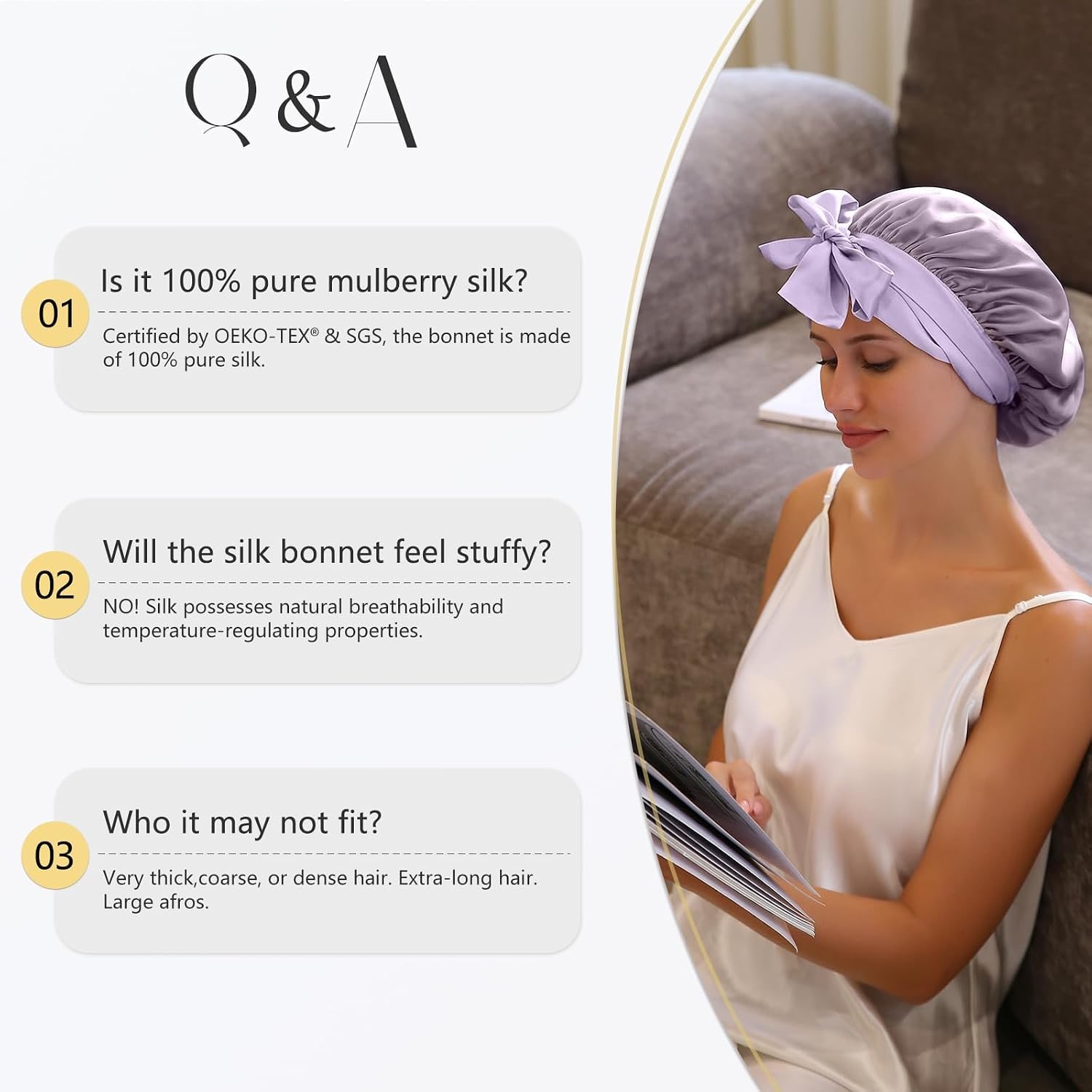
This cap is built from two layers of mulberry silk rather than one. The practical difference is in the feel and the drape. A single thin layer can cling and shift as you move. Two layers have a bit more body, so the cap sits more like a soft dome and holds its shape across the night. People shopping for the best double layer silk bonnet usually mention that extra substance as the thing they notice first.
The tie closure, and why it matters
Here is where most bonnets go wrong. The cheap ones use a wide band of elastic, and that elastic does two unhelpful things. It presses on your forehead, leaving a line that can take an hour to fade. And it loses its stretch over a few months of washing, so the cap either slips off or becomes tighter than you want.
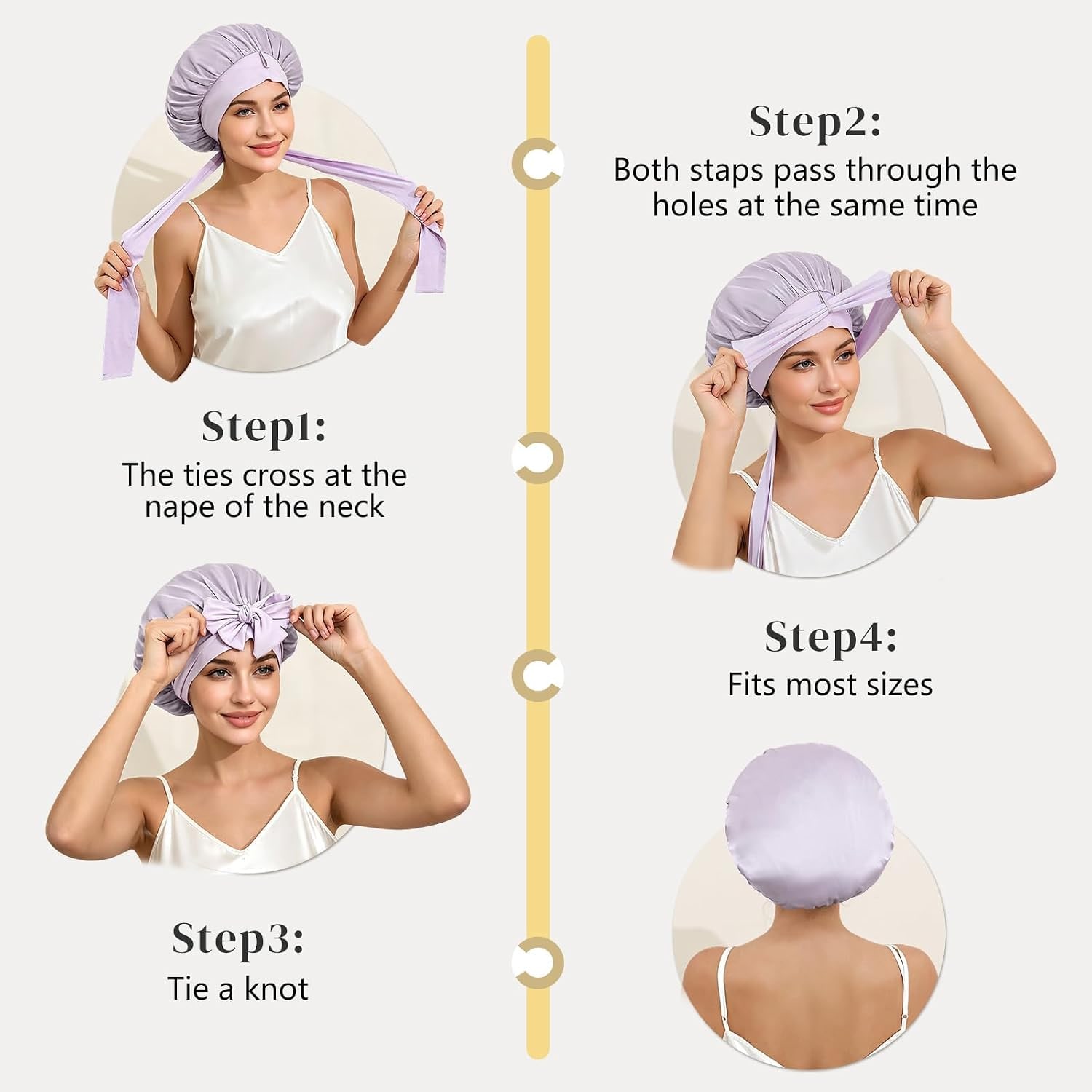
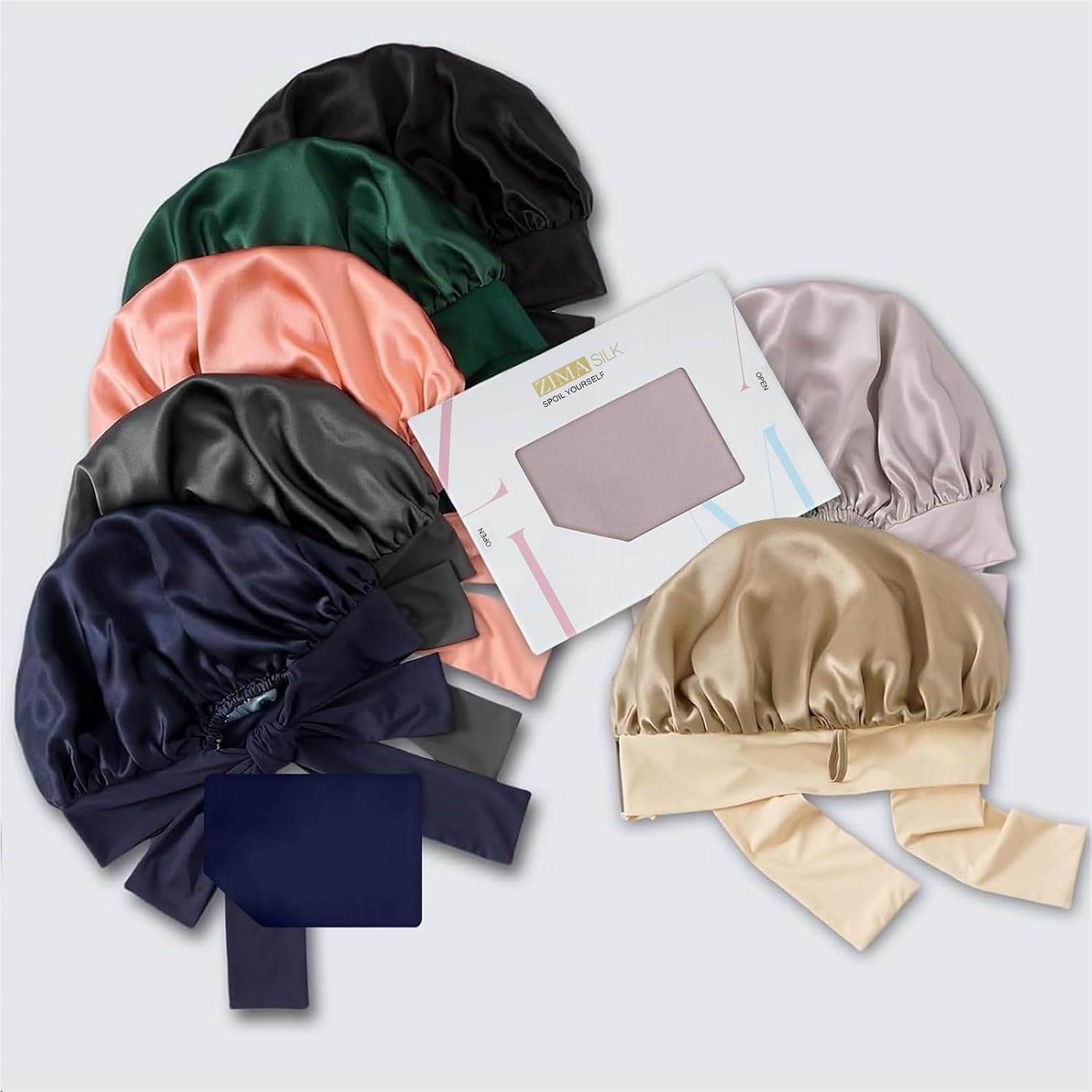
This one closes with long silk ties instead. You gather the fabric, pull the ties to the tension you like, and knot it. If you want it loose for a lot of hair, you tie it loose. If you are a restless sleeper and want it secure, you tie it tighter and lower, down at the nape. The fit is yours to set, and it does not degrade with age the way elastic does.
The ties being silk also matters. A nylon drawstring sitting against the back of your neck all night is not pleasant. These are soft and long enough to wrap once before knotting if you prefer that.
Who it suits
Anyone with hair they want to protect, honestly. But a few groups get more out of it than others.
People with curls, coils and locs tend to notice the biggest change, because those textures suffer most from friction and from being pressed flat. A tie-close cap gives the hair room inside rather than compressing it, which is why it is often recommended as the best silk bonnet for curly hair.
People with braids or a protective style get real mileage from it too. The style stays laid, the edges stay smoother, and the whole set lasts a few days longer before it needs redoing.
If you have fine hair, the benefit is slightly different. Fine hair is fragile and breaks easily at the ends. Taking away the nightly drag against cotton is simply less wear and tear. Tie it gently so there is no pulling at the roots.
And if you have had a blow-dry or a treatment you want to protect, a cap buys you time. It will not keep a style perfect forever, but it will stretch it noticeably.
How to choose and how to wear it
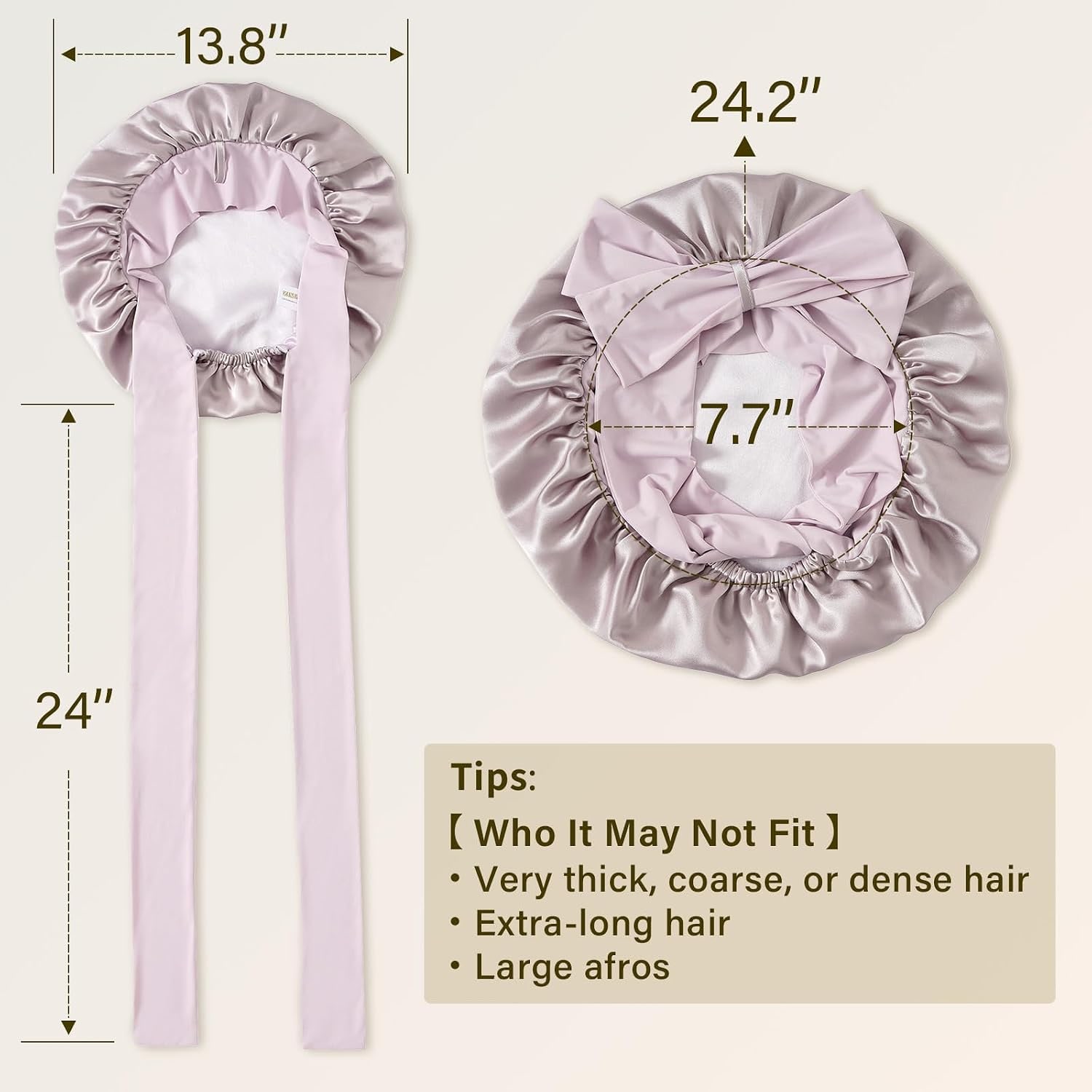
Start with your hair volume. The cap is adjustable, but the amount of room inside is finite. If your hair is long or very thick, gather it loosely at the crown or coil it before you put the cap on, then tie off. Cramming it in flat will create creases you have to deal with in the morning.
Next, think about where you want the knot. High at the crown looks tidier and suits shorter hair. Lower at the nape is more secure for people who move a lot in their sleep, because the weight of the hair sits inside the cap rather than trying to push it off.
Give yourself a few nights to settle on your tension. Almost everyone ties it too tight on the first night out of habit, because elastic bonnets train you to expect pressure. You want it snug enough to stay put and no tighter. If there is a mark on your skin in the morning, loosen it.
On colour, this one is a solid purple with no print. That is deliberately plain. It does not shout, it does not clash with bedding, and it is subtle enough to keep on while you make coffee without feeling like you are wearing a costume.
Caring for silk so it lasts
Silk is not fragile exactly, but it does not forgive rough treatment. The care instruction here is hand wash only, and that is worth following.
Use cold water and a mild detergent. Something made for delicates is ideal, but a gentle soap works. Keep bleach well away, and skip fabric softener too, since it coats the fibre and takes away the slip you paid for.
Swirl it in the water, do not scrub. Rinse until the water runs clear. Then press the water out between your palms or roll it in a towel. Do not wring and do not twist, because that stresses the seams and the ties.
Dry it flat, away from direct sun and away from heaters. Sunlight fades dye and weakens the fibre over time. Laid on a towel out of the light, it will usually be dry in a few hours.
Wash it every week or two in normal use. If you sleep with oils or a leave-in treatment, wash more often, because product builds up on the inside where you cannot see it and that is what eventually makes a cap feel dull.
If you want it crisp, press it on the coolest iron setting with a cloth in between. Most people never bother, and it drapes fine as it is.
A note on what we do and do not claim
We will tell you that silk is smooth, that hair slides across it with much less friction than cotton, and that this cap is double-layered mulberry silk with a drawstring tie and a solid purple finish. Those are things you can verify by touch.
We will not tell you a cap grows hair, fixes damage or does anything to your skin. It reduces friction. That is a real, useful thing, and it is enough.
Some details the maker simply does not state, including the finished measurements, the weight and the country of origin. Where we do not know, we say we do not know rather than filling the gap with a guess.
Buying it in South Africa
The price here is R920.99, down from R1104.99. Delivery is tracked and reaches every province in 10 to 20 working days, free on orders over R1800 and R250 below that. Payment is by card.
The cap arrives boxed, which makes it a straightforward gift. If you are buying for someone else and you are not certain, that boxed presentation is one reason it works well as the best silk night cap to hand over without a lot of explanation.
If it is not right, you have 14 days from delivery to cancel for any reason, provided it is unused and unwashed. So try the fit before you wash it.
The short version
A silk bonnet is one of the cheapest fixes in hair care. It takes the nightly friction out of the equation, and over months that adds up to smoother ends and styles that last longer.
This one is mulberry silk, two layers, solid purple, and it ties rather than squeezes. That tie closure is the reason to pick it over a standard elastic cap. You set the fit, it fits your hair instead of your hair fitting it, and it stays that way for the life of the cap.
Wash it by hand in cold water, dry it flat, keep it out of the sun. Do that and it will look after your hair for a long time.