

The complete guide
Choosing a 22 Momme Silk Pillowcase, Without the Guesswork
The problem with a perfectly good cotton pillowcase
Most people never think about what their face spends eight hours pressed against. Cotton is the default, it washes well, and it costs almost nothing. For a long time that is all a pillowcase needed to do.
Then you notice a few things. Hair that went to bed brushed comes out of bed with a crease and a knot on one side. The side of your face has a pattern pressed into it that takes twenty minutes to settle. Long hair wraps around itself overnight. None of it is a disaster. It is just small daily friction that adds up, and it comes down to the surface of the fabric.
Cotton fibres are short, slightly rough and grip whatever touches them. That grip is useful for a towel and less useful for a pillow. Silk fibres are long, smooth and continuous, so there is very little to catch on. Hair and skin slide instead of drag. That is the whole mechanical story, and it is why a silk pillowcase feels different the first morning rather than after a month of hoping.
What momme actually tells you
Silk is sold by weight, and the unit is momme. You will see it written as 16, 19, 22 or 25 momme. A higher number means more silk fibre in the same square of fabric.
Sixteen momme is thin. It feels nice in a shop, it is cheap to make, and it tends to go limp and show wear quickly. Nineteen momme is the common middle ground. Twenty-two momme, which is what you have here, is where silk starts to feel properly substantial. You can feel the difference just picking it up. It drapes with a bit of weight instead of floating, and it stands up to more washing before it starts to look tired.
Going higher than 22 is possible but you pay a lot more for a difference most people cannot feel on a pillow. For a pillowcase, 22 momme is the sweet spot between feel, durability and price. Anyone searching for the best 22 momme silk pillowcase is usually circling exactly this reasoning.
The thread count of 800 is a separate measure. It describes how tightly the threads sit together rather than how heavy the fabric is. Together, a high thread count and a 22 momme weight give you the cool, slippery surface that silk is known for.
Mulberry silk, and why both sides matter
Mulberry silk comes from silkworms raised on a controlled diet of mulberry leaves. The result is a long, even, uniform fibre. That uniformity is what produces the smooth finish and the soft sheen. Wild silks are coarser and more irregular, which has its own appeal in a scarf but not on a pillow.
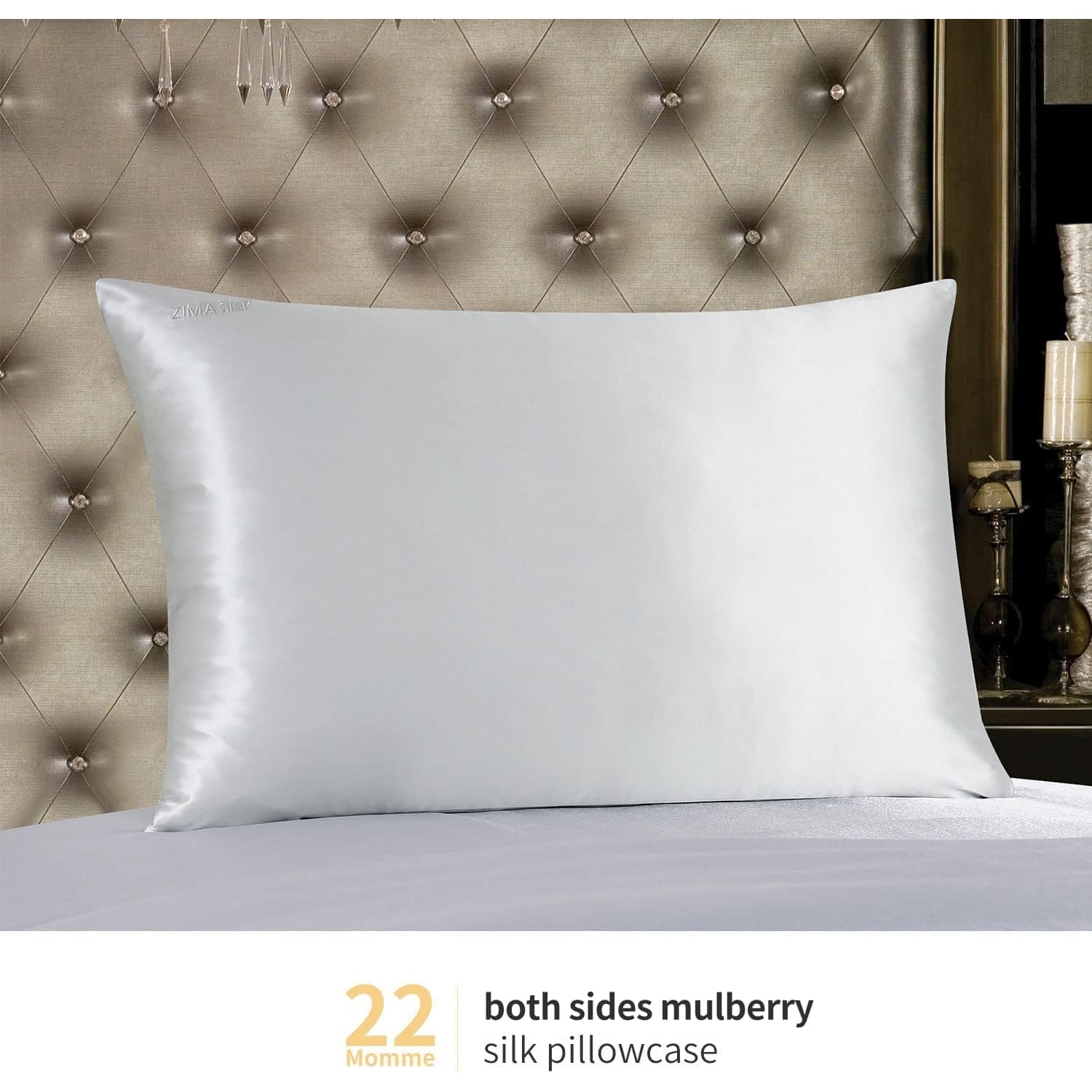
Pay attention to the phrase "both sides". A fair number of pillowcases on the market are silk on one face and cotton or polyester on the other. They are cheaper and they are not the same thing. This one is 100% mulberry silk on both faces, so it does not matter which way you lay it on the bed. If you are comparing options and trying to work out the best pure silk pillowcase for the money, that single detail separates a lot of listings.
Size, and the thing most people get wrong
This is cut to the American queen size, 75 cm long by 50 cm wide, which is 30 by 20 inches.
South African pillows are often a different shape. A common local standard sits around 45 x 70 cm. American sizing runs standard at roughly 51 x 66 cm, queen at 51 x 76 cm and king at 51 x 91 cm. Those numbers overlap confusingly, and the word on the packet does not always match the pillow in your cupboard.
So measure. Take a tape to your pillow, length and width, and compare it to 75 x 50 cm. If your pillow is a little smaller, this case will fit with some give at the open end. That is normal and most people like it, because the silk stays soft and relaxed rather than stretched tight. If your pillow is bigger, particularly if it is a king at around 91 cm, this is not the right size and you should look elsewhere.
The hidden zip
An envelope closure is the other common option on pillowcases, and it works, but it has two habits. The pillow slides out over the course of the night, and the open flap looks untidy on a made bed.
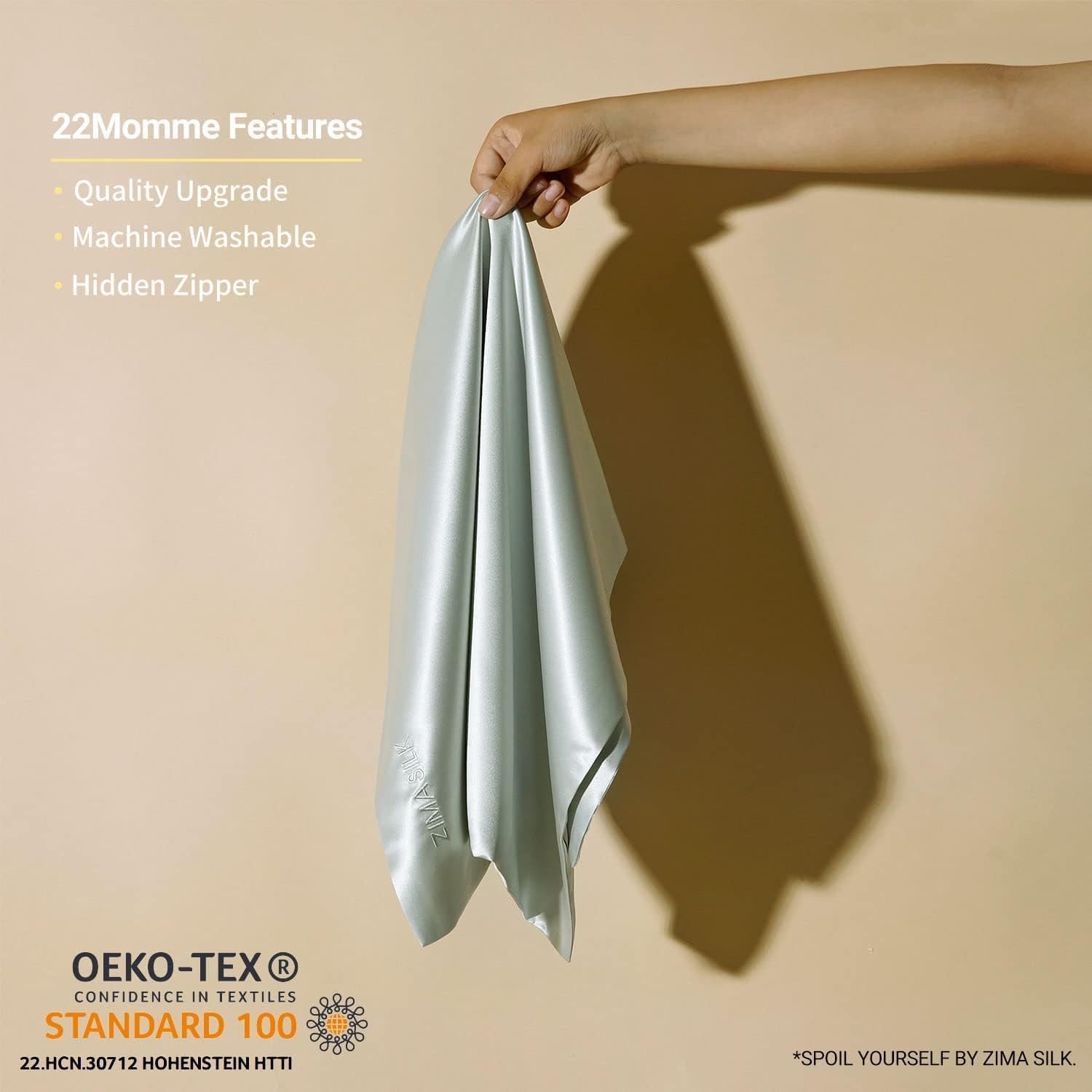
A zip solves both. A hidden zip solves both and does one more thing: it keeps the zip teeth tucked inside the seam where they cannot touch your face or snag your hair. The zip on this case is described as solid and durable, intended to keep working through repeated washes.
Practical tip. Always close the zip before washing. An open zip in a wash basin can catch the fabric and drag on it. It takes two seconds and saves a lot of annoyance.
Living with silk, honestly
Silk is not difficult, but it is not cotton either. The care instruction here is hand wash only, and it is worth taking that seriously if you want the pillowcase to look good in two years.
In practice it means a basin, cool water and a small amount of liquid detergent made for delicates. Swirl it around for a minute or two, rinse it in clean cool water, then press the water out between your palms or against the side of the basin. Do not wring it and do not twist it. Silk fibres are strong along their length but they do not enjoy being screwed into a rope.
Dry it flat on a towel or hang it in the shade. Skip the tumble dryer and skip the sunny washing line. Heat and UV are the two things that age silk fastest. Most of the creases fall out as it dries. If you want it crisp, iron on the lowest setting on the reverse while it is still a bit damp.
Avoid bleach entirely, and be mindful of anything else that touches the pillowcase. Strong acne treatments, oils and some hair products can mark any fabric. A light grey shows less than a white would, but it still pays to be a bit careful.
Who this suits, and who it does not
It suits someone curious about silk bedding who does not want to spend a fortune finding out whether they like it. One pillowcase is a much smaller step than a full set of sheets, and your face is where you notice the difference most anyway.
It suits long hair. It suits people who sleep on their side and wake up with a creased cheek. It suits anyone who likes the look of a neutral bedroom, because light grey is one of the most cooperative colours in bedding, sitting comfortably with white, charcoal, linen and most wood tones.
It does not suit someone who wants to throw everything in a machine on a Sunday morning. That is a genuine trade-off and worth being honest about before you buy. It also does not suit a king pillow, for the size reason above.
And a quick note on claims. Silk is smooth, it feels cool against the skin and it creates less friction than cotton. Those are properties of the fabric. Anything beyond that, about skin, hair growth or health, is not something to promise, and we will not.
Buying it as a gift
It arrives in a gift box, which removes the main obstacle to giving bedding as a present. A plain light grey silk pillowcase does not require you to know anyone's exact colour scheme, and it is the kind of thing people enjoy receiving but rarely buy for themselves. If you want it to feel more substantial, two pillowcases make a proper pair for a double bed.
The short version
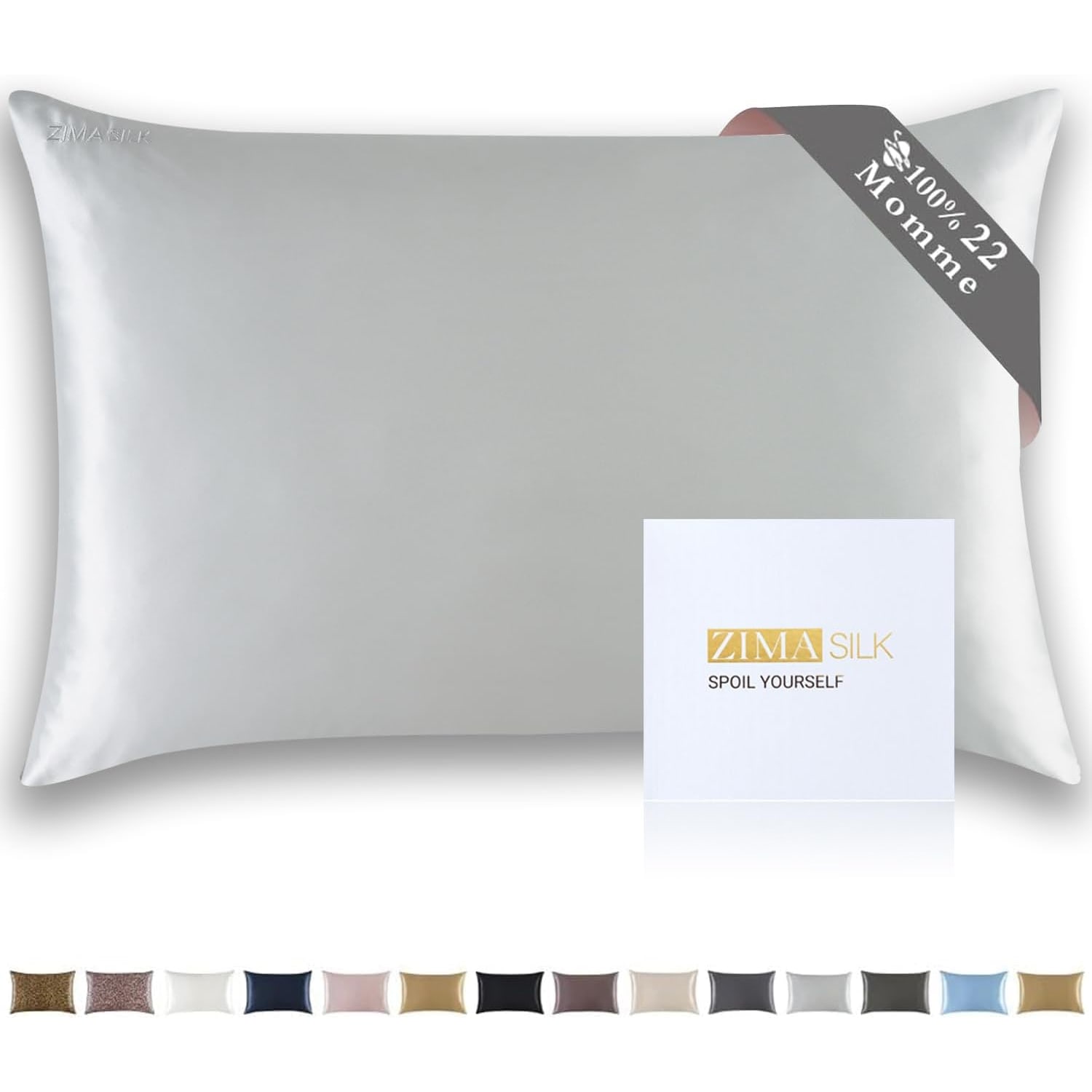
You are getting one pillowcase, 100% mulberry silk on both sides, 22 momme, 800 thread count, light grey, solid colour, with a hidden zip. It measures 75 x 50 cm, which is the American queen size, and weighs 163 grams. Care is hand wash only.
Measure your pillow before ordering. That is the single step that decides whether you are pleased with it or mildly irritated. Everything else about this one is straightforward.